

Bitcoin recouples its correlation with the U.S stocks
Ever since the pandemic lockdown started in March 2020, the premier digital asset is moving in tandem with the S&P 500
Heightened Volatility has been the hallmark of financial markets ever since the pandemic lockdown started in March 2020. Although extremely elevated levels of volatility produced some wild moves in the global equities, it is much of common sight in the digital assets, led by Bitcoin.
Although volatility has dropped off significantly since the March crash as stocks staged one of the quickest rebounds ever, the latest jolt came on Thursday when Standard & Poor’s 500 (S&P 500) Index of large U.S. stocks lost 5.7%. More surprising was the fact that Bitcoin followed the benchmark U.S index by registering a 6.37% price drop.
Apparently this isn’t a one-off bearish event happening in both the equity and digital asset markets. Data shows that Bitcoin has assumed a higher correlation with the U.S stocks ever since the pandemic lockdown ensued — earlier in March. The emergence of this interesting phenomenon over the past three months also means Bitcoin had become inversely correlated with the CBOE Volatility Index (VIX). The charts below make comparisons to demonstrate how this correlation has appeared.
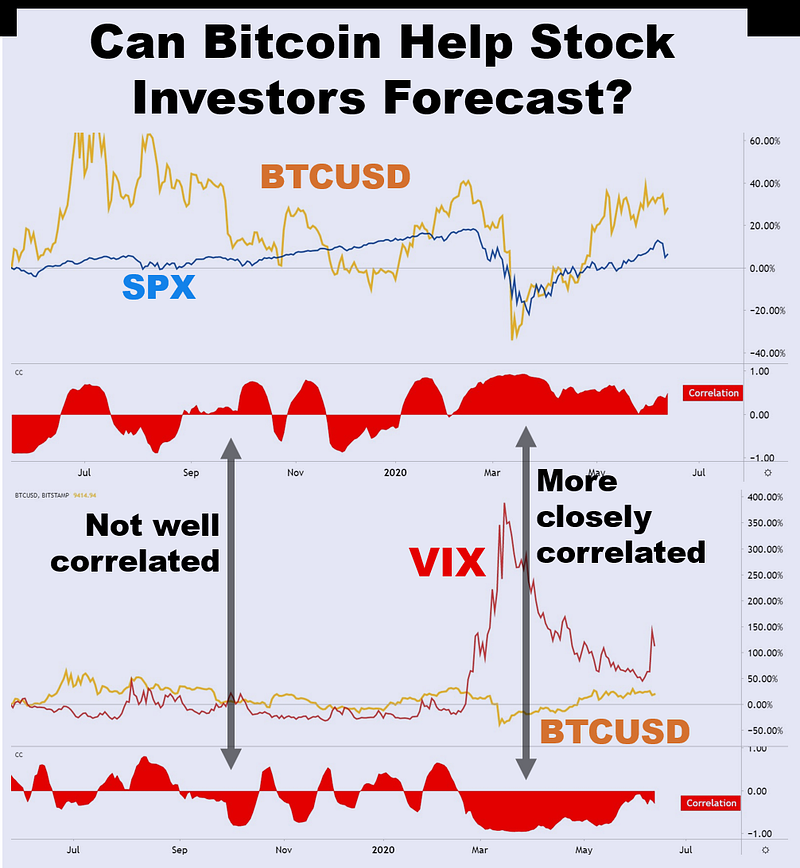
Both of the charts above (Figure 1) are stretched back to summer 2019. It is evident that was no serious amount of correlation during 2019. However, beginning in 2020 the correlation between stocks and bitcoin aligned positively and remained so as a result of the COVID-19 pandemic.
Higher than normal correlation among the two asset groups is probably resulting from across the board fear among the investors in risky assets — including stocks and digital assets. We might see a decoupling of this relationship between BTC & stocks once things get back to normal after the pandemic effects start to wane.
The chatter among cryptocurrency analysts over whether bitcoin is mostly uncorrelated with traditional assets is an ongoing one and the recent concurrent price moves have rekindled this debate. While some consider Bitcoin as a risky asset like stocks, others term it a price hedge, like Gold.

“The fact that bitcoin had any reaction at all to the Fed yesterday is a clear sign that either a) institutional money is playing a much larger role in the market these days, or b) retail traders are getting savvier and reacting more to their surroundings. Either way, the market is growing up fast.”
~ Mati Greenspan, Founder, Quantum Economics
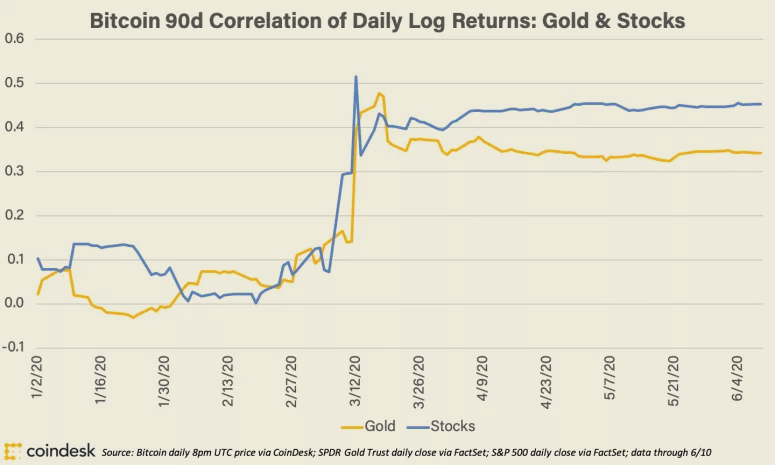
The opinion about BTC being a riskier asset has gained traction recently with its uptick in correlation with the U.S stocks. As the equity indices plunged in March, Bitcoin took a nosedive as well. As equities began to head to the quickest bear market correction in history, Bitcoin saw a wipeout of 39% on March 12. Despite that sell-off, the premier digital asset is still up 30% for the year to date.
Interestingly enough, Bitcoin has not just seen a rise in correlation with stock, but with the traditional hedge of Gold as well (Figure 2). Despite a weak but consistent correlation between BTC and gold & stocks both, might it be acting both as a risky asset and a hedge at the same time, depending on how the investing parties look at it?
Personally, I think the most recent pandemic-driven price action in Bitcoin is indicative of the fact that the digital asset is acting much more like a mainstream financial asset, given credibility by the inclusion of institutional investors in the digital space. Everything, including traditional hedge assets like Gold, got sold off as investors opted for Cash only. So the argument of BTC acting as a hedge might still be valid.
Some analysts still believe that the stock market has risen too far from the lows seen in March driven by unprecedented liquidity injections by central banks across the globe. There still seems to be a disconnect between the underlying economy and the equities.
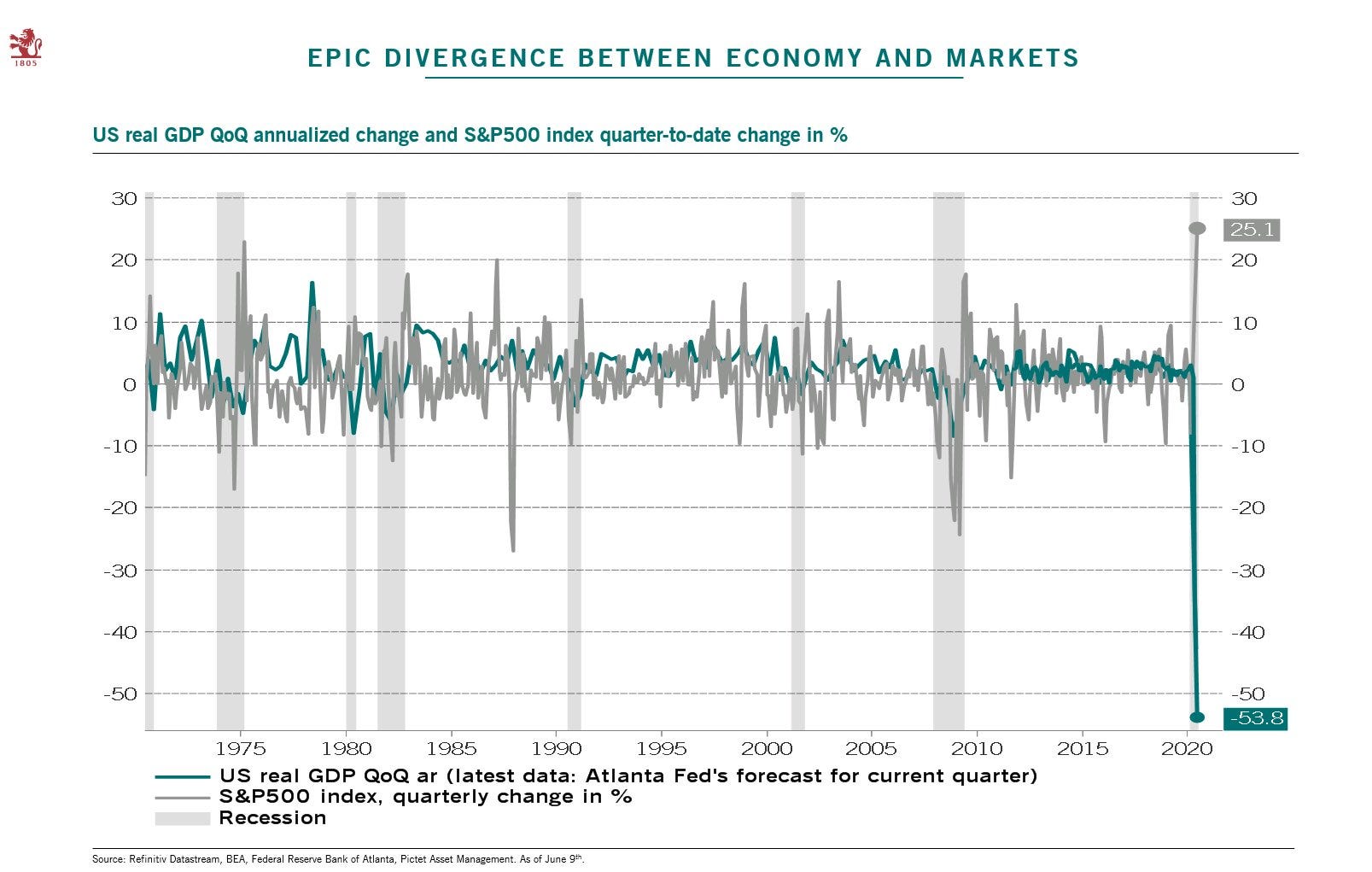
As the Federal Reserve presented sobering economic projections recently — coupled with rising pandemic cases in various U.S states, stocks might remain under pressure in the short term with Bitcoin remaining on the defensive as well. Technically speaking, BTC has once again failed the strong resistance of $10,400 — a level which it hasn’t bee able to surpass in the past five instances. It might be headed for a bigger correction as well.