Bitcoin Has One Big Flaw and You Can’t Deny It
There are 2,396 examples backing up why cryptocurrencies will lose you money
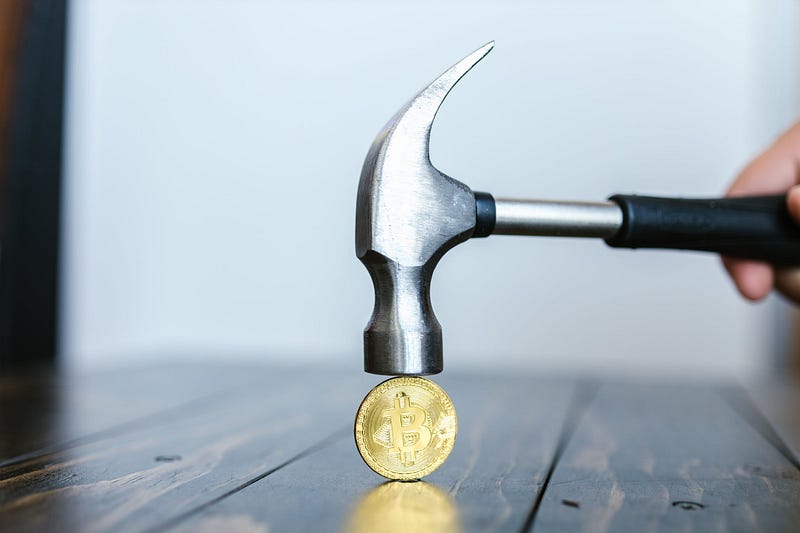
It hit me like a kick up the backside.
I’d been working on an article, What Donald Trump Understands About Money That You Don’t, and all the reading and research clarified my thinking.
I had an epiphany.
The one big thing that hadn’t occurred to me before — Bitcoin has a flaw.
There isn’t a day that goes by when my newsfeed doesn’t make me aware of another ordinary Joe who made millions from Bitcoin.
- This 25-year-old says he is a millionaire after investing early in Bitcoin.
- This 20-year-old is now worth $4.5 million.
These stories are everywhere.
There is nothing special about these people. They are ordinary folk who took a chance and bought some Bitcoin. There is only one common denominator — they bought in early.
People read these stories, which trigger their fear of missing out (FOMO), and they buy it.
They think:
That could be me.
Praise the Lord, Bitcoin will save me.
This time next year I could be a millionaire.
I think:
What about all the poor sods who bought Bitcoin after them?
The reality is, there is no money made in Bitcoin unless other people lose money. To get loads of money out, others have to put loads of money in.
Bitcoin has achieved legitimacy
Fidelity Investments is an American multinational financial services corporation with $4.2 trillion assets under management. In January 2022, they released a PDF to their clients regarding Bitcoin. In this document, they assert:
“Bitcoin is fundamentally different from any other digital asset. No other digital asset is likely to improve upon Bitcoin because Bitcoin is the most — relative to other digital assets — secure decentralised sound digital money. Other non Bitcoin projects should be elevated from a different perspective than Bitcoin.”
This is a Fidelity document. This is not something we are reading off a blog.
If you are interested in cryptocurrencies, reading the Fidelity document will give you an insight into why they conclude:
“Bitcoin’s first technological breakthrough was not as a superior payment technology but as a superior form of money. As a monetary good, bitcoin is unique. Therefore, not only do we believe investors should consider bitcoin first in order to understand digital assets, but that bitcoin should be considered first and separate from all other digital assets that have come after it.”
But is it as secure as we think?
- The $3.6 billion stolen in the Bitfinex hack?
- North Korea hackers stole $400m of cryptocurrency in 2021, report says.
There aren’t just the usual scammy emails to contend with. Watch out for imposter accounts on social media, fake mobile apps and imposter websites.
- Scammers stole $14 billion in cryptocurrencies in 2021.
Yeah, what about other thefts, frauds and counterfeiting going on?
Yes, it happens. That’s irrefutable. Where there’s money, there are people willing and able to take it from you. Cryptocurrencies aren’t as safe as the people behind them make out.
And you have to be careful about which cryptocurrency you choose. Can you guess how many cryptocurrencies were scams or just failed?
Did you guess how many?
According to Coinopsy, there are 2,396 cryptocurrencies that are dead or failed. You would have lost every single penny of your investment.
These are the abandoned cryptocurrencies because they received no volume or were outright scams.
With every new technology, there is an Innovation Adoption Lifecycle. The takeup of radio, television, the internet, and even the humble food mixer followed this cycle. Bitcoin is no different.
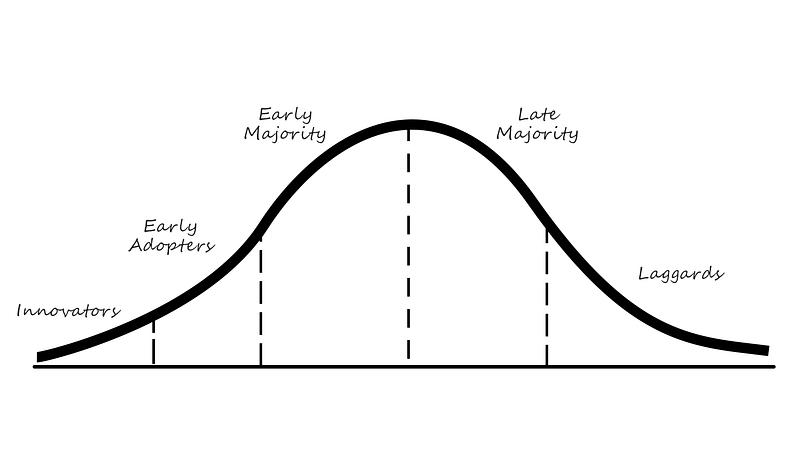
The trick might be to know where we are on the graph.
Statista provides a historical Bitcoin price chart. You can view the most up to date version of the Bitcoin graph here.
You may have heard of Tulipmania?
During the Dutch Golden Era prices for tulip bulbs went through the roof.
How does it compare to the Bitcoin graph?
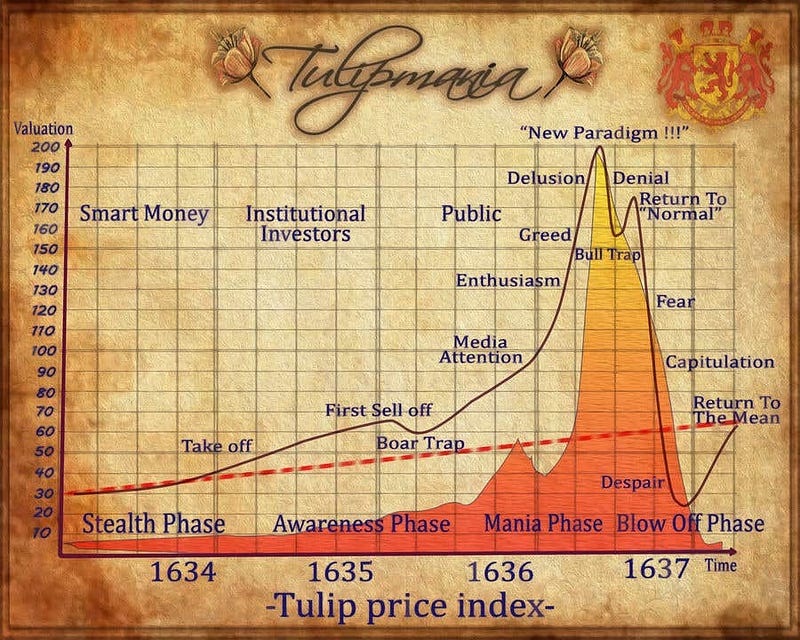
Is it fair to compare the two?
We still have tulips. You can still buy tulip bulbs. The mania settled down and we can appreciate those beautiful flowers every spring without losing our shirts.
When an investment management company like Fidelity produces documents that legitimise Bitcoin, we can expect it to be around for years to come. But in what form?
Can you trust Bitcoin?
“Money is the most universal and most efficient system of mutual trust ever devised.” — Yuval Harari
Money has no value unless we trust it. We have to trust we can exchange it for goods and services. It is the basis of worldwide cooperation.
- Can you trust Bitcoin to be around in ten years?
- If that is a yes, can you trust Bitcoin to be stable?
- Why is there so much tremendous volatility in the price?
From day to day, Bitcoin jumps about like a kiddie on a bouncy castle. Throw in a few other cryptocurrencies and you have a recipe for tears — someone is going to get hurt bouncing around like that.
If Coca-Cola announces a drop in profits, its share price takes a dip — or vice versa. The vagaries of the market. But we can be fairly certain people will put it in their rum 50 years from now and it will still pay a dividend, as it has done for the last 58 years.
You can’t second guess Bitcoin.
The price goes up and down on a whim.
It’s not producing anything, it doesn’t pay a dividend and nobody, but nobody can tell me they know which direction it will head, not for certain.
Even Harry Dent doesn’t know — although his prediction that Bitcoin will drop to $4,526 looks likely if Bitcoin mirrors the tulipmania graph.
Uncertainty makes it untrustworthy.
We have experienced it with money. Hyperinflation in Venezuela has caused the Venezuelan bolívar to be effectively worthless. The people holding the money lack confidence in its ability to keep its value.
If you worry you can’t pay your rent with your Bitcoin, unless Elon Musk tweets something to send the price shooting up, that’s no way to live.
Bitcoin has been described as a digital form of gold. They are both stores of wealth, but at least you can make jewelry with gold. It isn’t entirely dormant.
The big flaw with Bitcoin
Bitcoin is a store for wealth. And that’s it.
With gold you can use it for:
- Wealth protection and financial exchange.
- Coins and other financial assets.
- Jewelry, adornments, and medals.
- Electronics.
- Space exploration.
- Medicine and dentistry.
We store money using digital ones and zeros. Perhaps Bitcoin is the same, except it is decentralised and uses blockchain technology.
But there is one big difference. Put your money in a bank and that money becomes available to the bankers to lend out.
The banks loan more money than they have. It’s called the fractional reserve banking system. Governments allow banks to lend more than they hold in actual deposits.
They can lend 10 x the amount they have in reserves.
They are trusting in the future. They are trusting the entrepreneurs to start businesses and earn a return on their money.
They are trusting home buyers to pay off their mortgages because they earn money working for the entrepreneurs.
The governments trust the banks to loan out this money because without it there would be no investment in the future. With no investment in the future, there would be no jobs. Without jobs, there would be no earnings and without earnings, there would be no taxes.
Taxes pay for welfare so people don’t starve. It pays for health care, defense, public safety, defense, transport, and many more essentials required to ensure the fabric of modern-day society doesn’t rip apart.
Being decentralised makes Bitcoin worse than an offshore account used by the rich. It benefits nobody — other than those taking a cut from every transaction.
According to CoinMarketCap data, there is $2.6 trillion sitting in cryptocurrencies doing the same as an emu with its head in the sand.
Those making money from Bitcoin are buying champagne, Ferraris, yachts, and mansions. As their stories abound, the aspirational take their money from governments bonds, savings accounts and pension pots to put it into the Bitcoin mania.
Money that would be invested in start-up companies or help grow established businesses is being chained to a block. It’s like an S&M orgy in there — all done behind closed doors.
We built empires on finance. Merchants were willing to invest in new trade routes, businesses innovate and governments fund the infrastructure from the taxes those merchants, business and their employees.
It’s the entrepreneurs who drive progress.
Bitcoin takes us back to the potato farmer, who stores his spuds in his barn. If he doesn’t trade them, they are only good for roasting, boiling, or making mash.
There is no trust in the future with bitcoin, it’s fear. Fear of failure, fear of inflation, FOMO.
Bitcoin isn’t a resource that grows. It’s akin to hoping someone will come along and buy your bed for more than the money you hid under the mattress. And they are hoping they can do the same.
Somewhere along the line, people will have to lie in it.
Bitcoin isn’t the only crypto in town. How many unique blockchain investments are there?
Have a guess.
Here is the most up-to-date number.
You might be as surprised as I was. And you might ask yourself:
How many are scams? How many will fail? Why are there so many?
Am I wrong?
I am genuinely interested in whether this article rings true with you or whether I am missing something — please tell me what I am missing. I won’t be offended, I’m a lifelong learner and I love being educated.
It’s not all rants like this read more here and/or sign up to get an email when Malky publishes. And if you haven’t joined Medium, you can earn from writing on Medium by joining here.