Bitcoin : Cryptocurrency (BTC) 🪙💰
Bitcoin — The Digital Gold Revolutionizing Monetary Landscapes
Free AI web copilot to create summaries, insights and extended knowledge, download it at here
13094
Abstract
ame. Today, millions of people know about Bitcoin, yet its physical presence remains sparse, evidenced by the modest 6,674 Bitcoin ATMs across the globe. Bitcoin’s unique feature is its decentralization, which ensures that no single entity controls the network. Furthermore, Bitcoin is highly transparent with easy account setup, making it a compelling choice for many.</p><h1 id="c386">Services for the Average User</h1><figure id="28f1"><img src="https://cdn-images-1.readmedium.com/v2/resize:fit:800/1*[email protected]"><figcaption></figcaption></figure><p id="beac">Bitcoin can be used for a myriad of purposes, from purchasing goods and services to investment and even as a hedge against inflation. There are numerous platforms available for buying, selling, and storing Bitcoins. It’s also possible to use Bitcoin ATMs or engage in peer-to-peer transactions.</p> <figure id="cbd9"> <div> <div> <img class="ratio" src="http://placehold.it/16x9"> <iframe class="" src="https://cdn.embedly.com/widgets/media.html?src=https%3A%2F%2Fwww.youtube.com%2Fembed%2Fs-Fs_Ucy_EU%3Ffeature%3Doembed&display_name=YouTube&url=https%3A%2F%2Fwww.youtube.com%2Fwatch%3Fv%3Ds-Fs_Ucy_EU&image=https%3A%2F%2Fi.ytimg.com%2Fvi%2Fs-Fs_Ucy_EU%2Fhqdefault.jpg&key=a19fcc184b9711e1b4764040d3dc5c07&type=text%2Fhtml&schema=youtube" allowfullscreen="" frameborder="0" height="480" width="854"> </div> </div> </figure></iframe></div></div></figure><h1 id="cae1">Bitcoin’s Birth and Its Creator’s Enigma</h1><figure id="a008"><img src="https://cdn-images-1.readmedium.com/v2/resize:fit:800/1*[email protected]"><figcaption></figcaption></figure><p id="fdff">Bitcoin first stepped into the limelight in 2009, thanks to an individual or group known by the pseudonym, ‘Satoshi Nakamoto’. Satoshi, who remains a mystery to date, introduced Bitcoin as a solution to the double-spending problem in the digital world.</p> <figure id="9e30"> <div> <div> <img class="ratio" src="http://placehold.it/16x9"> <iframe class="" src="https://cdn.embedly.com/widgets/media.html?src=https%3A%2F%2Fwww.youtube.com%2Fembed%2FY3506qMWH94%3Ffeature%3Doembed&display_name=YouTube&url=https%3A%2F%2Fwww.youtube.com%2Fwatch%3Fv%3DY3506qMWH94&image=https%3A%2F%2Fi.ytimg.com%2Fvi%2FY3506qMWH94%2Fhqdefault.jpg&key=a19fcc184b9711e1b4764040d3dc5c07&type=text%2Fhtml&schema=youtube" allowfullscreen="" frameborder="0" height="480" width="854"> </div> </div> </figure></iframe></div></div></figure><p id="47ee"><a href="https://www.google.com/search?client=safari&hl=en-us&q=Double+spending&tbm=isch&sa=X&ved=2ahUKEwja96WZl6SAAxW3F1kFHSa2DUkQ0pQJegQIDBAB&biw=414&bih=720&dpr=2">Double spending</a> is a potential flaw in a digital currency system where the same single digital token can be spent more than once. This is possible because a digital token consists of a digital file that can be duplicated or falsely produced. Satoshi’s invention of the Bitcoin network effectively solved this problem by introducing the blockchain technology where every transaction is transparent and has to be confirmed by the majority of nodes.</p><h1 id="998c">Blockchain: The Core of Bitcoin</h1> <figure id="f322"> <div> <div> <img class="ratio" src="http://placehold.it/16x9"> <iframe class="" src="https://cdn.embedly.com/widgets/media.html?src=https%3A%2F%2Fwww.youtube.com%2Fembed%2FbBC-nXj3Ng4%3Ffeature%3Doembed&display_name=YouTube&url=https%3A%2F%2Fwww.youtube.com%2Fwatch%3Fv%3DbBC-nXj3Ng4&image=https%3A%2F%2Fi.ytimg.com%2Fvi%2FbBC-nXj3Ng4%2Fhqdefault.jpg&key=a19fcc184b9711e1b4764040d3dc5c07&type=text%2Fhtml&schema=youtube" allowfullscreen="" frameborder="0" height="480" width="854"> </div> </div> </figure></iframe></div></div></figure><p id="3f82">Blockchain, the technology underpinning Bitcoin, is a kind of distributed ledger where transactions are recorded in ‘blocks.’ Each block is connected to the ones before and after it, creating an unalterable chain of records. Due to its decentralized nature, the data recorded on a blockchain is transparent and nearly impossible to change.</p> <figure id="bf78"> <div> <div> <img class="ratio" src="http://placehold.it/16x9"> <iframe class="" src="https://cdn.embedly.com/widgets/media.html?src=https%3A%2F%2Fwww.youtube.com%2Fembed%2FLxDuk55owZ0%3Ffeature%3Doembed&display_name=YouTube&url=https%3A%2F%2Fwww.youtube.com%2Fwatch%3Fv%3DLxDuk55owZ0&image=https%3A%2F%2Fi.ytimg.com%2Fvi%2FLxDuk55owZ0%2Fhqdefault.jpg&key=a19fcc184b9711e1b4764040d3dc5c07&type=text%2Fhtml&schema=youtube" allowfullscreen="" frameborder="0" height="480" width="854"> </div> </div> </figure></iframe></div></div></figure><p id="5515">Bitcoin’s blockchain operates on a peer-to-peer (P2P) network model. In this model, each participant (peer) has equal rights and can perform any function that the other can. Here, there is no central authority, and every participant stores a copy of the entire blockchain. As a result, the system is extremely robust and immune to censorship.</p><h1 id="879a">Bitcoin Protocol (Algorithm)</h1> <figure id="9441"> <div> <div> <img class="ratio" src="http://placehold.it/16x9"> <iframe class="" src="https://cdn.embedly.com/widgets/media.html?src=https%3A%2F%2Fwww.youtube.com%2Fembed%2FS9JGmA5_unY%3Ffeature%3Doembed&display_name=YouTube&url=https%3A%2F%2Fwww.youtube.com%2Fwatch%3Fv%3DS9JGmA5_unY&image=https%3A%2F%2Fi.ytimg.com%2Fvi%2FS9JGmA5_unY%2Fhqdefault.jpg&key=a19fcc184b9711e1b4764040d3dc5c07&type=text%2Fhtml&schema=youtube" allowfullscreen="" frameborder="0" height="480" width="854"> </div> </div> </figure></iframe></div></div></figure><p id="9e9f">Looking into the code, Bitcoin operates on a protocol using the SHA-256 algorithm for its proof-of-work system. This algorithm transforms transaction data into a fixed size string of characters. In simple terms, it’s like taking a secret recipe and distilling it down to a simple, unchangeable code that everyone can see, but no one can alter or reverse-engineer. The function of the SHA-256 algorithm within the Bitcoin protocol is to secure transactions and keep the miners honest. Each miner competes to solve a tough problem based on a specific data set. The solution is straightforward to check, but challenging to solve, keeping the process fair.</p><h1 id="666d">Bitcoin Wallets: The Gateway to the Bitcoin Network</h1> <figure id="5497"> <div> <div> <img class="ratio" src="http://placehold.it/16x9"> <iframe class="" src="https://cdn.embedly.com/widgets/media.html?src=https%3A%2F%2Fwww.youtube.com%2Fembed%2FyKdK-7AtAMQ%3Ffeature%3Doembed&display_name=YouTube&url=https%3A%2F%2Fwww.youtube.com%2Fwatch%3Fv%3DyKdK-7AtAMQ&image=https%3A%2F%2Fi.ytimg.com%2Fvi%2FyKdK-7AtAMQ%2Fhqdefault.jpg&key=a19fcc184b9711e1b4764040d3dc5c07&type=text%2Fhtml&schema=youtube" allowfullscreen="" frameborder="0" height="480" width="854"> </div> </div> </figure></iframe></div></div></figure><p id="2cc2">Bitcoin wallets serve as the user interface to the Bitcoin network. They allow users to make transactions, view their balances, and essentially interact with the Bitcoin ecosystem. These wallets come in various forms: software-based (that can be installed on computers or smartphones), hardware wallets (physical devices that store Bitcoins offline), and even paper wallets (where Bitcoin keys are printed on paper).</p><h1 id="3e1b">Bitcoin Transactions: How Do They Work?</h1> <figure id="d6ef"> <div> <div> <img class="ratio" src="http://placehold.it/16x9"> <iframe class="" src="https://cdn.embedly.com/widgets/media.html?src=https%3A%2F%2Fwww.youtube.com%2Fembed%2FzGDTt9Q3vyM%3Ffeature%3Doembed&display_name=YouTube&url=https%3A%2F%2Fwww.youtube.com%2Fwatch%3Fv%3DzGDTt9Q3vyM&image=https%3A%2F%2Fi.ytimg.com%2Fvi%2FzGDTt9Q3vyM%2Fhqdefault.jpg&key=a19fcc184b9711e1b4764040d3dc5c07&type=text%2Fhtml&schema=youtube" allowfullscreen="" frameborder="0" height="480" width="854"> </div> </div> </figure></iframe></div></div></figure><p id="6f7f">When it comes to transaction handling, Bitcoin presents a unique way compared to traditional currencies. The Bitcoin network follows a <a href="https://www.google.com/search?client=safari&hl=en-us&q=UTXO+(Unspent+Transaction+Output)+model&tbm=isch&sa=X&ved=2ahUKEwjEtMqjmaSAAxX8MVkFHQevBNoQ0pQJegQICRAB&biw=414&bih=720&dpr=2">UTXO (Unspent Transaction Output) model</a>. UTXO represents a line item on the blockchain, a product of a transaction output that has not been spent.</p><figure id="949d"><img src="https://cdn-images-1.readmedium.com/v2/resize:fit:800/1*[email protected]"><figcaption></figcaption></figure><p id="c76a">Every Bitcoin transaction takes a number of these UTXOs as inputs, effectively ‘spending’ them, and generates new UTXOs as outputs. The amount in each of these new UTXOs is then available to be spent in future transactions.</p><h1 id="76ad">Bitcoin Mining: The Heart of Bitcoin’s Operation</h1> <figure id="1dd0"> <div> <div> <img class="ratio" src="http://placehold.it/16x9"> <iframe class="" src="https://cdn.embedly.com/widgets/media.html?src=https%3A%2F%2Fwww.youtube.com%2Fembed%2F-z4qbkQ3cK8%3Ffeature%3Doembed&display_name=YouTube&url=https%3A%2F%2Fwww.youtube.com%2Fwatch%3Fv%3D-z4qbkQ3cK8&image=https%3A%2F%2Fi.ytimg.com%2Fvi%2F-z4qbkQ3cK8%2Fhqdefault.jpg&key=a19fcc184b9711e1b4764040d3dc5c07&type=text%2Fhtml&schema=youtube" allowfullscreen="" frameborder="0" height="480" width="854"> </div> </div> </figure></iframe></div></div></figure><p id="5387">Bitcoin miners perform an essential role in the network by adding new transactions to the blockchain. They use powerful computers to solve complex mathematical problems that validate each transaction. Once they solve the problem, they add the transaction block to the blockchain, a process known as ‘finding a block.’</p> <figure id="b0bd"> <div> <div> <img class="ratio" src="http://placehold.it/16x9"> <iframe class="" src="https://cdn.embedly.com/widgets/media.html?src=https%3A%2F%2Fwww.youtube.com%2Fembed%2FGrQ3-q2K03Q%3Ffeature%3Doembed&display_name=YouTube&url=https%3A%2F%2Fwww.youtube.com%2Fwatch%3Fv%3DGrQ3-q2K03Q&image=https%3A%2F%2Fi.ytimg.com%2Fvi%2FGrQ3-q2K03Q%2Fhqdefault.jpg&key=a19fcc184b9711e1b4764040d3dc5c07&type=text%2Fhtml&schema=youtube" allowfullscreen="" frameborder="0" height="480" width="854"> </div> </div> </figure></iframe></div></div></figure><p id="feaf">The Bitcoin network adjusts the difficulty of these problems to ensure that a block is added approximately every 10 minutes. This maintains the stability of the network and the controlled issuance of new Bitcoins.</p> <figure id="4f1a"> <div> <div> <img class="ratio" src="http://placehold.it/16x9"> <iframe class="" src="https://cdn.embedly.com/widgets/media.html?src=https%3A%2F%2Fwww.youtube.com%2Fembed%2FerIp5Hzw4D4%3Ffeature%3Doembed&display_name=YouTube&url=https%3A%2F%2Fwww.youtube.com%2Fwatch%3Fv%3DerIp5Hzw4D4&image=https%3A%2F%2Fi.ytimg.com%2Fvi%2FerIp5Hzw4D4%2Fhqdefault.jpg&key=a19fcc184b9711e1b4764040d3dc5c07&type=text%2Fhtml&schema=youtube" allowfullscreen="" frameborder="0" height="480" width="854"> </div> </div> </figure></iframe></div></div></figure><h1 id="42a3">Forking: The Evolutionary Path of Bitcoin</h1> <figure id="de10"> <div> <div> <img class="ratio" src="http://placehold.it/16x9"> <iframe class="" src="https://cdn.embedly.com/widgets/media.html?src=https%3A%2F%2Fwww.youtube.com%2Fembed%2FboARRLlu5Uc%3Ffeature%3Doembed&display_name=YouTube&url=https%3A%2F%2Fwww.youtube.com%2Fwatch%3Fv%3DboARRLlu5Uc&image=https%3A%2F%2Fi.ytimg.com%2Fvi%2FboARRLlu5Uc%2Fhqdefault.jpg&key=a19fcc184b9711e1b4764040d3dc5c07&type=text%2Fhtml&schema=youtube" allowfullscreen="" frameborder="0" height="480" width="854"> </div> </div>
Options
</figure></iframe></div></div></figure><p id="98d0">Forking, in the context of blockchain technology, refers to the process of creating a new blockchain by diverging from the original. A fork can be either a ‘hard fork’ or a ‘soft fork,’ each with different implications.</p>
<figure id="d1cb">
<div>
<div>
<img class="ratio" src="http://placehold.it/16x9">
<iframe class="" src="https://cdn.embedly.com/widgets/media.html?src=https%3A%2F%2Fwww.youtube.com%2Fembed%2FXCo6yyutYAM%3Ffeature%3Doembed&display_name=YouTube&url=https%3A%2F%2Fwww.youtube.com%2Fwatch%3Fv%3DXCo6yyutYAM&image=https%3A%2F%2Fi.ytimg.com%2Fvi%2FXCo6yyutYAM%2Fhqdefault.jpg&key=a19fcc184b9711e1b4764040d3dc5c07&type=text%2Fhtml&schema=youtube" allowfullscreen="" frameborder="0" height="480" width="854">
</div>
</div>
</figure></iframe></div></div></figure><p id="d4cf">A ‘<b>hard fork</b>’ involves changes to the blockchain protocol that render older versions invalid. If nodes continue running the older version, a new, separate blockchain is created. A ‘<b>soft fork</b>,’ on the other hand, introduces changes that are backward-compatible. Older nodes can still validate transactions, but new features won’t be available to them.</p>
<figure id="6353">
<div>
<div>
<img class="ratio" src="http://placehold.it/16x9">
<iframe class="" src="https://cdn.embedly.com/widgets/media.html?src=https%3A%2F%2Fwww.youtube.com%2Fembed%2FBY878HXxh-8%3Ffeature%3Doembed&display_name=YouTube&url=https%3A%2F%2Fwww.youtube.com%2Fwatch%3Fv%3DBY878HXxh-8&image=https%3A%2F%2Fi.ytimg.com%2Fvi%2FBY878HXxh-8%2Fhqdefault.jpg&key=a19fcc184b9711e1b4764040d3dc5c07&type=text%2Fhtml&schema=youtube" allowfullscreen="" frameborder="0" height="480" width="854">
</div>
</div>
</figure></iframe></div></div></figure><p id="253c">Forking plays a significant role in the development and evolution of Bitcoin, as it allows for the integration of new features, improvements to existing ones, or changes in the underlying protocol based on the community’s consensus.</p><p id="b9d7">Let’s look into three notable forks in Bitcoin’s history to better understand their impact:</p><h1 id="65f3">Bitcoin Cash (BCH)</h1>
<figure id="83fd">
<div>
<div>
<img class="ratio" src="http://placehold.it/16x9">
<iframe class="" src="https://cdn.embedly.com/widgets/media.html?src=https%3A%2F%2Fwww.youtube.com%2Fembed%2FlKLS7MxA2Vs&display_name=YouTube&url=https%3A%2F%2Fwww.youtube.com%2Fwatch%3Fv%3DlKLS7MxA2Vs&image=http%3A%2F%2Fi.ytimg.com%2Fvi%2FlKLS7MxA2Vs%2Fhqdefault.jpg&key=a19fcc184b9711e1b4764040d3dc5c07&type=text%2Fhtml&schema=youtube" allowfullscreen="" frameborder="0" height="480" width="854">
</div>
</div>
</figure></iframe></div></div></figure><p id="5e98">Bitcoin Cash emerged from a contentious hard fork of Bitcoin in August 2017. The primary reason for the split was a disagreement within the Bitcoin community over how to handle the scalability issue. Bitcoin Cash proponents believed increasing the block size limit from Bitcoin’s 1MB to 8MB (and eventually 32MB) would allow for faster transaction times and lower fees, catering to the original vision of Bitcoin as a transactional currency.</p><p id="433c">Bitcoin Cash is evidence of how forks can be used to implement significant changes in the functionality of a cryptocurrency.</p><h1 id="17d7">Bitcoin Gold (BTG)</h1>
<figure id="1795">
<div>
<div>
<img class="ratio" src="http://placehold.it/16x9">
<iframe class="" src="https://cdn.embedly.com/widgets/media.html?src=https%3A%2F%2Fwww.youtube.com%2Fembed%2FaTYZ0J0zuzo%3Ffeature%3Doembed&display_name=YouTube&url=https%3A%2F%2Fwww.youtube.com%2Fwatch%3Fv%3DaTYZ0J0zuzo&image=https%3A%2F%2Fi.ytimg.com%2Fvi%2FaTYZ0J0zuzo%2Fhqdefault.jpg&key=a19fcc184b9711e1b4764040d3dc5c07&type=text%2Fhtml&schema=youtube" allowfullscreen="" frameborder="0" height="480" width="854">
</div>
</div>
</figure></iframe></div></div></figure><p id="1eef">Another hard fork in October 2017 gave birth to Bitcoin Gold. The BTG community intended to re-democratize Bitcoin mining by changing the hashing algorithm from SHA-256 (dominated by specialized ASIC hardware) to Equihash, which can be mined using general-purpose GPUs. This change aimed to prevent the centralization of mining power and keep Bitcoin accessible to hobbyist miners.</p><p id="36b2">Bitcoin Gold highlights the role of forks in shaping the philosophical and ideological aspects of Bitcoin, such as decentralization and accessibility.</p><h1 id="f091">Segregated Witness (SegWit)</h1>
<figure id="de87">
<div>
<div>
<img class="ratio" src="http://placehold.it/16x9">
<iframe class="" src="https://cdn.embedly.com/widgets/media.html?src=https%3A%2F%2Fwww.youtube.com%2Fembed%2Ff3CFUbeehc8%3Ffeature%3Doembed&display_name=YouTube&url=https%3A%2F%2Fwww.youtube.com%2Fwatch%3Fv%3Df3CFUbeehc8&image=https%3A%2F%2Fi.ytimg.com%2Fvi%2Ff3CFUbeehc8%2Fhqdefault.jpg&key=a19fcc184b9711e1b4764040d3dc5c07&type=text%2Fhtml&schema=youtube" allowfullscreen="" frameborder="0" height="480" width="854">
</div>
</div>
</figure></iframe></div></div></figure><p id="5ff4">Unlike the previous examples, SegWit was implemented as a soft fork in August 2017. SegWit altered how data was stored in Bitcoin blocks by separating (or ‘segregating’) transaction signatures (‘witnesses’) from transaction data. This change effectively increased Bitcoin’s block capacity and decreased transaction fees, mitigating Bitcoin’s scalability issues without the need for a block size increase.</p><p id="7646">SegWit demonstrates that forks aren’t always contentious or divisive — they can also introduce key improvements while maintaining backward compatibility with older versions.</p>
<figure id="598b">
<div>
<div>
<img class="ratio" src="http://placehold.it/16x9">
<iframe class="" src="https://cdn.embedly.com/widgets/media.html?src=https%3A%2F%2Fwww.youtube.com%2Fembed%2FYUXlvKQjF7I&display_name=YouTube&url=https%3A%2F%2Fwww.youtube.com%2Fwatch%3Fv%3DYUXlvKQjF7I&image=http%3A%2F%2Fi.ytimg.com%2Fvi%2FYUXlvKQjF7I%2Fhqdefault.jpg&key=a19fcc184b9711e1b4764040d3dc5c07&type=text%2Fhtml&schema=youtube" allowfullscreen="" frameborder="0" height="480" width="854">
</div>
</div>
</figure></iframe></div></div></figure><p id="ebfc">Each of these forks in Bitcoin’s history have allowed it to evolve and adapt, addressing issues and integrating improvements. They illustrate the flexibility and adaptability of blockchain technology and demonstrate how cryptocurrency communities can influence the direction of their chosen coin’s development.</p><h1 id="1e49">Bitcoin’s Future: A Peek into the Crystal Ball</h1>
<figure id="39ec">
<div>
<div>
<img class="ratio" src="http://placehold.it/16x9">
<iframe class="" src="https://cdn.embedly.com/widgets/media.html?src=https%3A%2F%2Fwww.youtube.com%2Fembed%2FJVHmzTxr9RQ%3Ffeature%3Doembed&display_name=YouTube&url=https%3A%2F%2Fwww.youtube.com%2Fwatch%3Fv%3DJVHmzTxr9RQ&image=https%3A%2F%2Fi.ytimg.com%2Fvi%2FJVHmzTxr9RQ%2Fhqdefault.jpg&key=a19fcc184b9711e1b4764040d3dc5c07&type=text%2Fhtml&schema=youtube" allowfullscreen="" frameborder="0" height="480" width="854">
</div>
</div>
</figure></iframe></div></div></figure><p id="e87a">Bitcoin’s journey from a programmer’s whim to a globally recognized asset class has been extraordinary. It has inspired countless other digital currencies and blockchain projects. With its robust underlying technology and unmatched network security, Bitcoin shows promise to grow as a reliable store of value and a medium of exchange.</p><p id="2813">However, Bitcoin’s future is not without challenges. Issues like scalability, energy consumption, and regulatory complexities can hamper its growth. The Lightning Network and other Layer 2 solutions are in the works to address some of these problems.</p><p id="9ff5">As for regulation, it’s a double-edged sword. While it can lend more credibility and widespread acceptance to Bitcoin, excessive regulation could stifle innovation. What’s undeniable is that Bitcoin has sparked a financial revolution that cannot be ignored.</p>
<figure id="bcea">
<div>
<div>
<img class="ratio" src="http://placehold.it/16x9">
<iframe class="" src="https://cdn.embedly.com/widgets/media.html?src=https%3A%2F%2Fwww.youtube.com%2Fembed%2FEh5o3PaHCJU%3Ffeature%3Doembed&display_name=YouTube&url=https%3A%2F%2Fwww.youtube.com%2Fwatch%3Fv%3DEh5o3PaHCJU&image=https%3A%2F%2Fi.ytimg.com%2Fvi%2FEh5o3PaHCJU%2Fhqdefault.jpg&key=a19fcc184b9711e1b4764040d3dc5c07&type=text%2Fhtml&schema=youtube" allowfullscreen="" frameborder="0" height="480" width="854">
</div>
</div>
</figure></iframe></div></div></figure><p id="a0dd">For the non-techy audience, this is analogous to a treasure hunt where everyone has the same map, but only the fastest and most efficient miner gets the treasure. This incentive is what fuels the entire system. As Bitcoin’s popularity rises, the questions around its use cases follow suit. Is it a currency, an asset, or something more? Well, it’s a bit of everything, to be honest. Bitcoin, as a currency, allows for transactions devoid of borders and banking institutions. It’s a dream come true for those tired of sluggish international wire transfers and exorbitant fees. As an asset, it’s an investment vehicle with immense potential. Sure, it’s a volatile ride, but no high-reward venture ever comes without risks. Just ask those who bought Bitcoin in its early days; they’ll tell you about waking up in a different tax bracket. Bitcoin can even be a tool of change, offering financial services to those in regions underserved by traditional banks. Think of farmers in remote parts of the world, accessing loans, or making transactions. All they’d need is a smartphone and internet connection.</p><p id="701c">In a summary, Bitcoin is more than a digital currency or investment asset; it’s a social, economic, and financial phenomenon, disrupting traditional norms and inviting us to rethink what money can be. Suffice it to say, we stand on the forefront of a financial revolution, where Bitcoin and its brethren are scripting the future. As a part of this narrative, it’s crucial to stay informed, stay ahead, and be ready to adapt. By understanding Bitcoin, we get a front-row seat in this unfolding era of digital finance.</p><h1 id="627e">Crypto Price Updates Below</h1><blockquote id="d8ae"><p><a href="https://coinmarketcap.com/currencies/bitcoin/"><b><i>Bitcoin</i></b></a><b><i> | <a href="https://coinmarketcap.com/currencies/ethereum/">Ethereum</a> | <a href="https://coinmarketcap.com/currencies/xrp/">Ripple (XRP)</a> | <a href="https://coinmarketcap.com/currencies/litecoin/">Litecoin</a> | <a href="https://coinmarketcap.com/currencies/dogecoin/">Dogecoin</a></i></b></p></blockquote><h1 id="a240">Crypto Mining Management | Simple Guide to Mining Cryptocurrency in 2021</h1>
<figure id="efe6">
<div>
<div>
<img class="ratio" src="http://placehold.it/16x9">
<iframe class="" src="https://cdn.embedly.com/widgets/media.html?src=https%3A%2F%2Fwww.youtube.com%2Fembed%2F89YLEhaYQkU%3Ffeature%3Doembed&display_name=YouTube&url=https%3A%2F%2Fwww.youtube.com%2Fwatch%3Fv%3D89YLEhaYQkU&image=https%3A%2F%2Fi.ytimg.com%2Fvi%2F89YLEhaYQkU%2Fhqdefault.jpg&key=d04bfffea46d4aeda930ec88cc64b87c&type=text%2Fhtml&schema=youtube" allowfullscreen="" frameborder="0" height="480" width="854">
</div>
</div>
</figure></iframe></div></div></figure><p id="d4a0"><a href="https://discord.gg/pYSDZ9Af"><b>Discord</b></a><b> | <a href="https://www.reddit.com/r/CryptoCrumbSnatchers/?utm_source=share&utm_medium=ios_app&utm_name=ioscss&utm_content=1&utm_term=1">Reddit</a> | <a href="https://t.me/CryptocurrencyWatch">Telegram</a> | <a href="https://twitter.com/ccrumbsnatchers">Twitter</a></b></p><p id="c406">Welcome to Crypto Crumb Snatchers Lab, your new home base for everything Cryptocurrency Mining. We’re excited to introduce you to our warm and knowledgeable community that’s ready to navigate the crypto cosmos together.</p></article></body>
Bitcoin : Cryptocurrency (BTC) 🪙💰

Today, we will gently explore Bitcoin (BTC), looking at the code under its hood and its role in shaping our world. Bitcoin is not just another digital coin; it’s an entire ecosystem powered by Blockchain technology. A peer-to-peer network that records transactions on a public ledger, Blockchain ensures the transparency and security of Bitcoin transactions. In the expansive cosmos of digital currencies, Bitcoin undoubtedly reigns supreme. As the pioneering cryptocurrency, Bitcoin has paved the way for a financial revolution that continues to reshape our world. What sets Bitcoin apart from conventional currencies is its decentralized nature — it’s not governed by any central bank or government.

In the realm of cryptocurrency, the terms ‘coin’ and ‘token’ often cause confusion. A coin, like Bitcoin, operates on its independent blockchain, whereas a token is built upon an existing blockchain. Bitcoin, as a coin, forms the lifeblood of its unique blockchain where all transactions are recorded and verified.
Bitcoin’s underlying technology is a marvel in its own right. It operates on a system of layered networks, where each layer contributes to its security, efficiency, and speed. At its core, the Bitcoin network consists of the main blockchain layer and a secondary layer known as the Lightning Network. The Lightning Network enhances Bitcoin’s scalability, allowing it to process millions of transactions per second, a significant leap from the main blockchain’s capacity.


Bitcoin’s inherent design includes an interesting event known as ‘halving.’ This process, occurring approximately every four years, cuts Bitcoin’s block reward in half. A block reward is the number of Bitcoins miners receive for adding a new block to the blockchain.
With each halving, fewer Bitcoins enter circulation, an intentional design that mimics the scarcity property of gold. As supply decreases and demand remains constant or increases, the price of Bitcoin tends to rise. However, this also means that mining becomes less profitable over time, potentially affecting the network’s security.
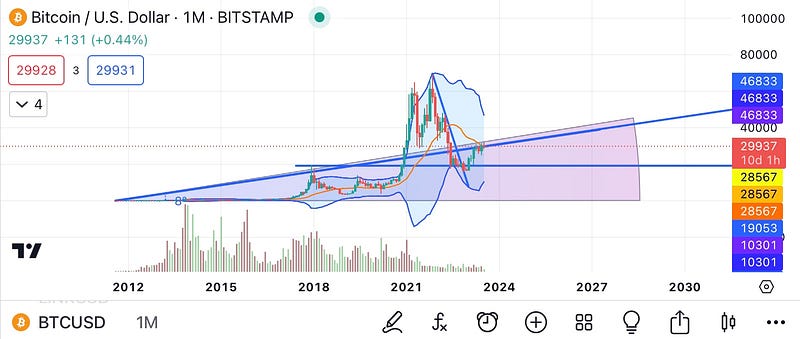
To fully grasp Bitcoin’s magnitude, we need to dissect the elements that define its market standing. The price of Bitcoin is the cost of purchasing a single unit, currently valued at $29,970.38. Bitcoin’s market capitalization, however, is a product of the total number of Bitcoins in circulation and the current price per Bitcoin, which as of recent data stands at a whopping $582,522,576,006.39.
Market capitalization gives a clearer picture of Bitcoin’s total value in the market. Even with price fluctuations, Bitcoin’s market cap has seen an overall rise of 80.77% this year alone, attesting to its increasing popularity and widespread adoption.
Bitcoin operates on a protocol called Proof of Work (PoW). Miners validate transactions and add new blocks to the blockchain by solving complex mathematical problems. This process requires significant computational resources, making it secure but energy-intensive.
Nodes in the Bitcoin network are integral in maintaining its decentralization. They store a copy of the entire blockchain and validate all transactions, ensuring transparency and security.


Bitcoin’s journey has been remarkable, from its humble beginnings in 2013 to reaching an unprecedented market cap of over 1,000 billion USD in April 2021. Despite minor setbacks, the cryptocurrency continues to assert its dominance. While Bitcoin’s market cap grew exponentially, public awareness of its existence has been a slow-burning flame. Today, millions of people know about Bitcoin, yet its physical presence remains sparse, evidenced by the modest 6,674 Bitcoin ATMs across the globe. Bitcoin’s unique feature is its decentralization, which ensures that no single entity controls the network. Furthermore, Bitcoin is highly transparent with easy account setup, making it a compelling choice for many.

Bitcoin can be used for a myriad of purposes, from purchasing goods and services to investment and even as a hedge against inflation. There are numerous platforms available for buying, selling, and storing Bitcoins. It’s also possible to use Bitcoin ATMs or engage in peer-to-peer transactions.

Bitcoin first stepped into the limelight in 2009, thanks to an individual or group known by the pseudonym, ‘Satoshi Nakamoto’. Satoshi, who remains a mystery to date, introduced Bitcoin as a solution to the double-spending problem in the digital world.
Double spending is a potential flaw in a digital currency system where the same single digital token can be spent more than once. This is possible because a digital token consists of a digital file that can be duplicated or falsely produced. Satoshi’s invention of the Bitcoin network effectively solved this problem by introducing the blockchain technology where every transaction is transparent and has to be confirmed by the majority of nodes.
Blockchain, the technology underpinning Bitcoin, is a kind of distributed ledger where transactions are recorded in ‘blocks.’ Each block is connected to the ones before and after it, creating an unalterable chain of records. Due to its decentralized nature, the data recorded on a blockchain is transparent and nearly impossible to change.
Bitcoin’s blockchain operates on a peer-to-peer (P2P) network model. In this model, each participant (peer) has equal rights and can perform any function that the other can. Here, there is no central authority, and every participant stores a copy of the entire blockchain. As a result, the system is extremely robust and immune to censorship.
Looking into the code, Bitcoin operates on a protocol using the SHA-256 algorithm for its proof-of-work system. This algorithm transforms transaction data into a fixed size string of characters. In simple terms, it’s like taking a secret recipe and distilling it down to a simple, unchangeable code that everyone can see, but no one can alter or reverse-engineer. The function of the SHA-256 algorithm within the Bitcoin protocol is to secure transactions and keep the miners honest. Each miner competes to solve a tough problem based on a specific data set. The solution is straightforward to check, but challenging to solve, keeping the process fair.
Bitcoin wallets serve as the user interface to the Bitcoin network. They allow users to make transactions, view their balances, and essentially interact with the Bitcoin ecosystem. These wallets come in various forms: software-based (that can be installed on computers or smartphones), hardware wallets (physical devices that store Bitcoins offline), and even paper wallets (where Bitcoin keys are printed on paper).
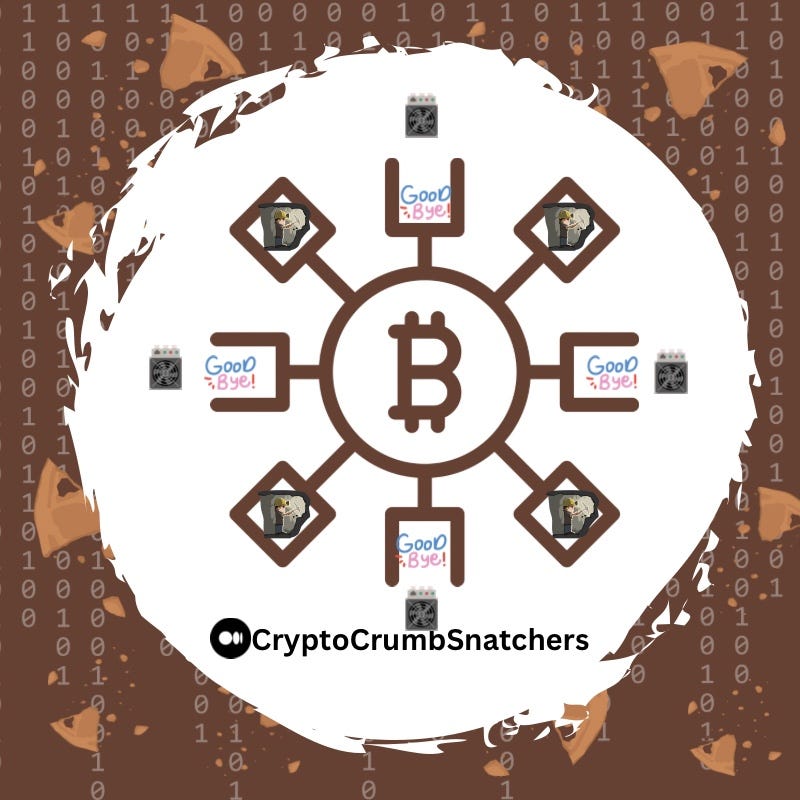
When it comes to transaction handling, Bitcoin presents a unique way compared to traditional currencies. The Bitcoin network follows a UTXO (Unspent Transaction Output) model. UTXO represents a line item on the blockchain, a product of a transaction output that has not been spent.
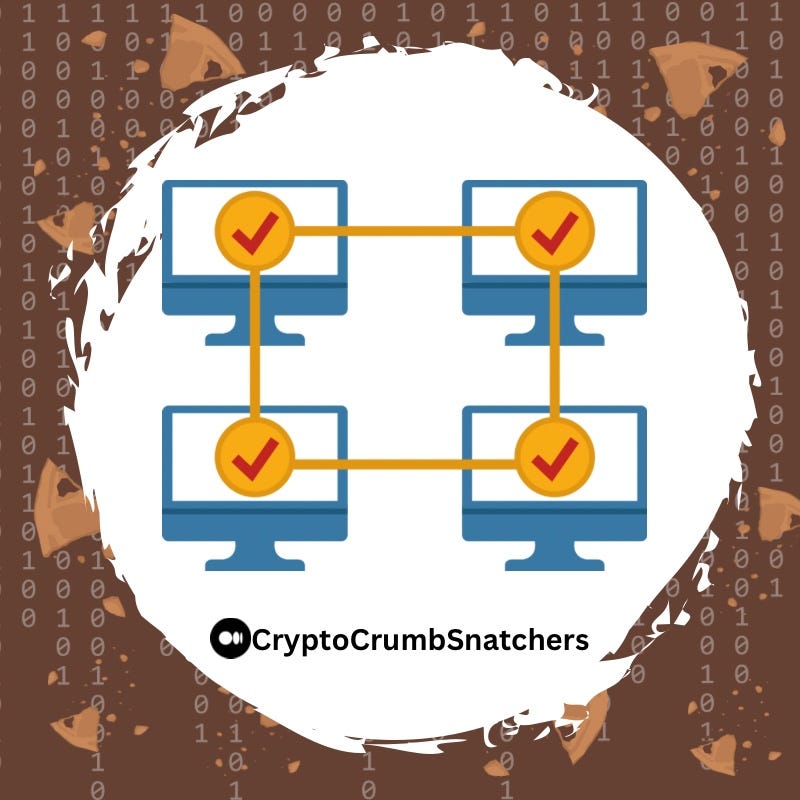
Every Bitcoin transaction takes a number of these UTXOs as inputs, effectively ‘spending’ them, and generates new UTXOs as outputs. The amount in each of these new UTXOs is then available to be spent in future transactions.
Bitcoin miners perform an essential role in the network by adding new transactions to the blockchain. They use powerful computers to solve complex mathematical problems that validate each transaction. Once they solve the problem, they add the transaction block to the blockchain, a process known as ‘finding a block.’
The Bitcoin network adjusts the difficulty of these problems to ensure that a block is added approximately every 10 minutes. This maintains the stability of the network and the controlled issuance of new Bitcoins.
Forking, in the context of blockchain technology, refers to the process of creating a new blockchain by diverging from the original. A fork can be either a ‘hard fork’ or a ‘soft fork,’ each with different implications.
A ‘hard fork’ involves changes to the blockchain protocol that render older versions invalid. If nodes continue running the older version, a new, separate blockchain is created. A ‘soft fork,’ on the other hand, introduces changes that are backward-compatible. Older nodes can still validate transactions, but new features won’t be available to them.
Forking plays a significant role in the development and evolution of Bitcoin, as it allows for the integration of new features, improvements to existing ones, or changes in the underlying protocol based on the community’s consensus.
Let’s look into three notable forks in Bitcoin’s history to better understand their impact:
Bitcoin Cash emerged from a contentious hard fork of Bitcoin in August 2017. The primary reason for the split was a disagreement within the Bitcoin community over how to handle the scalability issue. Bitcoin Cash proponents believed increasing the block size limit from Bitcoin’s 1MB to 8MB (and eventually 32MB) would allow for faster transaction times and lower fees, catering to the original vision of Bitcoin as a transactional currency.
Bitcoin Cash is evidence of how forks can be used to implement significant changes in the functionality of a cryptocurrency.
Another hard fork in October 2017 gave birth to Bitcoin Gold. The BTG community intended to re-democratize Bitcoin mining by changing the hashing algorithm from SHA-256 (dominated by specialized ASIC hardware) to Equihash, which can be mined using general-purpose GPUs. This change aimed to prevent the centralization of mining power and keep Bitcoin accessible to hobbyist miners.
Bitcoin Gold highlights the role of forks in shaping the philosophical and ideological aspects of Bitcoin, such as decentralization and accessibility.
Unlike the previous examples, SegWit was implemented as a soft fork in August 2017. SegWit altered how data was stored in Bitcoin blocks by separating (or ‘segregating’) transaction signatures (‘witnesses’) from transaction data. This change effectively increased Bitcoin’s block capacity and decreased transaction fees, mitigating Bitcoin’s scalability issues without the need for a block size increase.
SegWit demonstrates that forks aren’t always contentious or divisive — they can also introduce key improvements while maintaining backward compatibility with older versions.
Each of these forks in Bitcoin’s history have allowed it to evolve and adapt, addressing issues and integrating improvements. They illustrate the flexibility and adaptability of blockchain technology and demonstrate how cryptocurrency communities can influence the direction of their chosen coin’s development.
Bitcoin’s journey from a programmer’s whim to a globally recognized asset class has been extraordinary. It has inspired countless other digital currencies and blockchain projects. With its robust underlying technology and unmatched network security, Bitcoin shows promise to grow as a reliable store of value and a medium of exchange.
However, Bitcoin’s future is not without challenges. Issues like scalability, energy consumption, and regulatory complexities can hamper its growth. The Lightning Network and other Layer 2 solutions are in the works to address some of these problems.
As for regulation, it’s a double-edged sword. While it can lend more credibility and widespread acceptance to Bitcoin, excessive regulation could stifle innovation. What’s undeniable is that Bitcoin has sparked a financial revolution that cannot be ignored.
For the non-techy audience, this is analogous to a treasure hunt where everyone has the same map, but only the fastest and most efficient miner gets the treasure. This incentive is what fuels the entire system. As Bitcoin’s popularity rises, the questions around its use cases follow suit. Is it a currency, an asset, or something more? Well, it’s a bit of everything, to be honest. Bitcoin, as a currency, allows for transactions devoid of borders and banking institutions. It’s a dream come true for those tired of sluggish international wire transfers and exorbitant fees. As an asset, it’s an investment vehicle with immense potential. Sure, it’s a volatile ride, but no high-reward venture ever comes without risks. Just ask those who bought Bitcoin in its early days; they’ll tell you about waking up in a different tax bracket. Bitcoin can even be a tool of change, offering financial services to those in regions underserved by traditional banks. Think of farmers in remote parts of the world, accessing loans, or making transactions. All they’d need is a smartphone and internet connection.
In a summary, Bitcoin is more than a digital currency or investment asset; it’s a social, economic, and financial phenomenon, disrupting traditional norms and inviting us to rethink what money can be. Suffice it to say, we stand on the forefront of a financial revolution, where Bitcoin and its brethren are scripting the future. As a part of this narrative, it’s crucial to stay informed, stay ahead, and be ready to adapt. By understanding Bitcoin, we get a front-row seat in this unfolding era of digital finance.
Bitcoin | Ethereum | Ripple (XRP) | Litecoin | Dogecoin
Discord | Reddit | Telegram | Twitter
Welcome to Crypto Crumb Snatchers Lab, your new home base for everything Cryptocurrency Mining. We’re excited to introduce you to our warm and knowledgeable community that’s ready to navigate the crypto cosmos together.