
Birthday Madeleines
Dedicated to Krasi Shapkarova, who may start baking one of these days
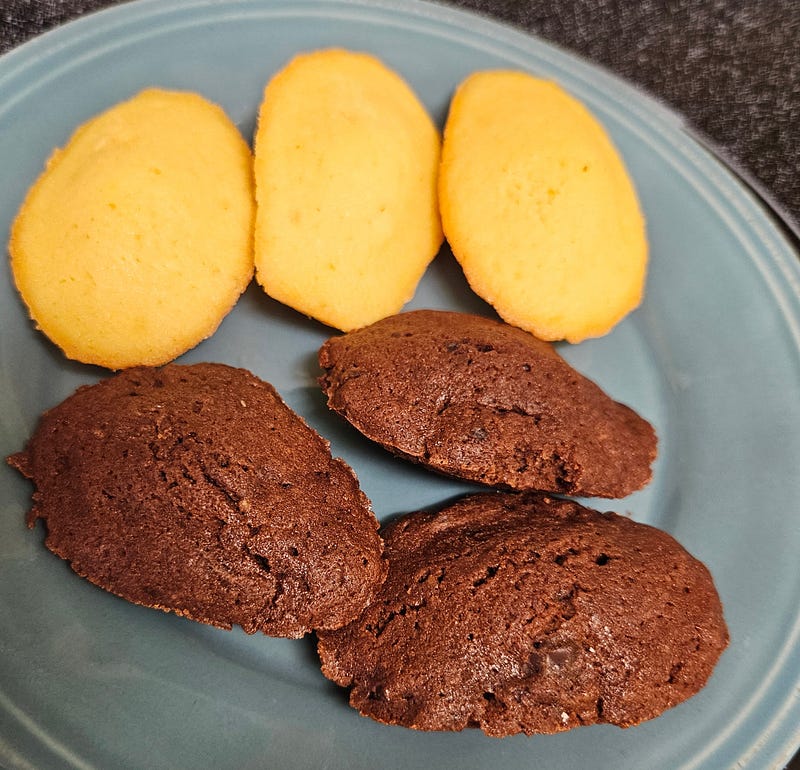
Some liberal friends and I have a monthly gathering. We discuss politics, women’s rights, and social justice while sharing finger foods and desserts that we prepared. For our February 2023 meeting, I baked Madeleines for the first time. My friend Gina raved about them. Since her birthday was the following week, I made another batch of Madeleines for her birthday present. She was elated!
Once again, it’s February and her birthday, so I baked Madeleines — enough for her and for us.
Now, let’s talk about Madeleines. What are they?
Although Madeleines are often grouped with cookies, they are small, buttery sponge cakes originally from the Lorraine region of France. Traditionally, they are baked in special pans like mine below:
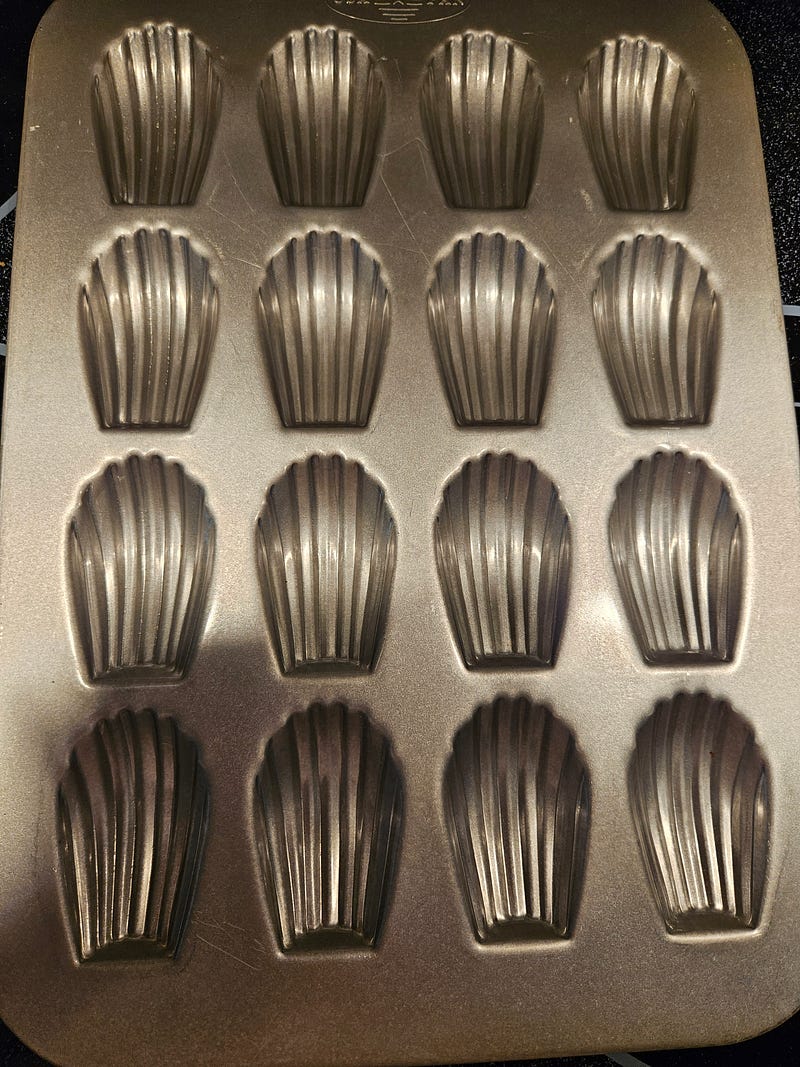
But I’ll show you how to bake these little cakes without spending money on a pan. However, I highly recommend purchasing one if you like Madeleines and think you might bake them often.
I also recommend investing in a kitchen scale if you’ll be baking regularly.
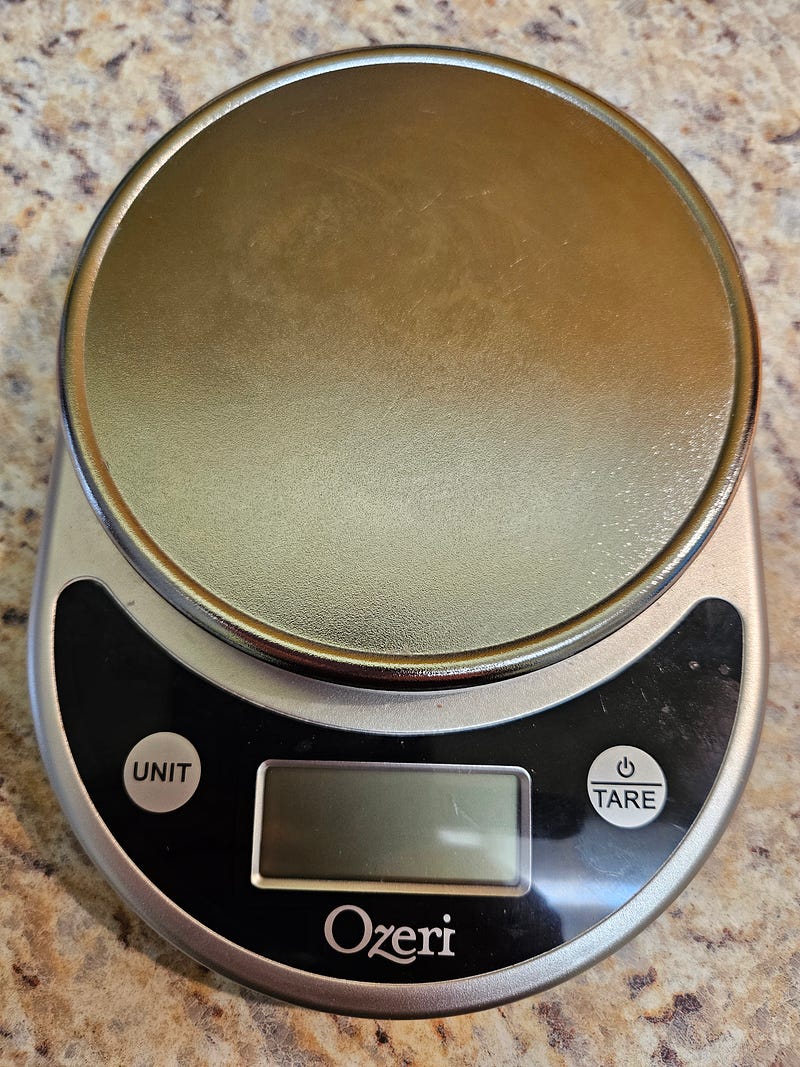
This scale is $10 on Amazon and worth every penny. Using a scale ensures correct measurements.
Sometimes, new bakers fear any French recipe, and I get that. Many, if not most, French baking recipes are complicated and time-consuming. But I guarantee that is NOT the case with Medeleines.
I also recommend the practice of mis en place to prepare for baking. Mis en place is French for “put in place” — in other words, get everything you need ready and in place before you start baking. That includes ingredients, utensils, and equipment.
So, let’s get baking! My favorite Madeleine recipe is from Sally’s Baking Addiction:
Traditional Madeleines
Ingredients:
.5 cup (1 stick or 115 g) unsalted butter — preferably European butter, which has a higher fat content than American. I used Kerrygold Pure Irish Butter for this recipe, but I also like Plugra Premium European Style Butter. My grocery stocks both.
2 tablespoons of melted butter for the pan
2 large eggs at room temperature (Unless a recipe says otherwise, always use room-temp eggs)
.5 cup (100 g) granulated sugar
2 teaspoons lemon zest (see my note below)
1 teaspoon pure vanilla extract
1 cup (115 g) sifted all-purpose flour
1/2 teaspoon baking powder
1/8 teaspoon salt
Optional: 1/4 cup confectioners’ sugar (powdered sugar/icing sugar)
If you don’t have a Madeleine pan, 12 cupcake liners
Note: I don’t buy lemons to have on hand for zesting. Too often, I use the zest, and the rest of the lemon goes bad before I can use it, and lemons are too darn expensive to throw away! So, I substitute Organic Lemon Emulsion from King Arthur ($14.95) for lemon zest. In this recipe, I used one teaspoon of Lemon Emulsion. You can also use it as a substitute for lemon extract. It lasts a long time and is cheaper than buying and throwing away lemons.
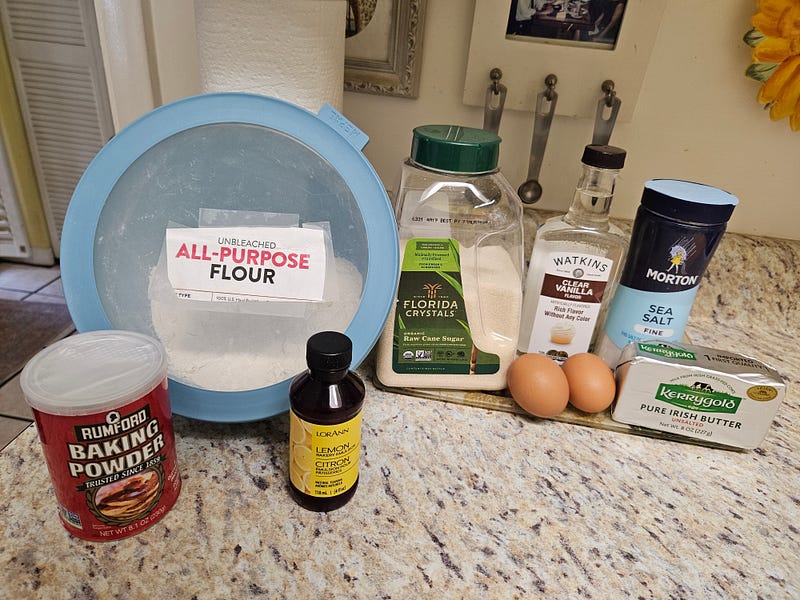
Above is the photo of all the ingredients I used for the Traditional Madeleines.
Instructions:
Melt the .5 cup (1 stick or 115 g) unsalted butter in a microwave-safe bowl.
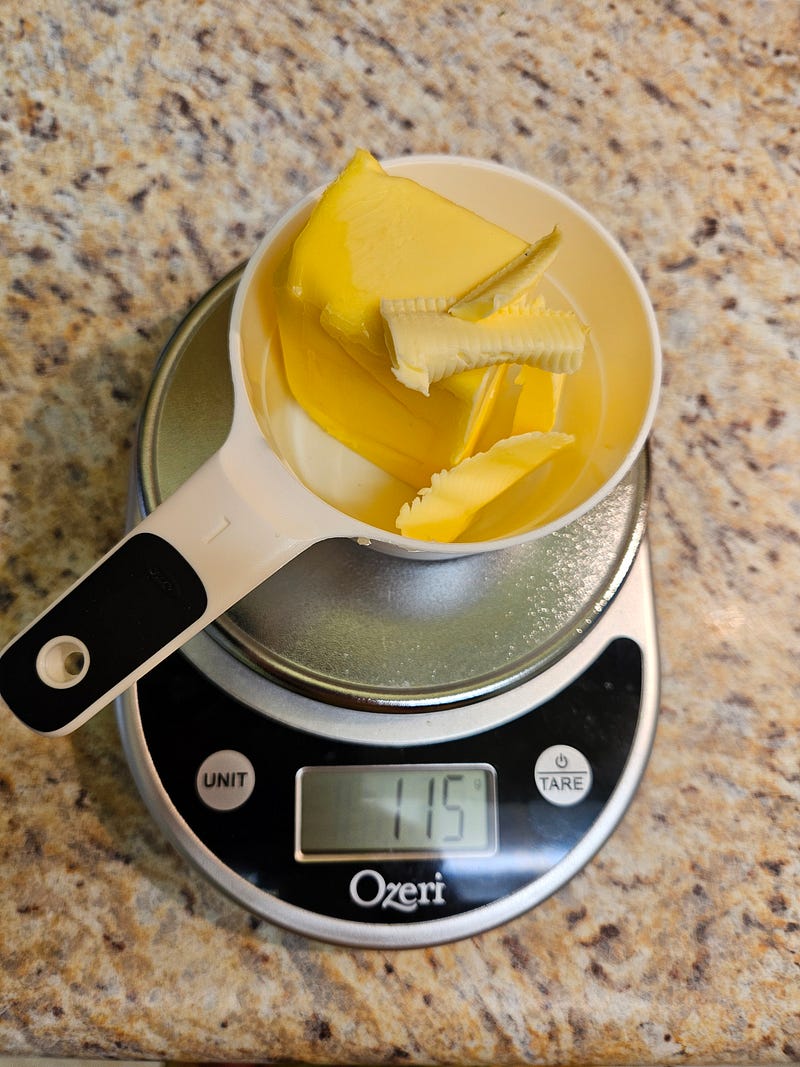
The melting took one minute in my microwave. You can also melt the butter on your stove.
Take the melted butter out of the microwave or stove and place it somewhere out of the way where it can cool undisturbed.
Next, you will whip the eggs and sugar together. Although you can accomplish that with a handheld mixer, your arms will be very tired. I highly recommend using a stand mixer. I use a Cuisinart SM-5OR 5.5 Quart Stand Mixer I purchased on sale from Amazon three years ago.
Using your handheld mix or a stand mixer with a paddle attachment, put the two eggs and sugar in the bowl and beat on high for at least 8 minutes. Stop twice to scrape down the bowl and stir any sugar that has settled on the bottom of the bowl.
Your mixture should be pale, and ribbons should form when you lift the beaters.
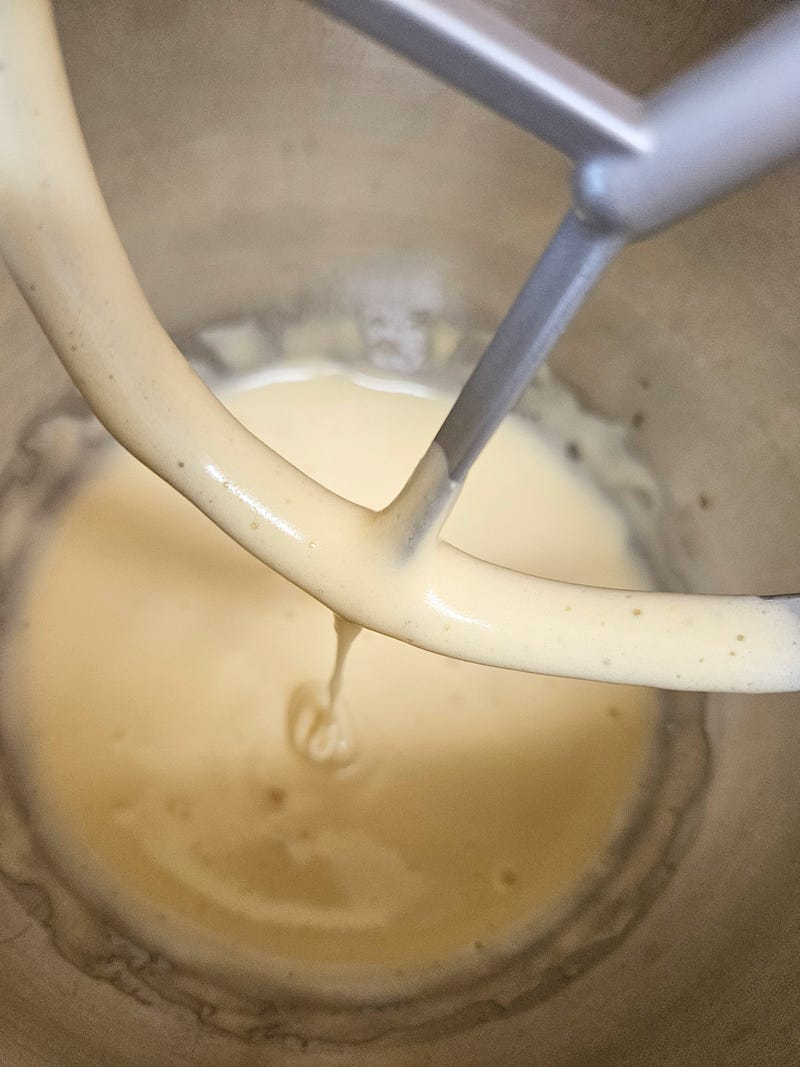
Beat in your lemon zest (or emulsion) and vanilla extract. You won’t need your stand or handheld mixer anymore.
Whisk the sifted flour, baking powder, and salt in a separate bowl. Break apart any baking powder lumps with your fingers.
Using a spatula or wooden spoon, fold 1/2 of the flour mixture into the egg and sugar mixture. Then add the remaining flour mixture and fold until all the flour is incorporated. Here is a video demonstrating the folding technique:
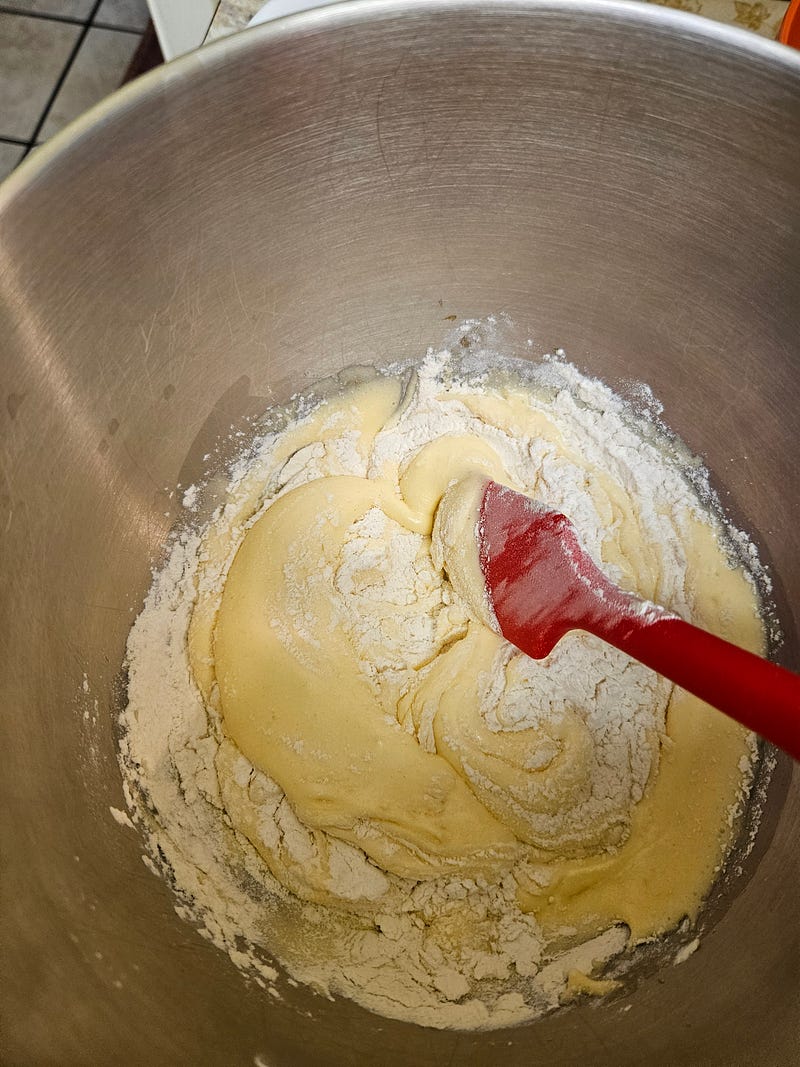
I differ from Sally in the next step. Her recipe says to stir 1/4 of the batter into the melted butter, which doesn’t make sense to me since the melted butter is in a much smaller container. So, I gently fold 1/2 of the butter into the batter until it’s mostly incorporated, and then add the rest. Again, fold slowly and gently so you don’t lose the air that’s in the batter.
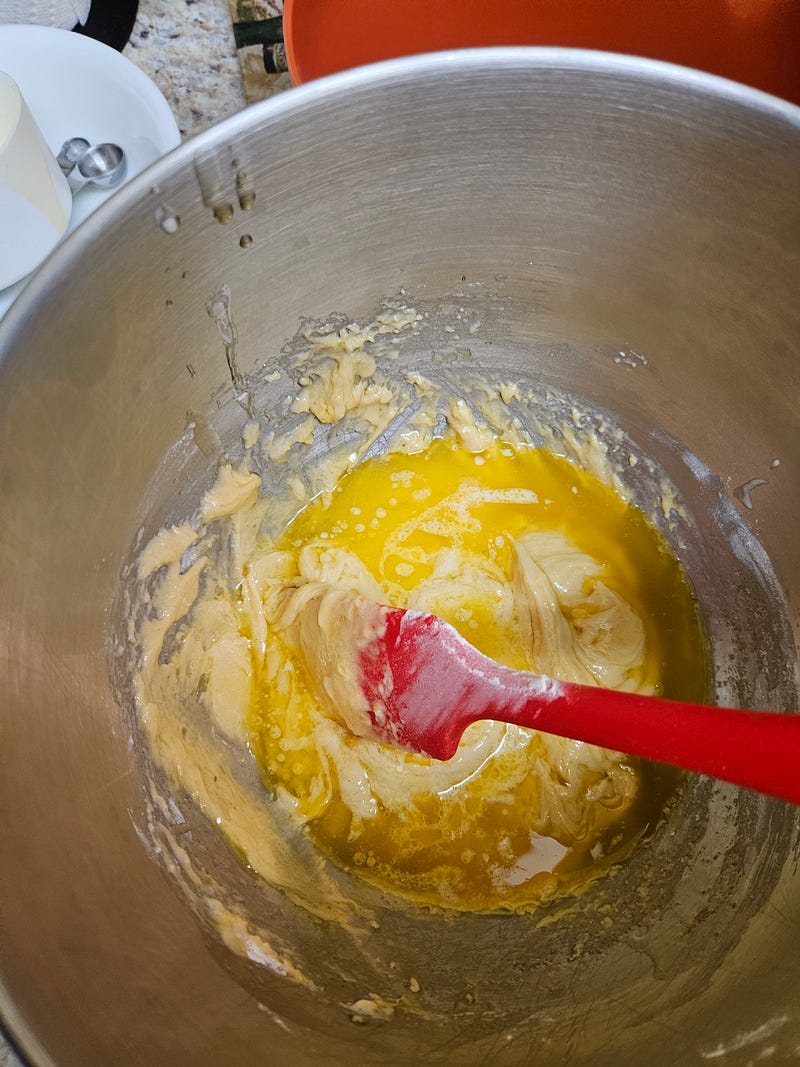
I have prepared this recipe both ways — adding the batter to the butter and adding the butter to the batter — and I saw no difference in the resulting batter, which in both cases was “thick, silky, and shiny,” as Sally says.
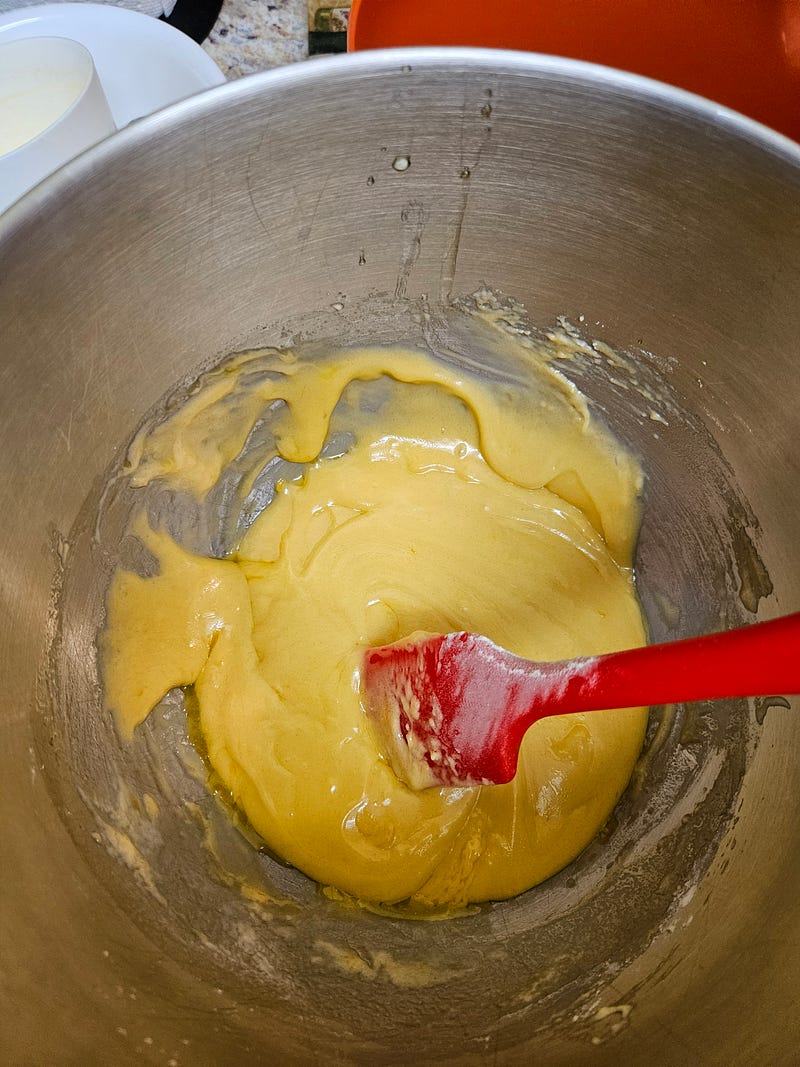
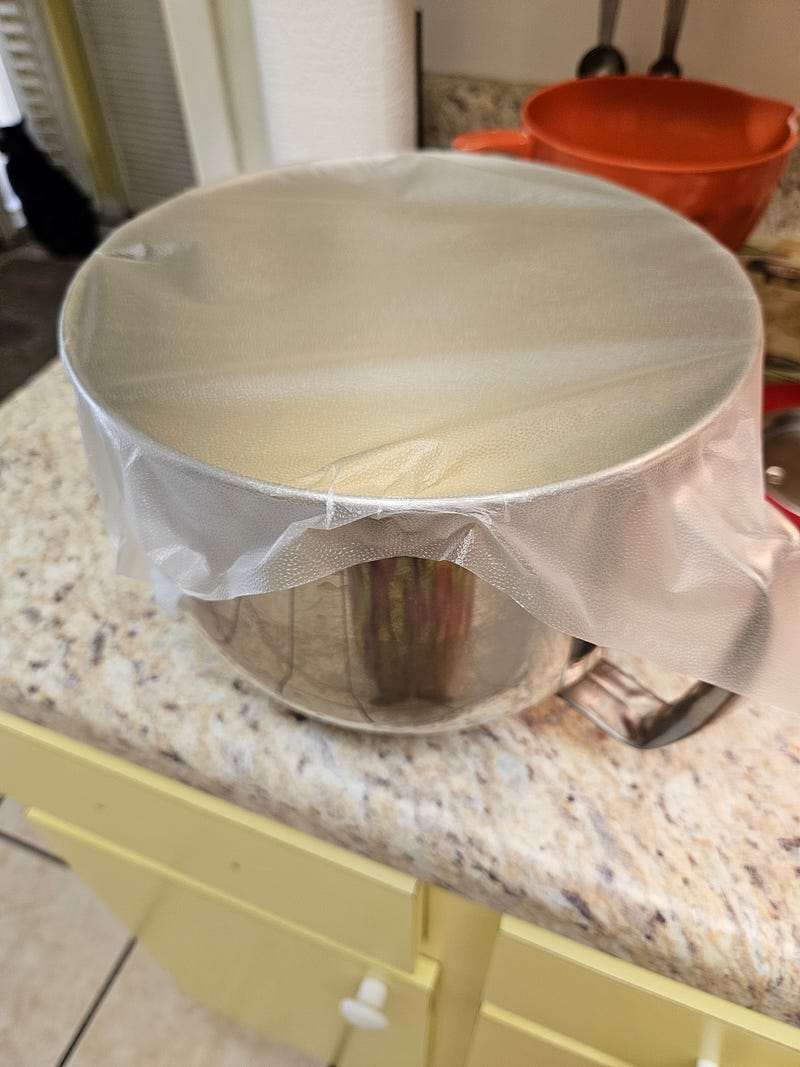
Cover your batter bowl with wrap and refrigerate for at least 30 minutes and no longer than 60 minutes. You don’t want the butter to start to solidify.
During the last 10 minutes of the refrigeration time, preheat your oven to 350F (177C). Melt the 2 tablespoons of butter and use it to coat your Madeleine pan with a pastry brush or a paper towel.
If you don’t have a Madeleine pan, turn 12 cupcake liners inside out to resemble canoes and place them on a cookie sheet. Brush each with a small amount of melted butter while maintaining the canoe shape.
Your cold batter will be very spongey. Do not stir it. Using a tablespoon, put a dollop of batter in the middle of each shell in the Madeleine pan or the middle of the canoe-shaped cupcake liners.
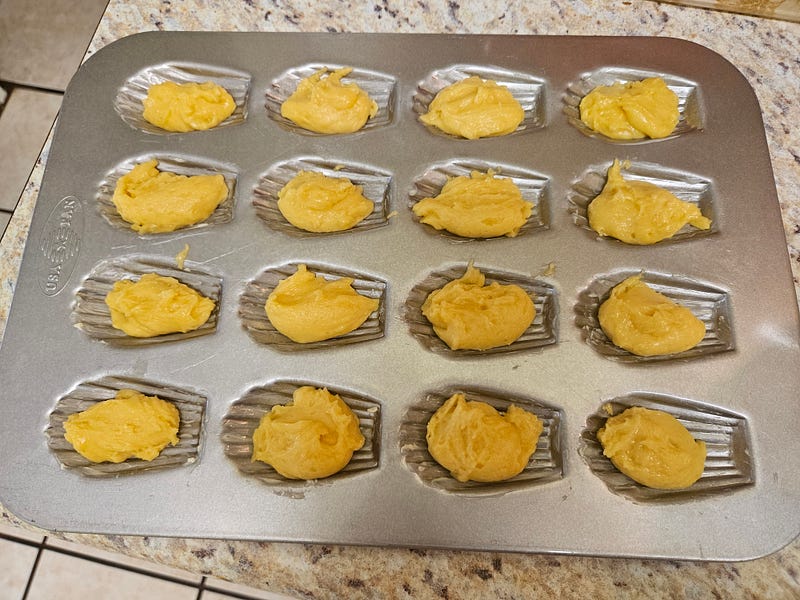
Do not spread out the batter. The more you handle it, the more likely the batter will lose the air that makes it light and spongey. The batter will spread while baking.
If you have batter left, refrigerate it as your first batch bakes.
Bake for 10 to 12 minutes. Mine took 11 minutes. You know they're done when the Madeleines feel spongey and spring back when touched. They should be golden brown, with the edges slightly darker than the tops.
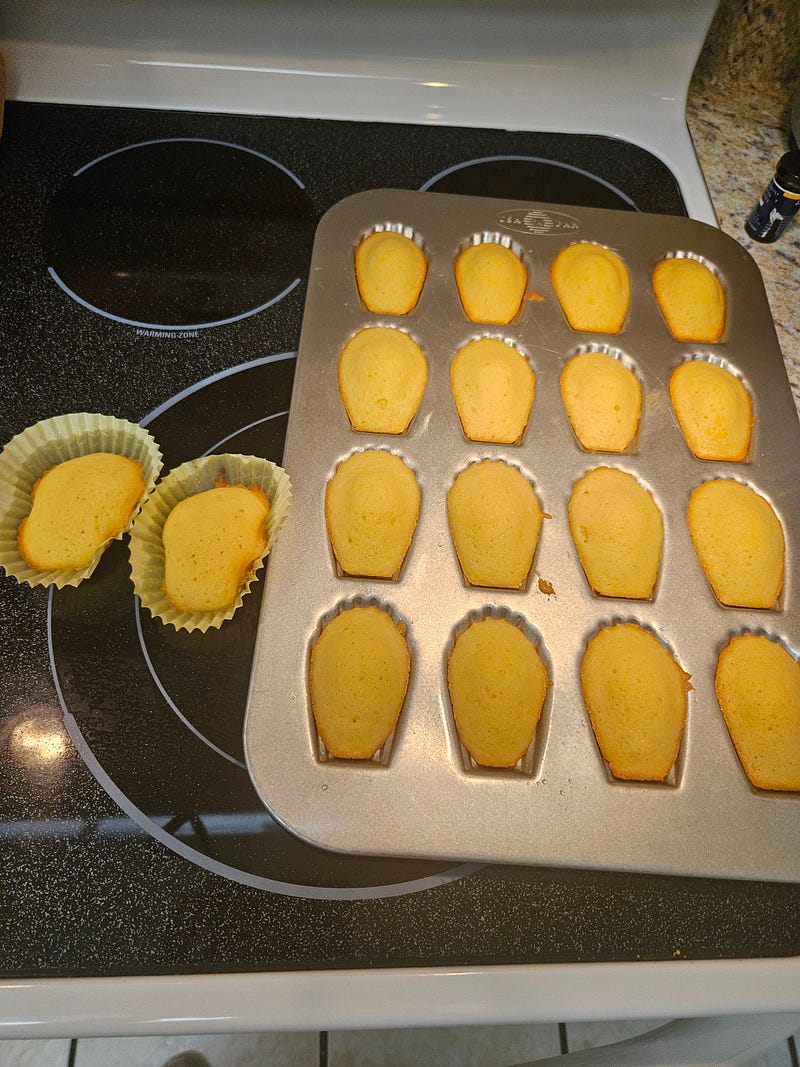
I baked two in cupcake liners to show you how they should look.
I always let my Madeleines cool in the pan for 5 minutes before transferring them to a cooling rack or plate. To remove the Madeleines, you can invert the pan or gently lift them out with a knife.
You can dust the Madeleines with confectioners’ sugar (powdered sugar/icing sugar) before serving.
I also made a batch of chocolate Madeleines. The recipes I found online called for 6 egg whites. As with lemons, I don’t like to use egg whites from eggs because I end up throwing out the yolks. I prefer to buy egg whites in a carton. Since I didn’t have a carton of egg whites, I followed the recipe above and substituted 1/4 cup of Dutch-processed cocoa powder for 1/4 cup of the flour and stirred 1/3 cup of chopped dark chocolate into the batter. The resulting Madeleines were denser than the lemon ones but tasted very good.
Although Sally recommends eating Madeleines right after baking, I store mine in the refrigerator in a storage container for up to three days. Yes, they lose a bit of their airy texture, but they’re still very tasty, especially when dunked in a cup of coffee or tea.
Madeleines are easy and fun to make and they taste delicious!
© Dennett 2024