avatarDeborah Barchi

Free AI web copilot to create summaries, insights and extended knowledge, download it at here

2097

Abstract

their own memory prompts. For example, many people hear in the American goldfinch’s call the phrase <a href="https://www.audubon.org/sites/default/files/AMEGOL_8.per-tee-tee-teeflightcalls_NYle_1.mp3?uuid=5ec03fda0955a">“potato chip, potato chip, potato chip</a>.” But to me it always sounds as if the goldfinch is saying “persnickety, persnickety, persnickety”.</p><p id="c728">Well, whatever works, right? And frankly, the goldfinch could care less what we think he sounds like!</p><p id="0980"><b>When wild birds sing they are not trying to communicate with us, their human admirers. Instead, with their songs and calls, birds are telling their avian neighbors things like “I am here! This is MY territory! Stay away! Unless you are a desirable female. In that case, come closer!</b></p><p id="9aaf">Yet even though we are not their intended audience, most people enjoy listening to birds. And bird watchers, t<i>hose half-crazed but basically harmless enthusiasts </i>who devote a huge portion of their lives looking at, listening to, and learning about birds, often use the distinctive songs and calls of birds to help identify them.</p><p id="69b3">With hundreds of different birds to be found in nearby woods, fields, parks, and neighborhoods, it really helps to learn some of the most common bird songs. For one thing, even though many birds are very beautiful and colorful, it can be extremely difficult to spot them high in a tree or hidden in a bush, even with binoculars.</p><p id="a8b3">When you hear a bird singing nearby, the song helps you to get a better idea of the bird’s location. More importantly, if you have studied and learned a variety of bird songs and calls, you can figure out which species is singing, even if you never get much of a look at the singer.</p><p id="b946">What’s the best way to learn bird songs? Well, the very best way is to be out looking for birds and to have the good luck to spot a bird as it is singing.</p><p id="ccf8"><a href="https://www.allaboutbirds.org/guide/Carolina_Wren/sounds"><b>Seeing that little feathered creature with its head tippe

Options

d back, belting out a lusty song for all it’s worth </b></a><b>will definitely imprint the bird and its song in your head for a long time.</b></p><figure id="7dfb"><img src="https://cdn-images-1.readmedium.com/v2/resize:fit:800/0*_JFYw5oIRc0c8GIh"><figcaption>Photo by <a href="https://unsplash.com/@ryk?utm_source=medium&amp;utm_medium=referral">Ryk Naves</a> on <a href="https://unsplash.com?utm_source=medium&amp;utm_medium=referral">Unsplash</a></figcaption></figure><p id="cb32">Short of that happy encounter, we are lucky to have access to recordings available online or through apps and also on the Internet or Facebook that identify birds and give samples of their songs and calls.</p><p id="8765">There are many birding apps available for smart phones. The one I use the most is The Audubon Bird Guide, available through the App Store on my phone. If you search for apps, put in key words like bird songs or bird sounds or bird identification to find some good choices.</p><p id="5933">When I am birding I have my cell phone with me and use the Audubon app to help me identify the birds I see. I will also take a few moments to listen to the recorded songs to help me feel more confident about identifying the bird.</p><p id="0da9">A word of caution, though. Although it is tempting to try to lure birds out of their safe places by repeatedly playing recorded bird songs on your phone, it is considered very poor behavior when birding. Hearing their songs on a recording can distress wild birds who will assume that there is a rival or even a predator in their territory.</p><p id="7602"><b>We need to always remember that birds, like all wild creatures, live their lives on the edge of survival. Every day they must work with every ounce of their energy to find food, raise their young, and stay away from endless dangers.</b></p><p id="4b99">Bird song is a precious gift we all can enjoy, while honoring and protecting the countless birds who create the songs.</p><p id="33f3" type="7">I believe that bird song is the soul of the earth, set to music we all can hear.</p></article></body>

Bird Song Is the Soul of the Earth

Set to music we all can hear
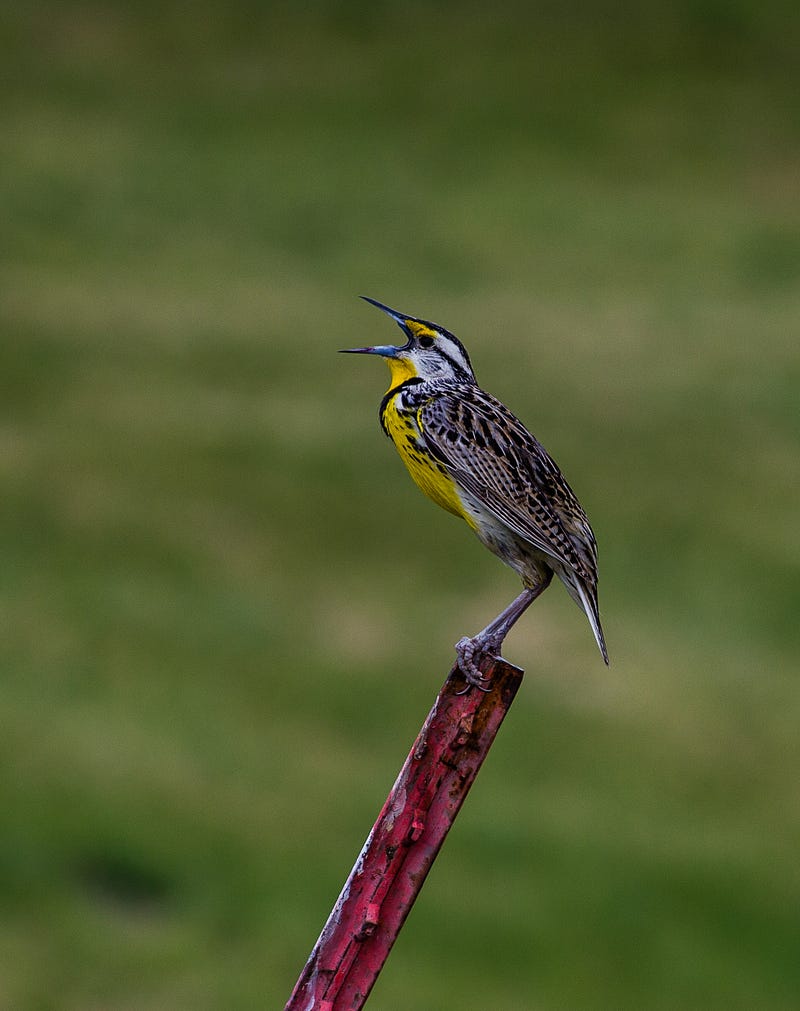
Photo by Jeffrey Hamilton on Unsplash

Spring of the Earth

Trees, trees, murmuring trees

Cheerily, cheerily, cheerily, cheer

Oh Sweet Canada, Canada, Canada!”

Are these lines of poetry?

Coded messages from an evocative dream?

Lyrics from a beloved children’s lullaby?

The answer is: none of the above. Yet these “words”, sung by the Eastern meadowlark, Black-throated Green warbler, American robin, and White-throated sparrow, respectively, do seem to evoke a poetic, lyrical, almost dreamlike state. Especially when we hear them outdoors on a warm, cloudless day.

Of course, we need to use our imagination to actually hear these words and phrases in bird song. That is why many birders use mnemonic devises to help keep the songs better fixed in their memories.

Because all people are different, one person will hear one thing and another person something else, as they come up with their own memory prompts. For example, many people hear in the American goldfinch’s call the phrase “potato chip, potato chip, potato chip.” But to me it always sounds as if the goldfinch is saying “persnickety, persnickety, persnickety”.

Well, whatever works, right? And frankly, the goldfinch could care less what we think he sounds like!

When wild birds sing they are not trying to communicate with us, their human admirers. Instead, with their songs and calls, birds are telling their avian neighbors things like “I am here! This is MY territory! Stay away! Unless you are a desirable female. In that case, come closer!

Yet even though we are not their intended audience, most people enjoy listening to birds. And bird watchers, those half-crazed but basically harmless enthusiasts who devote a huge portion of their lives looking at, listening to, and learning about birds, often use the distinctive songs and calls of birds to help identify them.

With hundreds of different birds to be found in nearby woods, fields, parks, and neighborhoods, it really helps to learn some of the most common bird songs. For one thing, even though many birds are very beautiful and colorful, it can be extremely difficult to spot them high in a tree or hidden in a bush, even with binoculars.

When you hear a bird singing nearby, the song helps you to get a better idea of the bird’s location. More importantly, if you have studied and learned a variety of bird songs and calls, you can figure out which species is singing, even if you never get much of a look at the singer.

What’s the best way to learn bird songs? Well, the very best way is to be out looking for birds and to have the good luck to spot a bird as it is singing.

Seeing that little feathered creature with its head tipped back, belting out a lusty song for all it’s worth will definitely imprint the bird and its song in your head for a long time.
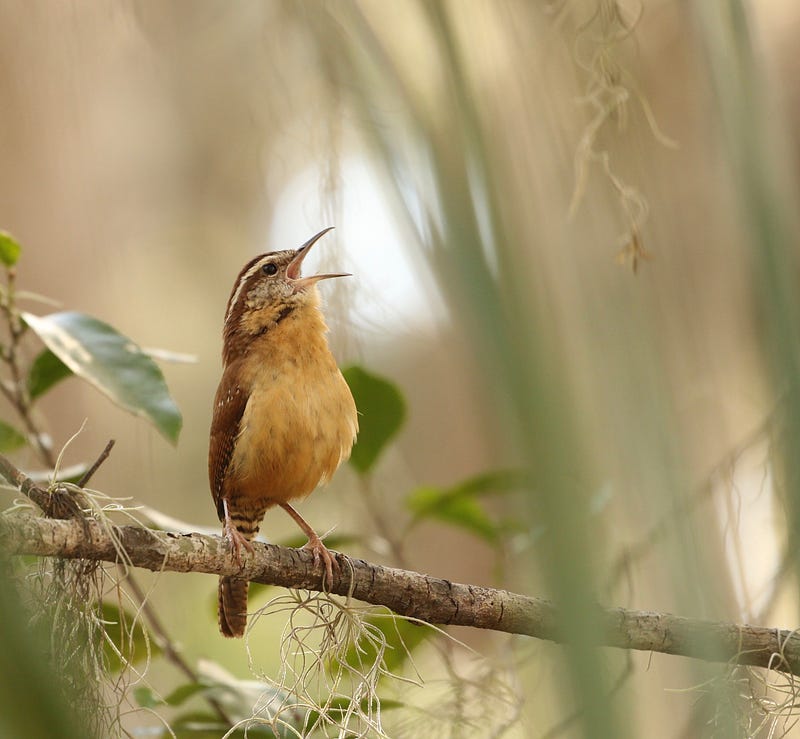
Photo by Ryk Naves on Unsplash

Short of that happy encounter, we are lucky to have access to recordings available online or through apps and also on the Internet or Facebook that identify birds and give samples of their songs and calls.

There are many birding apps available for smart phones. The one I use the most is The Audubon Bird Guide, available through the App Store on my phone. If you search for apps, put in key words like bird songs or bird sounds or bird identification to find some good choices.

When I am birding I have my cell phone with me and use the Audubon app to help me identify the birds I see. I will also take a few moments to listen to the recorded songs to help me feel more confident about identifying the bird.

A word of caution, though. Although it is tempting to try to lure birds out of their safe places by repeatedly playing recorded bird songs on your phone, it is considered very poor behavior when birding. Hearing their songs on a recording can distress wild birds who will assume that there is a rival or even a predator in their territory.

We need to always remember that birds, like all wild creatures, live their lives on the edge of survival. Every day they must work with every ounce of their energy to find food, raise their young, and stay away from endless dangers.

Bird song is a precious gift we all can enjoy, while honoring and protecting the countless birds who create the songs.

I believe that bird song is the soul of the earth, set to music we all can hear.

Nature
Birds
Environment
Mindfulness
Self Improvement
Recommended from ReadMedium