Biohackers Retreats, Summer 2020
No, it is not what you are thinking
Before I delve into retreats, let’s clarify a couple of things, again… and again.
The word “hacking” has been overly abused in the last year, as it makes “cool” the topic we are talking about. People don’t say “strategy marketing”, they say “grow hack”, as if they can get the rebel mindset of software programmers breaching security doors into their marketing campaign. The same has been for the word “biohacking”. According to Biohack.me, “Biohackers/Grinders are passionate individuals who believe the tools and knowledge of science belong to everyone”, and this is more or less in-line with the computer security community of software hackers who fight for democracy. Moreover, talking about “bio”, biohackers also refers to experimentation (as by gene editing or the use of drugs or implants) improving the qualities or capabilities of living organisms especially by individuals and groups working outside a traditional medical or scientific research environment. That’s where it got wrong. Anyone eating a vitamin supplement is advertising him/herself as a “biohacker”. Or sometimes narcissistic approaches of transhumanism take over which is maybe even worse.
(Bio)hackers retreats or summercamps are events (most often family friendly) where (bio)hacking happens. I will summarize some of them happened in this COVIDSummer, but before I want to re-iterate about what is NOT biohacking for me and extremists. Again, and again… yes, unfortunately it is needed.
What is NOT biohacking for me
Depending which reliable or not not source you explore, biohacking can include anything from increasing blood flow (just eating some ginkgo biloba), to fasting intermittently and drinking “salt juice” each morning, to putting an NFC device into your arm. Most of these techniques are based on nutritional science evidence though they are sensationalized and speculated as if they can really change your life. Sometimes, they are total lies and waste of money/time, and you should always investigate the evidences. You can find in each city meetups and retreats about people claiming to cleanse you, or empowering you, or whatever without a minimal scientific basis. If you are interested in this kind of stuff, you can leave this page. We are more or less the same, we can improve ourself with a bit of fasting, sleeping more, eating less processed food, eating this fruit or mushroom, etc. But once we have removed all damaging habits (smoking, sleep deprivation…), the improvements are minimal, you can’t “hack” seriously yourself, anything sensationalized is probably a scam or fad. Or at least I am not going to talk about this here, talk to your nutritionist, and about certain practices of transhumanism (as inserting an NFC device into your am), I have serious difficulties seeing the advantage.
On the other extreme, probably you’ve read about former NASA researcher Josiah Zayner injecting himself with DNA using the gene-editing technology CRISPR. Or the more recent do-it-yourself insulin and COVID-19 vaccines. Those people are already on another level compared to the speculative people I mentioned earlier. These are scientists (PhD graduated, Professors…), which however act beyond regulations and laws, often outside their original or previous research institutes or universities. What they do generally follow the scientific method and scientific approaches. However, acting regardless regulations and laws make things dangerous and possibly leading to incontrollable results. Those people want to bring science from institutional walls or pharmaceutical companies to everybody, and they are willing to break laws and to introduce dangerous knowledge as inevitable side effects. Before demonizing this, I remind that the very first survey on DIY Biology suggested these fears are largely unfounded. According to the results, 92% of DIY biologists work mostly in communal spaces rather than in their garages or basements, and follow standard policies of security, so do not fear modern Dr. Frankenstein next door. Again, if you are looking for sensational stories, leave this page and watch the Netflix series. Nevertheless, I am not here to promote nor criticize these approaches but to show the rest of possibilities, less sensational to the media but still useful or cool.
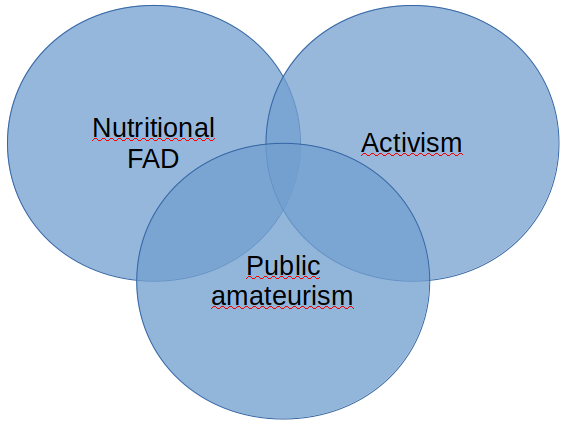
I share the view of Claire Pentecost defining public amateurism:
active social participation in which any nonspecialist is empowered to take the initiative to question something within a given discipline, acquire knowledge in an institutionally sanctioned way, and assume the authority to interpret that knowledge […] the motive is not to replace the specialist, but to augment specialization with other models that have legitimate claims to producing and interpreting knowledge.
In this context, (bio)hacking is not necessarily something aiming to change your life overnight. It is more science communication, empowering people, and creating useful projects outside institutions or in low cost settings. Typical examples are learning the biology behind kombutcha, understand plant-pathology, learn how to use a polymerase chain reaction (PCR), etc. Other times, the focus is purely artistic, as painting with agar, or creating music from home-made electronics. All this fed indistinctly to either amateurs or senior researchers.
Due to the recent pandemic many events this year have been canceled, yet I can describe few of them. This is obviously a non exhaustive list as travelling is still an issue, and for obvious reasons I focused only to Europe.
Hackteria X Why Zet, July 11–12
HLabX was a series of residencies and concentrated gatherings of people working transdisciplinary who are interested in creative biological fields and any other areas which intrigue the critical interaction across art and science. It was held over the last 12 months with activities in Taiwan, Indonesia and Switzerland and culminated this April during Oki Wonder Lab in Okinawa, Japan. It culminated with the XWhyZet event in Zurich (Switzerland) between 11th and 12th of July.
The program comprised hormone extraction, piezoelectric energy generation, biovisual jam session and more.
Mary Maggic conducted a workshop centered on the concept of “open source estrogen,” the underlying premise that hormonal molecules are ubiquitously all around us, and available for us to hack, mutate, and become-with. She gave a 2-hour workshop on hormonal histories and fictions and a hands-on urine hormone extraction protocol.
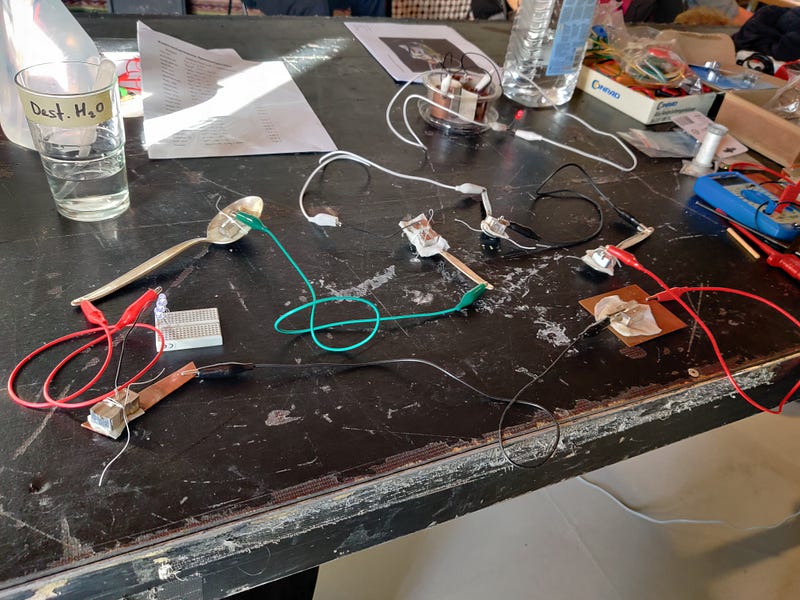
The “Care for current” workshop was focused on building batteries from scratch and cascade them until there is enough voltage. Starting from two or three metals, Andreas Rudolf showed how to generate the smallest electrical energies with them, which are enough to generate sound and light effects. Andreas introduces you to his latest experiments. More specifically, electricity from home-made crystals, producing piezo-electric materials which generate tension.
Sound Performances & BioAudioVisual Jam Session, as the „Self-Similarity“ of Wolfan Spahn relates to Madelbrot’s ideas by displaying sonification and visualization of fractal systems. Analog computer and analog neural systems communicate with the self-similarity of Patagonia’s nature on both huge and macroscopic scale.
PIFCamp 2–8 August
PIFCamp is a 7-day hacker-base set in Slovenian nature, where art, technology and knowledge meet, happening since 2015 and organized by the Ljudmila associations and Project Atol.
Despite reduced capacity due to COVID19, PIFCAMP 2020 had some pearls as well. Andrew Quitmeyer connected remotely from DinaLab (located in )Panama at the Smisthonian tropical research institute) gave a very interesting lecture on ants.
First of all, the general approach of Dinalab is to conduct art and research interacting directly into the wild and not into a lab. Andrew has been always interested in the topic of ant tracking and this year he pushed forward as conducting a project a wearable ant farm. Very often trees are symbionts of ants, in the sense that they “accept” ants on them. How can we feel the same thing a tree can sense? Namely, how do we “feel ants” like a tree?
Andrew has pushed to the point of a wearable interactive ant-farm loop to offer us a prototype Head Hallucinator: “As the LEDs sense ants, they change their flicker frequency, changing the hypnagogic hallucinations you see in your eyes (with the ants)”.
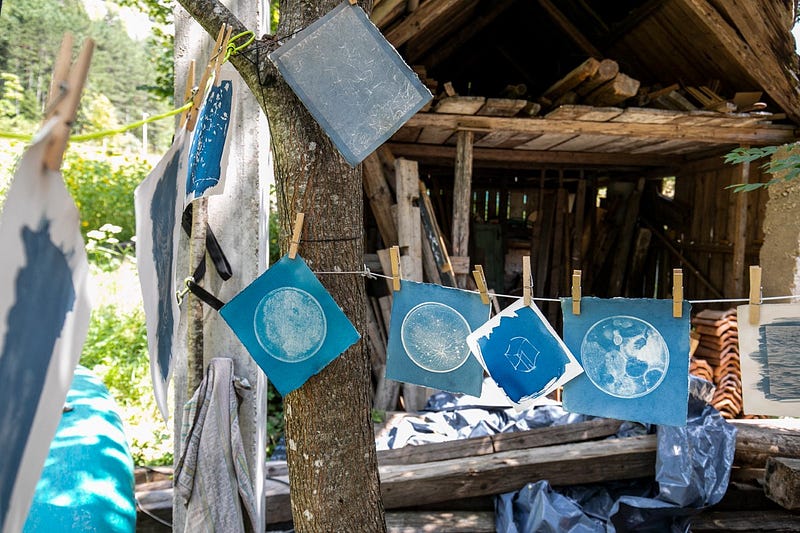
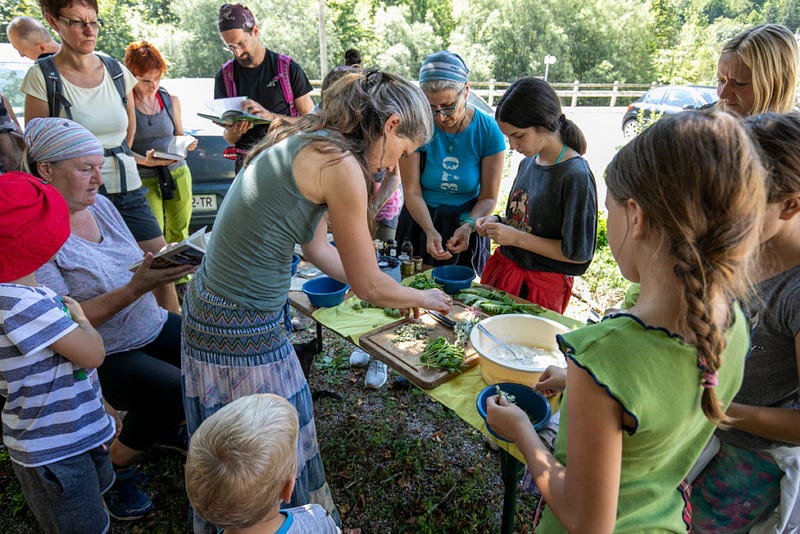
The Summercamp had many activities including a workshop on hydrolates, tinctures and ointments from medicinal plants:
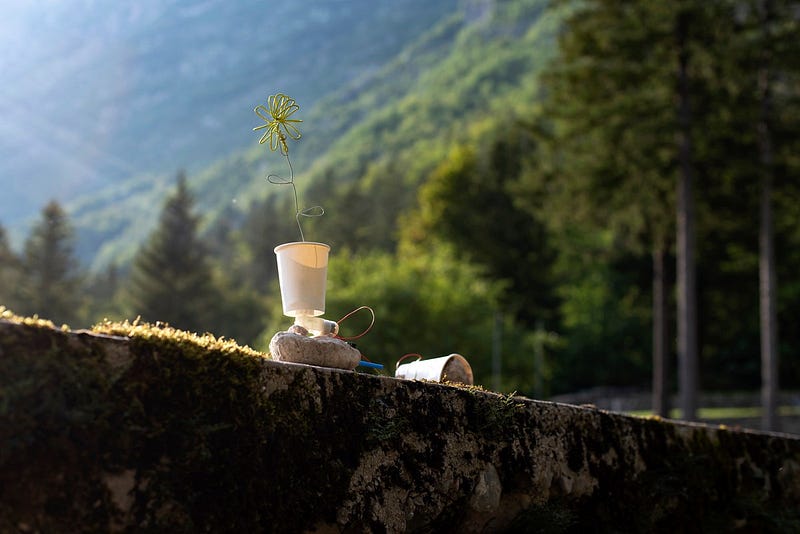
Low-cost solar powered rotator for houseplants:
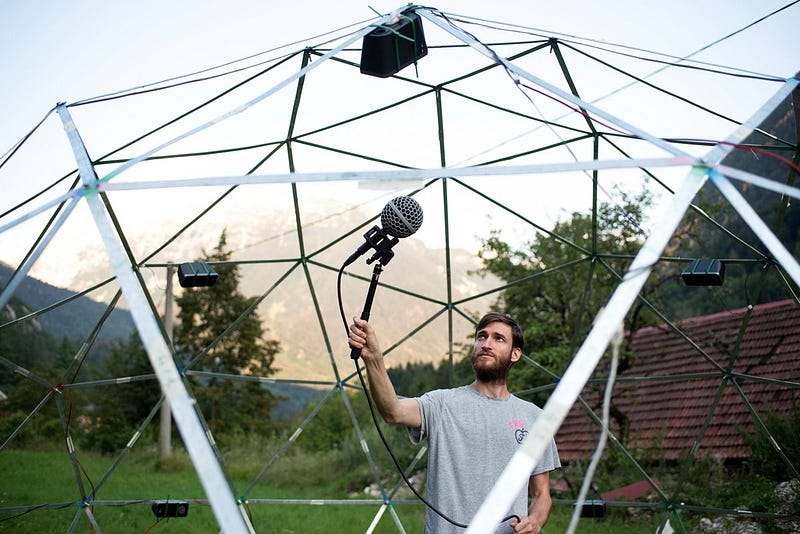
DIY ambisonic dome:
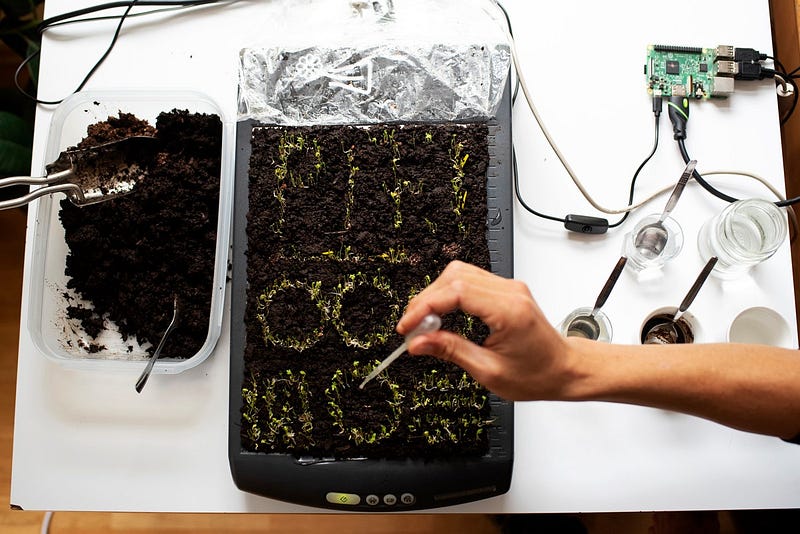
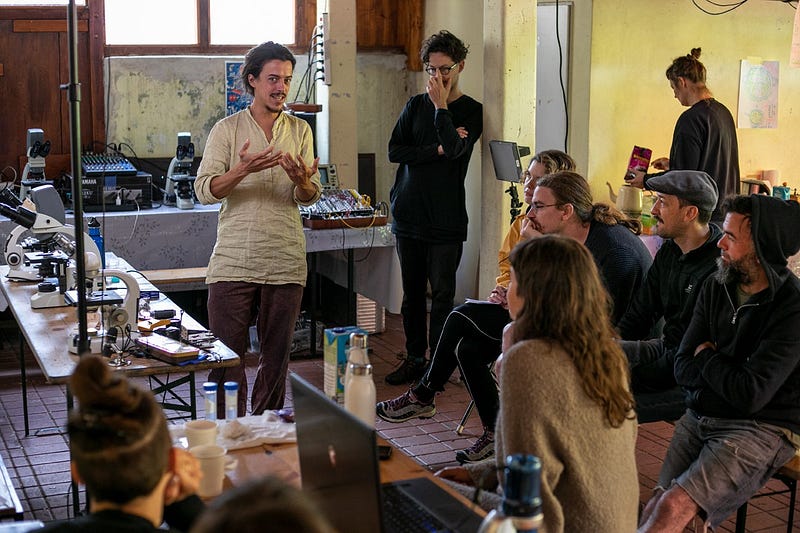
and an introduction to microscopy and humus analysis by mikrobiomik.org (a similar workshop was also given at X Why ZET):
Homemade Summercamp 1–8 August
The same week of the PIFCamp the Schweizerischen Gesellschaft für Mechatronische Kunst (SGMK) had its own summercamp, mostly focused on DIY electronics and electronic music, in St. Ursanne (Switzerland).
You can find a short video summary here made by Panayotis Antoniadis:
36C3
The Chaos Communication Congress is not exactly 2020 as it happened between the 27th to 30th of December 2019, but I would say was the last big event before lockdowns and quarantines. It happened in Leipzig (Germany).
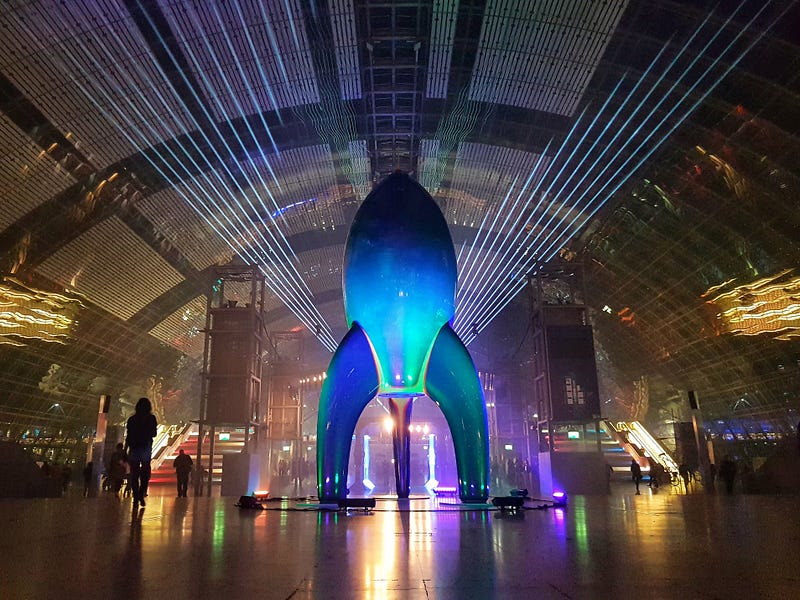
It is also not exclusively focused on biohacking but rather on cybersecurity, and December is definitely not summer. The event was held in December 2019, at that time we had no idea the planet would have been shaken by a virus. Thinking of that time, it gives me a sense of hope, of freedom and creativity. There was a rocket, like the TinTin cartoon, a sign that something will happen (at least blow up), or someone will go and explore far territories. I hope now after summer all other countries which are still highly affected by restrictions, economic depression, and so on will soon go back to normality, catch up for further public amateurism or life as usual.