
Bioacoustics: Symphony of the Species
Biophony offers a deep insight into the health, diversity and potential conservation of ecosystems.
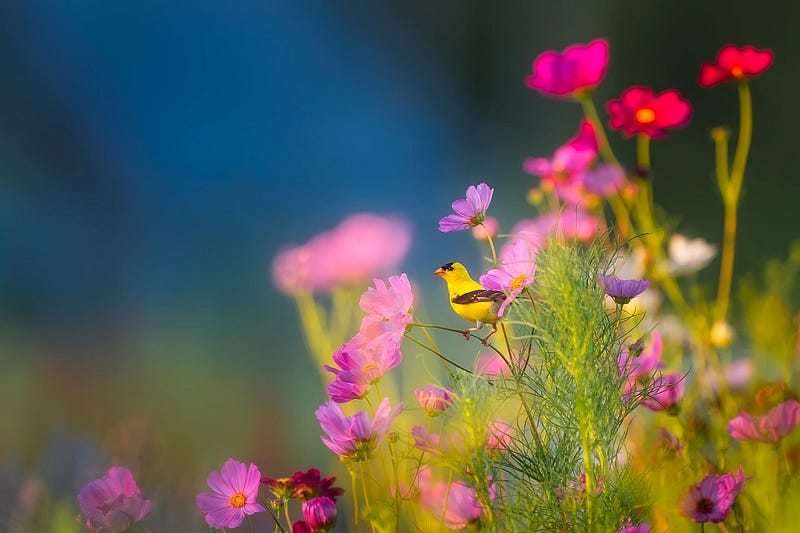
One morning in 2020, I became convinced that the usual chorus of birdsong in my garden was getting louder. It was April — the first real taste of COVID lockdown — and I, like many others, was witnessing the quickening new life of spring with an added layer of awestruck appreciation. Though the fabric of daily life unraveled before us, it seemed as though nature sang out louder than ever.
Several months and an internet search later, I realized my mistake: the symphony of birdsong outside my window was not any louder, but a sudden lull in human sound had created space to listen.
I wasn’t alone in this experience. All around the world, people reported an increase in bird chatter during the pandemic. With fewer airplanes roaring overhead, less traffic on the roads and diminished human noise, the usually-muffled sounds of nature rang out clear and uninterrupted.
As the ordinary hum of human activity came to a halt, scientists studying animal vocalizations found themselves faced with a unique opportunity to listen. Research in bioacoustics, or soundscape ecology, flourished, giving the field a long-deserved moment in the public spotlight.
One such researcher in the world of bioacoustics is Bernie Krause, an American musician (and prominent bio-acoustician) who has spent decades compiling a vast archive of environmental soundscapes. Over the course of his extensive career, Krause has garnered particular attention for his theory of biophony.
Biophony opposes the traditional documentation and study of soundscape ecology, which favors examining individual species vocalizations as singular, decontextualized voices. Through his own field research, Krause realized this model overlooked the fundamental interconnectedness of acoustic habitats. Over time, he instead came to the conclusion that the evolution of each individual song was inherently bound to the evolution of the whole: to make themselves heard, each species had to claim their own place in the choir.
This constantly shifting and fluctuating soundscape of voices— from the ultra-low frequencies of elephants to the high-pitched sonic clicks of bats and dolphins — together form a kind of orchestral symphony. The more layered and synchronous the soundscape, the healthier the ecosystem it belongs to.
Excessive interference of man-made noise (what Krause would call anthropophony) in a natural soundscape inevitably topples the balance of this symphony. When the orchestra of an ecosystem thins due to habitat loss, or when a species cannot hear or locate one another due to human-produced noise, individual plants and animals immediately become vulnerable.
“Of the biophonies I’ve captured and documented over the past fifty years, well over half arise from environments so thoroughly transformed by human endeavor that many are now acoustically unrecognizable or altogether silent,” Krause explained in a publication for Yale University Press. “The impact of these changes is astonishing.”
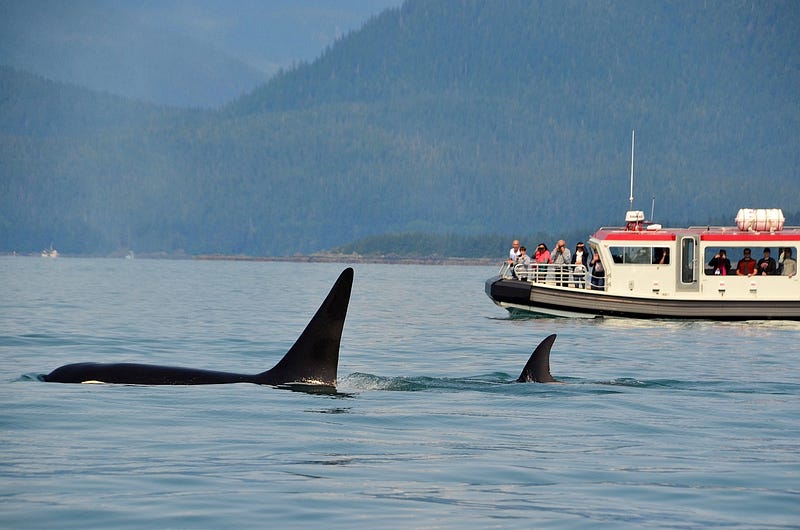
The devastating effects of chronic underwater noise pollution on marine mammals is one such example. As the ocean becomes increasingly filled with anthropogenic sounds — ships, seismic airguns and construction activities, for instance — species like whales and dolphins, for whom sound is essential for survival, are in critical danger. Already, mass behavioral changes have been recorded across cetacean species, amongst them unusual mass-strandings, reduced feedings and fewer calls.
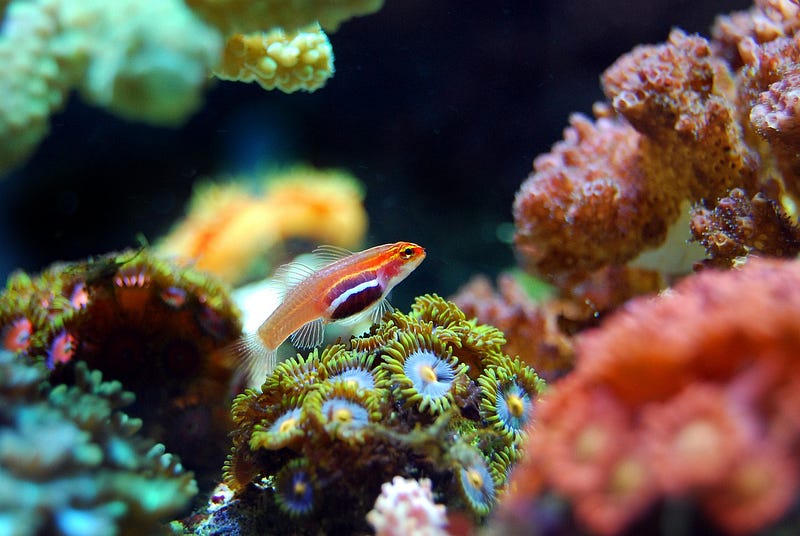
Yet while some ecosystems are getting louder, others are suddenly marked by an eerie silence. In coral reef habitats (some of the most biodiverse communities on our planet), there is a direct relationship between acoustic diversity and biodiversity. A healthy coral reef is one rich in the ambient sounds of its inhabitants.
In the last several years, scientists have drawn upon this close relationship between noise and coral reef health to restore degraded reef habitats. Using a method known as acoustic enrichment— a process in which the recorded soundscapes of a healthy coral reef are played back to degraded habitat spaces — field researchers have managed to repopulate fish communities in at-risk reef areas with great success. Healthy reef systems sound more appealing to juvenile fishes, encouraging them to form community settlements which in turn attract other species from all areas of the food chain.
The theory of biophony — and other evolving branches of bioacoustic study like it — offers deep insight into the health and diversity of a given ecosystem. Moving forward, it might also provide a system of accountability for human land use: by documenting acoustic changes in an environment, scientists can track how species presence and behavior changes with anthropogenic interference. These data findings can in turn be used to inform conservation plans and protective legislation around particular habitats.
As aural testaments to the health and harmony of the natural world, these natural soundscapes present an invaluable and yet-untapped resource for enhancing and informing conservation efforts.
“The breadth of most environmental programs has been limited to what we can see or touch–the contradictory equivalent to the sole study of silent movies in a contemporary master film class,” Krause explained.
“How can one hope to understand much about ecology while, at the same time, being completely deaf to its voices?”
Collectively, we as human beings focus primarily on visual experience as our means of relating to and characterizing the world around us. In doing so, we seem to have lost the ability to consciously incorporate wider sensory experience into our awareness of place. Yet bringing acoustics into conversations surrounding the environment and its protection helps to broaden the boundaries of our perception, encouraging us to engage with the natural world in all of its richly textured dimensions.
For further reading:
‘Biophony’ by Bernie Krause (2017) https://www.anthropocenemagazine.org/2017/08/biophony/
‘The Niche Hypothesis: A Virtual Symphony of Animal Sounds, the Origins of Musical Expression and the Health of Habitats’ by Bernie Krause (1993) https://www.researchgate.net/publication/295609070_The_niche_hypothesis
‘The Power of Biophony’ by Bernie Krause (2016) https://yalebooks.yale.edu/2016/05/05/the-power-of-biophony/
‘Acoustic enrichment can enhance fish community development on degraded coral reef habitat’ by Timothy Gordon, Andrew Radford, Isla Davidson and others (2019) https://www.nature.com/articles/s41467-019-13186-2
This article is inspired by a related feature story I wrote for Smithsonian Folklife Magazine in July 2023. You can read that story here to discover more information on bioacoustics and the contemporary musicians it inspires.


