
Bingo Nights and Guitar Fights — When Rock Music Took on the Clubs And Lost
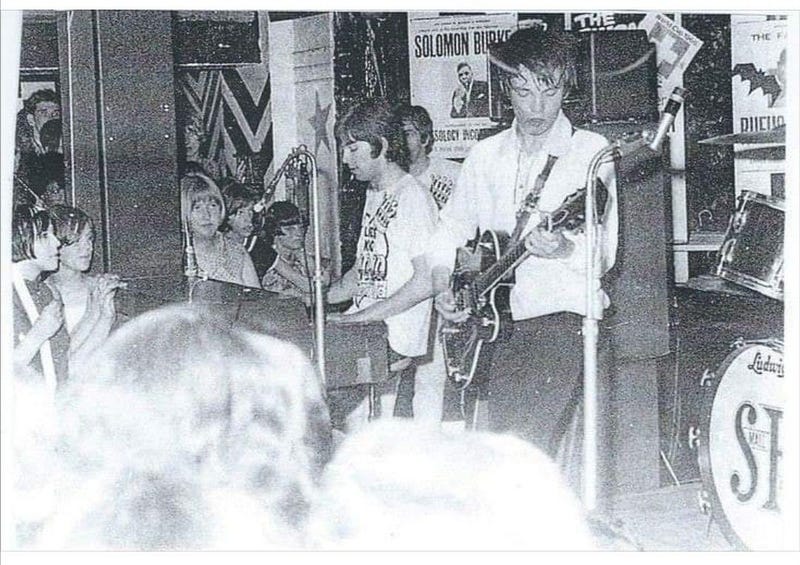
The journey to the upper echelons of the rock ’n’ roll world has never been easy, but it’s arguable that having to please a “jumped-up labourer with no interest in modern music” added a bridge too far for many.
Don’t believe it happened?
The Small Faces, rock band Saxon, sixties star Long John Baldrey, ‘St. Elmo’s Fire’ writer John Parr, and Sheffield star Dave Berry all felt the wrath of the club committee — the suited and booted gentlemen who ran the UK’s Working Men’s Clubs, which were at their most powerful in the late 1960s and 1970s.
Bands had generally managed to steer clear of them until changes in licensing laws saw the end of great swathes of ‘teenage clubs’ — venues like the King Mojo in Sheffield that didn’t serve alcohol but attracted artists spanning Jimi Hendrix to The Who to perform for their audiences aged between 13 and 18 years old — in the late ’60s. Groups had no choice but to look to the Working Men’s Club circuit — a network of social clubs that were started by a teetotal minister in the Victorian era — for work and a possible springboard to fame.
The only problem - provided they were given a gig at all — was the fact that the star of the show was the game of bingo. In fact, everything revolved around bingo; the bands were essentially just killing time before the main event. It’s fair to say little could prepare artists for the kind of reception they got.
The first job was to persuade ‘the club committee’ they were worthy of gracing the stage.
The majority of committee men couldn’t have been more out of step with the ’60s pop explosion. Most of them had completed military service and lived through World War Two rationing and austerity. Add a sense of power that felt like they’d been reborn as the king of England (many of them were labourers by day), and you had the makings of an unholy clash of cultures, which the committee men normally won as they held all the cards.
Mark Rodgers remembers: “Acts quickly resigned themselves to routine humiliation. I remember we turned up to one club in Leeds late in full stage gear. The chairman looked at us in complete disdain and said, ‘If you think you’re coming into my club dressed like that, you can forget it.’ Being at the mercy of a jumped-up labourer with no interest in modern music became a regular occurrence.”
The Small Faces got their marching orders from a club in Sheffield after just two songs. Ronnie Lane remembers: “We’d come up from London to play in one of Sheffield’s clubs. After playing a couple of numbers, we were asked to leave.”
Getting your marching orders — or getting ‘paid up’ as it was known in the trade — halfway through a set became quite normal! Drummer Mike Hayes said, “John Parr band was paid up at Tinsley (in Sheffield) even though ‘St. Elmo’s Fire’ was top of the charts.”
The quicker artists grew a thick skin, the better. “At Skellow in Doncaster, Long John Baldrey was introduced as Bald John Laundrey,” added Mike Hayes. One clubland magazine even advertised singer/comedian Bobby Knutt as ‘Bobby Kunt’.
But their were success stories from this unlikely of launchpads.
British rock band Saxon actually has clubland to thank for their big break — they signed their first-ever record contract at the Boilermakers Club in Sunderland in late 1978.
Many of the clubs dedicated one night a week to rock in the period, and the band found themselves with a big following courtesy of the Working Men’s Clubs. Drummer Pete Gill — who later joined Motorhead — said, “The back cover of the first Saxon album is taken in a Working Men’s Club. These venues had an unbelievable atmosphere. We’d arrive, and they’d be queuing around the block.”
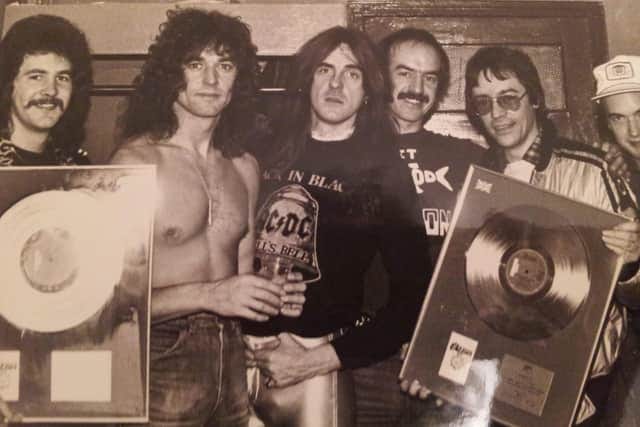
But despite all that, something never changed. “We’d play two sets,” he added. “One on either side of the bingo.”
* You can read more about the British phenomenon in the ‘Dirty Stop Out’s Guide to Working Men’s Clubs’.