
Billions of Dollars Are Being Wasted in the Prison System
We are losing on all sides
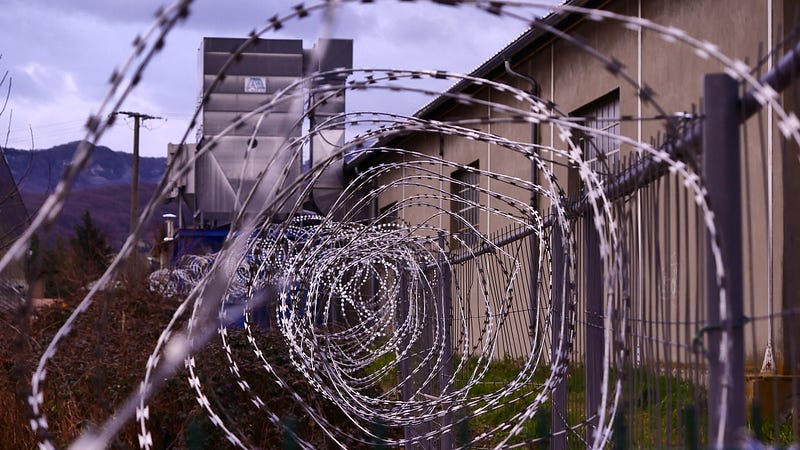
The Bureau of Justice Statistics reckons that the United States spends more than $80 billion each year to keep roughly 2.3 million people behind bars. Many experts say that figure is a gross underestimate because it leaves many hidden costs that are borne by prisoners and their loved ones, with women overwhelmingly shouldering the financial burden. These costs rise during the holiday season, relatives of people in prison say, as they make more visits, call more often, and send more care packages, they spend a lot more.
The Prison Policy Initiative, an organization working to reduce mass incarceration estimates that families spend $2.9 billion on commissary accounts and phone calls. These families are also expected to pay fines, restitution, court fees, etc. According to a 2015 report by the Ella Baker Cater for Human Rights Forwards Together, and Research Action Design, the average family paid roughly $13,000 in fines and fees.
To fully understand how capital and human resources are wasted by the prison system, it is important to examine how the prison system in different places in the world is run and maintained.
Despite the UK being one of the countries that boast of having the highest number of law-abiding citizens, overcrowding is inherent in the prison system of the UK. The UK spent approximately 4.37 billion pounds on its prison system in 2019/2020, a little decrease from the previous year. As of February 26, 2021, they were 78,015 prisoners in the UK and they were about 118 prison facilities in the UK as of 2018. However, the UK prison system allows inmates to get some skills that make it easy for them to fit back into society as law-abiding citizens.
In France, there are short-stay prisons. They contain defendants awaiting trial and prisoners sentenced to less than two years. These are the overcrowded prisons in France with an average rate of occupancy of 130%. There are detention centers for people who show genuine interest in social reintegration. Also, there are prisons specially reserved for rather dangerous individuals regarded as The Central Prison.
Nigeria is one of the countries with the worst prison system, as there are a plethora of problems plaguing this industry. There are 240 prisons in Nigeria, and each can accommodate 50,000 inmates. However, most of them are overpopulated.
Averagely, a prison in Nigeria houses 74,000 males and 1,509 females. This stat shows how overpopulated Nigerian prisons are. Not to mention the inhumane treatments the inmates go through, which is in total contrast to the basis of having prisons in the first place, which is to reform and reintegrate offenders.
Many prison systems have very few resources, so they struggle to meet basic needs such as food, healthcare, clothing, and even shelter in safe, hygienic environments. In Cambodia, for example, the amount allocated for food per prisoner per day was reported to be less than EUR 1 (KHR 3500). The International Poverty Line set by the World Bank is around EUR 1.70 (USD 1.90).
While this standard includes more than just food costs, it provides a basis for comparison to indicate how alarmingly low the food expenditure in some prisons can be. As a result, in many countries, authorities rely on families, charities, or religious organizations to provide food, healthcare services, and other essentials for inmates. Still, a lot of money is expended by different parties to keep the correctional centers functioning.
Staff and infrastructure appear to be the major expenditure of the prison system. In France, around 41 percent of the money budgeted for the penitentiary was allocated for staff, administrative and operational costs. In Italy, the proportion is higher, with 76 percent of the prison’s budget allocated to personnel costs. In South Africa, employee compensation and payment for buildings and other fixed structures amounted to 74 percent of the 2018–19 budget of the Department of Correctional Services. While the bulk of the money is channeled to the welfare of the prison workers, the prisoners live in terrible conditions in many of these prisons.
The United States’ prison system continues to grow every year. Over 2.3 million people are incarcerated in U.S prisons and jails. The U.S federal, state, and local governments spend 68billion dollars every year on prisons, and this is not definitively adding to the economy. On the contrary, it destabilizes communities, harms families, and derails the lives of individuals.
Research has shown that in the last ten years, states that have increased prison population have not seen a corresponding decrease in crime, and states that have reduced the prison population boast of a decreased crime rate. Therefore, there is a need to significantly reduce the alarming amount of people in prisons, and hence, the money spent on the prison system in the US, and perhaps the world at large. Below are a few solutions to that effect:
- Keeping people who commit minor crimes out of prisons: The prisons tend to get overpopulated when people are thrown in prisons for every crime committed. There are several other ways we can correct offenders without putting them in jail.
- Removing the barrier to employment for people leaving prisons: When inmates are finally freed, they are supposed to be welcomed into society and not treated with contempt. When people who get freed have a stable source of income, then there will be no looking back to the world of crime that got them incarcerated in the first place.
- Providing substance abuse treatment is more cost-effective than imprisonment: Drug abuse is pervasive but can be controlled. Rather than spend so much to incarcerate or imprison the offenders, it is better to treat the abusers psychologically. This will yield positive results like reform, and the individual will not have to go through the trauma of being treated as second class because of imprisonment.
The money spent on prisons can be spent prudently and judiciously if it is channeled to other spheres of the economy that will yield better results and public safety.