
Big Problems Always Start Small: Why Entitlement Issue is Exactly Why the World Has Become As Obscured As It Is Now
And Why It’s Time to Link Individual Wounds with The Common Good
Do you gossip with your peers how the new joiners at work are getting worse and worse every year? You talk about how they can’t even do photocopying right, spend all the time texting, and never agree to stay late.
What’s wrong with these people? At one point, we start wondering if they are just plain stupid or has the education system completely failed us.
No, first-world people, the answer is we are getting richer and our parents are getting busier. These kids are spoiled so fundamentally that they don’t know the art of giving and reciprocity.
I’m recently diagnosed with entitlement issues. Frankly, if it isn’t because a serious crisis has arrived upon me, I wouldn’t even open my eyes to this diagnosis. It’s a good thing though, I’m glad I saw it now.
And everyone should do this as soon as possible because the world is not moving to a good direction.
What Is Entitlement?
I was diagnosed with an anxiety disorder because my life is crumbling into pieces. My therapist asked me if I can identify any triggers, and long story short, I did a test with this amazing book she recommended me. It’s called Reinventing Your Life by Jeffrey E. Young, Janet S. Klosko, and Aaron T. Beck.
Based on the test, my biggest ‘life trap’, i.e. unresolved cognitive issues from childhood/past, is entitlement.
Symptoms of entitlement include impulsivity with no regards of consequences, lack of empathy, dependency, demanding, controlling, see yourself as special, etc.
Usually, people with entitlement will never consider they have issues because they are often hurting others to get their own way. They probably think they are very persuasive, free and resourceful (I know I did)!
But I eventually see it. Friends after friends have left me for my ‘snobbishness’, some say that I am not ‘reliable’, and ‘only there when she needs something’. I was also controlling to everyone around me, especially to the people I love and love me most.
So What Causes You to Be Such a Horrible Human Being?
Thank you very much. There are three types of entitlement: spoiled, dependent and impulsivity. Based on a further test, I’m on the spoiled and impulsive side, thankfully not too dependent.
The book also says that only child, or the only gender among siblings, are likely to catch this entitlement life trap. I am an only child, and I’ve written extensively about how middle class I am. So that’s the perfect setting to be spoiled.
Specifically, with spoiled entitlement, it’s not only when your parents treat you like a princess and shower you with gifts. It can also be this particular patterns of rearing:
- Weak parental limits: when a child can get away with responsibilities
- Lack of frustration tolerance: when a child is not taught how to manage their frustration, or when the parents also don’t have boundaries — i.e. if they also express their anger without control and no one stops them
- Lack of impulse control: when parents do not restrict their child’s desires, literally let the kid does whatever they want
Modern Parenting Red Flags
As I was studying child psychology and kindergarten teaching, I witness how some parents do everything for their children. A kid once handed me back a big red apple because he doesn’t know how to eat one that’s not peeled and cut up nicely.
I’m very grateful that we are born without hardship and much richer than our previous generations. But we get away with things too easily, and as parents are more likely than ever to focus on giving the best for their children, perhaps some of us have forgotten a healthy childhood involves reminding the child that they can’t have everything they want. Because society won’t give them everything they want.
The problem is, individuals’ entitlement issues have much more dire consequences than we think.
The Underlying Message of Entitlement
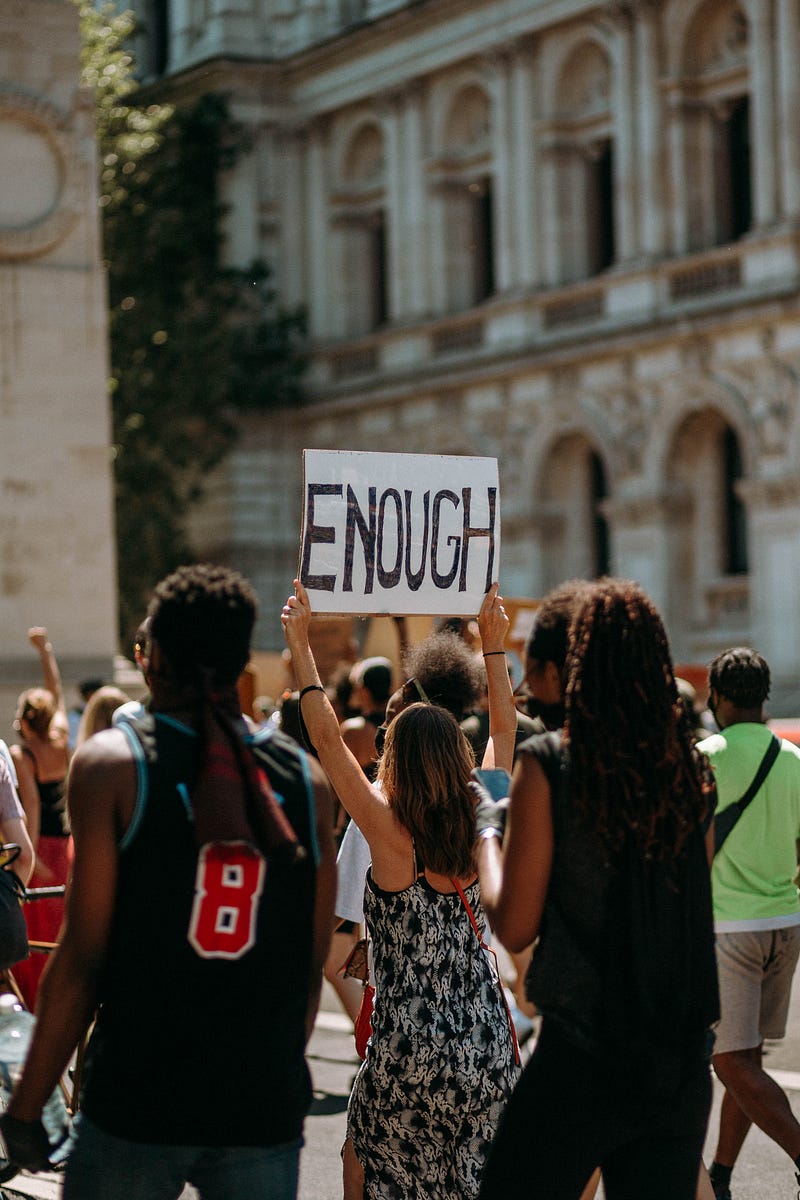
No, I’m not really here to talk about parenting. I’m more interested in how the word entitlement is used everywhere, in the discussion of feminism and racism specifically.
To really tackle entitlement, pointing finger at an entitled person and label them this way will never get you very far. Entitled people will always feel they are right and you are wrong, stupid and inferior. Just look at Trump and any other elitists out there.
One of the other things I’ve learned about entitlement is that it’s often a counter-attack to something more fundamentally damaging — social exclusion, dependence, extremely critical parents...it’s to compensate something else we feel we are fundamentally lacking or inferior.
I wonder when people, especially in today’s time, still making false accusation and assumptions on other races and genders, are they feeling lacking and inferior about something within themselves. By blaming others, they divert this inferiority to someone else, as well as their insecurity.
As we push the noble cause of feminism and equality, I wonder if we can do so without igniting anger in the oppressed and if we can do without generating more hate and antagonism? Can we try to understand why did people oppress others in the first place?
Sciences and numerous examples have proved enough that no single race or gender have the supremacy. These people are holding onto that belief to deny the failure and fear within themselves, by using old, false entitlements as an excuse, to make them feel better.
What these people need is not accusations thought, because they are hurt. We can’t combat hate with hate, the world will just flip from one power imbalance to another. We must look at the traps within us, especially our entitlement as the most powerful animal species on Earth.
Put plainly, we can’t separate big problems in the world and our individual wounds anymore. The little hurt and pain in us have precisely created the obscured world we’re living in, every single problem that keeps world leaders and us from a good night’s sleep.
If we can’t see this linkage and the common ground of pain that exist in the “good” and the “evil” sides of any arguments, then we can never solve the problem.
Heal now and be compassionate to others, including our energy, for the sake of your righteousness and the world you care so deeply about.
If you like my thought-provoking articles, please click here to subscribe to my mailing list!


