
Why Do You Only See Me as Big, Black, and Scary?
Forever trying to escape the racist tropes of Black people being viewed as scary and menacing
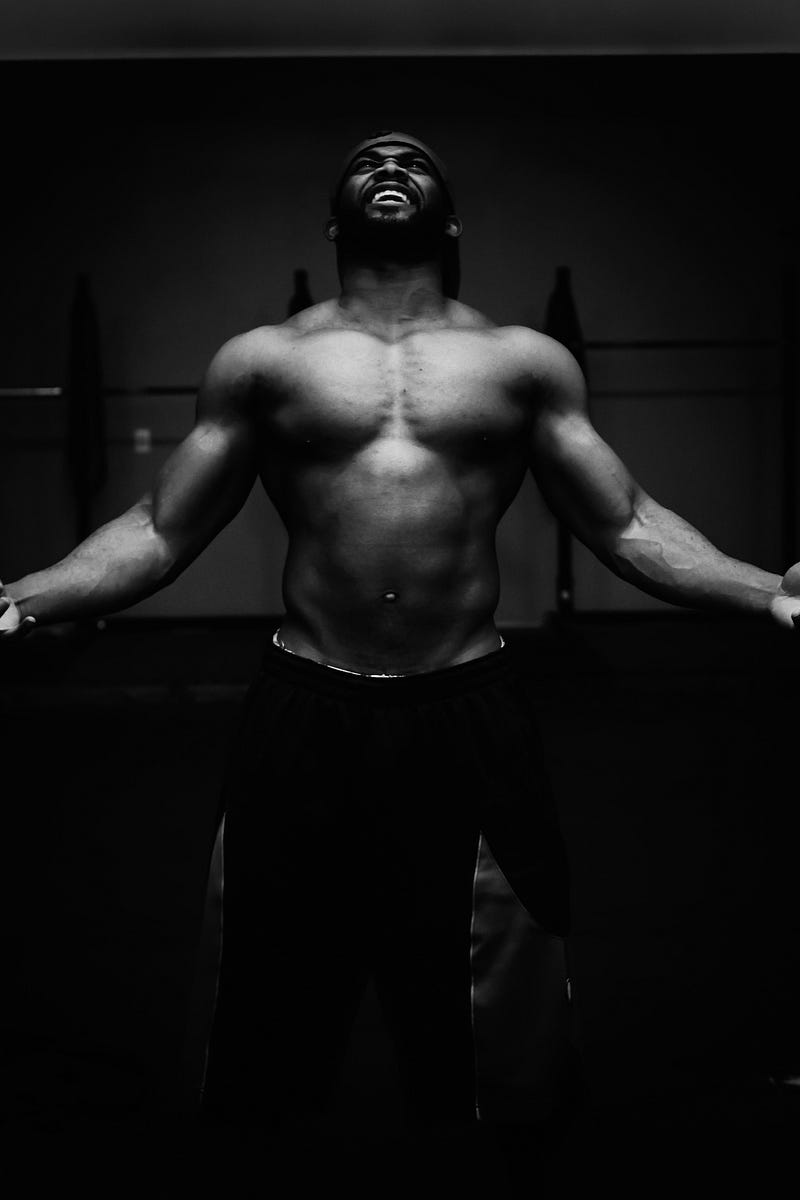
I’ve heard it all. And if the past designs the future, I expect to hear it all again:
“We need someone to stand by the door.”
“You’ve done time, right?”
“Hey, we’re having trouble with this guy. You can take him.”
“Don’t hurt me; I don’t have any money.”
“Man, you’re big. People must be scared of you.”
Being the recipient of such discrimination is taxing.
Black people have tried tirelessly to counter negative stereotypes while witnessing the threads of racism continuing to infect future generations.
Nice to meet you
I recall many instances when someone used my size and skin color to satisfy deep-seated fears of the scary and threatening Black man. On one occasion, I was put in a position of being physically harmed or worse.
A college acquaintance (let’s call him Ed) who I met through a friend’s friend asked if I wanted to hit a bar one night. I was only superficially familiar with this person, but I recall him being aggressive with his invite — as if it were a matter of life and death and he needed affirmation. But when you’re a young college student looking for any excuse to party, your best judgment still lives comfortably in its incubator. Suspicious characters are usually forgiven right quick for the possibility of a good time.
Unbeknownst to me, the setup had been solidified once I agreed to tag along that evening. I later learned I was only asked to join because of my size and color.
We arrived at the bar early, before the influx of professional drinkers made their appearance. Immediately, we took refuge in the poorly lit back corner, away from the barflies and regulars. There, we could concentrate on conversation and our glass bottles. However, halfway through the first round, I couldn’t help but notice that every so often, with unwavering determination, Ed would eye-f*ck the front entrance to the bar. I chalked up his distraction to being on the lookout for other friends who might join us.
After about 30 minutes of inane discussion, Ed left the table. Moments later, he came back in a hurry, pointing at me. “Hey, man, I want you to meet someone,” he said. In no particular mood to uproot, I reluctantly agreed but only after a few rather forceful pleas and a promise to pick up the next round.
“As I got older and experienced similar instances of being thought of, used, or regarded as a large intimidating Black villain only good for causing uneasiness, my desire to start new friendships became infrequent.”
We made our way to the middle of the bar, where four “squirrely looking mugs” stood at attention as if they were in a police lineup. Ed stood directly behind me, clearly unwilling to broker any introductions. Compelled to break the ice, I made the first move. Just as my hand opened for a greeting, I felt a sharp break in the air by my right ear, followed by the swift strike of Ed’s fist flying over my shoulder. I was a shield for a pending retaliation. The next few seconds were a blur.
As I stumbled back in confusion, the melee was now full-on.
The four “townies” seized on Ed like ravenous dogs pouncing on a meaty bone. The bouncers, who were near the bar’s entrance, saw the skirmish and made their way over to intervene. “Go ahead, man,” one said. “ We saw what happened. You should leave before things get worse.”
What, a pass? But why? Did it really matter? I was just happy to be spared from any further participation in Ed’s foolish game of punkery.
“Fear of something is at the root of hate for others, and hate within will eventually destroy the hater.” — George Washington Carver
Days after the “rumble in the ‘burbs,” I learned the true intention behind my invitation for that evening. Ed, who frequented this bar, developed a reputation for starting trouble with the locals. A few friends said Ed invited me because I was big and Black. He thought I would provide the backup he needed to confront his adversaries.
I didn’t sign up for this nor did I have any beef with the participating actors of that night. I was invited solely because of a racist stereotype and the hope of exploiting this to help support an agenda. Though I walked away physically unscathed, the psychological impression left on me from that night stayed for years. As I got older and experienced similar instances of being thought of, used, or regarded as a large intimidating Black villain only good for causing uneasiness, my desire to start new friendships became infrequent.
Gangland
When I recall that night, I remember being a young Black man at the center of a premeditated brawl and the ingrained prejudice many have against Black people.
Eradicating centuries-old racism is not only challenging but can also seem unattainable. Even when with my Black brothers and sisters, I can’t shake the feeling of suspicious white side-eyes forming judgments about a group of Black people congregating (men in particular) and how they might perceive them as a threat.
In the minds of many, this kind of gathering might as well be a gang ready to wreak havoc on unsuspecting white communities — that the only intent is to cause destruction, crime, and unrest. It’s the false and dangerous narrative that has lasted generations, a narrative that continues to oppress Black people to this day.
The anxiety and even terror that festers within some white people who learn early on to fear the “other,” who fear an angry Black uprising that will take control and plot their demise, is kept alive by design.
“No one loves the man whom he fears.” — Aristotle
The idea of the terrifying Black monster has been ingrained in so many people that it is difficult to shake off. Three months ago, we saw this at play during the Derek Chauvin trial. Most people knew the defense would lean on painting George Floyd as a large, drug-addicted thug who was aggressive and unwilling to comply. Sure enough, this blatant tactic, which fed off the historical stereotype and fear of Black men being uncontrollable criminals, was blasted right before our eyes, yet again, for all to see.
That incident in college was not the only time someone used my appearance to further an agenda. I was frequently painted as someone who had a penchant for crime or succumbed to life’s seedier aspects. While in court to fight for visitation to see my son, my lawyer told me what to expect. “They will paint you as an abuser, a drug addict, and a criminal.”
True to form, this is exactly how my son’s mother’s attorney described me. It didn’t shock me I would be portrayed in this light; a large Black subhuman who allegedly abused his son’s mother. The reality did not matter to the court. What mattered was how easily an all-white court would lean into stereotypes of a large Black man who fathered a child with a white woman. The optics would never work in my favor.
American history is littered with instances of Black people being the target of racial discrimination due to fear and negative stereotypes that have been unjustly placed upon us.
In an age of Karens and Kens, it’s no wonder the constant assault on innocent people of color is only a continuation of the agenda to keep us in check. The warped reality of this is demonstrated by how often race is used against us and how it can advance someone’s misguided perception.
Over the years, I have become more selective in my interactions. As my self-awareness blossomed and the need to compromise my integrity waned, I found that letting others define who I am is counterproductive. I am no longer driven by my reactions but directed by self-assuredness.
Knowing who you are and being aware of how others perceive you is paramount to self-preservation. Acceptance from others might not come, but confidence in yourself will. Ultimately, this matters most. We can’t change how people perceive us (for now) though we can control how we are treated. The battle for racial equality is an ongoing effort that has seen some progress but has yet to yield the rightful outcome we all deserve.
Hopefully, you’ll never have to experience being viewed as an object, painted as anything other than a human being, or put in a position where your safety and dignity are put on the line because of someone’s insecurity or self-indulgent grand plan.
Thank you for reading!
Follow me on Twitter: @gcorreiawrites


