avatarArcher-Ventures

Free AI web copilot to create summaries, insights and extended knowledge, download it at here

2363

Abstract

n and a loud trumpet blast. The people are afraid and Moses brings them to the foot of the mountain where they see smoke and fire and hear God’s voice.</p><p id="47e2">God calls Moses up to the mountain and reiterates His specific instructions for how the people and priests are to approach him.</p><figure id="351e"><img src="https://cdn-images-1.readmedium.com/v2/resize:fit:800/0*ci6eI7FbsaZvj4kt"><figcaption>Photo by <a href="https://unsplash.com/@daveherring?utm_source=medium&amp;utm_medium=referral">Dave Herring</a> on <a href="https://unsplash.com?utm_source=medium&amp;utm_medium=referral">Unsplash</a></figcaption></figure><h1 id="f47c">Exodus 20</h1><h2 id="b913">The Ten Commandments</h2><p id="4b2c">God then speaks the Ten Commandments to all the people gathered at the base of Mount Sinai. These commandments are a set of moral and religious laws that will guide the Israelites in their relationship with God and with each other.</p><p id="698a">The first four commandments focus on our relationship with God:</p><ol><li>You shall have no other gods before me.</li><li>You shall not make for yourself an idol.</li><li>You shall not misuse the name of the Lord your God.</li><li>Remember the Sabbath day by keeping it holy.</li></ol><p id="f905">The next six commandments focus on our relationship with others:</p><ol><li>Honor your father and mother.</li><li>You shall not murder.</li><li>You shall not commit adultery.</li><li>You shall not steal.</li><li>You shall not give false testimony against your neighbor.</li><li>You shall not covet.</li></ol><p id="1282">These commandments serve as a guide for living a moral and righteous life, and are still relevant today in many religions and belief systems. They promote love, respect, and justice towards both God and our fellow human beings.</p><h2 id="fe2d">Idols and Altars</h2><p id="6388">After receiving the Ten Commandments, God further instructs Moses on the construction of altars for sacrifices and offerings. He also warns against making idols or gods of silver or gold.</p><p id="1cf2">God reminds the Israelites to build an altar with uncut stones and not to use tools in its construction. This is to prevent the temptation of using those same tools to create idols.</p><p id="ac26">He also commands that if they do make an altar of earth, it must be made without steps so as to not

Options

reveal any nakedness while approaching it.</p><figure id="75e5"><img src="https://cdn-images-1.readmedium.com/v2/resize:fit:800/0*qRhPF-HNQUC1vBzF"><figcaption>Photo by <a href="https://unsplash.com/@wladkiselev?utm_source=medium&amp;utm_medium=referral">Vlad Kiselov</a> on <a href="https://unsplash.com?utm_source=medium&amp;utm_medium=referral">Unsplash</a></figcaption></figure><h1 id="657a">Exodus 21</h1><h2 id="d664">Hebrew Servants</h2><p id="a2fa">God continues to give Moses law and instruction on various matters that will govern the lives of the Israelites. He begins by outlining laws for Hebrew slaves, stating that they shall serve their masters for six years and then be set free in the seventh year.</p><p id="c90a">If a servant chooses to stay with his master, he must have his ear pierced as a sign of permanent servitude.</p><p id="3fea">If a man sells his daughter into servitude, she is to be treated as a daughter and not as a servant. If the master does not take care of her, she shall be allowed to go free.</p><h2 id="e22b">Personal Injuries</h2><p id="307e">God then addresses the issue of personal injury. If a person injures another, they must provide compensation for any loss of wages or medical expenses as well as a payment for pain and suffering. However, if someone intentionally kills another, they shall face the death penalty.</p><p id="5810">These laws promote accountability and justice for all individuals, regardless of their social status or wealth.</p><p id="8d88">God also outlines laws for property and possessions. If a person’s animal causes harm to another’s property, they must compensate the owner for the loss.</p><p id="eae8">These laws encourage respect for personal belongings and promote responsible ownership. They also emphasize the importance of treating others with fairness and honesty.</p><p id="5d72">As we continue reading through Exodus, we see how God establishes a system of laws and guidelines for his people. These laws serve as a moral code for how to live in harmony with God and each other, promoting justice, equality, and accountability. They also highlight the importance of valuing human life and respecting personal property.</p><p id="1a0f"><a href="https://readmedium.com/bible-study-guide-day-037-exodus-22-24-1f9a6aa98143"><b>Next</b> Day 037: Exodus 22–24</a></p></article></body>

Bible Study Guide Day 036: Exodus 19–21

The people remained at a distance, while Moses approached the thick darkness where God was.

Exodus 20:21
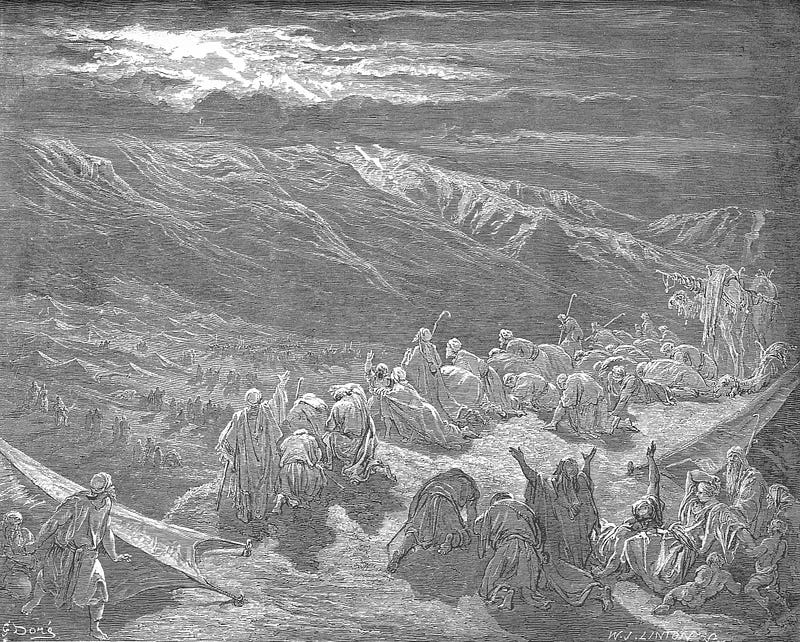
The Giving of the Law Upon Mt. Sinai by Gustave Doré

Previous Day 035: Exodus 16–18

Exodus 19

At Mount Sinai

After leaving Egypt, the Israelites journey to Mount Sinai. It is here that God reveals himself to Moses and gives him instructions for the people. This is where they will enter into a covenant with God and become his treasured possession, a kingdom of priests and a holy nation.

Moses summons the elders and tells them what God has said. The people agree to obey all that God commands and Moses relays their response back to God.

God instructs Moses to put limits around the mountain, warning that anyone who touches it shall be put to death. Moses is then instructed to consecrate the people for two days so they may stand before God on the third day. They must wash their clothes and be prepared for the third day when they will meet with God.

Moses then consecrates the people, washing them with water and having them prepare for three days before they are allowed to come near the mountain.

On the third day, there is thunder, lightning, a thick cloud over the mountain and a loud trumpet blast. The people are afraid and Moses brings them to the foot of the mountain where they see smoke and fire and hear God’s voice.

God calls Moses up to the mountain and reiterates His specific instructions for how the people and priests are to approach him.

Photo by Dave Herring on Unsplash

Exodus 20

The Ten Commandments

God then speaks the Ten Commandments to all the people gathered at the base of Mount Sinai. These commandments are a set of moral and religious laws that will guide the Israelites in their relationship with God and with each other.

The first four commandments focus on our relationship with God:

  1. You shall have no other gods before me.
  2. You shall not make for yourself an idol.
  3. You shall not misuse the name of the Lord your God.
  4. Remember the Sabbath day by keeping it holy.

The next six commandments focus on our relationship with others:

  1. Honor your father and mother.
  2. You shall not murder.
  3. You shall not commit adultery.
  4. You shall not steal.
  5. You shall not give false testimony against your neighbor.
  6. You shall not covet.

These commandments serve as a guide for living a moral and righteous life, and are still relevant today in many religions and belief systems. They promote love, respect, and justice towards both God and our fellow human beings.

Idols and Altars

After receiving the Ten Commandments, God further instructs Moses on the construction of altars for sacrifices and offerings. He also warns against making idols or gods of silver or gold.

God reminds the Israelites to build an altar with uncut stones and not to use tools in its construction. This is to prevent the temptation of using those same tools to create idols.

He also commands that if they do make an altar of earth, it must be made without steps so as to not reveal any nakedness while approaching it.

Photo by Vlad Kiselov on Unsplash

Exodus 21

Hebrew Servants

God continues to give Moses law and instruction on various matters that will govern the lives of the Israelites. He begins by outlining laws for Hebrew slaves, stating that they shall serve their masters for six years and then be set free in the seventh year.

If a servant chooses to stay with his master, he must have his ear pierced as a sign of permanent servitude.

If a man sells his daughter into servitude, she is to be treated as a daughter and not as a servant. If the master does not take care of her, she shall be allowed to go free.

Personal Injuries

God then addresses the issue of personal injury. If a person injures another, they must provide compensation for any loss of wages or medical expenses as well as a payment for pain and suffering. However, if someone intentionally kills another, they shall face the death penalty.

These laws promote accountability and justice for all individuals, regardless of their social status or wealth.

God also outlines laws for property and possessions. If a person’s animal causes harm to another’s property, they must compensate the owner for the loss.

These laws encourage respect for personal belongings and promote responsible ownership. They also emphasize the importance of treating others with fairness and honesty.

As we continue reading through Exodus, we see how God establishes a system of laws and guidelines for his people. These laws serve as a moral code for how to live in harmony with God and each other, promoting justice, equality, and accountability. They also highlight the importance of valuing human life and respecting personal property.

Next Day 037: Exodus 22–24

Faith
Bible
Bible Study
Law
Mountains
Recommended from ReadMedium