
Bible Study Guide Day 032: Exodus 7–9
Hail fell and lightning flashed back and forth. It was the worst storm in all the land of Egypt since it had become a nation.
Exodus 9:24
Exodus 7
Aaron to Speak for Moses
The Lord tells Moses that He will make him like God to Pharaoh, and Aaron his brother will be his prophet. God instructs Moses to tell Aaron everything God commands, and Aaron will speak for him to Pharaoh. God also warns Moses that Pharaoh’s heart will be hardened, and he will not let the Israelites go. However, God will bring His people out of Egypt with mighty acts of judgement.
Aaron’s Staff Becomes a Snake
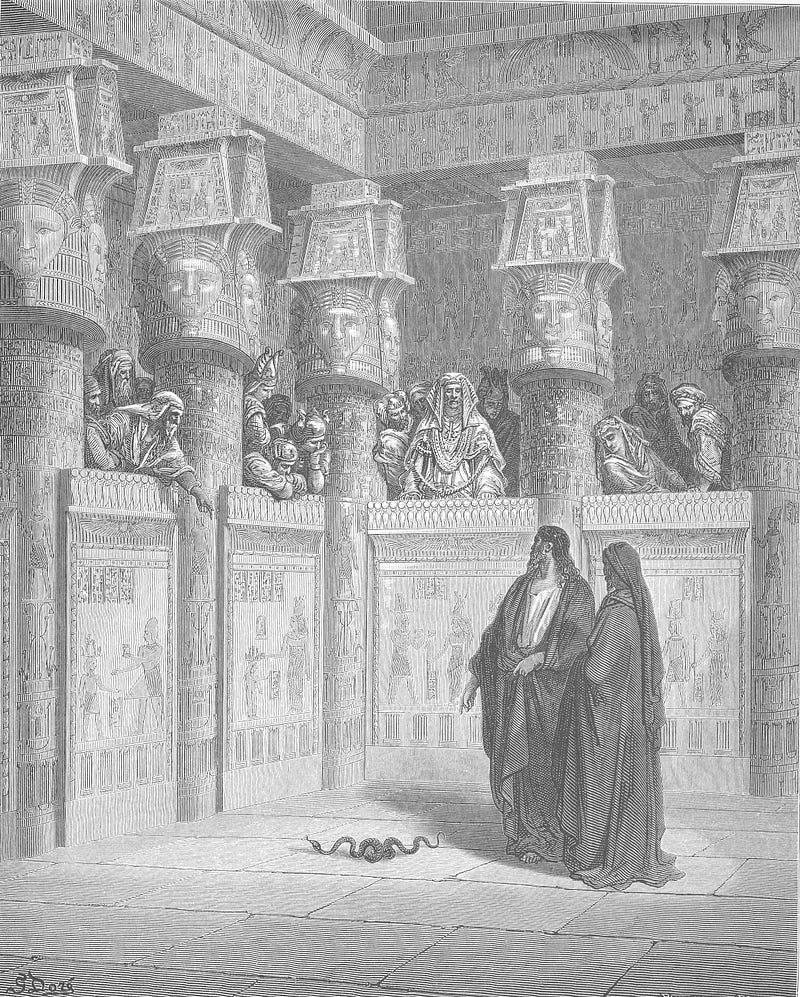
Moses and Aaron go to Pharaoh, and Aaron throws down his staff before Pharaoh and his officials. The staff becomes a snake, but Pharaoh’s magicians also turn their staffs into snakes by their secret arts. However, Aaron’s snake swallows up the magicians’ snakes.
This is the first time we see Pharaoh’s heart being hardened, as he refuses to listen to Moses and Aaron’s request to let the Israelites go. We also see the power of God through Aaron’s staff turning into a snake and swallowing up the magicians’ snakes. This show of power is just the beginning of God’s judgement on Egypt.
The Plague of Blood
God instructs Moses to tell Aaron to stretch out his staff over the waters of Egypt, turning them into blood. The Nile river, along with all the other rivers, canals, ponds, and even water stored in vessels becomes blood. The fish die, and the Egyptians are unable to drink their water.
This plague shows God’s power over the elements and also serves as a direct hit on one of Egypt’s major sources of livelihood and sustenance. Yet, Pharaoh’s heart remains hardened, and he does not release the Israelites.

Exodus 8
The Plague of Frogs
God commands Moses to tell Aaron to stretch out his staff over the waters of Egypt again, bringing forth hordes of frogs that cover the land. Even Pharaoh’s palace is overrun with frogs. Pharaoh finally asks Moses to pray to the LORD to take away the frogs, and in return, he will let the people go sacrifice to God.
However, as soon as the frogs are gone, Pharaoh changes his mind and refuses to keep his promise. This is a pattern we see throughout these chapters — Pharaoh’s temporary surrender under pressure, followed by a hardening of his heart and refusal to release the Israelites.
The Plague of Gnats
God tells Moses to tell Aaron to strike the dust, turning it into gnats that cover all of Egypt. This plague is different from the previous ones as it affects not just the Egyptians but also the Israelites in Goshen. The magicians try to replicate this plague but fail, acknowledging that it is the finger of God at work.
Even though Pharaoh’s magicians recognize God’s power, Pharaoh still refuses to listen and continues to harden his heart.
The Plague of Flies
God warns Pharaoh that if he does not let the Israelites go, He will send swarms of flies on all the land except in Goshen. This time, though, God makes a distinction between His people and the Egyptians, sparing the Israelites from this plague.
Dense swarms of flies cover the land, making life unbearable for the Egyptians.
Pharaoh then offers to let the Israelites sacrifice within Egypt but insists they cannot leave. Moses stands firm and refuses this offer, knowing that God has commanded them to leave Egypt completely.
Pharaoh replies that he will let the Israelites go, but they must not go far. However, once again, after the plague is lifted, Pharaoh changes his mind and hardens his heart.
Exodus 9
The Plague on Livestock
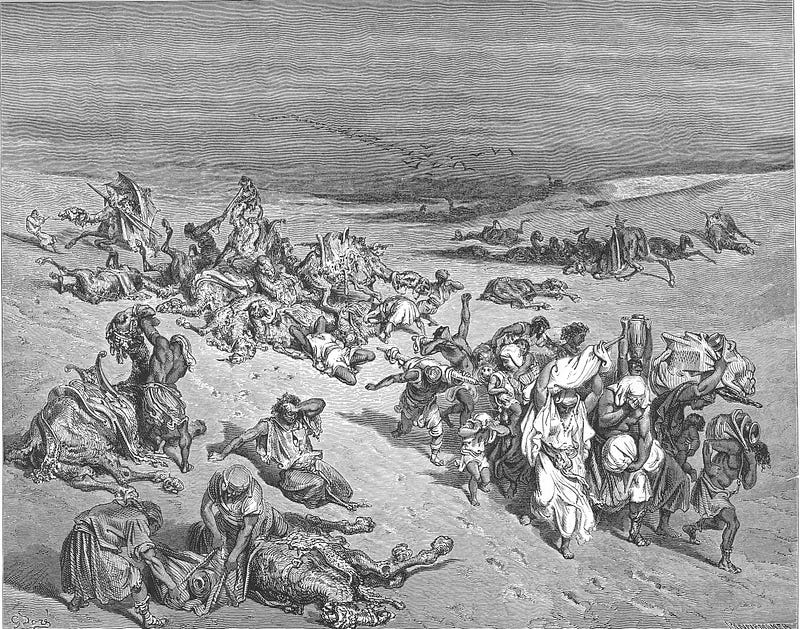
God tells Moses to tell Pharaoh to let His people go and warns him that if he doesn’t, all the livestock in Egypt will die. However, once again, God makes a distinction between His people and the Egyptians, and none of the Israelites’ livestock dies.
This plague shows Pharaoh that his power and wealth are no match for God’s power. Yet, he still refuses to let the Israelites go.
The Plague of Boils
God instructs Moses to take handfuls of soot from a furnace and throw it into the air, causing boils to break out on people and animals throughout Egypt. This is the first time that God’s judgement directly affects the Egyptians’ health.
The hardening of Pharaoh’s heart continues, as he still refuses to release the Israelites.
The Plague of Hail
God warns Pharaoh of a severe hailstorm unlike any Egypt has ever seen. He instructs the Egyptians to bring their livestock and people inside, but those who do not heed God’s warning suffer great loss.
This plague shows that even though God is judging Egypt, He still cares for His people and protects them in the midst of His judgement. The only place where it does not hail is Goshen, once again showing the distinction between God’s people and the Egyptians.
Pharaoh summons Moses and Aaron, confessing his sin and asking them to plead with God to stop the hail. Moses agrees, knowing that this is a momentary surrender from Pharaoh. When Pharaoh sees that the hail has stopped, he hardens his heart once again and refuses to let the people go.