avatarThomas Guy Lovett

Free AI web copilot to create summaries, insights and extended knowledge, download it at here

3996

Abstract

biodiversity — which sustain human well-being and life.</p><p id="eb95">In fact, COVID-19 already shows us what happens when we slow down and flatten the curve. Some commentators suggest the lockdown is leading to <a href="https://www.theguardian.com/environment/2020/mar/23/coronavirus-pandemic-leading-to-huge-drop-in-air-pollution">fewer deaths</a> through a dramatic reduction in <a href="https://www.theguardian.com/environment/2020/apr/11/positively-alpine-disbelief-air-pollution-falls-lockdown-coronavirus">air pollution</a> and traffic accidents. This is a clear signal that the health, climate and (looming) financial crisis are intertwined and have deep common roots within a paradigm of expansion and exploitation.</p><figure id="28b3"><img src="https://cdn-images-1.readmedium.com/v2/resize:fit:800/1*wevEZJcBfyQfooFJxQCXNw.jpeg"><figcaption>The agricultural frontier expands daily across the globe (Source: <a href="https://www.ucsusa.org/sites/default/files/images/2014/09/fa-industrial-monoculture-aerial-large.jpg">UCSUCA</a>)</figcaption></figure><h2 id="f36b">The Endless Frontier: a detachment from reality</h2><p id="fcad"><i>“The image of the frontier is probably one of the oldest images of mankind, and it is not surprising that we find it hard to get rid of.” — Kenneth Boulding</i></p><p id="a2d5">In 1966, <a href="http://arachnid.biosci.utexas.edu/courses/THOC/Readings/Boulding_SpaceshipEarth.pdf">Kenneth Boulding</a> described the “Cowboy Economy”: an open system dependent on constant input from “infinite reservoirs’ and more concerned with production than ensuring the maintenance of resources. He wrote that an open economy is often associated “with reckless, exploitative, romantic, and violent behaviour”. To function, such an economy must believe the Earth’s resources to be inexhaustible.</p><p id="0a6e">Does it sound familiar? It should. Think of the images of the <a href="https://news.mongabay.com/2019/08/greenpeace-releases-dramatic-photos-of-amazon-fires/">Amazon burning</a>. Or of an <a href="https://www.independent.co.uk/news/world/asia/orangutan-defends-jungle-home-video-digger-ape-borneo-indonesia-deforestation-a8387836.html">orangutan</a> fighting construction workers in Indonesia. We are part of a ”reckless” ego-centric economy, in which management of resources is detached from human well-being: the <a href="http://assets.fsnforum.fao.org.s3-eu-west-1.amazonaws.com/public/discussions/contributions/Soil-degradation-Final-final_0.pdf">UN</a> states conventional land-use is an urgent risk to humanity.</p><p id="f5cf">The conversion and degradation of healthy landscapes for the production of so-called “<a href="https://sustainabilitycommunity.nature.com/users/335374-michele-graziano-ceddia/posts/58735-follow-the-money-how-the-super-rich-drive-cropland-expansion-via-direct-investments-in-agriculture">flex-crops</a>” — oil palm, soy bean, sugar cane — demonstrates this. These crops all have various food, feed and industrial uses but their cultivation is nothing to do with food production. Rather it is about agricultural investment and moving “pools” of monetary capital around.</p><figure id="65d1"><img src="https://cdn-images-1.readmedium.com/v2/resize:fit:800/1*mHFAS3uR84_MefsjO83_OA.png"><figcaption>The cultivation of “flex-crops”, like oil palm, demonstrates how land-use is detatched from human well-being (Source: <a href="https://www.flickr.com/photos/cifor/38802487905">CIFOR</a>)</figcaption></figure><p id="7c32">Because in our current system, money is fungible: there is a constant supply of freely exchangeable and replaceable capital always looking for profit. The people making the investments are rarely connected with the ecosystems being destroyed; and money always wants to grow, so the cycle of frontier expansion and degradation continues.</p><p id="f588">We are all now acutely experiencing what ecological degradation and a “reckless” economy means for human well-being and planetary health.</p><h2 id="

Options

6640">There is an alternative</h2><p id="6d15">As an alternative to the “Cowboy Economy”, Kenneth Boulding presented a “closed-system” in which the “outputs of all parts of the system are linked to the inputs of other parts”. In other words, the various components of the system are connected and in constant interaction, just like a healthy ecosystem. The main concern of a closed system is to ensure longevity by maintaining and curating the fundamental resources which living beings depend. Boulding called this the “Spaceman Economy”.</p><p id="2df5"><i>“Earth has become a single spaceship, without unlimited reservoirs of anything, either for extraction or for pollution, and in which, therefore, man must find his place in a cyclical ecological system.” — Kenneth Boulding</i></p><figure id="2809"><img src="https://cdn-images-1.readmedium.com/v2/resize:fit:800/1*6YI6HLfyv3mIh_DAifarJw.jpeg"><figcaption><i>“Earth rise”: taken by William Anders from Apollo 8 in 1968 </i>(Source: <a href="https://www.nasa.gov/image-feature/apollo-8-earthrise]">NASA</a>)</figcaption></figure><p id="9e10">Closed system thinking led to the rise of ecological economics. This discipline is rooted in the idea that <b>a real economy functions within planetary boundaries</b>; aligned to the planet’s threshold and carrying capacity. Such an economy flourishes with ecology and does not fight against it. Because ecosystems and healthy landscapes are not externalities to the economic production systems — they form the very foundation of it.</p><p id="da24">This week, the Amsterdam municipality announced a <a href="https://www.theguardian.com/world/2020/apr/08/amsterdam-doughnut-model-mend-post-coronavirus-economy">new vision</a> for the city guided by economist Kate Raworth. Her economic model <a href="https://www.kateraworth.com/">“Doughnut Economics”</a>, provides a framework that provides people with life’s essentials within the carrying capacity of the planet. This offers an opportunity to see where people and economy fit in with the world around them and how they can thrive in balance with natural ecosystems.</p><p id="e4d0"><i>“The world is experiencing a series of shocks and surprise impacts which are enabling us to shift away from the idea of growth to ‘thriving’.”– Kate Raworth</i></p><h2 id="cff8">Beyond the curve: building a real economy</h2><p id="1792">Economic growth and frontier-thinking during the 20th century caused untold damage to the world’s ecosystems and is driving human society to the brink of collapse. The COVID-19 outbreak highlights this vulnerability. Now, it is more clear than ever that there are thresholds to planetary boundaries and overloading the carrying capacity leads to severe consequences.</p><p id="cddc"><b>The challenge of the 21st century is to build a real economy that supports healthy human societies within the carrying capacity of Earth.</b></p><p id="f75e">There is a way. By reflecting on and rethinking our relationship with the natural world we can create circular systems that function within ecological carrying capacity. When we use ecosystems as a foundation, healthy landscapes become building blocks for prosperous and resilient global and local societies. It does not mean looking backward, but rather to a future “beyond the curve”, where human economy, finance and society are based on regeneration, natural abundance and human well-being.</p><p id="2b0e">This is a wake up call to channel investment into restoring degraded ecosystems. To build a <b>real economy</b> founded on healthy, functioning landscapes. And to align human well-being and planetary health. Let’s build a future beyond the curve. Because, after all, we are part of this world.</p><p id="fe7c"><a href="https://www.linkedin.com/in/thomasguylovett/"><i>Thomas Guy Lovett</i></a><i> is an anthropologist and writer working at <a href="https://www.commonland.com">Commonland</a>: a facilitator for large-scale lanscape restoration.</i></p></article></body>

Beyond the curve: building a real economy

The COVID-19 crisis is affecting almost every person on Earth and will continue to impact our lives for the foreseeable future. There is, however, power in imagining a world “beyond the curve”. A world where we collaborate as a global community in unprecedented ways and rewrite business as usual.

Major cities across the world are in lockdown. The economy is at a standstill. Social distancing, self-isolation, working from home, not being able to see family and friends are the new normal. Not only are the lives of millions as risk, but unemployment rates are soaring and this health crisis will likely result in another financial crash, plunging the world into economic debt.

A major global effort is galvanizing collective action to slow the spread of COVID-19 and “flatten the curve”. And it’s working. Lock-down, quarantines and other measures are reducing the spread of the virus and saving lives.
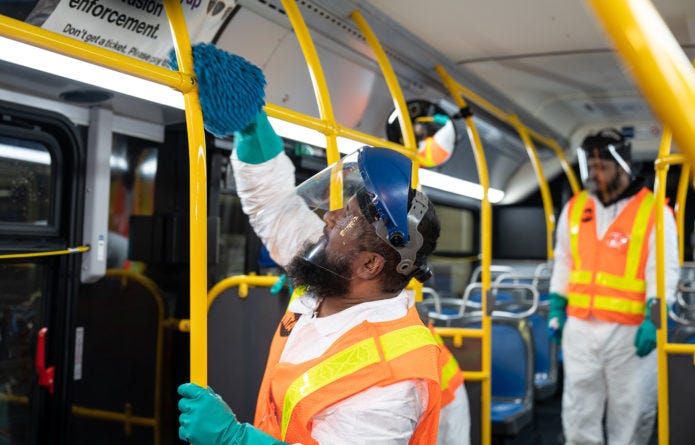
The COVID-19 outbreak is impacting all levels of society across the world (Source: Heart Resources)

But as soon as COVID-19 sweeps through countries, cities and neighbourhoods where running water, bathing and cooking facilities are a commons and not private, we will experience the privilege of social distancing and witness the burden that this virus will inflict on the poorer communities across the world.

COVID-19: a long time coming

In a 2015 TED TALK, Bill Gates argued that microbes were far more deadly than nuclear war. He laid out a scenario in which the world’s health care system would be completely unprepared for a highly contagious respiratory disease. Along with many warnings from doctors and scientists around the world, Gates got it right. The vulnerability of our health care systems has been wilfully exposed.

More than sixty percent of infectious diseases that affect humans are zoonotic and their causes well-known. Experts in the field of “ecology of disease” predict where new viruses are likely to spill over to humans from wild animal populations. These scientists work in areas of deforestation because degraded landscapes provide ripe conditions for pathogens to erupt. In the last fifty years, a four-fold increase in new viruses, like Ebola, AIDS, SARS, Lyme disease and now COVID-19, have been linked to global landscape degradation and the wildlife trade.
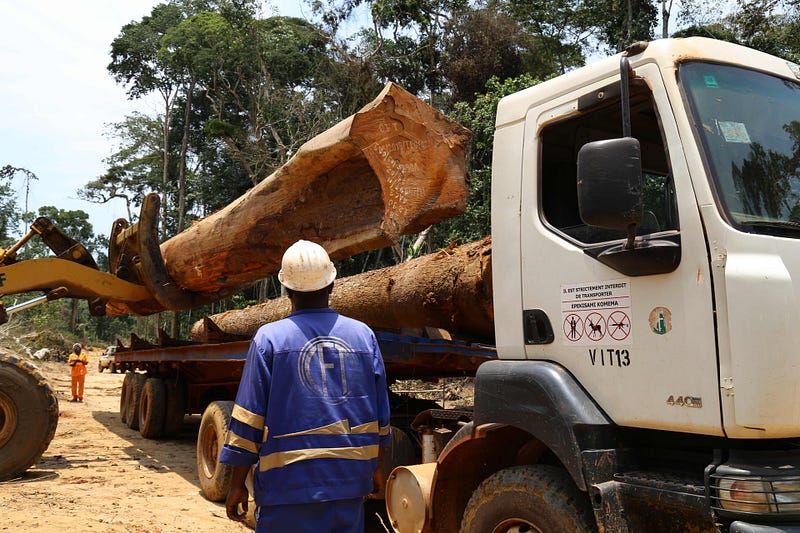
Deforestation and land degradation create the conditions for pathogens to jump from wild to human populations (Source: Getty Images)

Flattening the curve for planetary health

Although you may have just heard of “flattening the curve”, the concept is nothing new. Environmentalists have been shouting for years that we need to flatten the curve of human growth and reduce our “ecological footprint”; because human activity and natural resource exploitation weaken ecosystems and impact planetary health. As a species, humans are ‘nest polluters’: we degrade the very components — air, water, land and biodiversity — which sustain human well-being and life.

In fact, COVID-19 already shows us what happens when we slow down and flatten the curve. Some commentators suggest the lockdown is leading to fewer deaths through a dramatic reduction in air pollution and traffic accidents. This is a clear signal that the health, climate and (looming) financial crisis are intertwined and have deep common roots within a paradigm of expansion and exploitation.
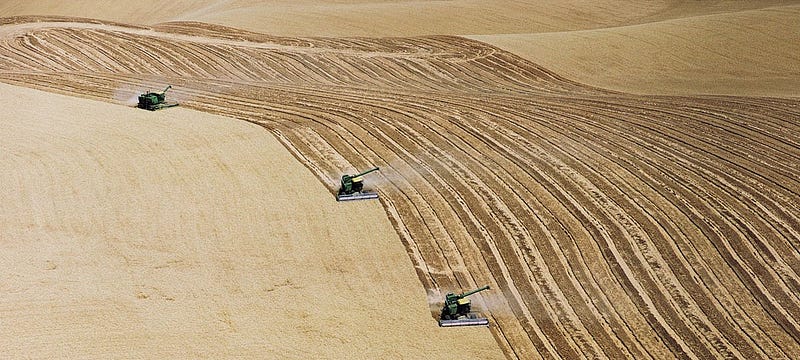
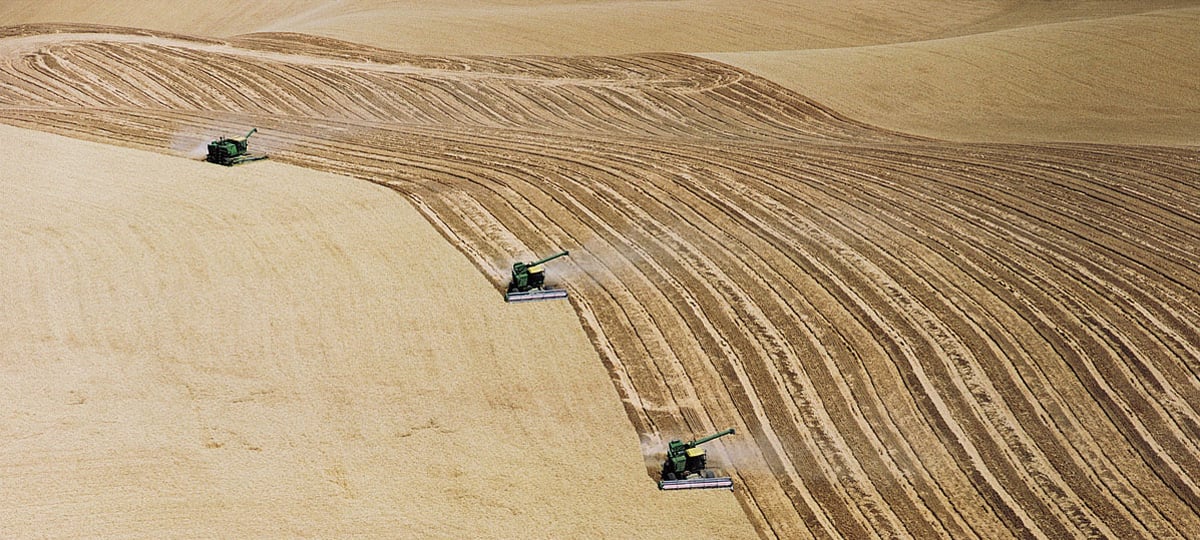
The agricultural frontier expands daily across the globe (Source: UCSUCA)

The Endless Frontier: a detachment from reality

“The image of the frontier is probably one of the oldest images of mankind, and it is not surprising that we find it hard to get rid of.” — Kenneth Boulding

In 1966, Kenneth Boulding described the “Cowboy Economy”: an open system dependent on constant input from “infinite reservoirs’ and more concerned with production than ensuring the maintenance of resources. He wrote that an open economy is often associated “with reckless, exploitative, romantic, and violent behaviour”. To function, such an economy must believe the Earth’s resources to be inexhaustible.

Does it sound familiar? It should. Think of the images of the Amazon burning. Or of an orangutan fighting construction workers in Indonesia. We are part of a ”reckless” ego-centric economy, in which management of resources is detached from human well-being: the UN states conventional land-use is an urgent risk to humanity.

The conversion and degradation of healthy landscapes for the production of so-called “flex-crops” — oil palm, soy bean, sugar cane — demonstrates this. These crops all have various food, feed and industrial uses but their cultivation is nothing to do with food production. Rather it is about agricultural investment and moving “pools” of monetary capital around.
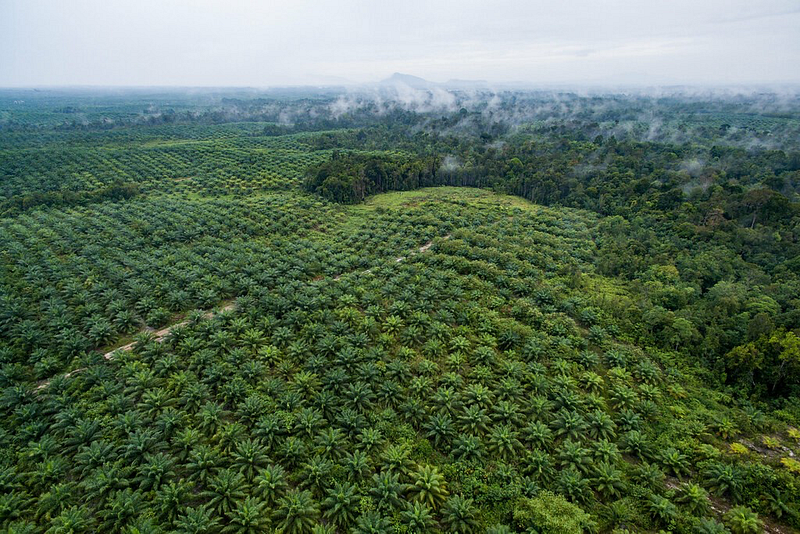
The cultivation of “flex-crops”, like oil palm, demonstrates how land-use is detatched from human well-being (Source: CIFOR)

Because in our current system, money is fungible: there is a constant supply of freely exchangeable and replaceable capital always looking for profit. The people making the investments are rarely connected with the ecosystems being destroyed; and money always wants to grow, so the cycle of frontier expansion and degradation continues.

We are all now acutely experiencing what ecological degradation and a “reckless” economy means for human well-being and planetary health.

There is an alternative

As an alternative to the “Cowboy Economy”, Kenneth Boulding presented a “closed-system” in which the “outputs of all parts of the system are linked to the inputs of other parts”. In other words, the various components of the system are connected and in constant interaction, just like a healthy ecosystem. The main concern of a closed system is to ensure longevity by maintaining and curating the fundamental resources which living beings depend. Boulding called this the “Spaceman Economy”.

“Earth has become a single spaceship, without unlimited reservoirs of anything, either for extraction or for pollution, and in which, therefore, man must find his place in a cyclical ecological system.” — Kenneth Boulding
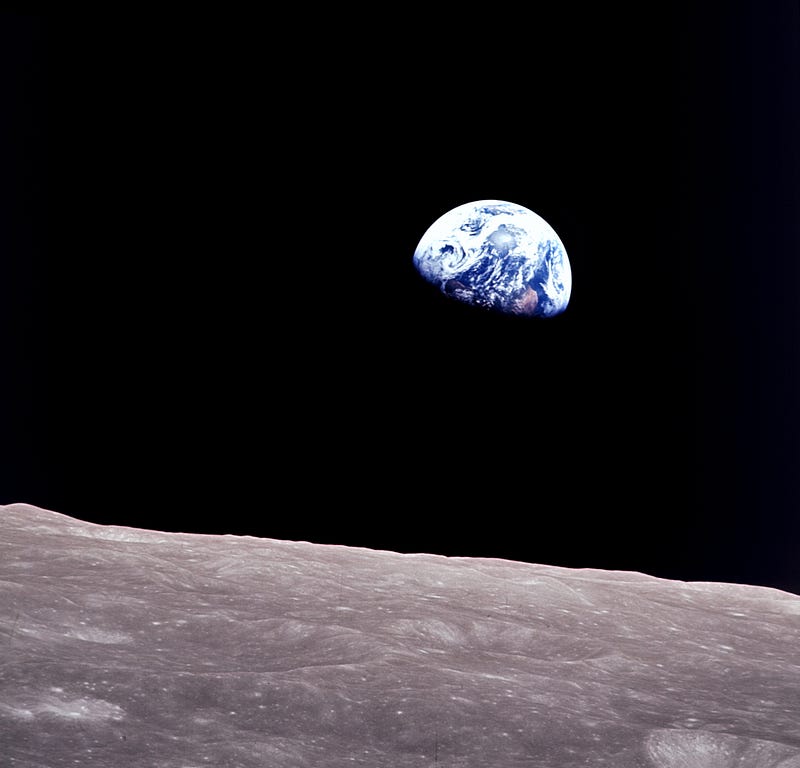
“Earth rise”: taken by William Anders from Apollo 8 in 1968 (Source: NASA)

Closed system thinking led to the rise of ecological economics. This discipline is rooted in the idea that a real economy functions within planetary boundaries; aligned to the planet’s threshold and carrying capacity. Such an economy flourishes with ecology and does not fight against it. Because ecosystems and healthy landscapes are not externalities to the economic production systems — they form the very foundation of it.

This week, the Amsterdam municipality announced a new vision for the city guided by economist Kate Raworth. Her economic model “Doughnut Economics”, provides a framework that provides people with life’s essentials within the carrying capacity of the planet. This offers an opportunity to see where people and economy fit in with the world around them and how they can thrive in balance with natural ecosystems.

“The world is experiencing a series of shocks and surprise impacts which are enabling us to shift away from the idea of growth to ‘thriving’.”– Kate Raworth

Beyond the curve: building a real economy

Economic growth and frontier-thinking during the 20th century caused untold damage to the world’s ecosystems and is driving human society to the brink of collapse. The COVID-19 outbreak highlights this vulnerability. Now, it is more clear than ever that there are thresholds to planetary boundaries and overloading the carrying capacity leads to severe consequences.

The challenge of the 21st century is to build a real economy that supports healthy human societies within the carrying capacity of Earth.

There is a way. By reflecting on and rethinking our relationship with the natural world we can create circular systems that function within ecological carrying capacity. When we use ecosystems as a foundation, healthy landscapes become building blocks for prosperous and resilient global and local societies. It does not mean looking backward, but rather to a future “beyond the curve”, where human economy, finance and society are based on regeneration, natural abundance and human well-being.

This is a wake up call to channel investment into restoring degraded ecosystems. To build a real economy founded on healthy, functioning landscapes. And to align human well-being and planetary health. Let’s build a future beyond the curve. Because, after all, we are part of this world.

Thomas Guy Lovett is an anthropologist and writer working at Commonland: a facilitator for large-scale lanscape restoration.

Covid-19
Economy
Circulareconomy
Landscape
Regenerative Agriculture
Recommended from ReadMedium