
Beyond the Constitution: Powers of the U.S. President in Foreign Affairs
Exposing the extent and limits of presidential influence on the world stage.
The U.S. Constitution is often praised for its detailed guidance on the structure of American government, but it is conspicuously silent on the President’s extensive role in foreign affairs (policy). These functions suggest a wide range of executive authority, from negotiating treaties to appointing ambassadors and recognizing foreign nations. This “oversight” is not just a quirk of history, but a door to understanding how presidential power extends beyond the written words into a domain defined by “situational discretions” and further judicial interpretations (we will define them below). It should make one curious to understand whether these powers actually exist, and also to realize if there actually are limits to congressional oversight.
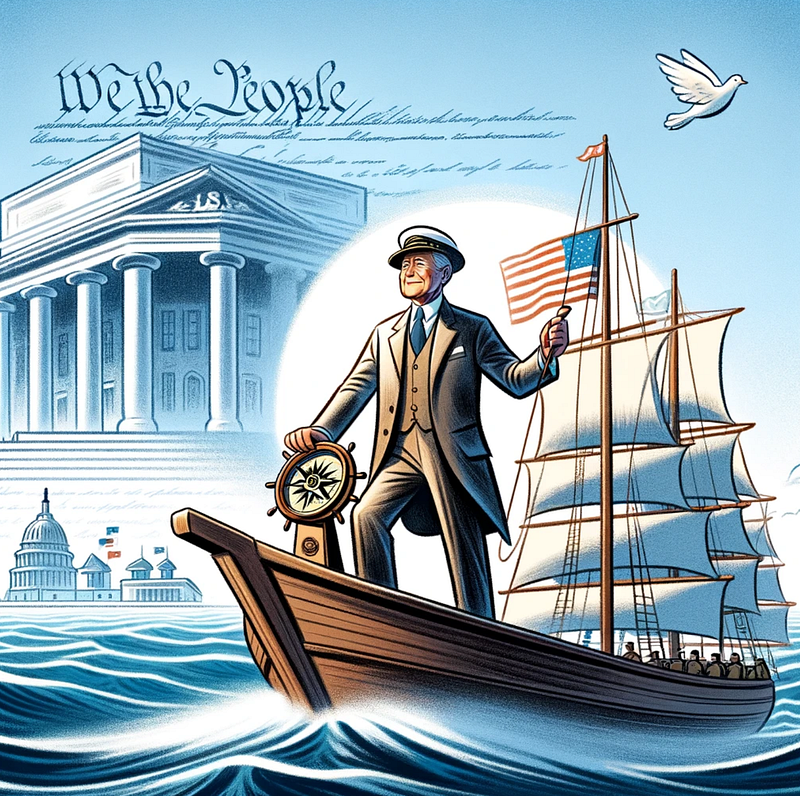
The Presidential Toolbox in Foreign Affairs
As defined in the Constitution (Article II “Executive”) , in international relations the President has a few key tools at his disposal. Two of these explicit authorities are:
- The ability to make treaties with the support of 2/3 of the U.S. Senate; and
- The power to receive foreign ambassadors.
However, the scope of executive power in foreign affairs isn’t limited to these explicit authorities. A third, somewhat shadowy one scene is to enter into non-treaty executive agreements.
Unlike treaties, executive agreements do not require Senate approval and do not rank as federal law in the hierarchy established by the Supremacy Clause (Article VI, clause 2). But they wield considerable influence in defining U.S. foreign policy and in setting the stage for how federal law can preempt conflicting state laws.
Supremacy Clause (Article VI, clause 2)
“This Constitution, and the Laws of the United States which shall be made in Pursuance thereof; and all Treaties made, or which shall be made, under the Authority of the United States, shall be the supreme Law of the Land; and the Judges in every State shall be bound thereby, any Thing in the Constitution or Laws of any State to the Contrary notwithstanding.”
The Supreme Court’s decision in Zivotofsky v. Kerry (2015) also illustrates the nuanced authority of the presidency in foreign affairs, particularly in recognizing foreign sovereignty. The case involved a congressional act that sought to allow U.S. citizens born in Jerusalem to list Israel as their birthplace on passports — a move opposed by the executive branch, which does not recognize Jerusalem as part of Israel (at least till December 6, 2017). The Court’s ruling underscored the President’s exclusive and perpetual right to recognize and maintain recognition of foreign states, highlighting a critical aspect of executive power that operates beyond the explicit text of the Constitution.

The Presidential Mantle in Military Affairs
The U.S. President wears many hats, but perhaps none is as important as that of Commander-in-Chief, a role endowed with the solemn responsibility of overseeing the nation’s military forces. This designation places the entirety of the U.S. Army, Navy, and by extension, other military branches such as the Air Force and Coast Guard, under the direct command of the President. This arrangement ensures that the military remains under civilian control, and consolidates that authority in the hands of a single individual to maintain a chain of command and prevent military overreach.
While the core of the Commander-in-Chief Clause (Article II, section 2, clause 1) is widely understood — establishing presidential leadership over the military — the extent of this power faces ongoing debate. This conversation has been determined by historical precedents, such as the Prize Cases, 67 U.S. (1863), which affirmed the president’s right to act decisively to defend the nation against sudden attacks without waiting for congressional approval. This authority is merely a response mechanism, and also has been interpreted to allow the President to undertake a variety of military actions, from combating piracy to conducting evacuations of U.S. citizens in danger abroad, without explicit congressional authorization.
Commander in Chief Clause (Article II, section 2, clause 1)
“The President shall be Commander in Chief of the Army and Navy of the United States…”
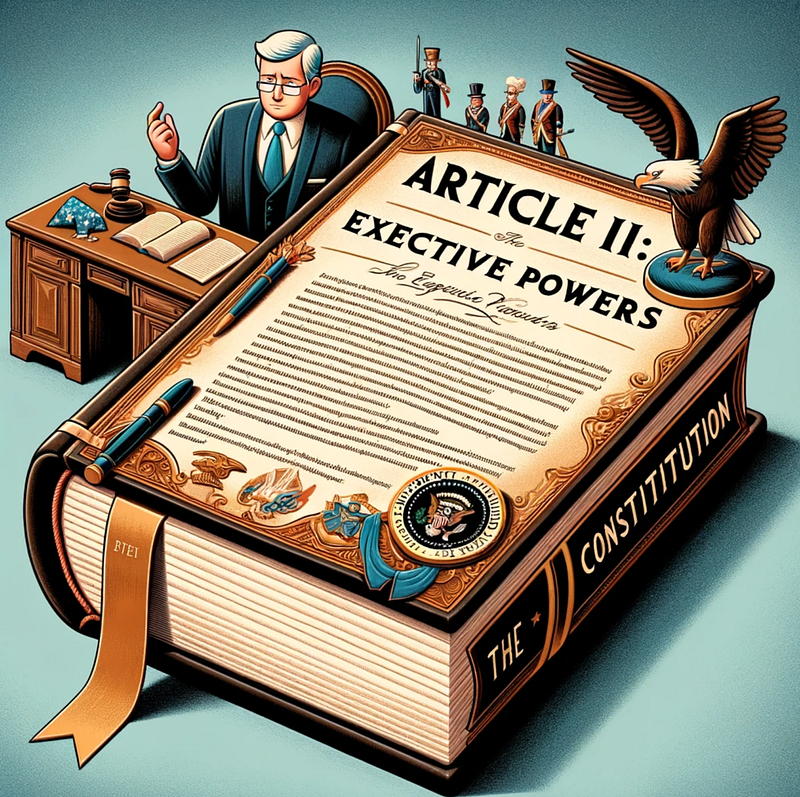
Presidential Powers vs. Congressional Checks in Times of War
The interactions between presidential authority and congressional oversight becomes most pronounced in matters of war and national security. The the Commander-in-Chief Clause has been a foundation for presidents asserting broad unilateral powers in these areas. For instance, during President George W. Bush’s administration, arguments were made that certain legislative restrictions — such as those forbidding torture, mandating warrants for foreign intelligence surveillance, and limiting detention practices — were unconstitutional encroachments on the president’s wartime prerogatives.
Yet the Supreme Court has carefully suggested that while the presidency wields significant power in national defense, that power is not absolute. The landmark decision in Hamdan v. Rumsfeld (2006) confirmed this point by affirming that Congress can impose meaningful limits on the President’s wartime actions, provided that those limits are a proper exercise of war powers.
Legal battles over the detention of enemy combatants continue to highlight the balance between national security needs and individual rights. In Hamdi v. Rumsfeld (2004), the Supreme Court upheld the detention of a U.S. citizen captured while fighting in Afghanistan, recognizing the President’s authority to detain enemy combatants. At the same time, however, it upheld the detainee’s rights under the Due Process Clause (see below), ensuring a fair opportunity to challenge the basis for his detention before an impartial adjudicator.
“No person shall … be deprived of life, liberty, or property, without due process of law.”
Due Process Clause in Section 1 of the Fourteenth Amendment:
“…nor shall any State deprive any person of life, liberty, or property, without due process of law.”
Moreover, the Court’s decision in Boumediene v. Bush (2008) extended these protections to noncitizens detained at Guantánamo Bay, asserting their right to challenge their detention under the Constitution’s Suspension Clause. While this ruling does not extend a blanket right of judicial review to non-citizens detained outside the U.S., it sets a precedent for the potential reach of constitutional protections.
Suspension of Habeas Corpus (Article I, section 9, clause 2)
“The Privilege of the Writ of Habeas Corpus shall not be suspended, unless when in Cases of Rebellion or Invasion the public Safety may require it.”
Something to Consider
As we see, the President plays a central role in directing international relations, in leading military operations, and ensuring national security. On the other side, this influence is balanced by the oversight functions of Congress and the interpretive rulings of the Supreme Court.
In a world of ever-changing international landscapes and security threats, the need for a well-informed and actively engaged electorate has never been more important. Understanding the checks and balances is a civic duty. Awareness of how the government works, especially in the context of foreign policy and national security, empowers to contribute to the national dialogue and hold the leaders accountable.
That is why the responsibility of citizens goes beyond casting a vote. It must include staying informed about the decisions and policies that affect the nation and the world. By engaging in the democratic process-through education, discussion, and participation — we play our role in upholding the founding principles.
Disclaimer
The information provided in this article is for informational and educational purposes only and is not intended to serve as legal advice or as a substitute for legal counsel. While efforts have been made to ensure the accuracy and completeness of the content herein, it is important to note that legal principles and regulations can vary significantly based on jurisdiction and specific circumstances. Therefore, this article should not be used as a definitive legal resource or as a basis for making legal decisions. Readers are strongly advised to consult with a qualified attorney for advice on legal issues or matters, as each individual case may require detailed and personalized legal analysis.
Reliance solely on the information provided in this article without seeking professional advice from an attorney may lead to unintended legal consequences or misinterpretation. The author or publisher of this article do not accept responsibility for any potential errors or omissions, nor will they be responsible for any losses, injuries, or damages arising from its display or use. The information provided here does not create an attorney-client relationship between the reader and the author or publisher.


