
Beware of the Covert Narcissist
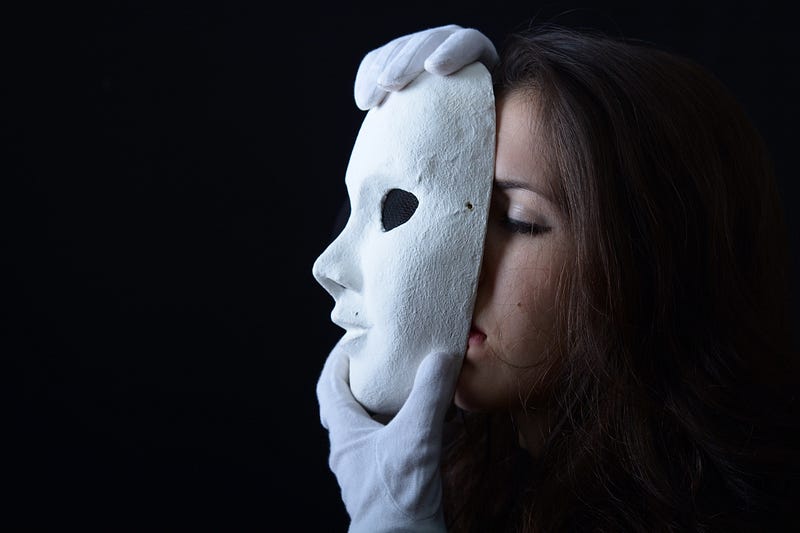
You may be fooled by a covert narcissist, but they’re every bit as much narcissists as the sterotypical extroverted narcissists. Some narcissists may emphasize one personality trait over others. A person with an outgoing personality might always show-off and need to be the center of attention, while another narcissist might be a vindictive bully, an entitled playboy, an imperious authoritarian, or an exacting know-it-all, as articulated by Madonna, “Listen, everyone is entitled to my opinion.”
Some public figures and celebrities exemplify extroverted narcissists — people who are, grandiose and crave attention. Radio host and psychologist Dr. Wendy Walsh said, “Narcissistic personality disorder is not only accepted in the entertainment industry, it’s often a requirement.” (Los Angeles Times, April 11, 2017) The Diagnostic and Statistical Manual criteria describe these types as “Exhibitionist Narcissists.”
The Covert Narcissist
There are several subtypes of narcissists. Among them are covert narcissists. Psychoanalyst James Masterson first identified the “Closet Narcissist” — someone deflated, with an inadequate self-perception. Lacking the aggressiveness of the exhibitionistic narcissist, they’re more prone to depression and feelings of emptiness or like things are falling apart. This subtype has also been referred to as a “covert narcissist,” “vulnerable narcissist,” or “introverted narcissist.” Take a quiz to see if you’re one, but don’t rely on it conclusively without speaking to a mental health provider.
On the surface, they can be hard to identify. These narcissists may appear shy, humble, or anxious. Their gratification may be indirect through their emotional investment in someone they admire. They take things personally and feel distrustful, mistreated, unappreciated, and misunderstood. Although they devalue themselves, they dream of greatness and wonder why people don’t appreciate and understand them.
They still qualify for narcissistic personality disorder (NPD), particularly feeling special and wanting admiration (perhaps secretly), lacking empathy, and feeling entitled. They’re still self-centered and expect special treatment. They often feel that their specialness is not appreciated, that they’re misunderstood, or that people or the world at large hasn’t sufficiently recognized their uniqueness. Some play the role of victim and a martyr.
They might be a philanthropists or in the clergy or helping professions. Yet, despite the fact that they may appear to genuinely care for others, they’re motivated by a need for recognition, power over others, or egoistic pride. They might help by taking over without even asking permission. They behave self-righteously superior, moralistic, or like an exploited, resentful sufferer for all their giving.
Contrasting with the Exhibitionist Narcissist
Despite sharing core traits, in a sense, behaviorally the covert narcissist is the mirror image of the exhibitionist narcissist. While the latter demands to be the center of attention, the former feels slighted that they’re not, or gets attention by playing the victim. Instead of working the room, the covert narcissist is self-absorbed. Normal introverts are generally good listeners, but not this narcissist. They consider others boring or ignorant. Rather than ordering others around, the covert narcissist can get their way indirectly through passive-aggressive behavior. They may agree to things, but not follow through, be late, forget, or pretend there was no agreement. All narcissists are manipulative. Covert narcissists may add self-pity to their toolkit to control others. Rather than put down others directly, they are more likely to express envy.
Due to their introversion, instead of bragging openly, covert narcissists display reserved smugness and judge everyone as inferior. They might act aloof and disinterested or make dismissive or discounting gestures, like looking away, sighing, yawning impolitely, or acting bored. While all narcissists react poorly to criticism, the introvert may have the thinnest skin of all, because they believe they’re uniquely sensitive. Instead of the aggressive and exploitative nature of extroverted narcissist, coverts have feelings of neglect or belittlement, hypersensitivity, anxiety, and delusions of persecution.
The Covert Narcissist in Relationships
The danger is in not seeing through the facade of a covert narcissist, because they’re more passive. But they can be just as destructive to relationships as the extroverted types. The emotional abuse might be more silent and subtle, but can wear you down and demoralize you. Your needs and pleas for attention will be discounted or ignored. You can get sucked into trying to console and help this manipulative martyr to no avail. There’s no way you can fill their emptiness or change their victim mentality. You’re left feeling resentful and angry. Meanwhile, your self-esteem is gradually undermined. The narcissist lacks empathy for you, won’t see you as a separate individual, and will do what’s necessary to maintain power and control. Their pain and needs will always take precedence, so you’re left feeling alone and neglected.
Extroverted narcissists sometimes also act covertly, pout, and play the victim in order to manipulate. Don’t get caught up in definitions. If your needs and feelings are being discounted, if you feel manipulated or abused, see a therapist and learn how to confront this behavior. Get Dealing with a Narcissist.
© Darlene Lancer 2018


