
Better Mental Health Services Won’t Stop America’s Mass Shootings
If our goal is reducing gun violence and preventing mass murder, talking about mental health is not enough.
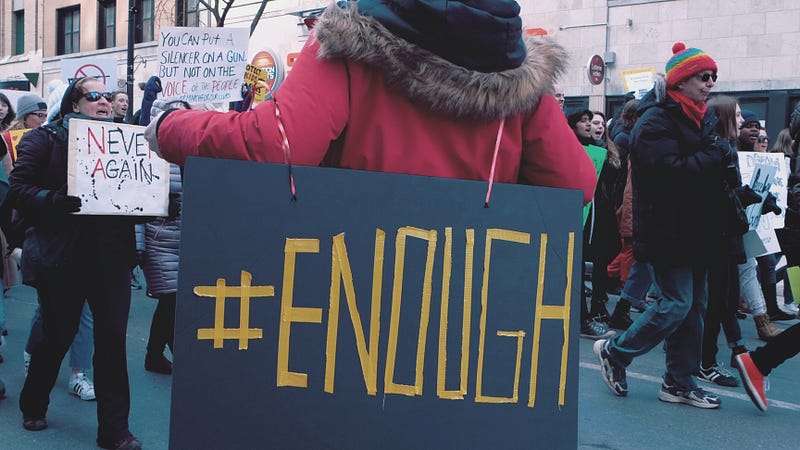
I don’t want to write about guns again.
I don’t want to talk about guns anymore. I’m tired of expending my emotional energy thinking about death. I don’t want to write about gun control and violence and argue with people on the internet about whether the “right to bear arms” should supersede people’s right not to be shot with a weapon whose main purpose is to injure living beings. I’m sick of having the same arguments over and over again and nothing changing.
I also don’t know what else to do. My words are my gift, my greatest power, so I have to use them. I opened my browser this morning to two comments on yesterday’s post about America’s mass shooting epidemic. One was in agreement, and the other was yet another vote for blaming gun violence on mental health:
My take away is that diagnosis and treatment work to reduce violent acts, not show that this isn’t a mental health issue. People who are diagnosed or are in treatment have reached out for help which puts them in a different category. There are (at least) two things involved in a mass shooting: Mental health issues and gun(s). Instead of punishing law abiding gun owners, why not focus on mental health awareness and treatment which will help all.
When did the answer to a complicated issue become an either/or situation? Either we work on gun control or we improve our mental healthcare system? Shouldn’t the government of a country with 327 million citizens be capable of tackling multiple issues at the same time? One or the other on its own will help, but it won’t be enough. This is partially because blaming mental health problems for violent mass murders is a gross oversimplification.
Why do people blame mental illness for mass shootings?
There are likely two main reasons mental illness gets shoved into the spotlight. The first, and most obvious, is that placing any of the responsibility on America’s nearly 400 million firearms would mean we have a gun problem. Millions of people in this country who own firearms and politicians who take money from the NRA don’t want to admit that guns are a big part of why this keeps happening.
Blaming mental illness lets us pretend that this is happening because somebody was sick or insane.
The second is that when we cannot understand a heinous act, it is easier for our minds to wrap around it if we have a reason other than hatred or psychopathy or because it was easy for the person to carry out their plan. Blaming mental illness lets us pretend that this is happening because somebody was sick or insane.
While it might be easier to assume that the perpetrators are suffering from some diagnosable and treatable mental illness, research shows that reality is much more complicated.
Are mass shooters mentally ill?
This question doesn’t have a definitive, simple, yes or no answer. A paper published in the American Journal of Public Health points out:
Surprisingly little population-level evidence supports the notion that individuals diagnosed with mental illness are more likely than anyone else to commit gun crimes. According to Appelbaum, less than 3% to 5% of US crimes involve people with mental illness, and the percentages of crimes that involve guns are lower than the national average for persons not diagnosed with mental illness.
Mental illness is certainly a factor that contributes to some incidents some of the time. However, that some of the time may be as little as twenty percent, per the New York Times:
About one in five mass murderers shows evidence of psychosis, according to Dr. Michael Stone, a forensic psychiatrist who maintains data on some 350 murderers going back more than a century. The other 80 percent have many of the problems that nearly everyone has to manage at some point in life: anger, isolation, depressive moods, resentments, jealousy.
Everyone I know suffers sometimes, we all have bad days. Beyond that, many people (including myself) suffer from generalized anxiety, depression, panic disorders, and other mental illnesses. There is a big difference between experiencing mental illness and having violent tendencies. sometimes they are connected, but more often they are not.
It is undeniable that persons who have shown violent tendencies should not have access to weapons that could be used to harm themselves or others. However, notions that mental illness caused any particular shooting, or that advance psychiatric attention might prevent these crimes, are more complicated than they often seem.
On the aggregate level, the notion that mental illness causes gun violence stereotypes a vast and diverse population of persons diagnosed with psychiatric conditions and oversimplifies links between violence and mental illness. -AJPH
No matter how simple we would like the issue, or the solution, to be, it just isn’t simple.
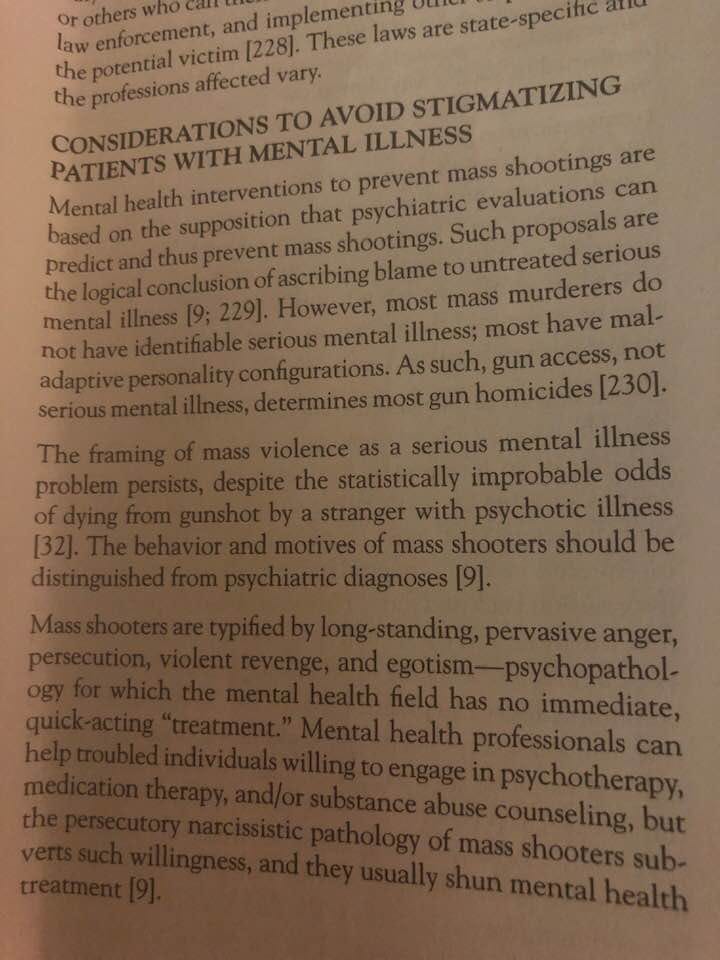
My friend (a licensed therapist) was working on her continuing education and training when she came across this page in her study materials. She shared, “It’s psychopathy, not mental illness, that leads to shootings. There is no significant correlation between psychiatric disorders and mass murder.”
The text points out the unfortunate truth of psychopathy: it’s not particularly treatable, and the treatments that do exist are not quick-acting. No medication or cure exists for psychopaths, though it is possible to improve their interaction with society at large if the disorder is caught at an early age. Regardless, the very nature of this type of mental illness means that they are “indifferent to the expectations of society,” so not likely to willingly seek treatment.
White supremacy, which is on the rise in our country, and the apparent motive for the El Paso shooting last Saturday, is also not a mental illness.
If mental illness doesn’t predict gun violence, what does?
Study after study shows that the best predictor of gun violence is access to guns, not mental health.
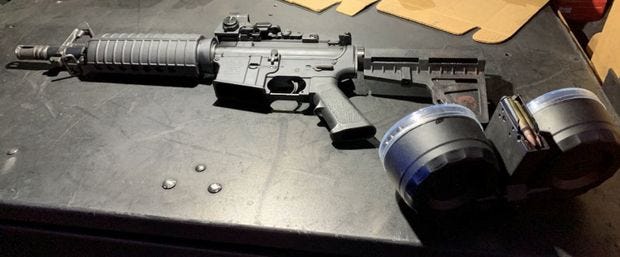
The difference between the United States, which is experiencing mass shootings every day, and other developed countries, which are not, is gun ownership. Americans make up 4.4% of the world population, but own 42% of the world’s guns.
A country’s rate of gun ownership is a far better predictor of public mass shootings than indicators of mental illness, said Adam Lankford, a University of Alabama criminologist who published a 2016 analysis of data from 171 countries.
“If mental illness were the driving factor, we would expect the countries with highest suicide rates to have higher rates of public mass shootings. That’s not what we see,” Lankford said.
Instead, Lankford found, gun ownership per person is the best predictor. -New York Times
Do these countries also have better mental health services than we do? Possibly. But we are not limited to one solution to a complicated problem, and continuing to blame these acts on the mentally ill is just increasing the stigma mentally ill people face, and decreasing the chance they’ll seek help.
“It’s really just scapegoating people with mental health issues,” says Dr. Seth Trueger, an assistant professor of emergency medicine at Northwestern University. And while rates of mental health conditions such as depression, anxiety and suicidal behavior are on the rise in the U.S., Trueger says other nations have similar problems and experience far fewer mass shootings. “Other countries have the same kind of mental health issues we have, the same kind of violent video games we have, the same religiosity that we have. All that stuff is just a distraction” from the need for better gun control, he says. -Time Magazine
Mental health services need reform — so do gun laws
While they don’t provide a total solution, none of this is to say that improved mental health services would not help. On their own, they can’t be nearly enough to address the gun-violence epidemic we are experiencing in the US.
Our healthcare system, including mental healthcare, is severely lacking. Does the system need improvement? Absolutely. In their official statement after last weekend’s shootings, the National Alliance on Mental Illness stated:
At the same time, we cannot forget that mass shootings result in profound trauma that increases the need for mental health care. One in five American adults experience a mental illness, but only 43% of them accessed care in the last year. There is a severe shortage of mental health professionals — more than 60 percent of all counties in the United States do not even have a single psychiatrist. People with mental health needs, including survivors, their friends and families, and first responders, are experiencing long waits for care, if they can get it at all. It’s time for Congress and the Administration to act and make access to mental health care a national priority for everyone.
I engaged in a potentially sticky conversation last night on Facebook with my boyfriend’s brother, who is decidedly more enthusiastic about firearms than I am. We ended up having the calmest, least reactionary conversation about guns I’ve ever had with a gun owner. I left the conversation feeling heard, and also a little more hopeful about the potential for both sides to come together and create solutions that actually work.
He drew the parallel between guns and cars, arguing that cars are dangerous and kill thousands of people per year, but no one is trying to take those away. In Time Magazine, Dr. Seth Trueger framed the same analogy in a different way:
When it comes to ending gun violence, improving mental health care and access may be one piece of the puzzle. But Trueger says better firearms regulation and policy should be far more pressing concerns, along with improving scientists’ ability to do research on gun violence as a public-health issue and strategies that could prevent these tragedies. That’s currently difficult, since the 1996 Dickey Amendment prohibits the use of federal funding to promote gun control.
“The perfect analogy is motor vehicles. Driving has gotten remarkably safer over the last number of decades, because we’ve studied it, we funded research for it and we’ve figured out evidence-based policies to make cars and roads safer,” Trueger says. “[Gun violence requires] the same kind of approach.”
We absolutely need to have a system that is better than what we have. When we talk about reducing gun violence and preventing mass shootings, talking about mental health is not enough.
Refusing to have a conversation about gun regulations, gun safety, limiting gun ownership, and potentially banning certain kinds of firearms in order to focus on mental health problems is counterproductive. We need to stop arguing and start talking to each other about the solutions that will really work to save human lives.
Don’t miss a thing! Sign up for my weekly newsletter here.