
Better Healthy Denial Than Crippling Anxiety
My mom’s simple secrets to a happier life
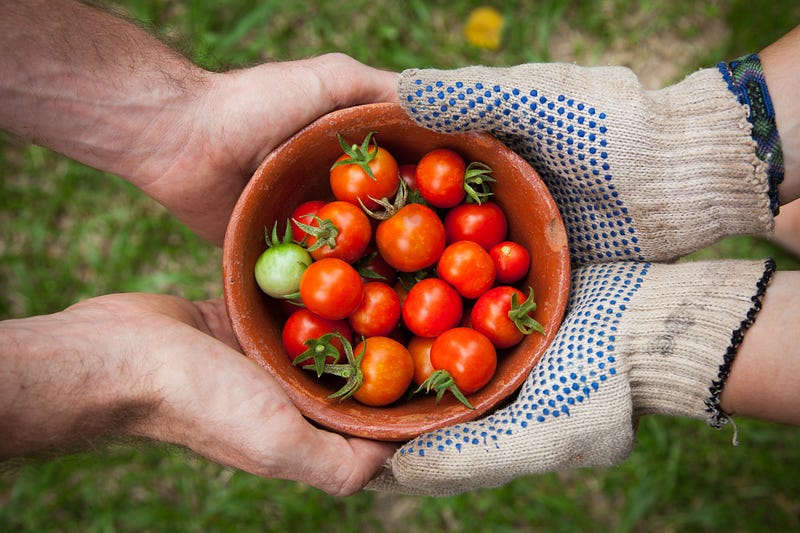
After spending the last twenty years trying to be different from my mother, I’m now seeing how much I can also learn from her.
Despite living in a cold country that screwed up the whole world and its own citizens, she happens to be one of the happiest people I know.
Here are a few things that, in my opinion, keep my mom content.
She makes food from scratch
My mom loves food. Everything about it: shopping, cooking, sharing it. I used to judge this “hobby” of hers. She put on extra weight as she got older, and I blamed it on the cooking.
Food, I thought, was fuel for our bodies, something we had to consume to get through the day, not indulge in.
Only recently, through experiencing and learning about different cultures, I finally got it: food is joy.
My mom takes her enjoyment of food to another level: she makes things from scratch. Not every day, of course, but often enough to justify buying a bread maker, pasta maker, ice cream maker, and god-knows-what-else maker.
How all that fits into my parents’ small kitchen I have no idea.
Again, what an inconvenience, I thought, spending time making bread while you can make your own. These days, I’m dreaming of the moment when I’ll have time to bake my first loaf.
She doesn’t dwell on the negative
My mom is the biggest optimist I know. Everything will be okay, she insists every time there’s a crisis. There’s always a solution ready. To balance this force of positivity, she has my dad — the world’s biggest pessimist.
Somehow, they manage.
It took me years to learn that when most of your adult life happens in Soviet and post-Soviet Russia, positivity is a survival mechanism.
When your country starts a war amid your retirement bliss, optimism is what keeps you going.
So many things went wrong for my parents lately. Yet my mom’s reaction remained the same: we’ll work it out. And work it out we do.
Better to be productive in denial, than crippled by anxiety, I learned.
She crafts
My mom loves to make things with her hands. She could easily buy a toy for her granddaughter, yet she prefers to make one out of wool.
She paints vases for fun and gives them away as presents.
She knits scarves, sweaters, dog blankets, you name it. She’s the original hipster, and she doesn’t even know what a hipster is.
As with food, making things with your hands instead of shopping for them, is the real joy.
She grows food
My mom’s life revolves around her “dacha” — a plot of land for growing produce that was given to my parents by the government during the Soviet Era.
When life was hard, food was grown there for survival. These days, it’s grown for recreation.
My parents’ dacha now has a proper house, proper plumbing, and a sauna. I love visiting there.
But when I was a teen, I hated it with all my heart. Why did I have to slave away my summers plucking weeds out of strawberry bushes while my friends got drunk in the city?
Still, looking back at those days, I remember them as some of the best childhood moments I’ve had. Biking along the river with neighborhood boys, fishing, chasing trains, berry picking, and getting into all sorts of trouble.
And yes, helping my parents grow food. And eat it, too.
How ironic that these days, I go from store to store looking for a decent (and decently-priced) home-made jam, while my mom makes her own every summer.
And her own pickles and tomato sauces — stuff people would pay ten dollars for at my local farmer’s market.
It’s taken me ages to understand the appeal of growing your own food. And with it, came the newly found respect for my parents’ lifelong hobby and its positive effect on their lives.
She grows plants
Some of my childhood’s most vivid memories are of being dragged around by my mother from one garden store to another in search of various seeds.
I didn’t like it one bit.
Little seems duller to a ten-year-old than a packet of dry weeds.
No matter how much my mom tried to get me excited about her plant-growing obsession, I couldn’t have cared less.
That is until I became an adult and tried to grow some plants of my own. Turns out little can be more rewarding to a woman than fiddling with her tiny garden.
Finally, my mom and I can have a conversation about things that matter.
If only I didn’t take thirty years to get here, I could have been ripping the benefits of plant-growing just like my mom did most of her life.
She hosts
My mom is an amazing host, one I can only aspire to be.
For as long as I remember, there were guests in our house. The core of them have remained and still visit each other’s homes for every birthday and many major holidays.
I loved everything about those visits: the food, the familiar faces, the attention they gave me, and the dancing that inevitably erupted. I would stay up for as long as I could, eavesdropping.
Sure enough, I took it all for granted. What can be easier than hosting ten people in your one-bedroom apartment for a three-course dinner which easily lasts five-six hours, while on the budget and working a full-time job, with two kids?
Now as an adult with children myself, I don’t know how my mom did it.
While we barely manage to feed the kids, walk the dogs, and keep the house clean, my parents maintained a regular stream of visitors, too.
Even today, when so many restaurants are available to them, my parents love hosting more than anything. And what an amazing and uplifting habit that is.
She goes to the theatre
While many of my parents’ friends (and my dad himself) lost interest in culture as they got older, my mom remains a theatre and concert-goer.
Once in a while, she phones up her girlfriend and the two go to see the latest musical comedy in their city or a new Chekov play.
While I whine about never having enough time to do “anything nice,” my mom always made the time for culture and still does.
Her brain stays sharp, and that is a major key to a happy and long life.
While writing this, I realized that I’m turning into my mother. Please, don’t tell my husband, or my therapist.