
The Best Personal Finance Books to Read in 2022

Personal finance is a difficult topic. But these books make it easy. I would know — I have two degrees in business and finance and have been trading stocks since the ripe age of 15. The shocking part of it all? I found out later in life that most of the important lessons were in several easy-to-understand books I had read as a kid.
They sure helped me out, and hopefully, they can do the same for you.
Here are some of the easiest-to-understand personal finance books available in 2022.
The Best Personal Finance Books to Read in 2022
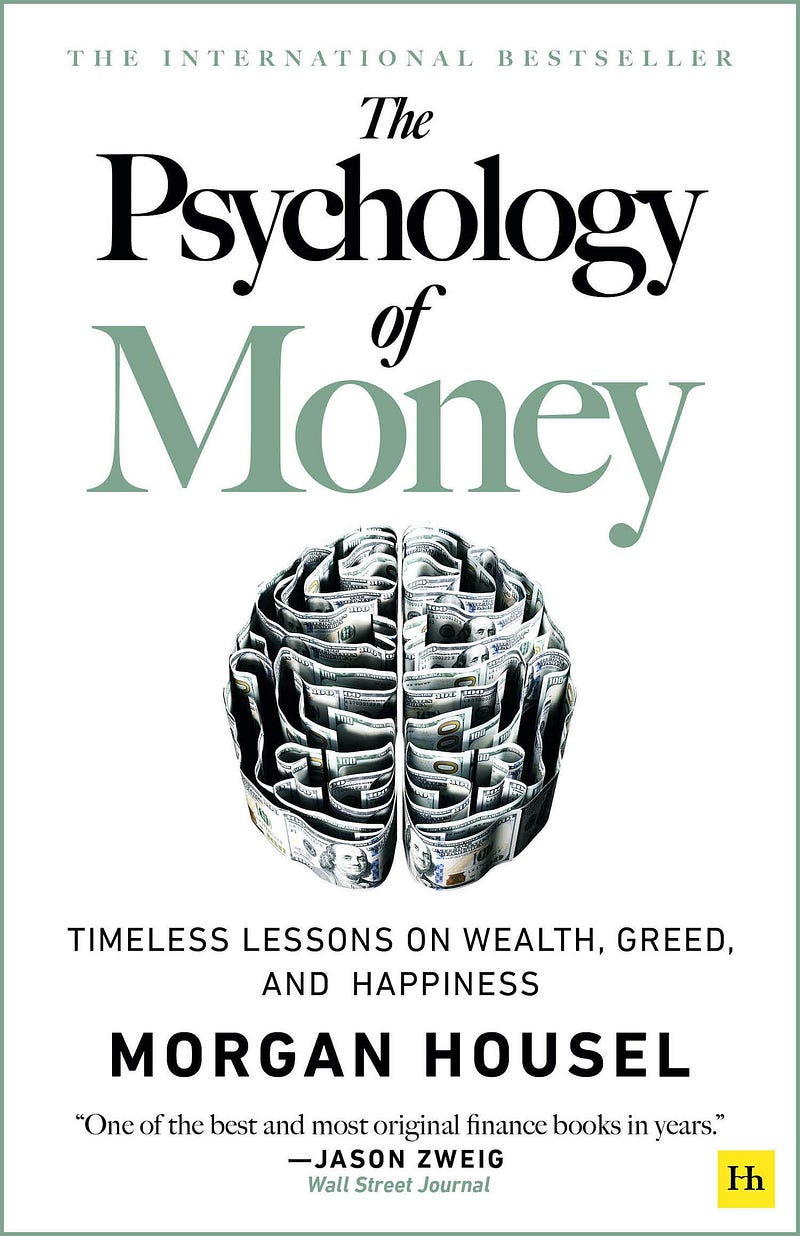
#1. The Psychology of Money: Timeless Lessons on Wealth, Greed, and Happiness
by Morgan Housel
Book Summary:
Forget the spreadsheet formulas and financial algorithms; “The Psychology of Money” takes you on an intellectual journey to understand money’s emotional and cognitive dimensions. Award-winning author Morgan Housel serves up 19 compelling stories that dive into the weird and wonderful ways humans think about wealth, investing, and business decisions. It’s a kaleidoscopic tour that sifts through ego, pride, marketing, and cultural background as influencing factors in our financial choices.
Why do some people accumulate wealth effortlessly while others remain trapped in a cycle of financial mistakes?
The answer, as Housel argues, is not merely mathematical, but deeply psychological. Read this book and you’ll never look at your wallet, or your life, the same way again. Curious? Ah, but for the full enlightenment, you’ll have to turn its pages yourself.
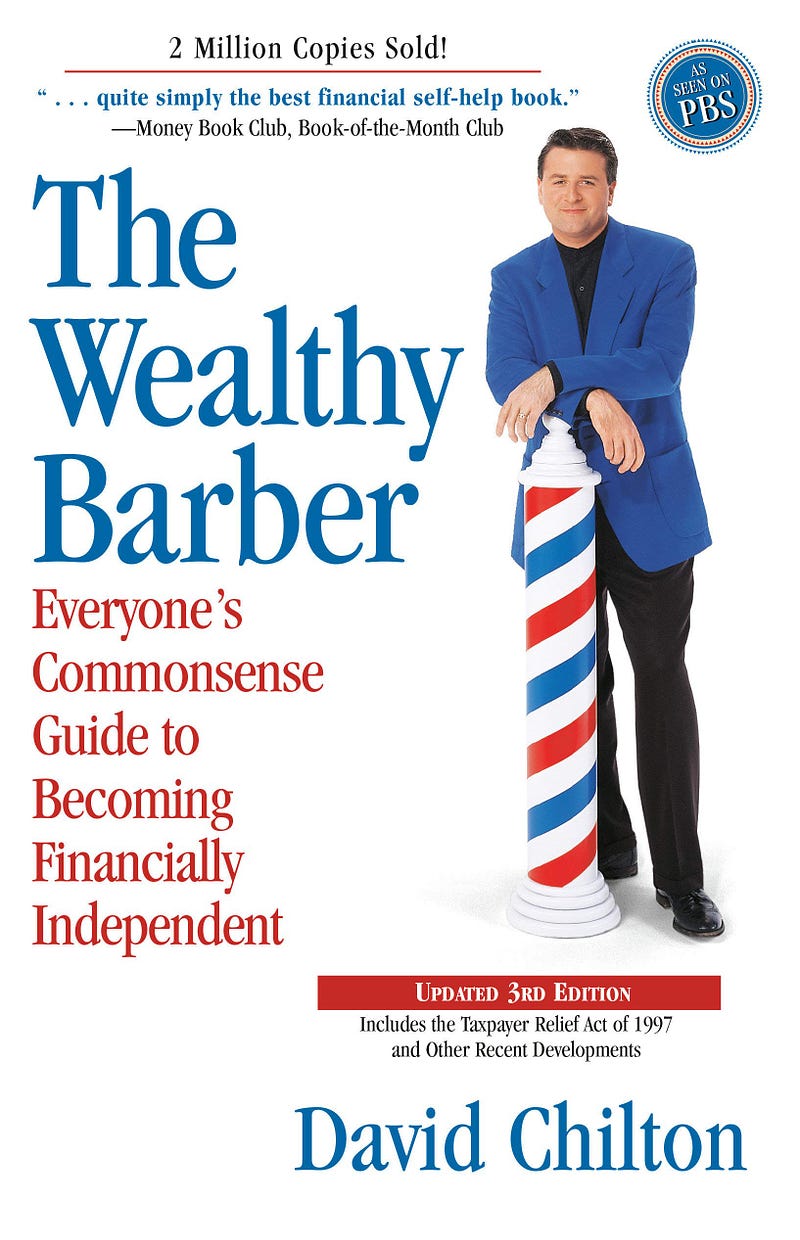
#2. The Wealthy Barber
by David Chilton
Book Summary:
David Chilton’s “The Wealthy Barber” isn’t your usual snooze-fest on personal finance. This time, the guru behind the financial curtain is Roy, a fictional barber who deals in wisdom alongside trims and shaves. Through Roy’s humor-infused insights, Chilton weaves an engaging tale that demystifies the labyrinthine world of finance, urging readers to secure their financial future through small, consistent efforts rather than chasing overnight riches.
Why is it that Roy, a simple barber, has the answers to attaining financial independence on an average salary?
The charm of the book lies in its disarming simplicity, but the real kicker is how Roy’s straightforward advice promises to change your fiscal habits forever. Ready to schedule an appointment with the Wealthy Barber? You won’t be getting a haircut, but you might just get a new lease on financial life.
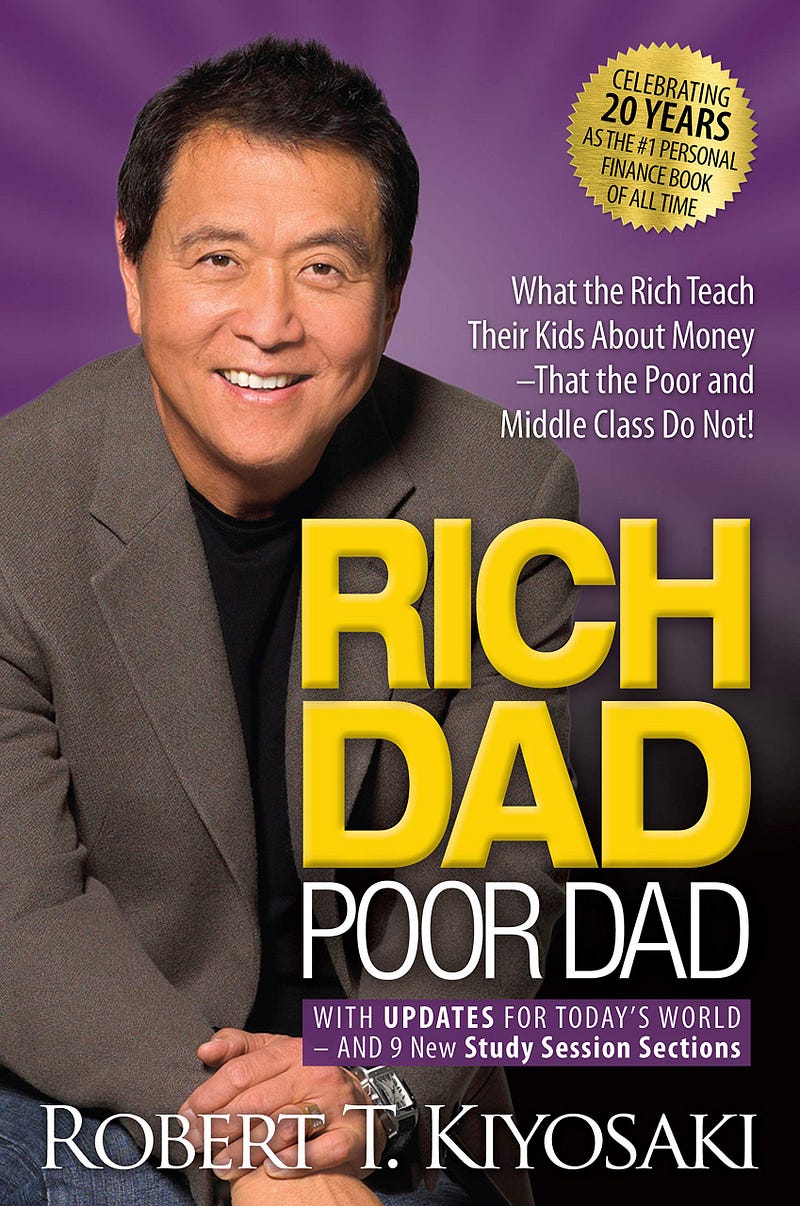
#3. Rich Dad Poor Dad: What the Rich Teach Their Kids About Money That the Poor and Middle Class Do Not!
by Robert T. Kiyosaki
Book Summary:
Robert T. Kiyosaki’s “Rich Dad Poor Dad” does more than just offer financial advice — it upends conventional wisdom about money itself. The book serves as a memoir of sorts, chronicling Kiyosaki’s upbringing under the influence of two fathers: one, his biological dad, subscribes to traditional ideas about money, emphasizing education and stable employment. The other, the father of his best friend, is a maverick who teaches Kiyosaki the unwritten rules of accumulating wealth.
What separates the rich from the poor and middle-class? The secret, Kiyosaki suggests, is not necessarily high income but financial literacy and the courage to let your money work for you. So, what will it be? Will you stick with the proverbial security of a 9-to-5 job, or venture into the realm where money is no longer your master, but your servant? The choices made by his two dads led them down vastly different financial paths — where will your choices lead you?
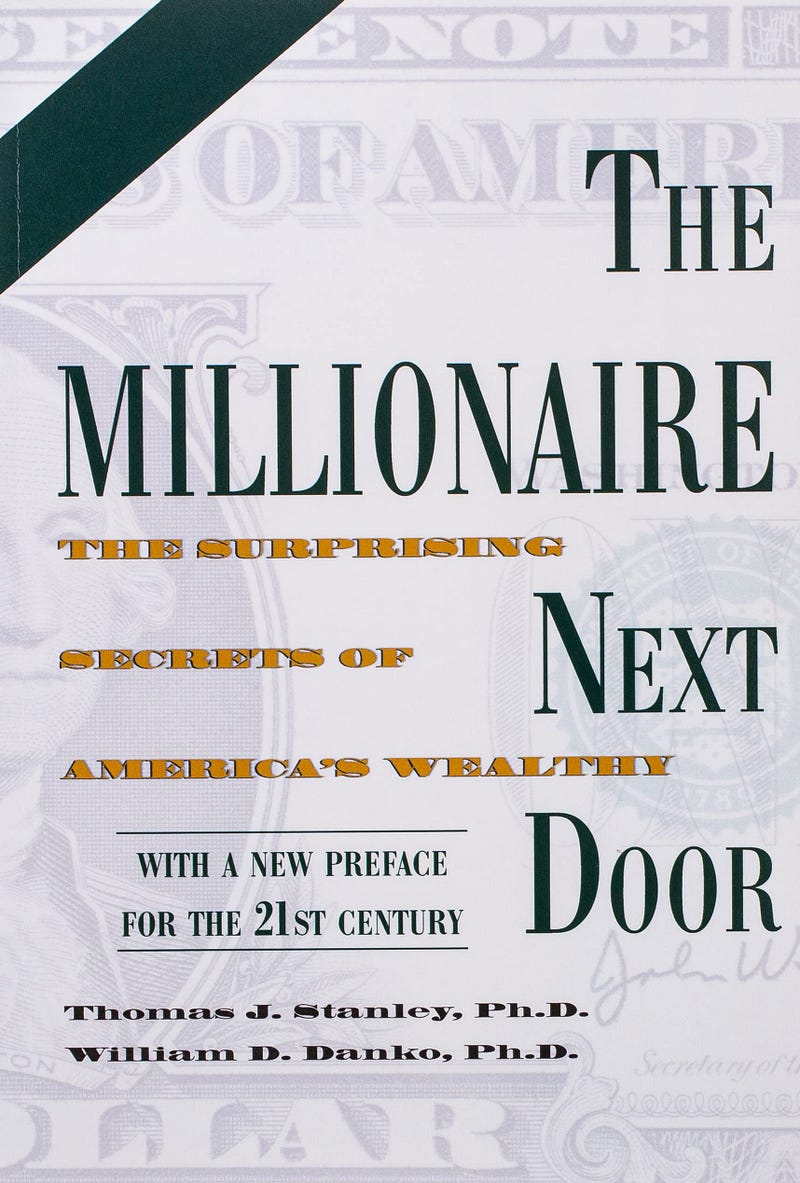
#4. The Millionaire Next Door: The Surprising Secrets of America’s Wealthy
by Thomas J. Stanley and William D. Danko
Book Summary:
Imagine a millionaire. Are you picturing private jets, flashy cars, and a mansion? Stanley and Danko’s seminal work, “The Millionaire Next Door,” might make you rethink that image. Through exhaustive research, the authors identify seven traits commonly found among the genuinely wealthy, and they’re not what popular culture would have you believe. Rather than the extravagance of Hollywood or Wall Street, these millionaires are characterized by frugality, disciplined spending, and a knack for savvy investing.
So why should you care?
Well, because these millionaires probably live right next to you, in a modest home, driving a budget-friendly car, and enjoying the financial freedom that many only dream of. And the kicker? Their path to wealth is often replicable. As you turn the last page, you’ll find yourself wondering: What’s stopping me from being the millionaire next door?
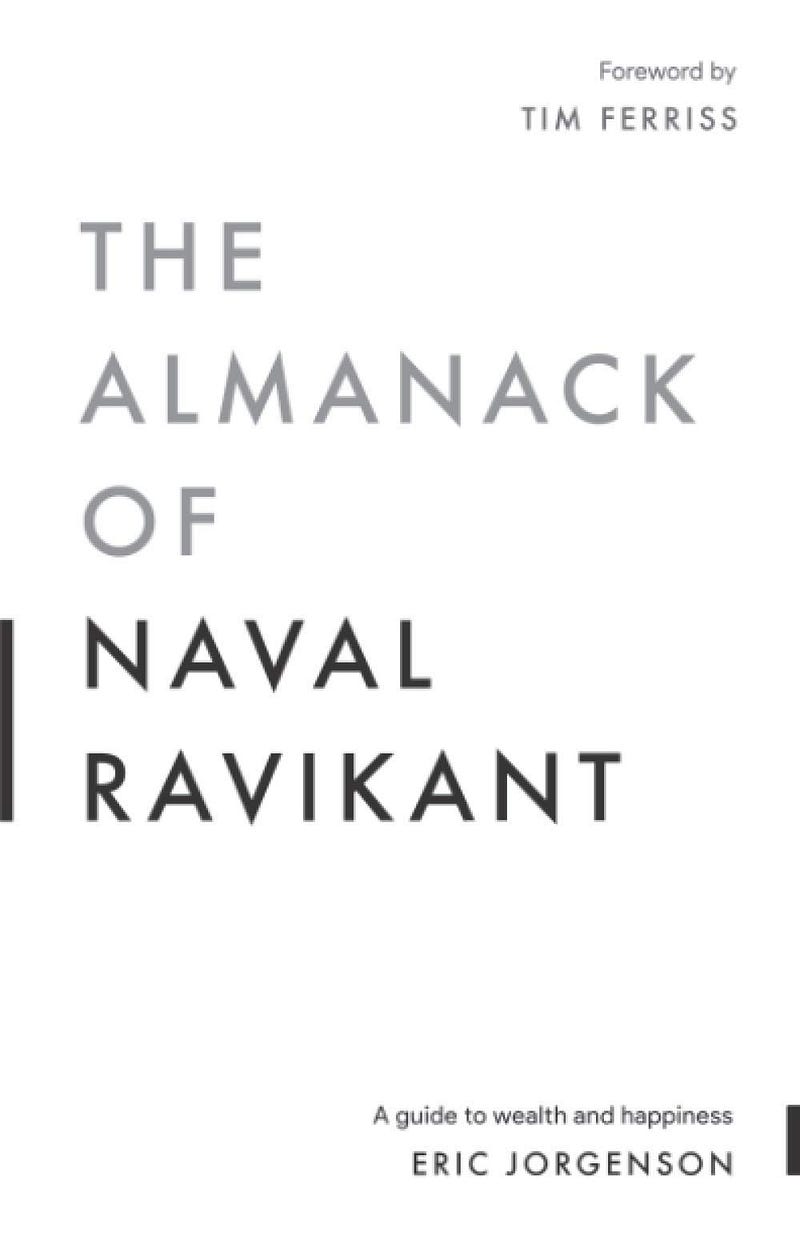
#5. The Almanack of Naval Ravikant: A Guide to Wealth and Happiness
by Eric Jorgenson and Tim Ferriss
Book Summary:
Eric Jorgenson and Tim Ferriss curate the wisdom of Naval Ravikant, a man who has worn many hats — entrepreneur, philosopher, investor — and excelled in each. “The Almanack of Naval Ravikant” is an intellectual smorgasbord that serves up bite-sized insights on attaining both wealth and happiness. But beware: this is not a blueprint or a 7-step guide to overnight success and eternal bliss.
What it is, however, is an enlightening collection of Ravikant’s reflections and interviews that provoke you to question, inspire you to ponder, and most of all, encourage you to walk your own bespoke route toward a fulfilling life. You won’t find easy answers here, but then again, isn’t the search for meaningful questions the first step to true enlightenment?
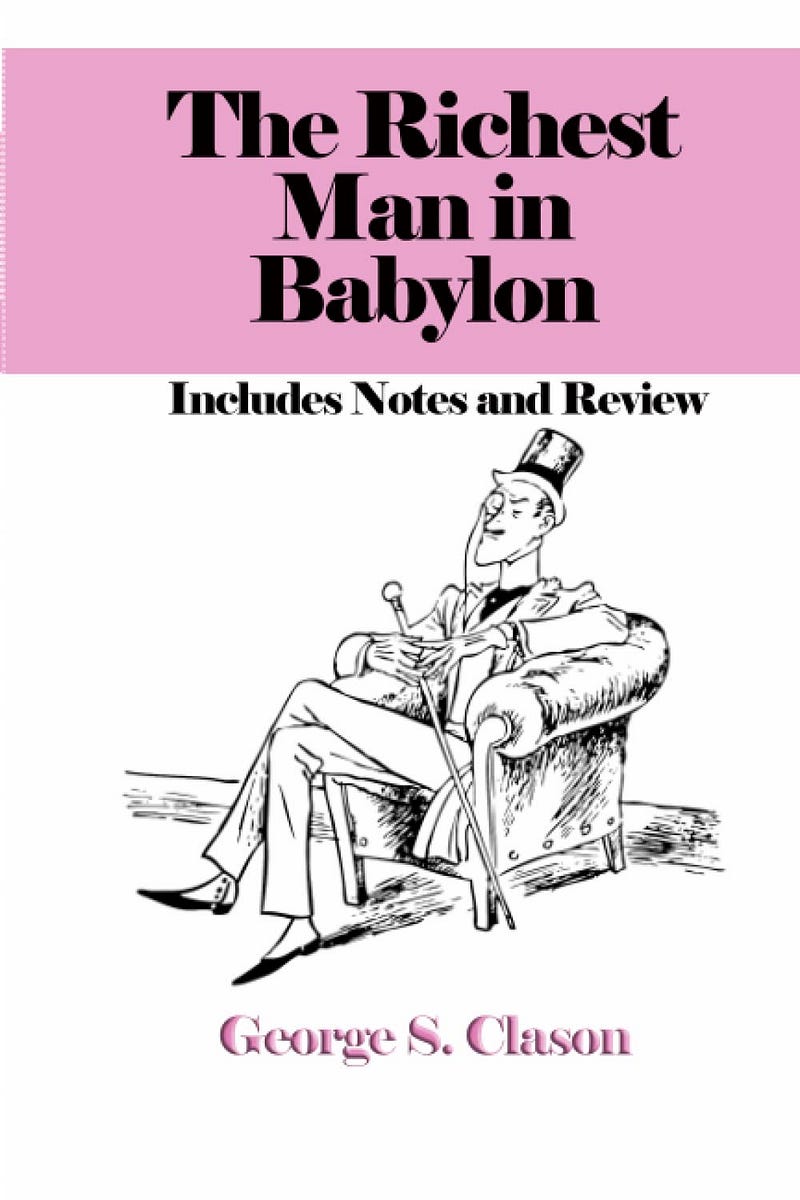
#6. The Richest Man in Babylon
by George S. Clason
Book Summary:
George S. Clason’s “The Richest Man in Babylon” is hardly your typical personal finance guidebook. It doesn’t bog you down with complex equations or Wall Street jargon. Instead, it beckons you into the ancient city of Babylon, where parables and life lessons unfold like well-woven tapestries. These Babylonian tales, as straightforward as Biblical proverbs, have educated readers for generations on the rudiments of thrift, financial planning, and the art of accumulating wealth.
But don’t let the antiquity of its setting deceive you; the stories are as relevant today as the air you’re breathing.
It’s not just about keeping your coffers full, but about understanding the path to prosperity that can sustain you for a lifetime. If these walls could talk, they’d tell you that the secret to riches lies not in the coin itself, but in the wisdom with which you earn and keep it. Intriguing, isn’t it?
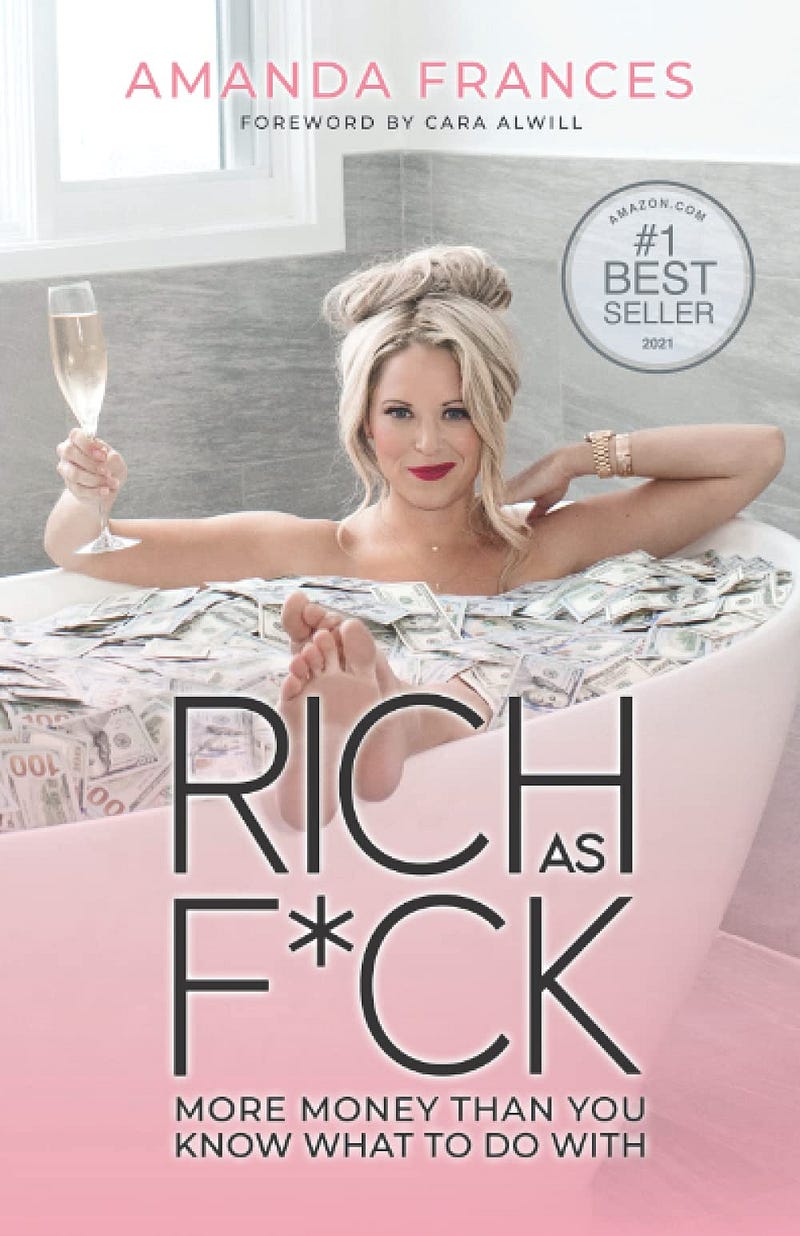
#7. Rich As F*ck: More Money Than You Know What to Do With
by Amanda Frances
Book Summary:
Amanda Frances throws political correctness out the window and delves straight into the heart of our complex relationship with money in “Rich As F*ck.” Far from a typical finance guide, this book is a revolution, advocating for an unapologetic ownership of your financial destiny. Here, money isn’t just currency — it’s energy, and understanding how to harness that energy could unlock unlimited potentials. Frances serves not only as a savvy financial advisor but as a spiritual guide, leading you through the labyrinth of societal conditioning and self-limiting beliefs about money that have held you back.
But don’t be fooled; “Rich As F*ck” is no hyperbolic self-help manifesto — it’s a practical blueprint designed to manifest abundance.
By the time you close its final chapter, you’ll be looking at money as not just a means to an end, but a form of personal empowerment. You’ll discover not only how to accumulate wealth but how to use it as a tool for broader life fulfillment. The result? You’ll have so much money, you won’t even know what to do with it. So, are you ready for your financial reality to explode in the best way possible?
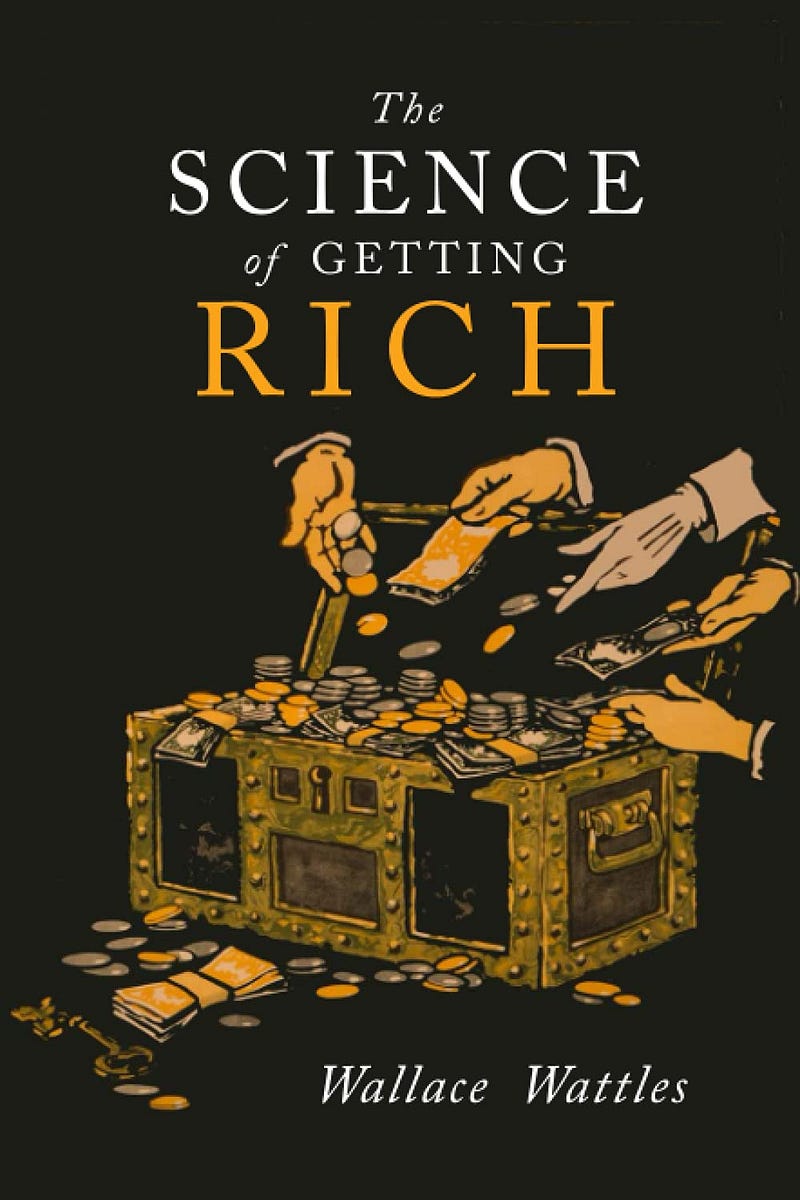
#8. The Science of Getting Rich
by Wallace D. Wattles
Book Summary:
Is there an actual science to getting rich? Wallace D. Wattles thought so, and he laid out his theories in a book that became the wellspring for the now-popular concept of the Law of Attraction. “The Science of Getting Rich” isn’t just a financial guide; it’s an exploration of belief, mindset, and the metaphysical elements that can, according to Wattles, conspire to bring you wealth.
The book delves into how our thoughts shape our reality, the emotional barriers that hold us back, and offers “foolproof” methods for financial ascension. No Excel sheets here; think more along the lines of alchemy mixed with practical reasoning.
The text captured the imagination of Rhonda Byrne, inspiring her phenomenon “The Secret.”
But unlike latter-day interpretations, Wattles offers a view unclouded by modern commercialization. It’s not just about wishing for a yacht; it’s about the complex relationship between thought, emotion, and tangible success. If you’ve ever wondered if there’s more to financial prosperity than just hard work and luck, this age-old tome might just hold the answer — or better yet, the formula.
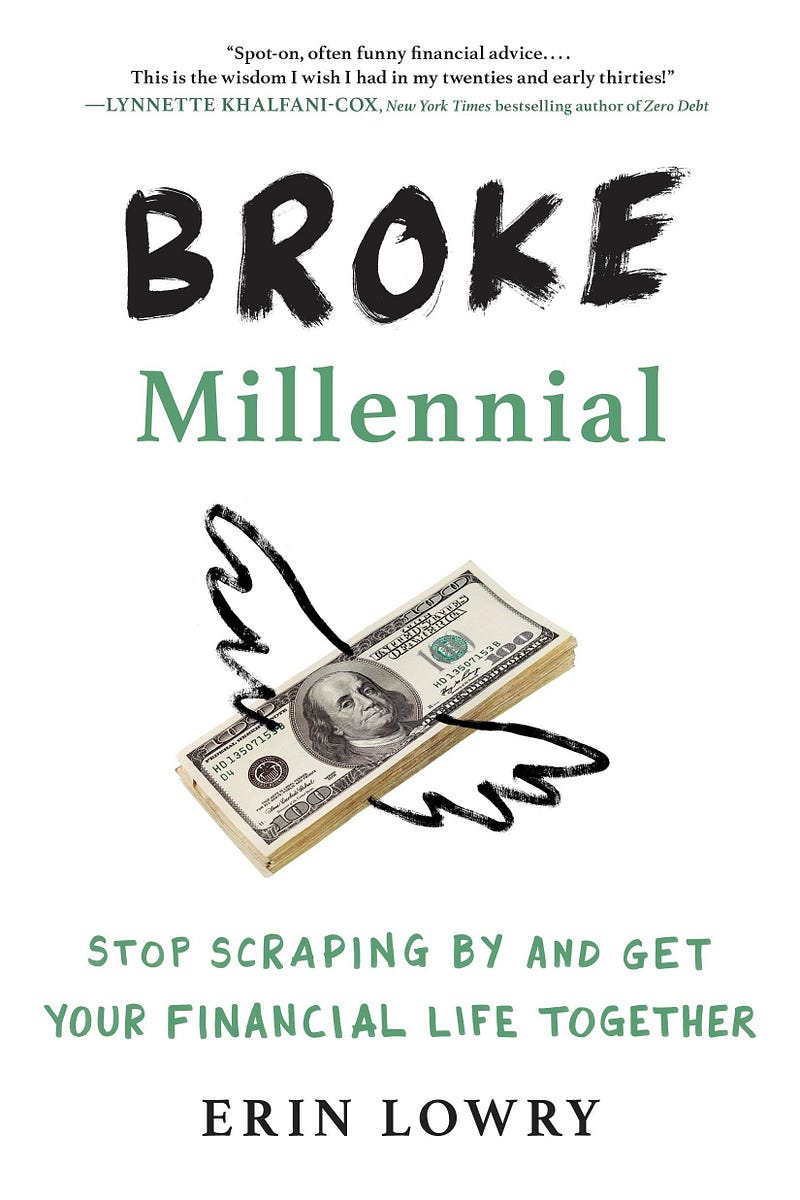
#9. Broke Millennial: Stop Scraping By and Get Your Financial Life Together
by Erin Lowry
Book Summary:
Are you a millennial who finds “adulting” harder than understanding the plot twists of a Christopher Nolan movie? Enter “Broke Millennial” by Erin Lowry, the financial guide for those who are befuddled by budgets and terrorized by taxes. Lowry ditches the jargon and yawn-inducing lectures that usually accompany discussions about personal finance.
Instead, she offers step-by-step plans for financial literacy that will make you the Bruce Wayne of your own monetary Gotham.
Here’s the fun part: this book doesn’t just harp on credit card debt or investing, topics that have been done to death.
It goes deeper, touching on subjects that really resonate with the 20 and 30-somethings, like how to have “the talk” about money with your partner or deciding if it’s really worth it to attend another destination wedding. If you’re craving financial wisdom without a side of sleep-inducing discourse, you’ll want to know what happens next in this savvy guide.
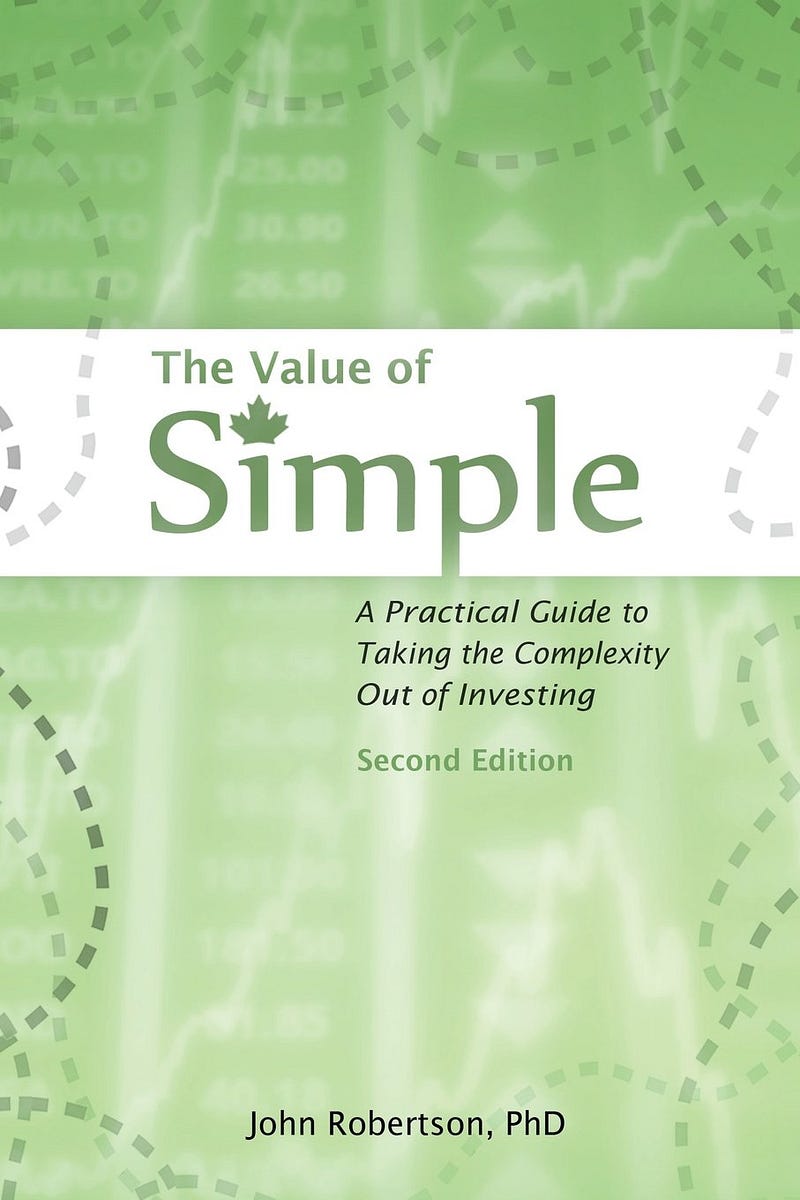
#10. The Value of Simple: A Practical Guide to Taking the Complexity Out of Investing
by John Robertson
Book Summary:
“The Value of Simple” is the antidote to the dizzying world of modern investing, where terms like “derivatives” and “cryptocurrencies” make even the bravest among us wobble. John Robertson takes you by the hand, leading you through a labyrinth of financial decisions with the ease of a practiced guide. He places an emphasis on well-designed processes and step-by-step instructions that minimize human error, turning the seemingly complex realm of investing into a set of actionable, understandable steps.
Imagine a life where your finances are not just a list of numbers, but a well-oiled machine that practically runs itself.
Automation becomes your friend, risk assessment your ally, and taxation less of a monster under the bed. It’s all wrapped up in the essence of low-cost index funds, a cornerstone of simplicity. You’re not just managing money here; you’re sculpting your financial future. Ready to carve out your masterpiece? Then you might want to read on.
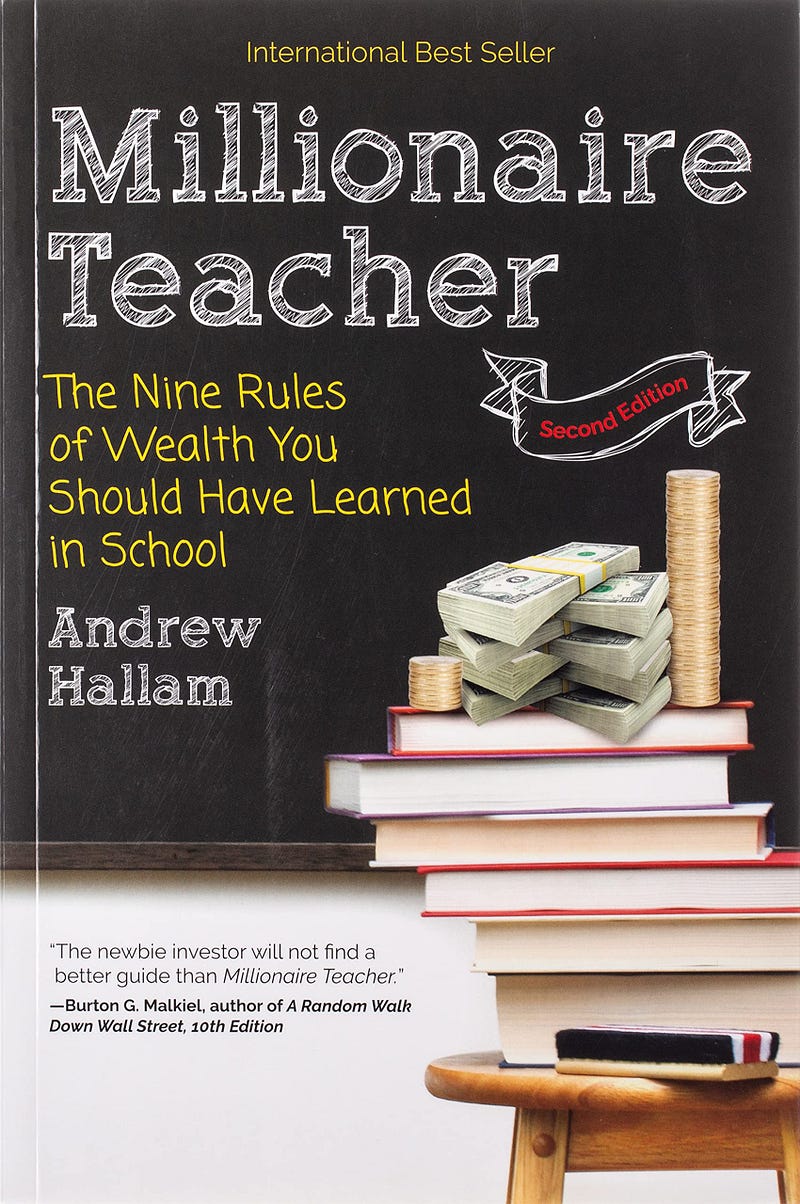
#11. Millionaire Teacher: The Nine Rules of Wealth You Should Have Learned in School
by Andrew Hallam
Book Summary:
Millionaire Teacher” is the headmaster of a unique kind of school, one where the subject is not mathematics or history, but the very contours of your financial future. Andrew Hallam isn’t your run-of-the-mill financial expert; he’s an English teacher who cracked the code to become a self-made millionaire. The book strips away the complexity and jargon that often shroud the world of finance, imparting nine straightforward rules that are as easy to follow as they are enlightening.
What sets this apart from the conventional personal finance volumes is its unpretentious wisdom.
Hallam assures you that you need not be a Wall Street savant to secure your financial independence. Imagine outsmarting professional investors while spending just an hour per year on your financial planning. Curious about how an English teacher did it and how you can too? Well, the answers lie within these pages, each one a stepping stone to a future where your wealth narrates your wisdom.
Related Reading
- 31 Best-Selling Books of All Time
- Banned Books You Should Definitely Read Because Screw Censorship
- Best Business Books
- Best Finance Books
- Best Entrepreneur Books
- Best Investing Books
- Best Books for Men to Read
- Best C++ Books
Or, click here to see all book recommendations
For more of my thoughtsays, deep dives, and essays, come check out Pryor Thoughts. You can also join Medium through my referral link (no extra cost to you) and get access to millions of stories for one low price every month.
This article contains some affiliate links. That means I may get a small commission if you buy something, but the price is no different for you.


