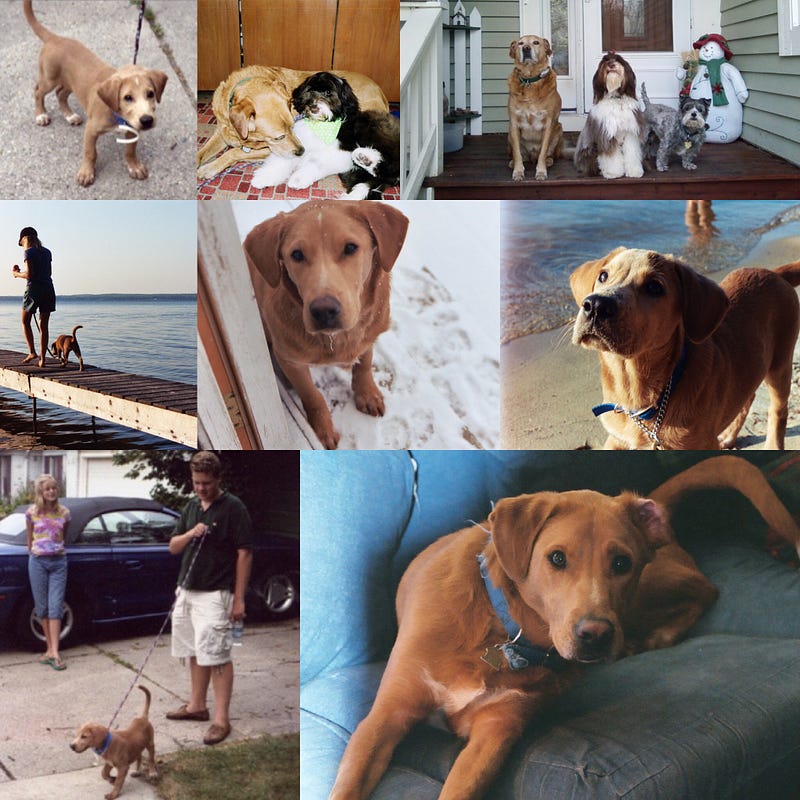
Best Love Advice: Men are Like Dogs
Three ways men are like dogs: “Man is an animal…”
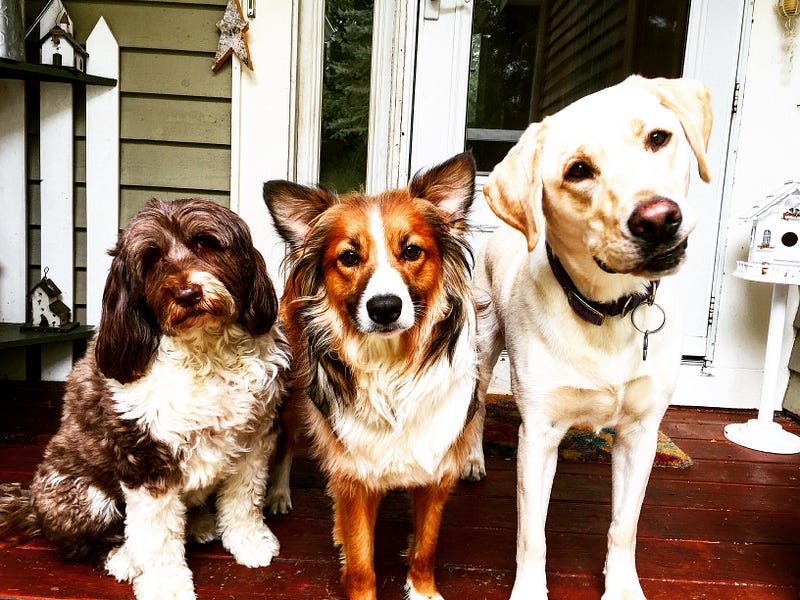
Walking our dogs through the woods, we shared one love. An irresistible distraction — probably a squirrel — interrupted: Jake the dog couldn’t help himself.
He had to yank at his leash and break away.
“NO!’’ I tugged back, pulling him toward the right path.
This is what fathers do: Love, teach, guide, feed, walk with you through life…
Then it hit me — and everything made sense:
Men are like dogs. We are made for more: we intuitively know the path we’re supposed to follow (even without a leash). The slightest distraction — or temptation — passes and we too instinctively pull away and chase after it.
But who — or what — is tugging at our leashes?
Our grand designs and plans start us out aiming high. Then someone or something distracts us (anything from advertising to texts to yoga pants) and the animal instincts kick in.
The best relationship advice I ever gave…
Men, like dogs, have three main appetites — but there is one easy way to teach them, to inspire them — to keep them in line.
The three main appetites of men and dogs alike:
Food
Feed a dog (or a man) something delicious and he will salivate over your amazing meal and then gobble it up as quickly as he can.
When the food is gone, man — like a dog — tends to move on to the next thing. For dogs, it’s looking out the front door (always protecting their home). Men are easier to satisfy: we just look at our phones.
Both will return the moment more good food is available. Man and his dog think about food a lot. That’s why Instagram and food porn were invented.
Sex
Another instinctive, deeper hunger driving man and beast, of course, is sex. It’s wired into us, the need to generate activity, as in regenerate. Dogs in heat and teenage boys are pretty similar: Move, eat, sit, lay, sleep.
But again, where does he go after he’s been fed? What brings him back and keeps him around when the need has been filled? The most powerful appetite of all, needed by all creatures — and even plants:
Love
All living beings need love. Pet a dog, pat him on the head or rub his belly, saying “You’re such a good boy’’ and he is likely to keep coming back for the attention and approval he craves. Men fall for praise in the same way.
The very first domesticated dogs, 5,000 years ago, (like teenagers) were essentially parasitic, learning they could feed off humans. They left the wild and moved in with humans because it was the easiest way to get food. Man and dog alike come to be fed — but they stay for the love.
When animal and man are being fed, when one or more of the three appetites is being satisfied, he is largely content but what happens when one or more of the hungers aren’t being fed?
The great debate: Do dogs love more or less deeply than humans?
A dog begs for food because the dog loves the food and we love feeding the dog, who shows such joy and gratitude each time we offer him something. It’s a win/win relationship pleasing to both giver and grateful recipient.
“Throw me a frickin’ bone here,” — Austin Powers.
Throw a dog a bone and he will be in an ecstatic type of joy as he relishes every bit of flavor touching the bone. You will, similarly, feel great joy watching the dog enjoy himself.
But eventually, the gifts of the bone fade and you and the dog both move on to the next thing, the next transaction. My wife and my late father-in law especially admired the intensely loyal love of dogs.
Harry Truman famously said: “If you want to find a friend in Washington, buy a dog.”
Is it you — or your lasagna?
Love has limits. Our dog Jake demonstrated the limits of transactional love early in our marriage when my bride made a wonderful full baking pan of lasagna and left it on the kitchen counter to cool.
Jake loved us with all his heart but he couldn’t resist something he loved more than us: that warm pan of lasagna. He got on his hind legs, knocked the tray to the floor and proceeded to eat every bit of it.
Did Jake think he should save some for the rest of the family or for our other dog Teddy or maybe the cat Sam? Of course not. He ate every bit of it. And then he licked it clean.
And when we looked at him, Jake the dog knew exactly what he had done wrong. The bottom line: he would go for that food every time, eating as much as he could. We loved Jake but trust was different.
Years later, as I walked Jake and our puppy Morgan, it hit me that man is often like a dog going for a walk with our beloved father or mother. We love and learn from them — but we are easily distracted and often miss the mark.
A wise attorney (but three times disbarred) when asked why he betrayed his wife to simultaneously start a new relationship and raise a new baby (leading to a long, complicated, extended double life) simply answered:
“Man is an animal.”
Transactional or transformational?
Most human/dog interactions and far too many human relationships are transactional: trading one thing to get something else. Even acts of mercy can become transactional:
For example, a homeless man asks for a dollar, you give him the dollar. He’s grateful for the money and you feel good because you helped someone. But, with the transaction ended, you quickly forget about each other and move on to the next transaction.
Four levels of love
The ancient Greeks described four levels of love that C.S. Lewis explored in his book, The Four Loves. The first three are often (but not always) transactional:
- Storge — the empathic love. This includes our love of country and culture, our love of community and our love of family.
- Philia — the friendship love. Philia, often translated as “Brotherly Love’’ is the love of the soul, the love between siblings or best friends sharing similar values and interests.
- Eros — the erotic love. This is the love felt strongly within the body, two people drawn together. C.S. Lewis stresses Eros goes beyond physical lust to capture the heart.
Transformative love is greater, leaping beyond transactional love
Transformative love, what the Greeks called “Agape” (meaning “charity,”) is also called unconditional “God love”: Something bigger than yourself making you want you to become a better version of yourself.
This is inspirational love.
The Secret?
We each have unique gifts, gifts others wish to share (or take).You have maximum influence over a dog when he sees you have a dog biscuit in your hands (something he instinctively desires). Once you give it away, it’s his.
As long as you hold that biscuit before him, both of you see and feel that possible next step. You have each other’s full and complete focused attention. I always told our children:“Never give up your biscuit too quickly or easily.”