
Benefits of Salat: Towards Healthy Soul and Eternal Peace
Salat is the obligatory Muslim prayers, performed five times each day by Muslims.
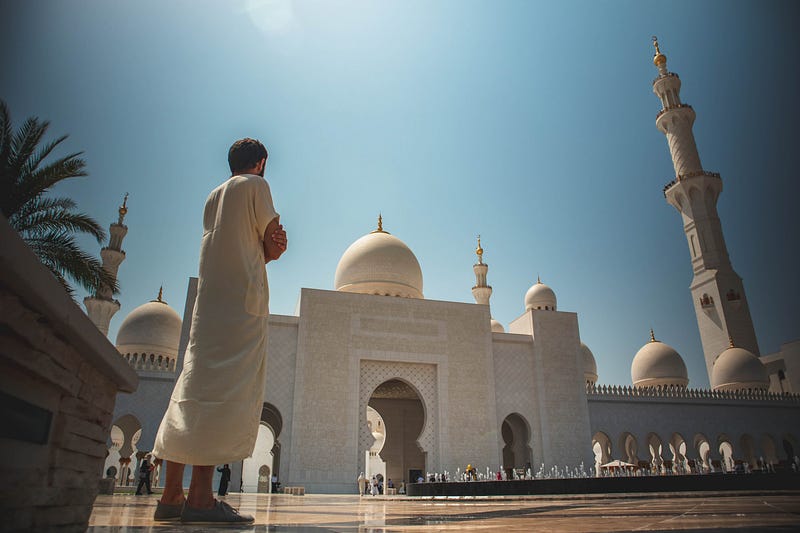
Religion is the key to the soul and a person can be healthy when he has a healthy soul and eternal peace. One of the ways for achieving this eternal peace is by praying. In Islam, prayer is known as salat. The salat is a special form of worship and is the second most important pillar of Islam after the shahada (testimony of faith). It is an obligatory form of prayer performed five times a day that was revealed in the Holy Qur’an and taught to them by Prophet Muhammad (peace be upon him).
The salat involves several physical movements — standing, bowing, prostrating, and sitting. It also involves the recitation of verses from the Holy Quran in Arabic along with some dua’ (supplications). The Muslims will face the direction of the Kaba, the Sacred House of Allah in Makkah, whenever they perform their prayer. These physical movements, recitations, and supplications are all done to show humility and submission to Allah.
Allah ordered Muslims to pray at five set times of day:
- Salat al-fajr: dawn, before sunrise
- Salat al-zuhr: midday, after the sun passes its highest
- Salat al-’asr: the late part of the afternoon
- Salat al-maghrib: just after sunset
- Salat al-’isha: between sunset and midnight
This regular schedule allows them to be punctual, disciplined, and appreciative of the value of time. There is a lot of discussion on the spiritual as well as physical signs of Salah. So what are the benefits and significance of praying five times daily?
Neurological Rehabilitation
In an article entitled ‘Health Benefits of Salat(Prayer); Neurological Rehabilitation’ written by Dr. Misbah Ghous and Dr. Arshad Nawaz Malik, it has been discovered that salat influenced our nervous system. Salat is a spiritual and physical activity where nearly all muscles of the human body become more active than any kind of physical exercise without muscle fatigue and induce serenity on body and soul.
When the different aspects of salat were studied, it concluded that heart, spine, memory, concentration, psyche, cognitive impairments, not only these, in fact the whole body is affected by the cumbersome beneficial effects of different postures of salat.
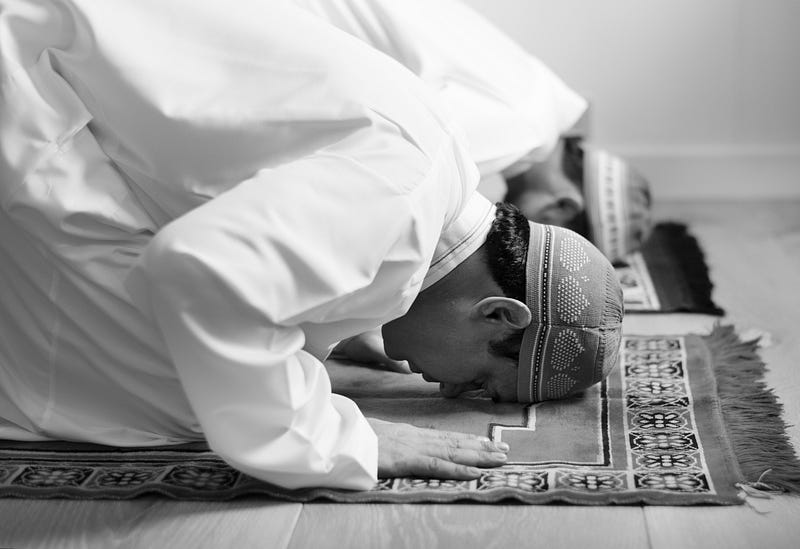
The standing posture in the salat helps to regain static and dynamic balance. Double leg stance brings equal weight-bearing with activation of joint proprioceptors. After standing bowing is done by a forward movement of the trunk which builds strength in lower limb and trunk muscles.
During salat, eyes are fixed on the site of prostration. This visual fixation together with proprioceptive systems, vestibular systems, and the various postures provide a complex positional sense in the brain stem and cerebellum, the two important areas which are usually affected. Salat is concluded by looking over one’s right and left shoulder. During which neck rotational movements take place, which further contributes to neuromuscular fitness.
Scientific evidence also supports the notion that even moderate-intensity activities, when performed daily, can have some long-term health benefits.
Similarity between Salat & Yoga
Dr. Ghazal Kamran in his article entitled ‘Physical Benefits of (Salah) Prayer — Strengthen the Faith & Fitness’ mentioned that salat movements can be another alternative to the existing exercises, like yoga and pilates. Salat postures are similar to some yoga postures.
In salat, a Muslim is required to focus during prayers and leave out all life distractions and connect with Allah during that time. During meditation in yoga, the mind is clear, relaxed, and inwardly focused, the individual is fully awake and alert, but the mind is not focused on the external world or the events taking place around the individual.
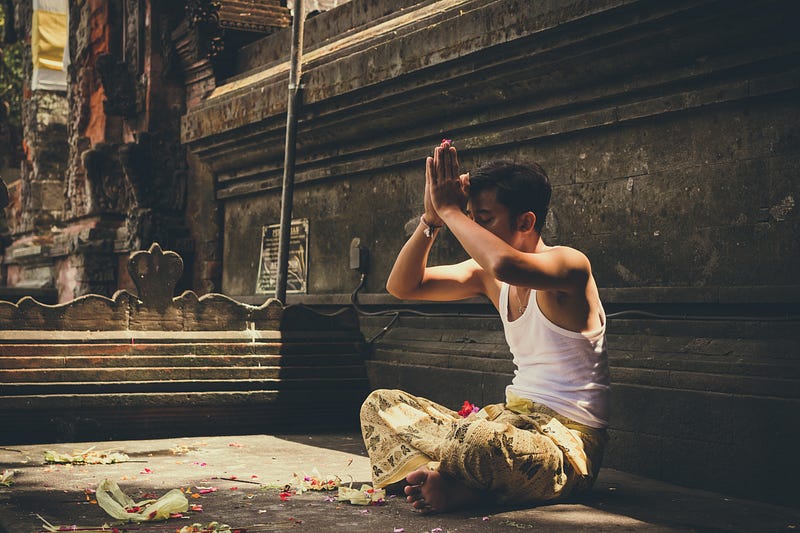
The start of salat with standing straight with the hands placed on the abdomen is known as Qayyam or Takbir. This standing posture is similar to Namaste in yoga. The word itself means “Bow me you” or “I bow to you,” Yogis place the hands together at the heart chakra to increase the flow of the divine love, bowing the head and closing the eyes.
Ruku’ is the forward bending position in Muslim’s prayers. It is a humbling act of bowing down to Allah, letting go of one’s pride, and submitting to Allah. Similarly, in yoga, Ardha Uttansana fully stretches the muscles of the lower back, front torso, thighs, and calves.
Sajdah is where the forehead touches the ground. It is mentioned in a Hadith that this is the position where Muslims are most near to his Creator. The pose called Balasana (Child pose) in yoga is the like Sajdah pose. The muscle work and stretches in these poses help in releasing the pain/tension in the lower back, shoulders, and chest.
Abu Huraira reported that the messenger of Allah said: “The nearest a servant comes to his Lord is when he is prostrating himself, so make supplication (in this state)” [Sahih Muslim, Book of Prayer, Hadith: 482].
Julus is sitting on the floor where a Muslim recites in the second and last Rakka of the prayer is quite like Vajrasana. This is the term used by yogis to describe that same pose. This position helps in getting rid of constipation, fighting stomach disorders, and improving the body blood circulation. It also helps in calming the mind and stimulates the body to relax.
Spiritual Energy of Salat
Islamic prayers can produce spiritual energy that may yield many psychological benefits, such as amelioration of stress and improvement in subjective well-being, interpersonal sensitivity, and mastery. Dr. Hani M Henry in his article entitled ‘Spiritual Energy of Islamic Prayers as a Catalyst for Psychotherapy’ mentioned that Islamic prayers may produce spiritual energy via two possible mechanisms: firstly via forging a direct connection with God; secondly via the influence of faith.
Prayers can energize Muslims and help them combat stress and feelings of danger. It provides Muslims with the spiritual energy that helps them experience closeness with the divine and protects them against feelings of loneliness and isolation.
Many psychologists receive little training in spiritual and religious issues, and as a result, they have been unwilling to address these issues in therapy. Islam covers every aspect of life and is a way of life that is not separate from other spheres.
Dr. Hani M Henry describe four measures that can be used for the explicit integration of these prayers into psychotherapy for their Muslim’s clients, and they are as follow: discussing the role of Islamic prayers and their spiritual energy in clients’ lives; encouraging clients to use Islamic prayers outside the therapeutic hour as an adjunct to therapy; using Islamic prayers to facilitate therapeutic change and attending to and maintaining spiritual energy
He conducted a case study on a woman known as Horeya (a pseudonym) a 50-year-old Egyptian Muslim woman who currently lives in Cairo. Horeya presented with severe symptoms of depression, which included the following: prolonged sadness; lack of interest in life activities; insomnia; lack of appetite; lethargy; and lack of pleasure.
Her depressive symptoms started five years ago after her two sons decided to immigrate to the USA and her daughter was married a year later to a man who accepted a diplomatic post in France. Horeya was both furious and sad about the departure of her three children in such a short period. Horeya disclosed that she never loved her husband because she was ‘‘forced’’ by her mother to marry him despite a significant age difference between them. She also expressed her anger toward him because she believed that he implicitly encouraged her children to immigrate.
When asked about her treatment history, Horeya reported that she had seen many psychiatrists, but she complained that her encounters with them were always short and meaningless. She also could not tolerate the side effects of the antidepressant medications they prescribed, so she refused to continue taking them.
By investing in her willingness and enthusiasm to pray, Dr. Hani was able to stimulate their therapeutic process and his traditional therapeutic approaches started to have a deeper and more effective meaning. Specifically, he encouraged Horeya to further discuss her experiences of praying in therapy and asked her to write down her feelings and thoughts every time she completed her prayers. He urged Horeya to pay deeper attention to the words of prayers and link them to our discussion about changing maladaptive thoughts, mourning, behavioral change, and meaning-making.
The integration of prayers into their psychotherapeutic work and the maintenance of these prayers in Horeya’s daily routine seemed to have mobilized and invigorated their therapeutic process and yielded many psychological benefits. For example, she started to mourn her losses by accepting her current situation without bitterness or despair. Horeya attributed this acceptance to her intimacy with God through prayers, which allowed her to realize that God’s will should be respected.
Any Muslim that has ever performed the Islamic prayer knows that there is something special about it. Prayer movements outside of worship, have many physical & physiological advantages. The body goes through a unique exercise routine during the salat therefore these postures help to maintain fitness in healthy individuals.
Some might even notice how prayer can calm a soul and reduce the anxiety and stress they are facing in life. This is a mercy and blessing from God Almighty.
Reference:
Ghous, Misbah & Malik, Arshad. (2016). HEALTH BENEFITS OF SALAT (PRAYER); Neurological rehabilitation. THE PROFESSIONAL MEDICAL JOURNAL. 23. 887–888. 10.17957/TPMJ/16.3539
Kamran G. Physical benefits of (Salah) prayer — Strengthen the faith & fitness. J Nov Physiother Rehabil. 2018; 2: 043–053. https://doi.org/10.29328/journal.jnpr.1001020
Henry, Hani. (2013). Spiritual Energy of Islamic Prayers as a Catalyst for Psychotherapy. Journal of religion and health. 54. 10.1007/s10943–013–9780–4.


