Gaza, Dogs, and Human Cannibalism
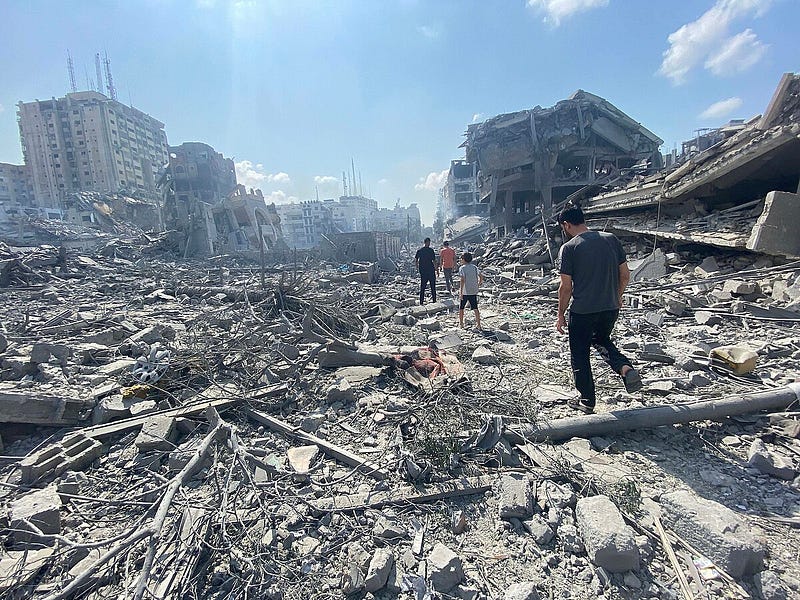
I could hardly look at my dog for two weeks when I came back from Gaza.
On the base just on the border of Gaza, where we were staying at and operating from at the time, wild dogs had come to find refuge from the relentless bombing. These dogs were traumatized, jumping at distant booms as their eyes darted in every direction.
They were also bone thin. We could count their ribs poking out from underneath their skin and they spent their days either begging or scavenging for food. Mostly, they spent their time sniffing through the dumpsters behind the bombed-out remains of the former base’s mess hall, no doubt hoping to find a bit of leftover or just a rotted bone to chew on.
We would give them food from our plates out of pity. That all stopped the day we saw the pack leader nearly rip the leg off a young pup who had the temerity to reach the meat before him. The pup was crying and shrieking in terror and pain in the pathetic way that dogs do, but still, the fully grown dog tore at him.
He might have succeeded in ripping the pup’s leg off entirely, but we chased him away.
Afterwards, we stopped feeding them. And when I got home, I could barely look at my own dog out of sheer disgust.
I naively felt that I understood what an animal was when it was pushed to the point of desperation. That when they’re not at home and being fed by nice owners who take them to beauty salons and play fetch with them in the park that they would tear through their own offspring just to have a bite of maggot-infested, rotting meat.
I thought to myself, “Surely no normal human being could commit such a heinous act on a child like that.”
I know now that I’m wrong.
Dogs are not the only creatures pushed to extreme cruelty in desperate circumstances. History has shown us that human beings are more than capable.
It’s difficult to describe the horrors of a famine, although many authors and historians have tried. A famine completely shatters society and breaks people down to their most base form. In this state, nothing matters beyond mere survival.
One book that tries to encapsulate these horrors is a book by Anne Applebaum called Stalin’s War on Ukraine. It’s an award-winning historical record of the Holodomer, the Soviet-engineered mass famine in Ukraine that took place from 1932–33.
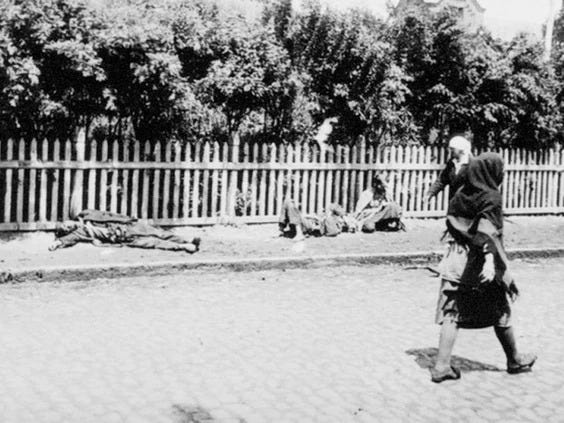
5 million people died during this period as Soviet agents went house to house taking every last bit of food they could find in a deliberate attempt to starve the Ukrainian people. In a desperate attempt for food, normal societal rules collapsed as theft and murder over scraps became widespread.
To quote one survivor from the book, who was a boy at the time, “People became so angry and wild, it was scary to go outside.” That same boy goes on to recall a story of a neighbor boy teasing other children with a loaf of bread and jam that his family managed to procure. He was mercilessly beaten to death by the other children for this act.
Another survivor in the book remembers how the boss of a farm collective caught a boy trying to steal bread and bashed his head into a tree, also killing him. The incessant wailing of starving humans and the lack of food drove people to the brink.
One survivor talked about a neighbor who was so desperate and unable to bear the sounds of his starving children wailing for food that he bashed their heads murdering them. He then smothered his infant son in his crib.
As the famine progressed, what little sanity people had was soon lost. By the late spring and summer, after all the pets had been killed and the eatable plants eaten, people began hunting each other. Children, in particular, were the most vulnerable.
Larysa Venzhyk, a survivor from Kyiv, recalled hearing the initial rumors that, “Children disappear somewhere, that degenerate parents eat their children. It turned out not to be rumors but horrible truth.”
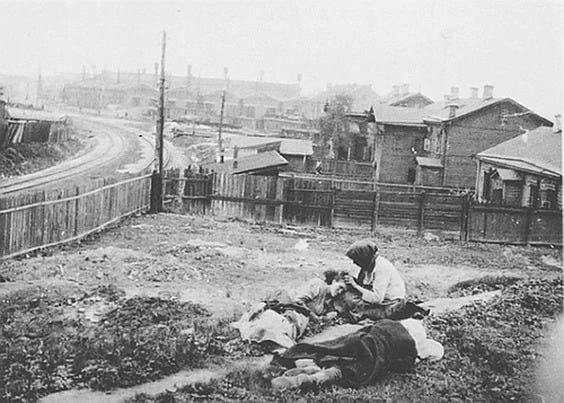
There was not just one instance of parents eating their children, but many. A 6-year-old boy was found wandering the street. When asked by a policeman what he was doing, he explained that his father had killed and eaten his two older sisters and that if he went home, “Father will cut me up.”
In Sumy, a survivor tells of how his neighbor, driven to insanity by hunger and the death of his wife, killed and ate his son and daughter. When confronted and asked why he appeared less swollen by hunger than his neighbors he replied, “I have eaten my children, and if you talk too much, I will eat you.”
Another woman, this time from a different Ukrainian province, explained that she had killed and eaten her two children because they would not survive anyway, but this way she would.
The Holodomor is just one example of the depths that humans will sink when confronted with a completely inhumane situation. We have historical records of Chinese families during famines back in the 6th century conducting “child swaps” between families. Each family would exchange a child, usually a girl, and the family would murder and eat the other’s child.
This was considered a far more ethical act since it was better for a family to not eat the flesh of their own family member and it was a behavior that was recorded even as recently as the Great Chinese Famine triggered during the Great Leap Forward between 1958–62.
I’m lucky that I only saw acts of depravity similar to these between dogs and not human beings. Sometimes I wonder if the Gazans in the refugee camps can say the same.
While I can look at and play with my dog again, I’ve been left with a certain amount of disgust for these animals that I didn’t have before the war. I no longer find them cute and I certainly don’t have any illusions that these are “noble beasts”
Thankfully, it’s just dogs, and not humans, because I don’t know how any person could come back from seeing human beings commit such atrocities. How do you go on thinking that humans are inherently good when you just saw your neighbor — a perfectly normal person just a few months ago — suddenly break and eat his own children?
Events like famine strip away the bonds of connection and loyalty that we have to each other and leave an animal in its wake. Actually, not even an animal, because we expect animals to take care of their young. It leaves behind something worse. A creature that is not so different from a single-celled organism surviving without thought. Some people say that the universe is cold and uncaring, perhaps this is proof they are right.
Or, to quote Russian author Fyodor Dostoevsky’s Crime and Punishment:
“Beneath a man there is not merely an animal, beneath the animal there is a fiend, and beneath the fiend, there is a god!”