
Beltane - the Sexiest Holiday Known to Mankind
Beltane is May 1st…How to Celebrate Like a Pagan
This year, Beltane falls on a Saturday, and with Covid restrictions finally being lifted, a lot of pagans are celebrating BIG this year! There are Beltane festivals happening everywhere, and the sale of chalices, crystals, athames, and sacred herbs have skyrocketed.
Beltane is a fun holiday to celebrate, no matter what your religion is. Below, find a bit of history about this age-old, intriguing celebration of fertility, and some tips on how to celebrate at home, even if if you’re not a Pagan.
The History
Beltane is the third sabbat of the pagan Wheel of the Year, but it’s considered by most pagans to be the biggest and most fun for celebrate of all eight, as it honors the continuation of Life and Love, and the glue that binds them together…Sex.
Beltane is commonly held on May 1st, but some astrologically-correct pagans will vary their celebration date from year to year, based on when the sun is at 15 degrees in Taurus. Beltane marks the midpoint between the spring equinox and the summer solstice.
Beltane celebrates the union of the Goddess and the God, the creators of all. The Goddess is known by other names, such as the May Queen, the May Bride, the Goddess of Spring, and Flora. The God is also referred to as the Green Man, the Young Oak King, and Jack-in-the-Green. Their union is also known as the union of Earth and Sky.
Beltane has Celtic origins, and originated as a fire festival. The name Beltane comes from the Celtic God, “Bel”, known as “The Bright One”, and the Celtic name for fire, “teine”. Put together, the words mean “Bright Fire”.
Traditionally, community bonfires were lit to honor the Sun, in hopes that the benevolent force in the sky would continue to nurture the spring plantings. Villagers would jump through the fire to cleanse themselves, and ask that they be made pure and fertile. Couples would jump through the fire together to pledge their unity. Farmers would drive their cattle through the sacred smoke to protect them from disease.
And… the Sex
Beltane was a popular time for handfasting. What better day to join together, than when the Goddess and Green Man were consummating their love? Handfasting would bind a couple for a year and a day, at which point they could part ways or finalize the union.
Handfasted or not, Beltane was an acceptable time for young maidens to take a lover. There was no shame involved as young men and women paired up to honor the May Queen and her chosen One beneath the moon. Babies born nine months after Beltane, even to unwed mothers, were considered a blessing.
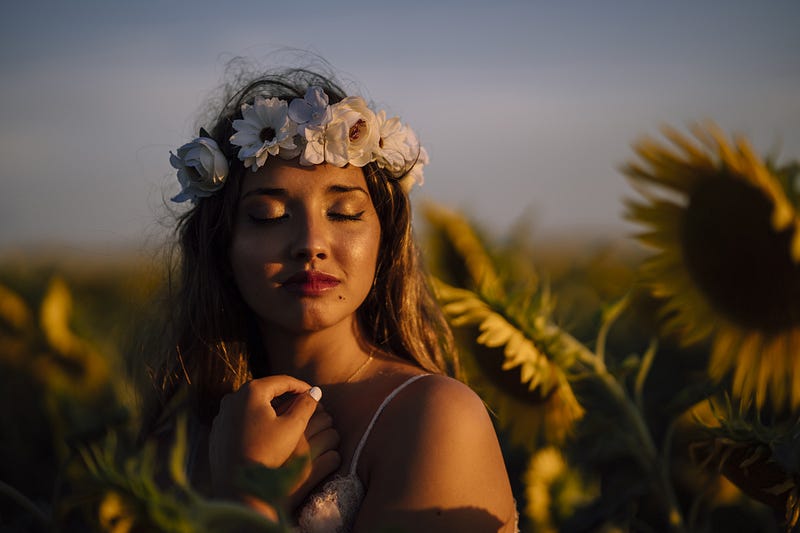
The tradition of making love on Beltane was called to “Go a-Maying”, in reference to the mayflowers blooming in the wild in spring. Couples would disappear into the night, sharing their passion under the Goddess’s watchful eye. The girls would gather hawthorn and mayflowers in the morning before they returned home. They would make crowns of the blessed blooms, and collect the morning dew to wash their faces with.
Beltane has remained a holiday centered around the union of male and female, though many people are unaware of the pagan origins of some of the traditions still practiced today on May 1.
For example, the maypole, which has become a more mainstream icon of May Day, is in reality, an old Beltane custom celebrating sex. The pole itself is a phallic symbol, while the crown of flowers and earth beneath are considered female. The insertion of the pole into the earth represents the joining of male and female, while the ribbons held by participants weaving through one another further symbolize the merging of the sexes.
Beltane Brew
Beltane has it’s own traditional drink, mead. Mead is made from honey, which is often associated with female sexuality. Times have changed, and so have the drinks of Beltane. The two recipes below are more modern, but still keep the tradition.
May Wine 1 bottle dry white wine 2 TBL dried woodruff leaves (can be found online) 1/2 cup sugar 1/2 cup strawberries, cut and lightly mashed Combine all ingredients, let sit in the sunlight for 2 hours. Strain out herbs and berries. Chill. Garnish with fresh strawberries
Beltane Brandy 1 bottle brandy 1 cup fresh hawthorn blossoms 2 TBL sugar Add sugar and blossoms to brandy in a large mason jar. Shake well. Store away from the light for 10 days, shaking each day. Strain out flowers and serve. Hawthorn flowers are thought to be beneficial to heart health.
Celebrate
Pagan or not, you can celebrate Beltane! Whether you see it as an opportunity to celebrate the union of male and female sexuality, or just see it as a rebirth of the Earth (springtime in full swing, baby animals being born and flowers blooming), Beltane is worthy of celebration.
In planning your festivities, keep in mind the colors and symbols of Beltane:
Colors red, white and green Flowers hawthorn and mayflower, any greenery Flavors/scents cinnamon, lavender, rose Candles red and white Trees rowan, hawthorn, birch Other symbols bonfires, bells, anthame (or dagger) placed in a chalice
Consider making merry on Beltane this year, as we all watch our freedoms being reborn, after surviving 2020, “the year of darkness”.
Celebrate solo, with a partner, or in a group. Make love, walk in the woods, plant a tree, wear a flower crown. Light some candles, or a campfire.
Eat, drink, and celebrate Life and Love (in all its forms). Because it’s Beltane, baby, and we should all be rejoicing!