
Being the Author of My Own Dictionary
My own word of the year
There are less than 20 days left in 2020. An ideal time to reflect on what resonated with me the most about the year. I usually end up with one word, sometimes two.
For example, COVID-19 steered and swayed most of 2020. But, no matter how many times I’ve spoken the word — it will not leave an echo from my lips. It might, for many others, though. Some parents have even gone to the extent of naming their newborns Corona. Acknowledging the pandemic — the first in their life, and a reminder of their struggle and resilience to survive.
It’s no surprise also that Merriam-Webster’s Word of the Year 2020 is pandemic. And while COVID-19 took a mere 34 days to find its way into the Merriam-Webster dictionary, it won’t appear in mine.
My Method of Choosing Words
Words get added to dictionaries in two ways:
➰When it is used many times by many people with the same meaning, either spoken or written. ➰The word has to be used on a wide scale and over a long period.
But I have my own rules for my dictionary. The words I choose do not describe my goals, my objectives, or even my purpose set out at the beginning of the year.
My approach is bottom-up. I view this at the end of the year. Like watching a movie first and then reviewing it after. Because watching the trailer can leave you somewhat lacking, confused, and downright disappointed.
The Process
Every year, I take my word and add it to my list of words — arranged, not alphabetically, but by year. My dictionary, like a traditional one, includes definitions, pronunciations (if need be), and information.
I’d like to refer to my dictionary as a specialized dictionary because it includes words specific to my life.
They are life-time entries. Every year I take stock of the biggest influence and add that to my collection. I make sure to imbibe that word and everything it stands for in the years that follow. It’s a domino effect, a cumulative effect. Not to forget and leave behind in that year alone but to carry over.
People are under the impression that dictionaries legislate language. What a dictionary does is keep track of usages over time — Steven Pinker
My Word for 2019
If I look back, the one word that engraved 2019 for me, which I chronicled in my dictionary was ‘Culturescape.’
I first came across this word from The Code of the Extraordinary Mind by Vishen Lakhiani. It’s defined as a set of beliefs and value systems made by man and society at large.
It’s a notion that has influenced my life in such a way that I always felt compelled to walk that straight line. To do things — because you should do them, and live life — the way you are expected to.
One size does not fit all. Tailor-made is more fitting.
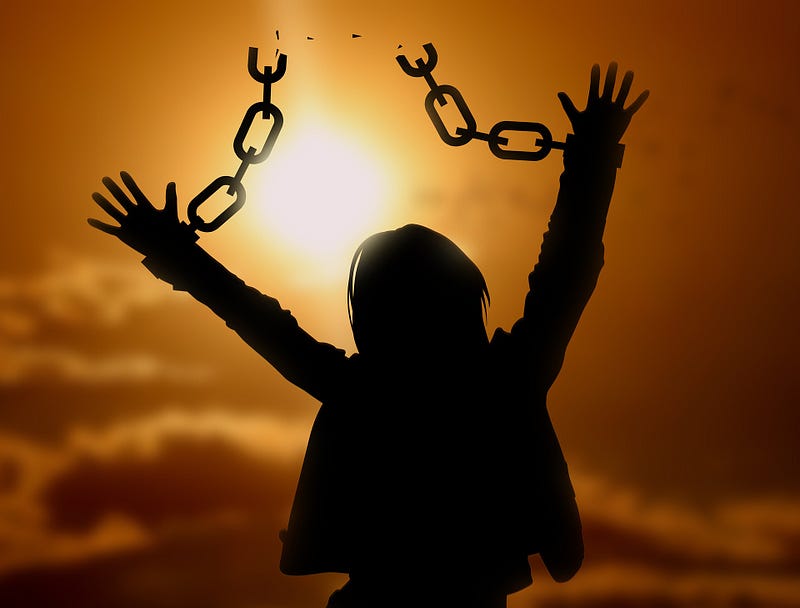
After finally breaking free of those chains, I unearthed my true self. Shedding the old to make room for the new. I was reborn to a whole new world of possibilities that was calling my name. With my word safely tucked away in my dictionary, I could tote it along in the years to come.
My Word for 2020
My word for 2020 is ‘Psithurism.’
Let me explain.
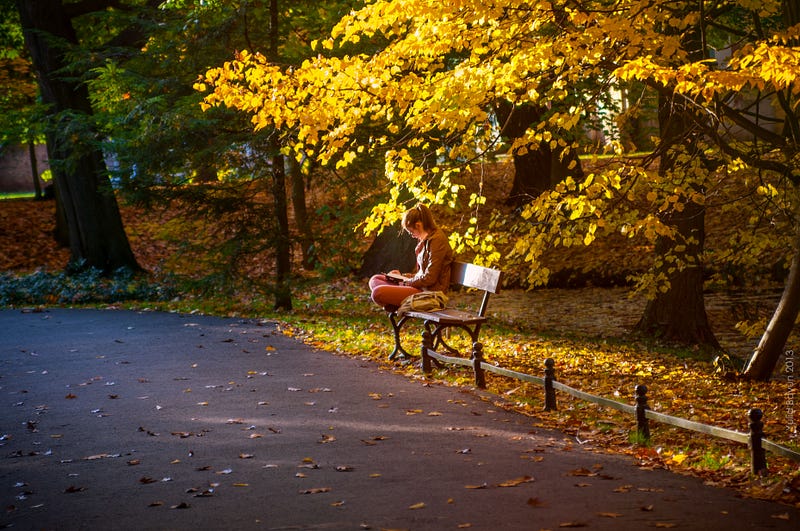
Have you sat in a park? It’s a simple but valid question. Have you sat in a park, to simply be there and be present? If yes, here’s another valid question: “What did you hear?”
For me, it was psithurism. Pronounced sith-err-iz-um. It’s the sound the leaves made in the wind or the sound of the wind in the trees.
It became the ultimate experience when outdoors. On which I judged every walk, run, picnic, and outdoor escapade. When I closed my eyes, all I heard were the dancing leaves. Nature’s very own instruments.
The music is hypnotizing. It transports me out of my element and puts me in a trance while my surroundings fade into oblivion. You can’t help but ponder how each leave works in unison with the others to churn out such eloquent harmony. It’s no musical masterpiece by far, but it has more order in its chaos than any man-made composition.
In times of stress and anxiety, walking amongst these giants with their foliage always brought about calm. When affairs got noisy in my head, listening to the sound of the leaves always brought perspective. That is how psithurism found its way into my dictionary.
That ritual resonated with me throughout this year and always will. You might think, ‘Yes, I have heard that sound before. Haven’t we all?’ The difference is the vast space between hearing and listening. The difference is being in that moment.
It has shaped my need to — my desire to — be outdoors. To wholly immerse myself in the sights and sounds surrounding me. It changed my perspective on how I lived my life in 2020. And going forward, why at every opportunity, I will seek to bring the outdoors in.
Final thoughts
My dictionary is for immortalizing my words. Capturing the meaning of those words — that take me back to that time in my life yet, made to last years and years.
They have superpowers that change my behavior, my view, my feelings, and my emotions — going forward. They have depth and substance. They have the means to build me up year after year.
I urge you to find your one word for 2020 and every year after that. Like learning a new skill today, only to practice and perfect it throughout life.
Every word added every year in your dictionary will help build your life inventory.
Thank you for reading.
If you want to read more of my writings, you may read the following one published in The Masterpiece.


