
Being HIPPO is ruining your design decisions

No, I didn’t mean it as the thick-skinned-muddy-brown animal HIPPO.
I meant a metaphorical HIPPO. It describes a person!
Heh! You mean like a derogatory cuss word?
Nope. Not that.
HIPPO means the Highest (income) Paid Person’s Opinion.
Let me tell you a story. A small group of seemingly intelligent people have gathered in a conference room. They have to make a decision collaboratively but most of them always look at one person while sharing their ideas.
And, other people in the room also look at the facial expressions of that person, voluntarily ignoring to listen to what’s being said.
As if magically this person is going to recognize the brilliance of your ideas, sprinkle some fairy dust on you and recognize you as their own Sir Jony Ive.
Well, the person being observed and spoken to is the HIPPO.
And, no,no,no, HIPPO isn’t trying to recognize the brilliance of what you are saying. This person is just engrossed in their thoughts, itching to get their turn to say what’s on his mind.
If you don’t know whether you are a HIPPO then just observe the gaze of everyone in a meeting or a group the next time.
No, damn it, not in that kind of creepy way.
But, what the hell does it have to do with design related decisions?
Actually, a lot.
You see when you are perceived as HIPPO then most of what you say is taken as the Pope’s proclamation. The other interesting ideas don’t brim to the surface. They don’t see the light of the day. Because, the angelical truth has been let out in the open. And, it must be accepted.
Even if you didn’t mean it to be the gospel truth, it is taken like that. Seriously. People think you might know your shit otherwise you wouldn’t have gotten to this position or they think that ultimately it’s your crummy ass on the line. So, we will just roll with your decision.
Sucks, right? I know! But, it happens. A lot. In the words of legendary rock band of all the time, Metallica — “Sad But True”.
So, what can you do if you mean well, want to have healthy conversations, bring forth everyone’s ideas and take meaningful decisions when you are perceived as a HIPPO?
Here are some really simple ideas for you to tell everyone that you are part of the team. I’m sharing this from a design team standpoint but you can use these ideas in any kind of HIPPO position ( pun intended )-
1. Rather than your gut, Trust the Data.
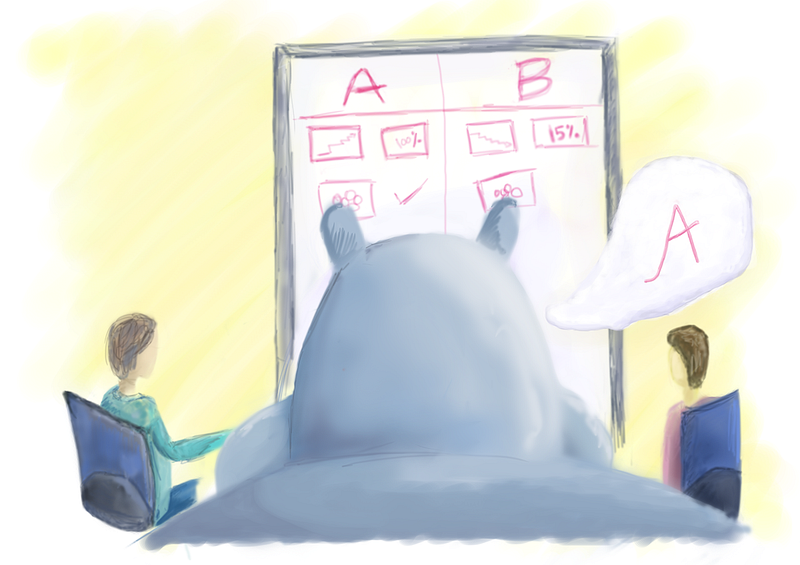
I know there is a lot of wisdom that comes with experience. It also hones your intuition. But, it doesn’t mean that your intuition could be right all the times. You could be wrong! And, there are chances that you will be. Face it.
So, whenever you feel like saying that “I say let’s do this…”. You should take a pause. Reflect back on the user persona. Figure out if this design really solves the problem.
Are there any usage analytics or user research data that can back your claim of the proposed solution? All it takes is to look at that funnel which you might have setup on Google Analytics.
For example, (hypothetically) if your users are dropping off at your site’s checkout page and you were suggesting to redesign it to have more engagement by including the cross selling options, then may be you should stop. See if that actually solves the cart abandonment issue. In that case, it would make sense to completely simplify the page and help the users focus only on the products in their shopping cart rather than increasing their cognitive load by making them look at more products.
Okay, are you designing this thing for the first time? Fine — is there a way you can invest in designing multiple options and then doing multivariate testing?
There would be a time to take a decision after hearing everyone’s inputs but don’t go off shooting opinions right off the bat. It’s a sure shot way of putting everyone else’s suggestions down.
2. “How might we” is your friend.
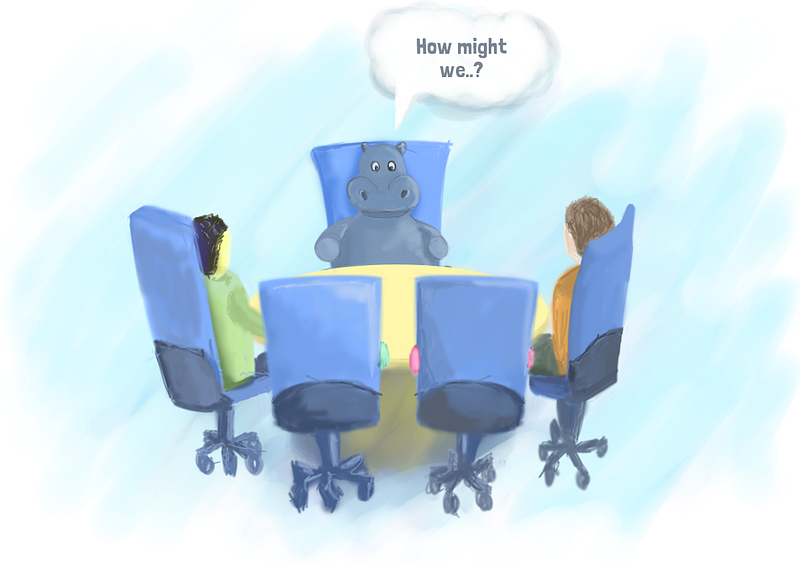
Some of us have this habit of saying — “I think we should….” or “I feel we should…”. or “How should I…” People in the leadership position tend to say things like that.
Ahem…I do this some times myself. Friggin’ Annoying. I know!
I’ve seen it impacting creative and collaborative thinking which is needed to solve a problem. Rather than using such phrases to present a design problem, open up the conversation by saying — “How might we….?”. This enables your design team to grasp the challenge, brings in the collaborative and creative spirit to solve a problem rather than hearing your opinion.
If you want to learn more about the benefits and how to use the “How might we…?” approach for holistic design thinking then check out this blogpost by IDEO.
3. Dump the Head Chair in design meeting.
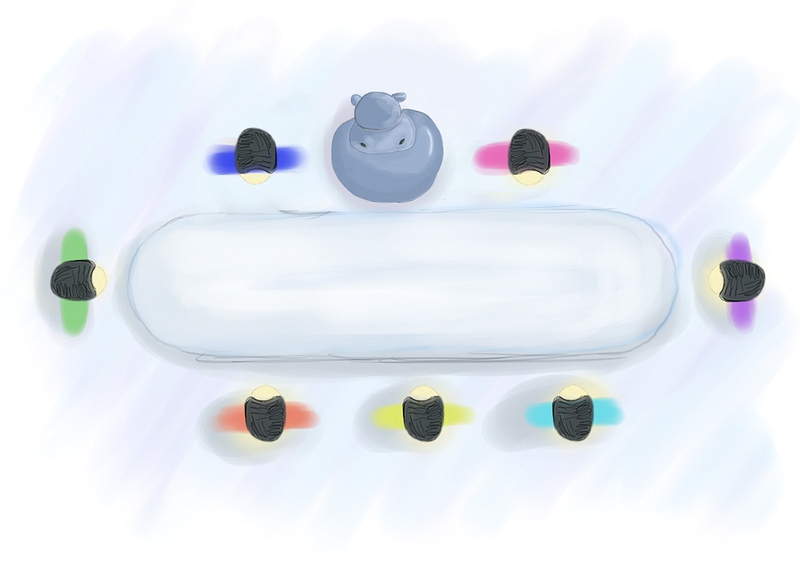
This is just plain ol’ common sense. Most of the leaders end up taking the position of power in meetings. Nothing wrong with that. Nothing wrong with letting people know who is the boss. Well, if that’s your thing.
But, if you are trying to foster a collaborative spirit where only the best ideas survive, little things like the position of your chair could have a subliminal impact. Seriously!
Like PsychologyToday, I would recommend sitting in the second or third spot on a big table where you don’t get isolated as the supremo leader of the group. This gives a message that you are part of the team. And, you are here to collaborate not dictate your opinions.
4. Practice Silent Design Selections.
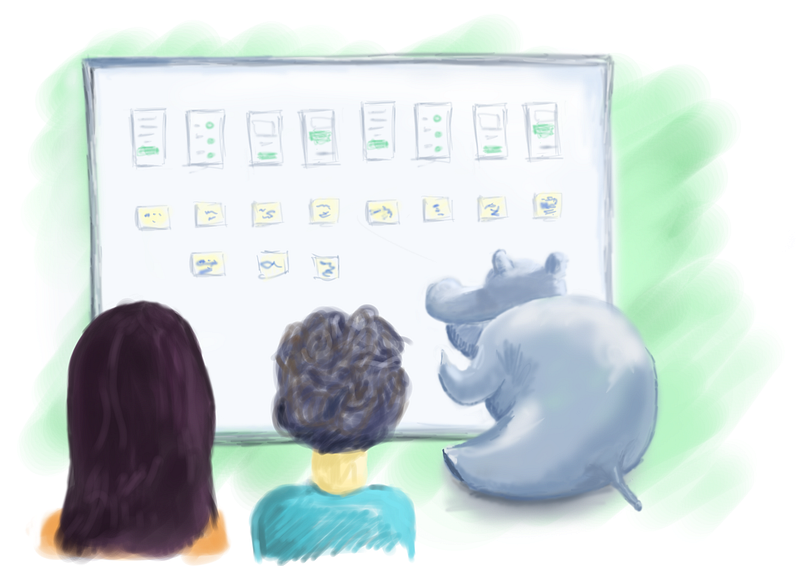
Rather than openly discussing design decisions, leverage Sprint’s technique of hanging your designs like they hang art in Museums. The method is aptly called Art Museum.
Then let your design team reflect on these designs quietly and then vote for their favorite designs or favorite aspects of multiple design options. The book, Sprint, calls this method Note and Vote or Silent Critique or you can fondly call it Zen Voting, like we call it in Quovantis.
I would encourage the perceived HIPPO to vote last. This will make sure that it accidentally doesn’t influence other team members.
If you haven’t read the book then I would highly recommend reading it. You can find it here. Or, you can read the entire philosophy and method of Sprint on Google Venture’s blog. Here is the link to the entire series. You would find Silent Critique in Day 2.
It is said that perception is reality. This list won’t help you control if you are perceived as a HIPPO but at least, you would make decisions that are well thought out and have been whetted by the team.
As an ending note, I believe the HIPPO term was coined by Avinash Kaushik back in 2006. I could find the very first occurrence of this word on his very thoughtful blogpost.
I’m writing a design series to share my learnings while working with our design team at Quovantis to build user experiences for innovative startups .
You can find my earlier writings here -


