
Being Game Be — Part 3 of 4: Uplink-Getting to the Heart of the Matter
A Danish journalist once asked me to explain myself in a sentence- this is what I said:
“I am a scientist who explores both the exteriors and interiors in our universe, looking for evidence of the sources of intelligence, wisdom and love and how our human and planetary connection to those sources can help us transform what it means to be human in the 21st century.”
The Global Change Agent club on clubhouse brings together clusters of positive mavericks who have been experimenting with what is becoming known as “Game B”, often for decades. And we discuss, frequently, what this means, both in theory and practice.
Of course, we live in a “Game A” world, by and large, and under stressful life conditions, even those who want to play Game B can revert to playing Game A to survive, as much as they may dislike how it makes them feel — and keep on hoping that they can hatch an escape plot back to Game B asap when things improve.
This article, Part 3 of 4 in this series, provides an overview of what I’ve synthesized in 40 articles here on Medium and 8 books about living a Game B life in a Game A world — and how to make the transition to a regenerative, inclusive, collaborative, multicapital world elegantly and effectively.
In Game Be, we learn to embody and integrate the heart-centered “Uplink” principle, along with the head-centric “Upthink” principle and the hands-centric “Transactivate” principle, as outlined in Part 1 of this series. Part 1 provides an overview of the 4 groups of 28 principles that help us catalyze the expression and scaling of thriveable projects by agents of change and transformation whose purpose is to prioritize people and planet. (Thanks to my remarkable Unstitution friends Steve and Donna for their co-creative suggestions on this diagram — we’re using this in our own practice and coalition building together to BE Game B in action in our co-creation).
You can explore this further through our free audiogram insights at www.globalchangeagent.com
Introduction — Getting to the Heart of the Matter
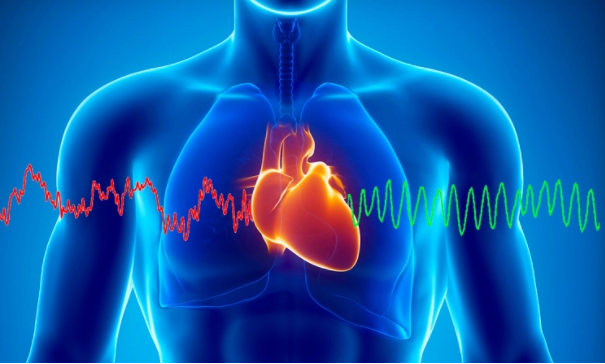
When something is important, we often speak of: “Getting to the heart of the matter”. Our heart is literally the place where heaven meets earth, as the ancient Chinese philosophers said. Modern neuroscience validates this claim- our heart sits at the center of our vaso-vagal nervous system, connecting the nervous system in our guts to the nervous system in our brains, and regulating our emotional states with its own extensive nervous system.
In fact, our hearts emit the most powerful electromagnetic field in our bodies, which can be sensed meters away by other living creatures. This is how horses, whose own electromagnetic heart fields extend several meters out from their bodies, can sense our emotional state when we approach them. Dolphins too, avoid humans who are emotionally disturbed.
All of this is now extensively researched and documented, and the ancient wisdom traditions which gave us mindfulness, meditation, and centering prayer know that our breath is the starting point to regulating our emotional state and thereby remaining “centered”. It turns out that by breathing in slowly and deeply and holding our breath in our abdomen for five seconds, our lungs compress our vaso-vagal nervous system which then slows our hearts down. Try it next time you’re feeling tense, anxious, or angry.
The Institute of HeartMath conducted an experiment where three meditators went into a meditative state while wearing heart monitors. As they got into this meditative state, their heartbeats synchronized, and their electromagnetic fields became coherent with one another. They then were told to focus on a 4th individual who knew nothing about meditation, nor what they were monitoring his heart for. At first, he sat there in a confused state and his heartbeat was erratic; soon, though, his heart became coherent with the other three and synched up into the same peaceful rhythm.
It is undeniable that what is in our hearts affects the world around us as our hearts transmit our emotional states. What determines what your heart is transmitting, you may ask? The state of your relationships. Life is a series of relationships. We define ourselves in relationship to people, animals, stuff, organizations, nature, and the world around us. Heart coherence is a scientific reality — entrainment of heart rhythms and electromagnetic fields lies at the core of why we feel good around some people, and awful around other people.
It turns out that Game A- the degenerative, exclusive, hierarchical, hypercompetitive, monocapitalistic game where money matters most, is bad for our hearts. Feeling stressed all the time raises your risk of heart attack and stroke, according to a recent study published in the Lancet. Constant stress has been linked to higher activity in an area of the brain linked to processing emotions, and an increased likelihood of developing heart and circulatory disease.
Socially well-adjusted psychopaths, known as sociopaths, tend to rise to the top in Game A. Interestingly enough, such hypercompetitive people gave been known as “Type A” by psychologists for half a century. The core personality features associated with psychopathy are callous and unemotional personality traits, which include a lack of empathy or remorse, weak social bonds, an uncaring nature, and shallow emotional responses. As heart rate goes down, psychopathic traits scores tend to go up, along with the ability to manipulate others and fake feelings. Machiavelli would be in his element.
In Game Be, we learn to embody and integrate the heart-centered “Uplink” principle, along with the head-centric “Upthink” principle and the hands-centric “Transactivate” principle, as outlined in Part 1 of this series.
The Power of Love, and the Love of Power
“The day the power of love overrules the love of power, the world will know peace.”
Mahatma Gandhi
“Where love rules, there is no will to power, and where power predominates, love is lacking. The one is the shadow of the other. Even a happy life cannot be without a measure of darkness, and the word ‘happy’ would lose its meaning if it were not balanced by sadness.”
Carl Jung
Love may make the world go around- but then, so too does money, as many are fond of saying. When one is “in love”, it may seem that the rest of the world joins you in your reverie. High levels of dopamine and a related hormone, norepinephrine, are released during attraction. These chemicals make us giddy, energetic, and euphoric, even leading to decreased appetite and insomnia — which means you actually can be so “in love” that you can’t eat or sleep.
Dopamine also plays a role in movement, motivation, mental focus, psychosis, even the production of breast milk. But it’s best known for its starring role in addiction — and romance.

Jumping from neuron to neuron, dopamine travels an ancient avenue called the mesolimbic pathway, priming the brain to pay attention and react to expected rewards from food, drugs, hugs, sex or other equally pleasant actions. This network is so ancient even worms and flies, which evolved about two billion years ago, have a similar reward highway in their primitive systems.
“Love looks not with the eyes, but with the mind, And therefore is winged Cupid painted blind.”
William Shakespeare from “A Midsummer Night’s Dream.”
First, the brain on love deactivates the amygdala, which controls the perception of fear, anger and sadness. No wonder we feel safe and secure with our loved one. At the same time, the brain dampens the ability of our mid- and frontal cortex to use logic, criticize or think clearly. We literally suspend our ability to analyze and judge the object of our affection or addiction.
This leads us to the next level of your brain on love: attachment. Adrenaline and dopamine offer quick highs, designed to get us interested. The brain seals the deal by releasing oxytocin, “the love hormone.” It’s a neuropeptide produced in the hypothalamus and secreted by the pituitary gland during times of intimacy, like hugging, breastfeeding, and orgasm.
Studies show oxytocin strengthens social bonds in mammals, and intimate activities that trigger its release help couples create strong bonds- and perpetuate the species. We fall in love, we get married, and then half of us get divorced. Why? Because love does not conquer all, and is not enough on its own to counter the slings and arrows of outrageous fortune.
“Power without love is reckless and abusive, and love without power is sentimental and anemic. Power at its best is love implementing the demands of justice, and justice at its best is power correcting everything that stands against love.”
Martin Luther King Jr.
If desire is the engine of evolution, biologically, culturally, and technologically, then care is what preserves the good that emerges from the interactions of our desires for each other and for experiences and objects expressing beauty, goodness, truth, and justice. Evolution appears to be designed to balance care and action, love and power — what I call the “synergy zone”.
This is reflected in the double helix pattern in the emergence of human value systems and capabilities. Love is learned and expressed differently at each developmental level, subject to the enablers and constraints in one’s life conditions and culture, and our own physical, emotional, mental, and spiritual wellbeing. Ideally, we learn to balance love and power, caring and action, in healthy ways at each stage of our development, leading to synergies of all kinds.
“Love is union with somebody or something outside oneself, under the condition of retaining the separateness and integrity of oneself. Love is an art- First, master the theory, then master the practice. One becomes a master in any art only after a great deal of practice, until eventually the results of one’s theoretical knowledge and the results of one’s practice are blended into one — my intuition — the essence of the mastery of any art. The mastery of any art must also be a matter of ultimate concern; there must be nothing else in the world more important than the art.”
Erich Fromm
The various layers of love appear throughout thousands of years of human history, and take four basic forms:
EGOCENTRIC — Eros: Love of the body. This type of love illustrates sexual attraction, physical desire towards others, and often a lack of control and judgement. Philautia: Love of the Self.
ETHNOCENTRIC — Storge: Love of the Child, where we learn empathy. Ludus: Playful Love, friendship. Being a member of a family, tribe or ethnic group, the feeling of belonging.
WORLDCENTRIC — Philia: Affectionate love for a wider circle of people, places, experiences and beings. Pragma: Long-lasting Love, centered around alignment of values, interests and concerns.
“Be grateful for whoever comes, because each has been sent as a guide from beyond.” Rumi
KOSMOCENTRIC — Agape: Selfless Love. … compassion. “Love is patient, love is kind. It does not envy, it does not boast, it is not proud. It is not rude, it is not self-seeking, it is not easily angered, it keeps no record of wrongs. Love does not delight in evil but rejoices with the truth.” Amor vincit omnia — love conquers all. Love thy neighbor as thyself, and various forms of divine love.
It is only because our species has spent enough productive time in the synergy zone that we are still here. If we allowed conflicts and compromises to dominate our existence, we would be caught up in a never-ending game of tit for tat, and medieval revenge dramas writ large at all levels of our society- all foundation stones of Game A.
We see these non-synergistic ways of being in gangs, military conflicts, lawsuits, political campaigns and compromises, divorces, company breakups, and mental breakdowns. The only alternative to breakdowns are breakthroughs. And for breakthroughs, we need synergy between heads, hearts, and hands. And for that to happen, we need to observe the seven principles of Uplinking in Game Be:
1. Letting Go
Human perception, sensemaking, and presencing all depend on an elaborate network of memories, dreams, images, and sensations we recall from the past as well as images of possible futures. We make sense of this all through one or more identities we co-create in relationship with others, that create this lived sense of “Me” we go through life with.
Even though we say, “be here now”, what we’re saying is, sure, live in the present, but actually, there’s a lot more to you in the now than just “now”. There’s you in the past, perhaps in the distant past, perhaps in previous lives, who knows? There’s you in the future, also.
Sometimes we’re awakened by a new experience, person, or place — smell and touch are particularly powerful in triggering lost memories. The past has a powerful influence on our lives. Yet, to move to what is next for each of us, we also need to master the art of letting go of what is no longer working for us.
What “Theory U” calls presencing is in fact a journey through all of these different kinds of times that we experience. But in order to experience them, we need to let go.
As we go down the left of the U, and we stop and listen to others and what life calls us to do, we co-sense the field of change, we go to our places of highest potential and listen again with mind and heart wide open. At the bottom of the U, in presencing, we find inspiration and common will.
We go to the threshold and allow our inner knowing to emerge, which then leads us to co-create strategic microcosms for prototyping and exploring the future by doing experiments with others. And then we can realize innovations and ecosystems that facilitate seeing and acting from the whole.
Otto Scharmer defines presencing as, essentially, a journey. Now, I’ve used the U process many times, in many different places, with many different kinds of people, and of course, its success relies, like anything, on the quality of the input and the process.
The U process is a fractal thing, so you can do this anytime — you can go down the left of the U and let go, and you can let presence come, and then as you let come, you will sense something new emerging. Microdoses of meditation and mindfulness practice help create a powerful personal capacity to let go. And then, you can move into right action.
I think that’s the essence of creativity — being able to let go of the past so we can “let come” the future. And the more we are present in the moment, the easier that is to do. Let go Game A, let come Game B. Repeat after me….
2. Energizing
We are currently living through a period of social fragmentation as the old world order of Game A steadily disintegrates around us and in us. While no longer fit for purpose or adapted to current realities, there are billions who are resisting letting go of Game A and their habits, worldviews, and lifestyles, what we can term the “old mainstream”.
This chaordic zone in the exit turbulence of Game A is a place where we can expend a great deal of energy and resources while remaining trapped in unproductive places and unpleasant situations- a draining, expensive and seemingly futile process. No wonder mental health issues are skyrocketing globally.
In the chaordic zone we can see the transition from order to chaos, and also the emergence of order out of chaos. This is the “edge of chaos” where new complex systems emerge, whether they are biological, cultural or economic systems. This is also where disruptive and breakthrough innovations and transformations happen, as old institutions and organizations are no longer able to address the existential problems generated by the emerging levels of complexity in the dominant socio-economic design and its unintended side-effects.
We are at a unique historical moment where globally interconnected collaborative and social media platforms are energizing the momentous leap, which is made possible by the new connections emerging from the interactions on such platforms. Such interactions are also driving accelerated learning and innovations so that this will be the fastest leap in history.
“Climate trauma” is a new term to describe the ultimate trauma whereby we experience the anxiety and crippling fear of the death of life as we know it, without being sure what comes next to replace it. This largely unacknowledged trauma is also seen by mental health experts to be triggering many of the old wounds in our societies, from “#Metoo” to ‘#Blacklivesmatter” to “#Brexit” and “#Trump”, as well as the rise of right-wing populism and fundamentalism worldwide in reaction to globalization and its discontents.
When people feel trapped or threatened, they release their frustration in a range of ways, from suicide and self-harm for the more introverted to aggression, hostility, and sometimes murder for the more extroverted. World-weary cynicism and passive aggression also offer ways to deaden the pain, anger, anxiety, and feeling of overwhelm.
Yet science shows us that the ability to imagine desirable futures rewires the brain extremely rapidly- as anyone who has looked forward to a day out in the countryside or at the beach can attest. We immediately “come alive”!
What do our hearts desire? What and whom do we love as a matter of ultimate concern? Let us energize ourselves by releasing those blocked energies and dead baggage we carry around inside us and between us every day. We can do this at multiple levels of scale with significant benefits:
• Unblocking the System — transform blocked energies into thriveable learning and outcomes, thereby avoiding the “blow-ups” that occur when blocked energies find no natural release valve.
• Effective Change — encourages the emergence of suitable systems and structures to minimize inputs of matter and energy and maximize outputs of useful information and thriveable activity.
Rest, relax, refresh, reinvent. Let go of the baggage. Breathe deeply and consciously. Take the time to reconnect with nature, each other, and yourself. Without abundant energy, making a positive impact in the world easily becomes a form of masochism. Physician, heal thyself.
3. Connecting for Relational Amplification
If we are to transition from Game A to Game B without a life and death struggle, we have to deepen the understanding of ourselves and each other and build the trust that enables us to learn and enjoy each other's presence in safe spaces. This is at the core of the concept and lived experience of thriveability, which I coined in a speech I gave nearly a decade ago:
“Thriveability — In conscious living systems such as human beings, thriveability includes the sense of the flourishing of oneself and all life, together with the ability to engage purposefully in life and work through meaningful relationships, along with a sense of accomplishment for one’s positive contributions to the world.”
Each of us can thrive when we are part of a larger whole that is flourishing. When we are in a nurturing place that helps us realize our full potential, we can also make a much greater contribution to the health of the whole system we are a part of. As it is in the nature of living systems to evolve and transform, healing ourselves and the wholes we are a part of is a synergistic process that can positively transform how our world works for all life. For this, we need to practice relational amplification, not just “connecting” or “reaching out”.
The “Future Glue” that integrates the six core biophysical and psychocultural capitals/flows into social and business models that lead to a regenerative, distributive world-system, comprises Relationship and Intellectual/Knowledge Capitals. Through the trust we build through our networks of relationships, and the ideas and initiatives we co-generate, we make good happen and shift our world and ourselves into a more thriveable future through synergistic innovations.
In Game Be relational amplification we co-create our relationships as ends in themselves, not as means to an end. This allows the gradual emergence of alignment of vision, sharing of interests, and deepening of trust. On the way home from a trip visiting friends, colleagues, and family before Covid-19 hit, I wrote the following to express the joy of relational amplification. Although Whatsapp, Facebook, and Zoom calls make this harder to reproduce today, it’s still possible:
“Thoughts from the wee small hours, flying above the clouds, returning to Perpignan from a few weeks of travel between home in Perpignan, Mallorca, Barcelona, Dorset, and London- deeply grateful today for the people and places I love so much, my family and friends everywhere, and their generosity of spirit, their aliveness in their hopes and dreams.
Travelling, connecting, sharing, opening hearts and minds, regenerating hope, shifting possibilities into being through each other. Weaving a tapestry of shining relationships, of relational amplification and depth. Being with and for, just being there and hanging together, is a lost art. The soul of road trips- No judgment, just being with, celebrating the wonder and mystery of it all. Letting go of limiting preconceptions.
Heart centered. Radiant experience, meshing the threads of goodness and positive energy, smoothing the jagged edges of everyday life, smoothing a path through the tangled web woven by the entangled slings and arrows of outrageous fortune and our deep desire to flourish. A canvas on which to paint fields of new ideas and dreams, the source of all else. Making space for carefree moments of laughter and lightness, so we can dissolve the matrices we trap ourselves in every day.
Transcending, liberating us from heaviness into an unbearable lightness of being, floating free, moving on. Music of the spheres, play on, play on, let’s dance in the aisles while we can.”
I hope we can all live this way, sooner rather than later, dear friends. Bring on Game Be.
4. Letting Come
This is what happens when we practice the art embodied in principles 1–3 above :-) What needs to emerge next, does. “What is wanting to happen, naturally”, arrives. Synchronicity. Intuition. All alive in the moment.
At the bottom of the U, in presencing, we find inspiration and common will. We go to the threshold and allow our inner knowing to emerge, which then leads us to co-create strategic microcosms for prototyping and exploring the future by doing experiments with others. And then we can realize innovations and ecosystems that facilitate seeing and acting from the whole.
We become one with the pockets of the future in the present. We scale those pockets into an emerging global civilization as we learn to be Game Be.
5. Courage in Brave Spaces
We’re now ready to demonstrate courage in brave spaces, to push the envelope, the boundaries of what it is possible to feel, think, know, be and do.
We need Game Be presencing and convening with pure hearts and open minds to facilitate such spaces, and practice this every Monday on clubhouse in the global change agent club. Showing up while cleaning up, growing up, and waking up and down. Getting on with Job One — not only being the change we seek in the world, but also rolling up our sleeves and doing the things the world needs for Game Be to be real, even if we feel a little out-of-our-depth, awkward and uncomfortable to begin with.
Being willing to step into the unknown, even to look a tad foolish, failing forward. Having the courage to believe in yourself as well as others and their dreams, possibilities, and aspirations, and stand your ground for what you hold sacred. Being a good animal while honoring your highest self and the highest selves of those around you. Being the power correcting everything that stands against love, standing for, in, and as justice, beauty, goodness, and truth.
6. Joyful Presencing
So, we reach the penultimate principle, joyful presencing. The presencing movement and the very concept itself can feel rather heavy on occasion. I mean, what is the point of righteously “presencing” if there is no sense of joy, abundance, completeness, and celebration of life, the universe, and everything?
As the old saying goes, life is meant for living — living to the full. A daring adventure, not some meek, apologetic, pathetic, weak peeking out from behind the politically correct curtains. We just need to get over ourselves and our petty dramas and opinions.
Human beings are not a virus on planet earth, as misanthropic deep ecologists claim — we are one of the ultimate expressions of conscious evolution in a living universe, on course from our Game A past as homo sapiens to homo universalis. To creating a blazing type one civilization powered by the sun, leaving behind our type zero civilization powered by ancient sunlight and dead plants and animals.
Yes, we are in a global crisis. Yes, it means we could go extinct along with 90% of life on earth. But let’s remember something — we evolved by finding ways to live on the edge of Ice Age glaciers and desert fringes. We evolved by outfoxing 60 freezes and 18 periods of global warming. That is our genius. And we can do it again.
“We are the first generation of humans on this Earth to be aware of ourselves as one planetary body, affecting our own evolution by everything we do, realizing we can destroy ourselves through the misuse of our new power or evolve ourselves into a universal species that is capable of infinitely more than we can currently imagine.”
Barbara Marx Hubbard

7. Sharing Emerging Abundance
It is time for us to be brave and be bold Game Be style. Not with the arrogance, greed, and mindblindness that characterizes the worst of Game A, but with the humility, love, compassion, connection, and creativity that characterizes Game Be.
The great shift happening right now means that consciousness will no longer simply refer to the way in which we apprehend the world. It will define the way in which reality itself is created. Evolution is evolving, through us!
You and I are at home in the universe. We’re currently sitting on a self-sufficient, organic, 4,5 billion-year-old spaceship. Orbiting a power source a million times larger than the earth, capable of fueling a Type 1 Solar Civilization.
As a member of a species that is evolving from homo sapiens, focussed on ethnocentric and national interests. To homo universalis, a worldcentric civilization capable of making our home planet flourish and bringing our solar system to life one day.
Today we have a new frontier whose potential is larger than any hostile horizon we’ve ever conquered before. It’s a new frontier not just for human beings but also for entire ecosystems — for meshes of living beings from bacteria and algae to trees, cats, and puppies. It’s a massive niche waiting to be greened. And we are the only beings on this planet that can reach it. We are the only ones who can green it. That vast new landscape hangs above our heads.
We’re in a global transition from Game A to Game Be. Hundreds of millions of us are already moving into unevenly distributed pockets of the future in the present around the world, where Game Be is emerging and now starting to scale. The big question is: How can we catalyze and accelerate this transition in time to address the root causes of the six interconnected, escalating global mega-crises? And create a flourishing world for us all and future generations?
You can explore this further through our free audiogram insights at www.globalchangeagent.com


