
Being Booshy — Fashionably Irresponsible
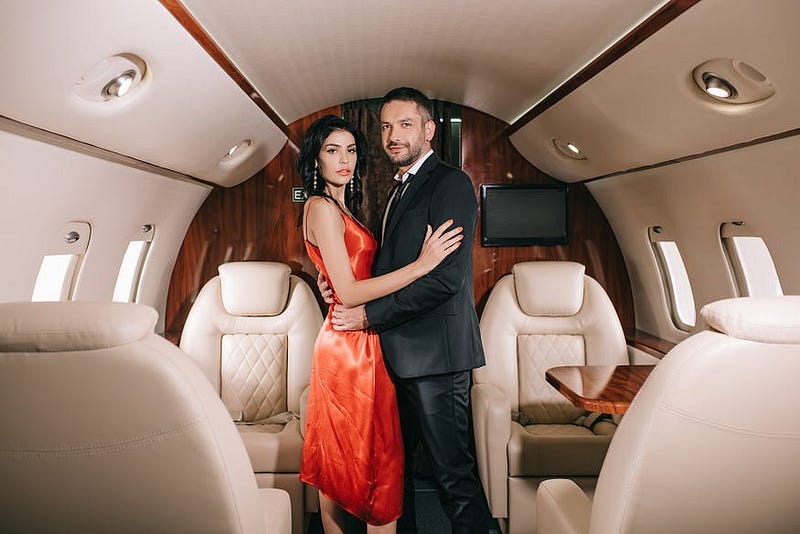
Our online exchange was tense. It started when a successful travel blogger posted an ego reel of her travels. Her short video showed her doing her happy dance in what appeared to be a private jet. Next, she stamped her foot in front of the Egyptian pyramids, which magically made all the tourist disappear. She was officially booshy. Her ego reel was her social proof.
The Carbon Footprint of Air Travel
I posted a comment on the video sharing that CBS News had done a report on how private jets are contributing a lot to global warming. One of her followers said the poster was in a first class cabin. The poster then confirmed that it wasn’t a private jet. I’ve never been inside either of them, so I wouldn’t know. I ain’t that booshy.
But the responders missed the point. First class seats have 6x’s the carbon footprint of the “shove me in the no legroom” section. Sadists call this section Economy class. The carbon footprint of first class cabins falls somewhere between first class seats and the most damaging private jets, because they take up more space in the plane.
The point; the poster’s ego reel was bragging about her elite airlines status while completely disregarding the environmental damage. Unconscious boosh like this gets praised rather than challenged.
This social norm is toxic.
Responsible Travel
I love travel. I’ve traveled more than most on this big blue globe. It’s been a privilege to travel for my work. These days, I video chat more and travel less. As a documentary filmmaker and SEO content creator, travel is necessary for my job, just like that travel blogger. So I don’t speak as a perfectionist who condemns everyone else for their carbon footprints. But with such clear signs like the increasing natural disasters, why do we avoid the conversation about responsible travel?
The travel blogger was celebrating their booshy lifestyle. Instead of acknowledging the downside of their decadence, they minimized their negative impact by avoiding a meaningful exchange that was my attempt to educate.
The recipe for avoidance goes like this:
- Post a reply that misses the point.
- Party on.
- Post my video as an ad to double down on the boosh!
My attempt to open a meaningful and factual dialogue with the travel blogger didn’t bring new awareness. So I’ve brought the situation here to see if we can elevate the conversation.
As long as being booshy is celebrated, it will remain the ultimate get-out-of-jail free card when it comes to personal accountability. You may deserve the spoils of your hard work, but that doesn’t mean the younger generations deserve to pay for your decadence. They pay for it with reduced personal security from rising natural disasters, higher costs for disaster clean-up, and higher insurance rates for floods, fires, and storms.
What does responsible travel mean in the 2020’s?
I ask myself the following questions before deciding to travel:
- Is travel necessary for this project or can I video chat/ email instead?
- If travel is necessary for the project, what is essential travel and which requests can be reduced?
- Is it possible to outsource part of the project to local professionals?
I don’t have all the answers. But so far these reflective questions have worked for me. I think defining responsible travel starts by figuring out what is necessary travel. Once we decide to travel, we can learn how to minimize our carbon footprint while traveling.
Minimizing Our Carbon Footprint while Traveling
To minimize my carbon footprint while traveling, here’s what I’ve figured out so far.
My current guidelines for traveling with lower carbon impact are:
- I always fly Economy. I’m not a masochist. But I’m prepared to suffer to minimize my impact on the environment. If they bump me up to an Economy Plus seat with extra legroom, I won’t fight them. But I don’t fly first class, because I’m just not that booshy.
- I try to stay at the destination for a while to complete everything in one trip to minimize plane rides.
- I use public transportation or use a fuel efficient vehicle like a scooter or hybrid car whenever possible. Staying in walking distance of a job can be a real treat.
- I minimize air conditioning use whenever possible. This can be as simple of setting the temperature a degree or two higher than usual and turning it off when you’re not there.
- I eat locally sourced food as often as possible.
- I bath in local lakes and fountains whenever possible to conserve water. No, not really. But the others are true.
Stop Celebrating Booshy People
It’s still socially acceptable to be booshy in ways that harm the environment. Buying a yacht and traveling by private jet are still on countless bucket lists. I think an important paradigm shift is to stop celebrating booshy people that don’t take responsibility for their unmeasured damage. Being in first class doesn’t make you a VIP. Being irresponsible means others pay for your entitlement.
We can have high-quality life experiences without devastating the environment.
Nobody is perfect, myself included. But so many people I interact with aren’t even trying to understand their impact on the world around them. What happens to the younger generations who will pay the tab for our booshy ways? What happens when people from the younger generations make the same mistakes that brought us here?
I’d love to hear from fellow travelers who’ve figured out new solutions. The bottom line; we need to have a meaningful public conversation about responsible travel. I’m listening.
Author Bio: G. K. Hunter is a SEO savant and content creator who’s work has been featured on PBS, NPR’s “All Things Considered”, Cornell University, and Pacific Historic Parks (Pearl Harbor). He’s the author of Healing Our Bloodlines.


