
Being Black
Go ahead and play the race card
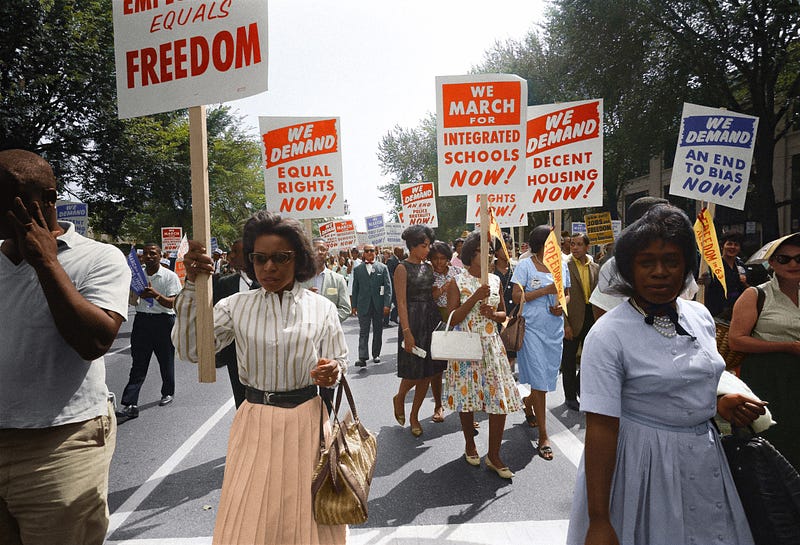
On a trip to Frankfurt last February, I witnessed a scene that sent a familiar sensation of proximal panic through my body. Two young woman of color were crossing a pedestrian bridge with two children who were on Razor scooters. An older white woman and then an older white man began to engage them in an increasingly hostile manner. As the children stood behind their respective adults, the white man and woman yelled at them in German.
I could not understand the words, but the tone and body language — the look of contempt in their eyes and the contempt contorting their faces — made me stop in my tracks and watch. Internally, I oscillated between standing still and rushing in to get involved. Fortunately, a young white man got between the screamers and the screamed at. My friends (and hosts in Germany) explained what the conversation (tirade, really) was about. Germans care about following the rules, and the older woman was telling the group of color that they should not ride their scooters across the bridge because it would damage it. My heart’s rhythms felt out of sync. My breaths shallowed. My skin pulsed with a coating of dread. I knew what this was.
Here’s the thing with racism, it isn’t always what you expect. To someone who isn’t a person of color, that scenario probably looked like an older woman simply chastising someone younger for breaking an explicit or implied rule. And perhaps she was doing that. But she wasn’t doing just that. Her aggressive posture, tone, and hand motions were disproportionate to the offense. She was acting like someone who had almost just been run off the road. She was acting like someone in fight or flight mode who chose the latter. And I deeply suspect that had she encountered a white family in the exact same situation (like the family that crossed the bridge on scooters mere minutes later), she would either have had nothing to say (though she perhaps would have entertained some peeved thoughts) or she would have spoken in a calm and respectful manner. She would have informed instead of informed and punished with her words. Because who gets that angry over a minor offense — especially when there are young children involved?
Eventually the white man who had the bravery to get in between (the definition of an ally — and God bless him) oversaw the diffusing of the situation. He continued to stand between the opposing parties and encouraged the chastisers to move on. Reluctantly, they shut up and backed away. The young family stayed put and looked on motionless as the old couple left.
All of us watching wanted to do something once the encounter had resolved. It felt stupid, but we’d just come from the confectioners and offered the kids some of what we’d purchased. They declined, probably because we were strangers offering children candy on a bridge in the land of Hansel & Gretel, but one of the adults and I shared a moment of deep eye contact and a reticent smile — communicating volumes in a way that required no words. The abuse she had suffered had not gone unacknowledged. And I think we both knew that we’d each been in such a situation before and would be again. It was a look of recognition, resolution, and shrug-of-the-shoulders commiseration.
So, what was it about that encounter that made my skin crawl? There are lots of angry people out there who verbally assault unsuspecting victims. Perhaps that’s all this was. But I also suspected it was time to go ahead and play the race card.
There is a type of racism that easily slips into the territory of everyday life. It is the white person who feels free — nay, obligated as if compelled by manifest destiny — to police people of color — whether in how they speak and act, in what they believe, or where they are permitted to exist.
It comes through in the patronizing or dismissive tone one adult feels entitled to assume against another adult over whom they have no authority. It lives in comments like, “Calm down. Stop attacking me,” when a Black woman coolly complains to a white teacher about the educator’s over-zealous discipline of her child (my sister bore witness to that).
It survives in the refusal to acknowledge the bias that may cause a Black man’s bag to be searched by police while his white friend isn’t stopped. Or pointing out a white person that was stopped as proof that race never came into play.
It wallows in the belief that people of color, though the minority of society at large make up the majority of the prison population because they are inherently more violent, less moral, or otherwise ethically impoverished.
It is fed by those who are more concerned with how many undocumented immigrants are coming into our country than what they’re fleeing from.
It is there any time a Black person makes an observation, shares a feeling, or takes a stand and a white person essentially says, “No. You’re wrong. This isn’t racism, it’s nostalgia. We’re not prejudiced, we’re celebrating our traditions. This isn’t bias, it’s just a coincidence.”
I’m in my forties. Do you know how many “coincidences” that can be explained by prejudices I’ve experienced in that lifetime? Too many. You say you’re colorblind? I say that’s impossible. In any event, I’m not impressed by people who claim to be colorblind. To eliminate color from the conversation is to also avoid the topics attached to color — namely injustice and inequality. It makes it possible to overlook failures in inclusion and diversity. Don’t try to be colorblind, that’s living outside of reality. Just don’t be color biased. I want you to see my color. It’s part of who I am. I don’t want it erased. I simply don’t want it held against me or over my head.
I want my color to be a benign characteristic rather than a socially sanctioned constraint. Blondes don’t have more fun or less intelligence. Eye color does not determine personality or athletic ability. Similarly, skin color only correlates to things like education, incarceration, and income because America has been a racist entity since our country’s founding.
Perhaps that’s why I wasn’t inspired to cheer or even to smile when I heard Chauvin’s verdict. Only he knows what he was thinking as he knelt on Floyd’s neck and then continued to do so as George’s life left his body. Only he knows if he regrets his actions or just that they were captured on video. But what I know in my core is that I am not fully at ease. I am ambivalent. I am relieved that he wasn’t found innocent. But I am also aware of the history of police officers going unchecked when they are careless (or malicious) in engaging brown and black bodies. This ruling is historic because it is an outlier. That saddens me.
Additionally, history has taught me to wait for the other shoe to drop. Most Confederate monuments weren’t built after the Civil War, they were built during peaks in the Civil Rights movement. After the abolition of slavery, America enjoyed a period in which Blacks were voting and being elected to office. But that advancement was met with a more than equal and opposite reaction from white supremacists. Lynching became commonplace. Covert and overt voter suppression became rampant. And behind each of these trends was a lie about protecting (white) citizens or the sanctity of our democracy. Unsurprisingly, the numbers of Blacks voting or in office atrophied. Want to know how long it took to regain those losses in Southern states? Bill Clinton was president.
When Barack Obama was elected, I felt the import of the moment, but I also thought of how many Black leaders have been assassinated and felt worried for him. (I have never been so happy to be wrong.) And then we saw the rise of “America First” and “Make America Great Again.” We saw a racist man elected to the same office and use his platform to disseminate ignorant, racist, and xenophobic rhetoric that inspired an exponential increase in violence against Asian-Americans and Pacific Islanders.
And perhaps I’m a pessimist, but George Floyd’s death and Chauvin’s conviction make me wonder how many more names we don’t know because no one was recording. Even as I join with so many who see this case’s outcome as a victory for, perhaps not justice, but at least accountability, I worry about the reaction that is surely coming from those who believe police officers can do no wrong in the pursuit of “law and order” and who are not appalled or otherwise moved by the desecration of a Black body.
This country has a lot of work to do. Even if our forefathers weren’t considering me (or those like me) when they penned the Declaration of Independence or the Constitution, I want to see their words (I won’t speak to their intentions) succeed. It’s going to be hard. Some foundations need to be torn out. And there are some who will need to step down to make things more diverse and inclusive at the top.
It’s not enough to say you want equality when you’re unwilling to share equal access to wealth, opportunity, and power. Protests and policy changes may not change hearts, but history has taught us that both can lead to significant steps forward.