
Being Biracial in a Multicultural Country is Still a Surprise
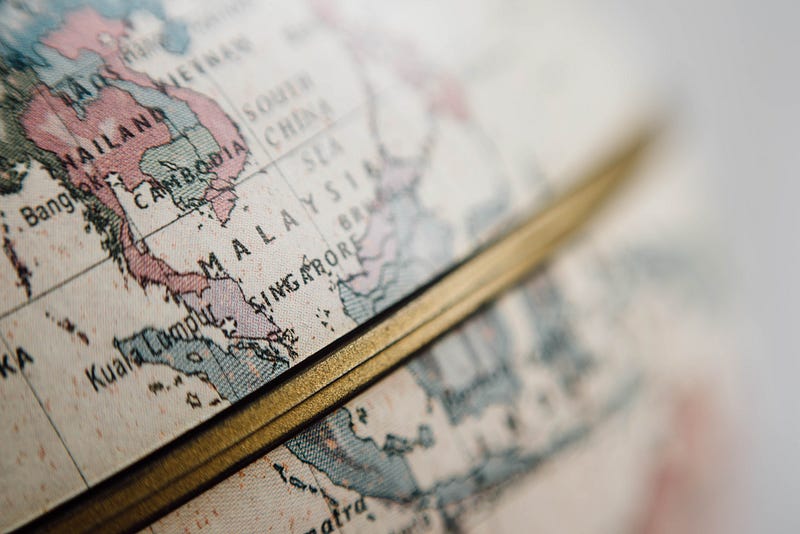
Malaysia is a country that prides itself on being ethnically diverse and accepting of the different races that have co-existed peacefully since our independence. The three main races — Malay, Chinese and Indian — are descendants of people who share a common history. Especially from the time of the British colonial rule.
We’ve evolved to be a true melting pot, showcased most clearly in our food. I’d recommend Chinese for breakfast, Malay for lunch, and a bowl of hearty Indian rice and curry for dinner. I’m of some certainty that wherever you are in Malaysia, you can find any of those within a 5km radius. It’s truly exciting.
For the most part, this is how life is here. It is vibrant and wholesome. Some restaurants stay open 24/7 where you can sit, eat and chat for hours. And it cost as little as a dollar. I’d dare say they’re more of a scene than nightclubs here.
These spaces are some of those that Malaysians draw heart to. It’s where the lines stop being drawn. It’s how I’ll always remember my country, not for it’s people’s failure to each other.
And while race riots are occasional blips in our short history of general tolerance and acceptance of each other, the undercurrent of long-held prejudices and clan mentality loom larger than we are ready to acknowledge.
I come from a mix of races probably the most common in Malaysia — Chinese & Indian or so this mix has been coined Chindian. It’s not unusual to me, as I’ve found many like myself, especially within the Baha’i community where interracial marriage is encouraged.
My closest relatives are also of mixed breeds and growing up I had never thought of myself as mixed or different. My father is Indian and my mother Chinese and people who look and speak like them were everywhere around me, whether during Diwali or Chinese New Year.
Besides, as Baha’is, the Teachings were straightforward and inculcated from when we were young: “The world is but one country and mankind its citizens”¹ or “Prejudices of any kind are the destroyers of human happiness and welfare.”²
So, I had little need to really question my identity or culture. At home, my parents didn’t appear to have strongly different views. My dad relishes in early morning dim sums as much as my mother loves dosas and naans.
It’s only when I started interacting with the world that I became aware that I was a minority, and that my parents were different from each other and so was I from the majority of Malaysians.
“Do you feel more Indian or Chinese?” or “What language do you speak at home?”. And “You don’t look Indian or Chinese.” These are some of the queries and comments I’d get from friends at school, along with looks of surprise that such offspring came from such marriages.
Being curious in nature, I enjoyed the curiosity of others. And I see only benefits in us learning more about each other — for ignorance is the mother of all prejudice.
But it would be subtle but hurtful remarks that took off the rose-colored glasses I once wore about my country. “I’m only friends with you because you’re half Chinese” or “Good thing you look more Indian”.
These comments seemed to imply that being biracial isn’t exactly possible, and one race had to invalidate the other in order for it to be legitimate.
It was a wake-up call to a reality that while our curiosity is innocent in nature, they reflected that at the heart of our multiculturalism is an emphasis on differences, not unity.
And as I grew older, it became clearer to me that from our neighborhoods, to schools, and to our government, race still played an unnecessarily huge role in our decisions as a people.
The truth is our country is still learning what ‘unity in diversity’ means. Widely used as a slogan, coupled with stock images of happy faces with every member of the three races it has become superficial at best.
We’re still learning how to get rid of prejudices that arose when the British rule segregated us for economic gain. And as a multicultural country born of it, what does it mean that we all call this land home.
But prejudices have long existed, and they will be for a while before they cease to. I know my grandparents struggled with their children marrying those of an opposite race. And that’s only one generation away from mine.
How many will it take before we’re ready to say we are all equal, in the sight of a God or in the eyes of the law? To not limit equality and unity to wishful thinking but to have it ingrained in our thoughts, convictions, behaviors and even policies.
Such questions become more widespread among the youth in Malaysia. More conscious in part thanks to global affairs, we’re more ready to call it out as it is and to address it together.
I take comfort in that for at least a portion of Malaysians about to raise another, we’re more ready to put justice for all before the interests of our own race.
And with that, I’m hopeful that for my children and grandchildren, building unity won’t be on the grounds of our differences but on an unwavering desire to see justice be done.
And maybe it won’t be so surprising who we’ve married, or who our parents are or what we look like. We’ll just be.


