
Life Story
Being a Liberal in Turkey?
Or should I say, being an admiral in a land that has no sea?

There are occasional events or situations in our lives that negatively affect our physical or mental state, perhaps leading to psychological problems. This is actually a process that should be seen as normal in human life. However, we do not take any of our actions just to cause a “bad” outcome. Bad results are partly because we understand those events differently or do not fully know the circumstances. But being liberal in Turkey is like, as the British people said “like turkeys voting for Christmas”, despite knowing it would lead to bad consequences in their life but still meant to be individuals that continue to do the action. In this article, I will try to explain the difficulties and feelings of being a liberal in Turkey, based on the events experienced, the emotions felt, and the dominant political ideologies.
The Dominant Political Ideology in Turkey
If we wanted to summarize the political ideology in Turkey with one word, at least for today, this word would be “conservative” for sure. In the Republic of Turkey, which we will celebrate its 100th anniversary in 2023, the new founding fathers designed the new state and society to be formed within the scope of modernization as a top-down revolution. However, over the years, this revolution could not be explained sufficiently to the society for various reasons, and this caused the feeling of counter-revolution, especially among the masses.
Essentially, at the most basic classification, Turkey’s current political-ideological position, can be based upon the conflict between the revolutionaries and counter-revolutionaries. But this conflict was due to which group would govern the concept of the state, which is always inviolable for both sides, imagined to be strengthened and seen as the “main purpose”. This understanding of statism has passed through various stages until today and has created an environment that approximately 95% of the society accepts without question.
At the beginning of the paragraph, I described Turkey’s political ideology with one word as conservative. Yes, there is an imagined conservative profile that a person or group who has embraced Islamic values, who wants to build the state and society through religion, and who does not hesitate to dominate the minority if necessary, because his/her own faith represents the majority. This profile essentially represents 40–45% of Turkish society, although there are also more tolerant or more radical ones. But the word “conservative”, in its terminology meaning (the group trying to preserve a set of values), I would argue, can be used to describe a group of 90–95%.
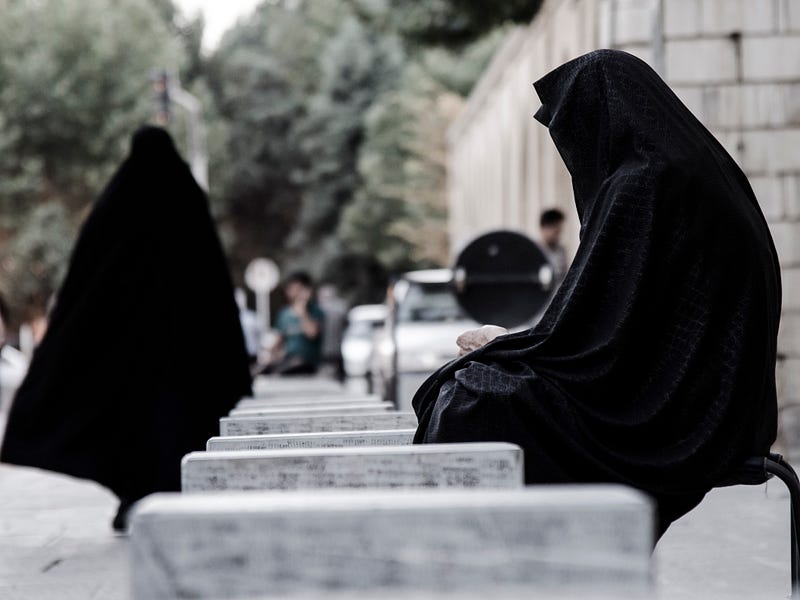
This conservative understanding can be explained by the absence of aristocracy when there is a Sultan in these lands and that all living people are legally the servants of the Sultan, and that these “servants” become “citizens” of a state within the scope of the nation-state building after the transition to the republican regime. But this state of being a citizen is not in an individual sense, but a citizen as a member of the community. Today, being an individual in a country with such a historical background, believing that the state is for the individual, and expressing that communities are structures formed by the gathering of individuals without associating them with any moral value is an approach that is regarded wrongly, although it does not constitute a crime yet.
How did I Describe Myself as a Liberal?
I am now 23 years old and politics is a field I have followed passionately since my childhood. Even this passion has caused 10 years old boy to have a scrapbook which is titled “How to Repair Turkey?”. But even I didn’t know, until a certain age, there is a liberal party in the country. Actually, the fact that I do not have information about the existence of a liberal party can be explained by the following voting rates of the party in the elections. I mean, in Turkey, especially in times of economic crisis, we saw a lot of political parties claimed that they would adopt a liberal economy but there is hardly any party that embraces liberalism as a whole (political and economic).
So how did my path cross with liberalism? This can actually be said to be related to where I live. Basaksehir district of Istanbul, in Turkey, Erdogan’s “last castle”, known as the relatively rich, but a place where people with Islamic values. There is even a football club with this name, and many of my foreign friends who were interested in football knew this football club as Erdogan’s club. I’ve also been living here almost since I was born. Although my family is a relatively “secular” family, I mostly grew up in a conservative / Islamic environment because of where I live. Such a way of growth creates a “being in purgatory” situation in humans from an early age. In other words, being neither here nor there. In Turkey, even there are so many facts, the main motivation of being a liberal is actually coming from this situation.

As a child, when they ask “What do you want to be when you grow up?” and after that, if I say “Governor!”, you can easily guess which department I studied in the university. Of course, Political Science and International Studies! In fact, even though I still had a great interest in politics after I entered university, I described myself as “apolitical”. However, I had a political stance: that was “I did not have a political stance”. But that wouldn’t show that I was apolitical because I was always interested in politics, I just didn’t know the ideas very well!
The biggest factor in my self-definition of politics was the university I studied. After getting acquainted with liberalism at university and doing a lot of research on it, I defined myself as liberal. Actually, I have not defined it, I already understood that I am liberal. Because liberalism in Turkey, an ideology very different from actually understood the essence, and I perceived it before as wrong. Let us examine this with the difficulties of being a liberal in Turkey.
The Difficulties of Being a Liberal in Turkey
Liberalism is a doctrine based on individualism, which guarantees the rights and freedoms of rational individuals in the political and economic sphere, and advocates minimizing the intervention of the state in the economy by leaving the market to its natural functioning. From this point of view, liberalism can be defined as “a thought defending freedom”.
The biggest difficulty of being liberal in Turkey stems from the state which has invaded every part of our lives. As I claimed before, for many people, the state is really seen as a concept to “serve” in Turkey.
The second major difficulty is the unconditional defense of freedoms for all. Especially in a country with 99% Muslim and 75% Turkish origin, it is very difficult to defend the freedom of 1% non-Muslims and 25% non-Turkish people. Moreover, this is just a demographic approach. Likewise, because the country is so politically polarized, it is questioned whether you belong to the ideologies of the people you defend, not your liberal identity, even when you defend the most fundamental rights and freedoms of any group. So because of this situation, a liberal in Turkey, seen both members of all ideologies and also “internal enemy” of these ideologies. What a paradox!

The third major difficulty is the damage done to liberalism by people who call themselves liberal, or people perceived as liberal in society. For example, did you know that the current president, Erdogan, was considered a leader “defending liberal values” at least for a time? What a contradiction isn’t it! This is a great paradox in Turkey. Erdogan was a defender of political or economic freedoms in his first times until he got some power shows that he is a pragmatist leader, not a liberal personality. But perception is often reality, right? You can see people in society, like Erdogan, behaving pragmatically and behaving liberally until they reach a certain power. This causes liberalism to be misunderstood in the country.
Conclusion
According to a survey conducted in 2012, there are only 9 per thousand people, that define themselves as liberal, not 9%. You can imagine how difficult it is to take a libertarian attitude in a country where this number is 12% with people who call themselves “democrat” or “social democrat”.
This subject was actually a subject that I wanted to tell but was afraid of not being understood and because there was no place to explain. In a way, Medium is therefore a very good platform. A place where you can tell what and how you think, without hesitation. Because the reader is cosmopolitan and open-minded most of the time. There are great difficulties in the correct understanding of what you say and being cosmopolitan in Turkey. I would have liked to write much more on this subject, but if I explained all the things I would like to tell, a book would have come out. I’d better end here.
May my last message be to see you in a more cosmopolitan world. Stay well!