
LOVE & RELATIONS | FATHERS & SONS | PARENTHOOD
Being A Good Father Is Not Easy, But Being A Great Son Is Not Easy Either.
Is there a generation gap, or is it just a way to avoid being aware of yourself and others?
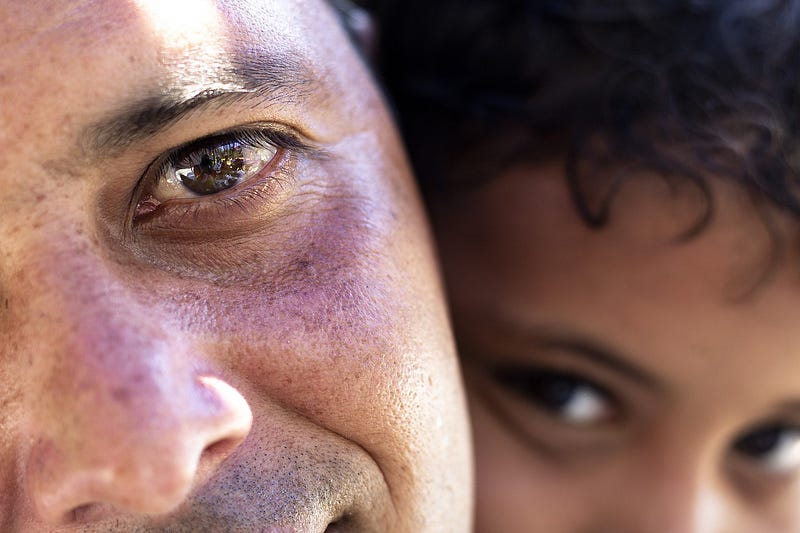
I was at a small gathering with a few men who all had children, mainly boys.
– “I try to deal with my teenage son’s shit”, was one of the comments, “it seems that nothing is right with what I do”.
The consensus was palpable. It seems that fathers have a hard time raising their children.
– “It’s because their brain is not yet fully developed”, contributed one Yoda from the group.
Again, nodding and knowing facial expressions.
What is wrong with these fathers?
I was silent and wanted to hear what these men were going through.
There was one with a son who came home so drunk that he had to carry the poor 16-year old to the bathroom. The worried, angry and disappointed father had to ensure his son didn’t drown in the vomit.
– “I grounded him for two months after that”, said the man shaking his head.
There were several similar stories. The common denominator was that each child did something upsetting and against the advice or direct directives of the parent. They rebelled, as the saying goes.
Another common trend was the lack of dialogue. The communication between the father and son was a one-way street. They spoke (or, in many cases, shouted) past each other.
I remained silent because the men were so upset and complaining about the behaviours of their offspring that I knew they didn’t have the bandwidth for any other ideas.
“Do I want to be a hero to my son? No. I would like to be a very real human being. That’s hard enough.” — Robert Downey Jr.
What happened when I was young?
I realised that I had done almost all those horrible things in my youth that the fathers described so graphically. Stealing a car was the only thing I didn’t do, but yes — I was guilty as charged for almost everything else.
Was I the only sinner in that group?
Were the other men saints that never had done anything similar as their sons were doing? I don’t believe so.
Why do we forget what it is like when you are young?
– “I was so afraid when I went to the hospital, and thank heavens he survived with only scratches and some bruises, but the car was a write-off,” said one whose son had crashed the new car just a couple of weeks after he got his licence. “I told him that that’s the last time he will drive my car”.
When I crashed our car at the tender age of 12, my father smiled and said: –”A bit expensive driving lesson”. After that, I listened to his advice ten times more carefully than ever before, but I kept driving. In the rural Finland police didn’t have resources to catch underage drivers who were learning a bit too early to drive. Times have changed since then.
“Your son will open your eyes, broaden your knowledge, and help your sense of humour.” — Michael Thompson, PhD, Speaking of Boys.
It’s often a blaming game instead of listening.
Fathers are humans but often forget that their sons are humans, too.
Where there should be a heart-to-heart conversation is often replaced with blame or guilt. That goes both ways.
In the beginning, Yoda’s remark about brains that are not fully developed was like a red flag. It told me that underneath this “wise” approach was an arrogant and patronising undertone.
At the end of the meeting, a boy, about 7 or 8, came to collect his father, who was talking to someone. He ignored his son, who had something urgent to tell.
The boy was almost in tears when an older guy kneeled to his level, asking what was happening. The boy explained that their dog had run away when somebody opened the door.
The older man stood up after telling the boy it was all right and said to the father: –”Your dog just ran away. You might like to catch it before it goes too far away.”
The man looked perplexed and said to his son: –”You should have taken care of Timmy. Why didn’t you tell me immediately”. He ran after the dog, and the boy looked lost.
The older man said again, kneeling: –”Don’t worry. He will get Timmy back. It wasn’t your fault”.
I saw how ignoring turns into blaming, and then the anger kicks in. The older man saved the situation, but the father’s attitude was revealing.
“Every father should remember that one day his son will follow his example rather than his advice.” — Charles F. Kettering.
I was thinking about my father with a deep sense of gratitude.
My father never raised his voice or smacked me.
He was the most silent man I have ever met, but his eyes shone with understanding, listening and curiosity. He had the patience of an angel.
I never felt with him that I was doing something wrong, but learning from my mistakes. He always tried to show me instead of telling me off or ignoring me.
When the older man at the meeting kneeled to talk with the small boy, I remembered how my father sought to have his eyes on the same level as mine. I was a child and an individual, but not some underdeveloped brain with no feelings or a tabula rasa to be filled with adulthood.
My father respected and trusted me. He didn’t lay any expectations but tried to understand my point. And then we found common ground. We never had any fights. And after listening to those fellow fathers, my respect and gratitude for my late father knew no boundaries.
“One of the greatest gifts you can give your teenage boy is the gift of letting him know you get it. You’ve been there.” — Sebastian R. Jones.
What lessons did I learn from my late dad and the gathering of grumpy fathers?
- Your child is not an underdeveloped adult but going through his life as an individual growing, knowing and experimenting with options and opportunities. Like you do with your middle-age crises, marital problems and stuff. Same shit, different age.
- Patronising is the quickest way to make sure that you will fight with your child. If you behave at work towards your colleagues the way you treat your children, you can say goodbye to promotions. It’s that simple.
- Your child is more important than your adult colleagues, friends or acquaintances because he depends on you. Respect your son, show it and your trust in him — and make sure that everybody knows how proud you are to have such a beautiful individual as your son. Dare to care.
As a father, you have the most powerful bond with your son, whether you like it or not. It comes with fear and worry and glorious moments of love and longing.
When I look at my 20-year-old son, I don’t see a child but a wonder. What did I do to deserve this lovely person to be part of my life?
I remember him growing up, but more than that, I remember how he taught me to love, listen and let go without guilt and fear.
Our sons teach us life if we let them do so.
Join my newsletter below and get a complimentary copy of my book Content Carousel for better digital communication. It’s about digital media and how to communicate with different media elements.