
Behind the Wheel: Does Music Make You Drive Better Or Worse?
The real impact of your favorite tunes
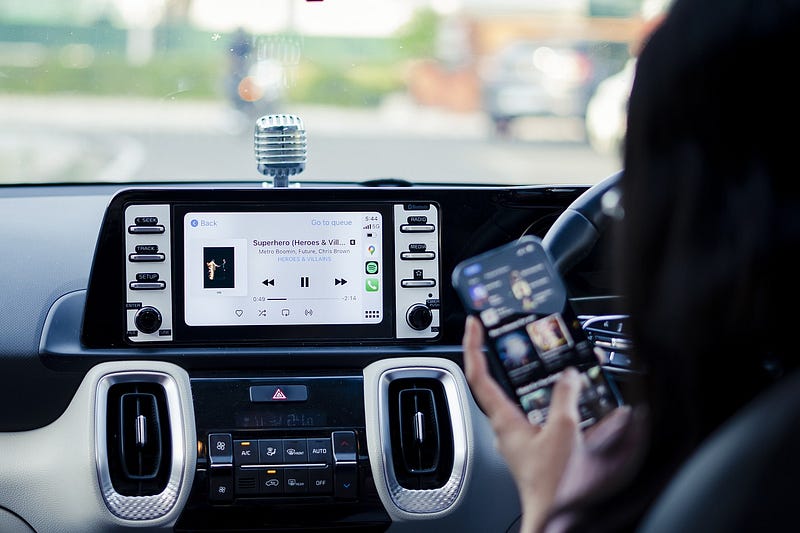
Jamming to tunes on the road is a widespread habit, but have you ever thought about how it affects your driving skills?
Our cars are our personal space for our favorite tunes, and it feels like a sanctuary from the chaos outside. I know the feeling.
But is it worth risking it all if you find out that the very music you love might be messing with your wheels?
Melodies don’t just set the mood. They influence your road performance, turning the simple act of putting the pedal to the metal into a potentially dangerous endeavor.
Here’s what you need to know to handle your wheels with music.
Music as your driver coach
Picture the following experiment. 165 university students drive in a simulated test facing 2 scenarios: low and high workload setups.
- Low workload: a visually simple car-following task where you closely follow behind a lead car, matching its speed while maintaining a safe distance. A relaxed Sunday afternoon countryside drive.
- High workload: this one is a complex city drive. You experience frequent braking for unexpected obstacles like pedestrians crossing, parked cars pulling out, and traffic lights changing colors. It’s like driving through downtown during rush hour.
The students go through a two-act play where each act presents a different driving challenge—first, the low-workload scenario, then the complex one.
After a 10-minute training session, they do two 12-minute test runs. Some drive with music, some without. The ones with music have a playlist of songs chosen by the participants and some handpicked by the researchers. Volume level remains constant at 70dB, a comfortable level for our ears.
As participants cruise through both scenarios, the simulator records various driving metrics, like steering variance, brake response time, number of collisions, and more.
The results?
The study carried out by researchers from the University of North Florida revealed fascinating insights.
In the low-workload scenario (i.e. the chill drive), drivers performed better with music. They showed less steering variance and car-following delay.
However, music didn't play as well with the drivers in the high-workload scenario. The drivers listening to music had more collisions with cars and lane excursions and were 3 times more likely to attempt to pass the traffic light when it was switching from green to red compared to those without music. Especially high-tempo music led to more risky behavior.
But here’s the twist, with more practice, drivers improved their skills while listening to music. With more practice and the beats flowing, drivers reacted faster.
The lesson
You know how you turn the volume down so you can better see a parking spot?
Even if it sounds silly, you’re lowering your cognitive load (by getting rid of the music stimulus) so you can better focus on the task at hand.
Driving with music is a bit like playing with fire — it can either make you a driving maestro or lead you to some traffic symphony chaos. The key, it seems, is practice. But until you don’t get a hang of your driving, the soundtrack (especially high-paced music) can turn you into a speedster.
The driving dilemma
There are a bunch of studies on the impact of music listening while driving but they’re giving us mixed signals on whether music improves or messes up our driving skills.
Some studies say music might be bad because it drowns out important sounds like sirens and horns, which end up distracting drivers from what’s really important. On the flip side, others say music, especially fast and loud beats, can actually enhance performance.
So is it a distractor or an enhancer?
Researchers from the University of Miami did a meta-analysis to cut through the noise. After a rigorous screening process, they narrowed the studies to 12 for the big analysis. They asked two main questions:
- Does music affect driving performance?
- Does it depend on specific music features?
They found that music does mess with your driving, but not in the way you think. Music mainly amplifies your collisions and what they call longitudinal control (your speed and staying in your lane). Your favorite tunes might be screwing your insurance policy.
But there are some additional insights you should be aware of:
- Music has a different impact depending on who’s selecting the playlist. If the researcher chooses the music, it’s more likely to be a wild ride, with more collisions and worse lateral control (i.e. struggle to stay in your lane).
- Unfamiliar and original music is associated with a higher risk of collisions. They might disrupt the driver’s focus on the road and affect their ability to avoid collisions.
- Vocal music, especially with lyrics, disrupts performance more than instrumental music. Lyrics could mess with your focus on the road.
- There were mixed results regarding tempo and volume. Sometimes fast tunes mess you up, sometimes they don’t. The same goes for volume. Loud tunes are an obvious hazard but soft music can also make you forget how to drive straight.
The lesson
Sadly, there’s not a playlist for safer driving.
Researchers can’t tell you what to play but they can show us that the rhythm of our drive might be more complex than we think.
But there are some general tips you can get from the abovementioned study:
- Choose your playlists. Don’t let others do it for you.
- Stick to familiar tracks. Original or unfamiliar tunes might distract you.
- Play it safe and choose instrumental music.
- For more complex driving scenarios, music might be an unnecessary companion.
The rest is up to the road and your driving skills.
Final thoughts
It’s not just about the music you put on but an intricate dance between volume, tempo, road complexity, and how you handle your ride.
Next time you hit the road with your favorite tunes remember it’s not just about the music; it’s about how it orchestrates your drive.
Make sure it’s a beat that harmonizes with the road.
Drive safe and rock on.
Want to learn more about the sound verse?
Join my newsletter to explore everything related to music and sound, from the effects on our psyche to the technologies that use sound to improve our lives.