
Behind North Korea’s sudden bombardment of South Korea: Why did the small peninsula become the “East Asian whirlpool”?

At the beginning of the new year of 2024, the situation on the Korean Peninsula suddenly became tense.
According to Korean media reports, from January 5th to 7th, the North Korean army continuously fired artillery shells near the northwest islands in the northernmost part of South Korea’s western waters. Some of the artillery shells landed close to the “Northern Boundary Line”, causing two incidents in South Korea’s Yeonpyeong Island and Baengnyeong Island area. An evacuation order was issued to local residents.
The South Korean military stated that there will no longer be a “buffer zone” between North and South Korea.
This conflict is a further intensification of the recent series of confrontations on the Korean peninsula: On November 23 last year, North Korea conducted artillery training in the West Sea buffer zone where the boundaries are divided; on the occasion of New Year’s Eve, South Korea and the United States launched large-scale joint military exercises.
The Korean Central News Agency recently published an article stating that this year is “the year when conflict between South Korea and North Korea is most likely to occur.”
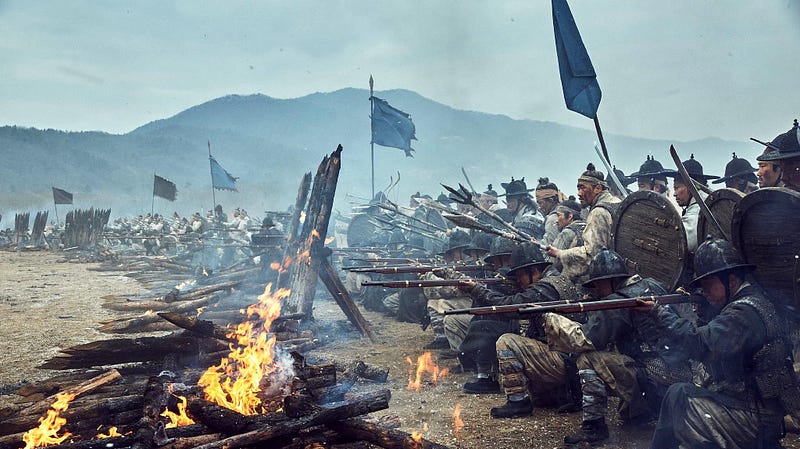
Historically, the situation on the Korean Peninsula is closely related to the power changes in Northeast Asia.
The Korean Peninsula is located between China, Japan, Russia and other major powers. Its foreign policy has long been oscillating between “majority” and balanced diplomacy, reflecting the repeated struggle between major power dependence and diplomatic independence.
The inter-Korean issue is an old geopolitical issue in Northeast Asia, but at a time when Russia, Ukraine, Israel and Palestine are filled with smoke, the intensifying conflict between the two Koreas has added a new dimension of instability to the world situation.
So, how did the North-South Korea issue come into being and why has it not been resolved for so long? How does a small peninsula gather intricate geopolitical relationships?
This article’s review and analysis of the history of the Korean Peninsula will help readers understand the “why” of today’s North and South Korea issues.
In international politics that emphasizes interests, there is a saying that “a weak country has no diplomacy.”
However, in the history of international relations, there are numerous examples of using small measures to achieve greater results.
After the end of World War II, thanks to the Cold War confrontation between the United States and the Soviet Union, the one-country-one-vote system of the United Nations, and the development of the new media industry, small countries gained the power to participate in the international diplomatic arena, and the two superpowers, the United States and the Soviet Union, had to win over these small countries. , Only by cooperating with it can we maintain control of the international diplomatic stage.
Sometimes small countries can even counter big countries by taking appropriate measures.
After the end of the Cold War, today’s international society has shifted from a bipolar structure to multilateral diplomatic relations composed of various countries. With the realization of globalization, global issues such as environmental protection, international trade, nuclear proliferation, and the war on terrorism have gradually emerged.
These problems have prompted these countries to form different interest groups based on the issues they care about, and they cooperate with and confront each other.
This has invisibly increased the influence of small countries and turned the international community into a balance of power situation.
Although small countries are not as powerful as others, they can unite and use votes to restrict the actions of big countries, or use the extensive influence of the media to denounce the wrongdoings of big countries to the international community.
Big countries must cooperate with small countries or exchange interests, otherwise they will easily lose control of the international situation.
Compared with the advantages of small-state diplomacy in the modern international legal order system, in the past, in the traditional “world order” centered on China, small-state diplomacy could only be said to be a way of self-preservation. It was to pay tribute to the Chinese emperor, express gratitude and sincerity in exchange for China’s political support and economic resources.
In the traditional “order of the world”, China’s most important and longest-lasting vassal states are the Silla, Goryeo, Joseon and other regimes that control the Korean Peninsula.
This article uses the changes in the foreign policy of the Joseon Dynasty and the vassal relations between China and North Korea from the 14th to the 20th century to explain the advantages and dilemmas of small country diplomacy in the traditional “order of the world” system, and explores the relationship between the north and the south on the Korean peninsula after the collapse of the traditional “order of the world” system. How the two regimes responded to the intervention of Japan, Russia, China, the United States and other countries, and then analyzed the development of small country diplomacy in the globalized international system and the changes in the power structure in Asia.
Tracing the development of modern East Asian history, we can see that the security issue on the Korean Peninsula not only involves the competition between China and Japan and the growth and decline of national power, but also is the epitome of how to rebuild a new order after the collapse of the traditional East Asian world order.
Under the colonial infiltration of European and American imperialism, the politics, economy, society and culture of Asian countries have all undergone drastic changes. The tribute system centered on China and the traditional East Asian world order have completely collapsed. They have no choice but to accept the treaty concept, sovereignty concept and the concept of the European and American international law system. its nation-state system.
In order to get rid of the oppression of European and American colonial empires, East Asian countries successively tried Sun Wen’s Greater Asiaism, Japan’s Greater East Asia Co-Prosperity Sphere, Socialist Asia and other attempts to rebuild a new order for Asian countries, but in the end they ended in failure.

To this day, Asian countries are still competing within the post-Cold War framework, trying to regain the right to speak, or using nationalism to weaken the political and economic influence of European and American countries on their own countries, but they have never been able to get rid of the influence of the United States.
This has laid hidden dangers for the stability and peace of Asian countries.
The Korean Peninsula after World War II was also unable to achieve its goal of independence.
Affected by the Cold War between the United States and the Soviet Union, the Korean Peninsula was divided into two spheres of influence, North and South, each controlled by the United States and the Soviet Union.
Due to the complex geopolitics of East Asia and the Cold War environment between the United States and the Soviet Union, coupled with the political threat from North Korea and the instability of the domestic political situation, South Korea can only use the historical experience of the North Korean dynasty in the 19th century to be grandiose and balanced in diplomacy, and find ways to maintain stability in its surrounding areas. The country and the great powers of the United States and the Soviet Union were trying to find a way to survive.
In order to defend against the military power of the Soviet Union and North Korea, South Korea must rely on the power of the United States and conclude a military alliance treaty with it.
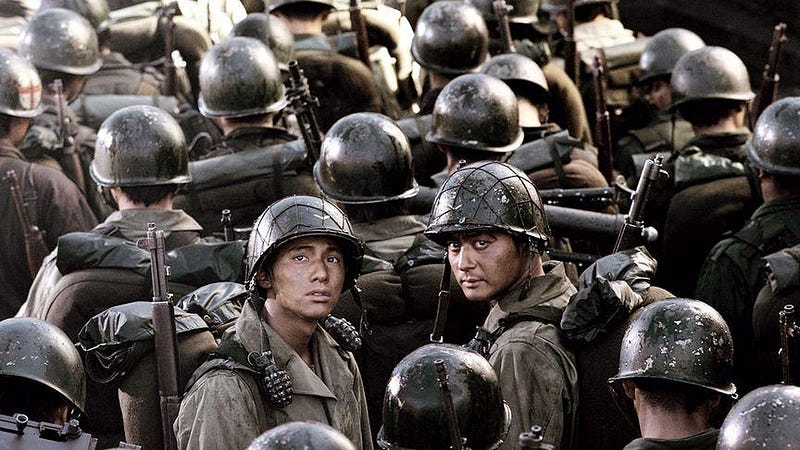
After the Korean War, South Korea tried to build up its national strength, maintain a flexible diplomatic space, try to remain neutral between the United States and the Soviet Union, and avoid being drawn into the Cold War conflicts between the United States and the Soviet Union.
Under pressure from the United States, South Korea has used international law to safeguard national rights and interests as much as possible, maintain South Korea’s independence in all aspects, and avoid being sacrificed as a pawn by the United States at any time.
Since the South Korea-US military alliance is based on the division of North and South Korea, South Korea has to rely on the protection of the United States.
The South Korean economy must also rely on the support of the United States to bear the huge expenditures of the US military stationed in South Korea.
Even though internal struggles continue in South Korea, the strategy of “pro-US and anti-North Korea” has been a diplomatic principle pursued by South Korea since its establishment, and has not changed due to the change of government leaders or the anti-US movement of the South Korean people.
After the collapse of the Soviet Union, the Cold War between the two major camps of the United States and the Soviet Union also ended.
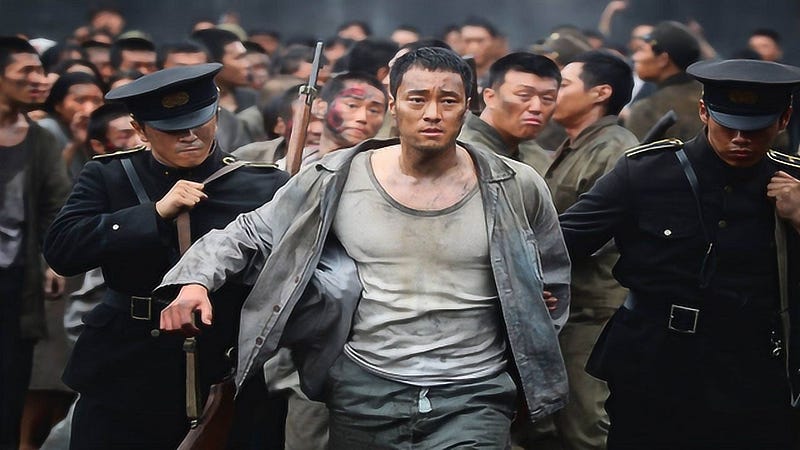
Due to the disintegration of the Soviet Union and China’s economic reforms, North Korea suddenly lost a large amount of aid from the communist camp countries.
However, North Korea relies on its geopolitical and nuclear weapons advantages to simultaneously demand concessions from China, the United States, and Japan.
In this process, China, the United States, and Japan formed a tacit understanding to cooperate to solve the Korean Peninsula issue.
From this point of view, the North and South regimes on the Korean Peninsula are still within the framework of dualistic confrontation and have not yet emerged from the Cold War pattern.
Precisely because of the risk of North Korea acquiring a nuclear weapon, the South Korea-US military alliance has not only not ended, but has gone beyond the offensive and defensive scope of the Korean Peninsula and has become one of the important pillars of the US “Rebalancing to the Asia-Pacific” strategy.
Under the protection of the United States, South Korea’s military pressure is relatively small. It is actively upgrading its industries, reducing its economic dependence on the United States, and becoming an economic power dominated by information high-tech industries. It also takes advantage of small country diplomacy and actively develops relations with neighboring countries. relations and play a positive role on the international stage.
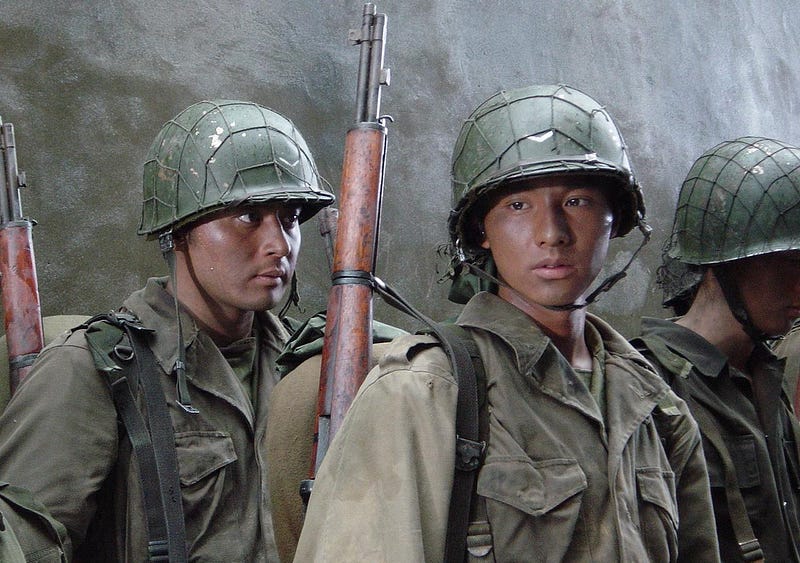
Especially on certain issues, South Korea is no longer limited by the “pro-US and anti-North Korea” strategy, and will try its best to engage in dialogue with Japan, China, and Russia without affecting the bilateral relations between the United States and South Korea, and maintain a low-key profile to safeguard its own interests.
As North Korea and South Korea compete with each other, the United States, Russia, and Japan are unwilling to see conflict or peaceful reunification between North Korea and South Korea. Otherwise, the United States will withdraw from Asia and the power structure in Asia will be out of balance.
However, with the rise of China’s economy, China is bound to complete industrial upgrading and economic transformation, and its demand for markets, resources, land, and labor from neighboring countries will gradually increase.
The “Belt and Road” policy is to reposition China’s future strategic development and link China’s own development with the overall development of Asia.
In this way, China’s interests will inevitably conflict with the order of Asian countries, led by the United States.
Originally, the power structure in East Asia had to be readjusted, so there were issues such as the dispute over the development of marine natural gas resources in the East China Sea, or the stalemate in negotiations on the China-Japan-South Korea Free Trade Area.
In addition to “business wars” such as resource development and trade negotiations, issues of cooperation and confrontation in military agreements between the United States and East Asian countries are more likely to trigger long-term conflicts between China and neighboring countries. The “THAAD crisis” is one example.
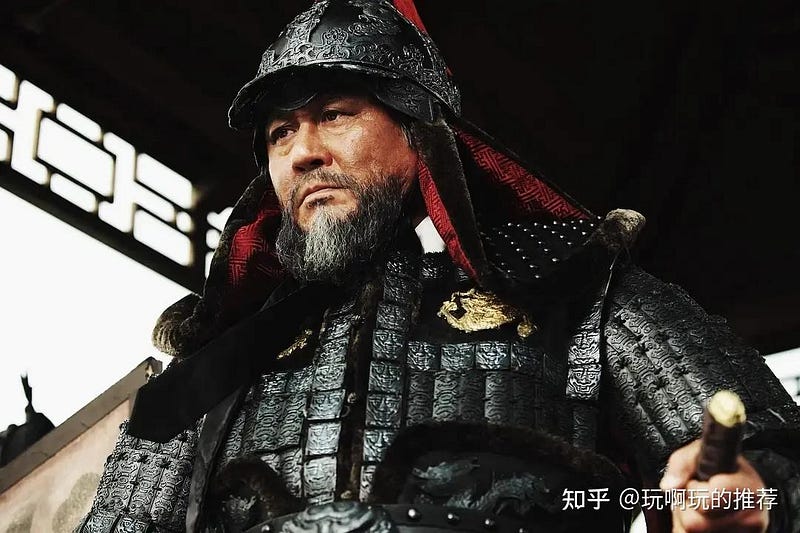
In this context, China needs to actively think about the characteristics of small-country diplomacy and the difficulties it faces, try to maintain a balance of power, eliminate the uneasiness of Asian countries, and gain the trust of neighboring countries.
Especially under the current new situation of multilateral diplomacy, China must rely more on the support of small countries, transcend nationalism, respect the cultural differences of Asian countries, and then build a Chinese cultural community that is inclusive of multiculturalism.