avatarDouglas Giles, PhD

Free AI web copilot to create summaries, insights and extended knowledge, download it at here

428

Abstract

“empty mind” is a core tenet of Zen Buddhism. Don’t misunderstand what is meant by “empty mind.” It is not a mind devoid of intelligence or even empty of thoughts. An empty mind is a clear mind, as this quote shows.</p><p id="fc00">Zen is a combination of Buddhism and Daoism. There is a Daoist saying that illustrates what this quote means:</p><blockquote id="4beb"><p>A full cup cannot take in more water.</p></blockquote><p

Options

id="cce9">To take in more you must first empty your cup. A cup is only useful when it has space to hold something.</p><p id="1d29">Experts are full of what they believe is knowledge. Their minds being full, they cannot learn more. Beginners know how much they do not know and their minds being empty (having room to take in new information), they can learn. Beginners see many possibilities. Experts see few.</p></article></body>

Beginner’s Mind

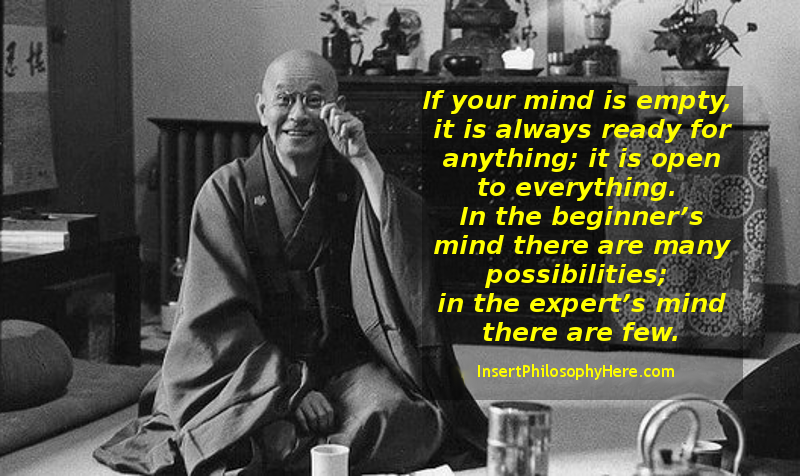
If your mind is empty, it is always ready for anything; it is open to everything. In the beginner’s mind there are many possibilities; in the expert’s mind there are few.

The concept of “empty mind” is a core tenet of Zen Buddhism. Don’t misunderstand what is meant by “empty mind.” It is not a mind devoid of intelligence or even empty of thoughts. An empty mind is a clear mind, as this quote shows.

Zen is a combination of Buddhism and Daoism. There is a Daoist saying that illustrates what this quote means:

A full cup cannot take in more water.

To take in more you must first empty your cup. A cup is only useful when it has space to hold something.

Experts are full of what they believe is knowledge. Their minds being full, they cannot learn more. Beginners know how much they do not know and their minds being empty (having room to take in new information), they can learn. Beginners see many possibilities. Experts see few.

Philosophy
Zen
Dao
Mindfulness
Learning
Recommended from ReadMedium