
Beer — The Great Golden Elixir That Gave Birth to Civilisation
How beer helped humanity settle down
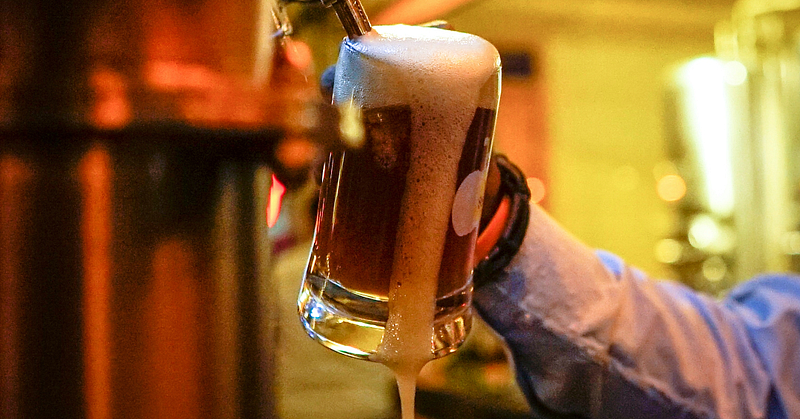
Let me tell you a tale that’s as tall as it is wide, as glorious as it is wondrous. Settle into your comfiest chair in your comfiest clothes and let us drink deep into the wellspring of human civilisation.
So, myself and a few mates were down at the pub the other day. After a few fine snifters down the gullet, we were seized by the rarest and most febrile of fancies . . . . that beer was without any shadow of a doubt the spark that brought civilisation to life; the glint in the eye of God upon realising the endlessness of its own being.
And I’m here to tell you about our theory. Let’s dive in.
And if you believe that, you’re a few too many sheets on the wrong side of the northwesterly breeze.
However, we’re in luck. In actuality, there is a real hypothesis that spills far beyond myself and my somewhat-sozzled friends, as compelling to consider as it is scrumptious to savour.
You see, there is an enigma/conundrum that lies right slap-bang at the very beginning of the social evolution of our species.
The conundrum
Few would picture hunter-gatherer-lifestyle as anything but what it was — tough, scary, vicious, brutal, wildly unpredictable, and short.
Yet, the lives of the first farmers were worse in a plethora of ways.
The lives of band societies were fraught with peril and scarily unpredictable, yet they weren’t always gruelling. It was feast or famine, with boundless foraging skills honed over millennia mitigating the latter.
Early agrarian life was a gruelling, backbreaking, relentless grind. And because of the roles played by collective property and extended kin, the fruits born from the endless hours and never-ending toil had to be shared around liberally, so one would see very little for all one’s efforts.
More to the point, humanity’s foray into farming following the Agricultural Revolution was not particularly productive, to say the least during its nascent period. It would have taken some time for humans to learn the tricks of the trade — crop rotation, irrigation, the use of fertilisers, tilling — and this learning of the ropes as it were may have lasted hundreds, if not thousands of years.
Longer hours, tougher work, worse food, worse life; getting shorter, getting sick more, suffering in a whole host of other ways, dying younger; less wandering, less leisure, less fun, less freedom — this is a proposition that only a glutton for punishment or those guided by a higher power would relish.
On top of the physical and mental torture of early agriculture, the diet was really quite miserable in comparison to that of our nomadic ancestors. Neolithic people were shorter, got sick more often, had worse teeth, were more malnourished, and suffered from a higher rate of mortality than the hunter-gatherers that came before them.
Longer hours, tougher work, worse food, worse life; getting shorter, getting sick more, suffering in a whole host of other ways, dying younger; less wandering, less leisure, less fun, less freedom — this is a proposition that only a glutton for punishment or those guided by a higher power would relish.
The bounteous salmagundi of all that civilisation would bestow was many hundreds of years off in the penumbra of the possible; so why in the world would our hunter-gatherer ancestors trade the wild, dangerous, and relatively healthy life of the only freedom they had ever known for the still dangerous, stupefying, stultifying, health-sapping and soul-destroying life of slavery in most every sense they cared to look at it?
The answer — beer.
The hypothesis
The theory supposes that our freewheeling nomadic cousins had to have been seduced by the sweetest of siren songs in order to give up their wanderlust in favour of the settled life.
And it was bread and beer that calmed the wild heart of the beast and induced him to settle, so it is posited.
But just before we lift our glasses, tilt our heads, and take another few generous inhalations, let’s have a moment to get two points of contention out of the way.
The first being that there are other theories as to why humankind decided to settle and embark on an agropastoral existence. And whilst some elements put forward by said theories may be mutually exclusive, it is highly likely that the reasons that pushed humanity towards sedentism were multifarious. It is also highly likely that what prompted one group to exit nomadism was not the same for another, and it is highly unlikely that any one-size-fits-all logic applies across the full breadth and scope of our species.
Secondly, the evolution of societal structure rarely follows a clean either-or dynamic. Foraging, fishing, and hunting would have existed alongside farming and the rearing of animals, and the ratios of all to one another would have depended on a great many things. Yet again, notwithstanding the grand sweeping unidirectional march, individual communities would have deviated from the path in their own special manner.
Great. Back to the beer.
The ambrosia of the gods has been brewed since time immemorial. There is evidence that humans liked to whet their whistle from 4,000 BCE with the Sumerians of Mesopotamia, from China from 9,000 years ago, and from Israel from 13,000 years ago.
It has been conjectured that humans not only learned how to grow and domesticate grains like wheat, barley, rice, and maize during the Neolithic Revolution, but also how to brew beer. Moreover, they may have been drinking beer before they ate bread, and there is evidence that the ancestral grasses to the grains we came to know and love were better suited to brewing up a storm than baking up a storm.
One way or another, the making of bread and the brewing of beer are largely coterminous. They both require grain, they both require yeast, they both require water and they both entail the process of fermentation. They are so inextricably entwined that beer has oft been called ‘liquid bread’.
Preceding the advent of such knowledge by many thousands of years, however, humans would have chanced upon naturally fermented food and tucked in with aplomb. Much like our primate cousins, who, from chimps to spider monkeys, consume ethanol, in one form or another given the chance, humans found that the practice conferred a number of benefits.
There must be something more which can shed light on what provided the necessary enticement for our ancestors to emerge from the ‘fog of prehistory’.
There is the high caloric content that fermented fruit or grain confers. Alcohol also has disinfectant qualities which can help to eliminate dangerous bacteria. It may be beneficial for mitigating the effects of certain diseases, cardiovascular for instance, when consumed in low to moderate volumes. Furthermore, it has been speculated that the fact that alcohol stimulates hunger may be useful for making an animal more competitive when vying with others for food.
Given the long list of negatives and sheer deleteriousness of early-agrarian life, the above is not likely sufficient to explain the settlement of humankind, however. There must be something more that can shed light on what provided the necessary enticement for our ancestors to emerge from the ‘fog of prehistory’.
The spark that brought the burning desire to settle down to life, if the beer hypothesis is to hold water, is the social and psychotropic qualities of the world’s first beverage. To be fair, I think you’ve been thinking this all along.
We all know how beer works to embalm a person in that warm, fuzzy life-affirming feeling that awakens certain things within us whilst putting others to sleep. Gone are doubts, worries, fears, and inhibitions to be replaced by a thirst for good cheer and good fun, a sense of comradery and shared being, a love of loquacity, a little libidinousness, and one’s fellow creatures.
We all know perfectly well of the incalculable capacity for calamity when libations get out of hand as well. But keep in mind that the beer neolithic peoples would have been quaffing on would have been very low in alcoholic percentage, thereby accentuating the positive side of the drug while suppressing its commodious list of dangers.
And remember, just in case I forget to say it later, to enjoy the golden ambrosia responsibly and with some degree of abstemiousness.
Just imagine the life of the first humans to roam the Earth. Imagine how dangerous, how tough, how brutal, how cruel, how short, and how horrible it could be? Imagine how wonderful it would be to let your guard down, if only for a few fleeting hours, in a world where you always had to have your guard up.
Beer had the power to bequeath a few hours of bliss where all could let their hair down and not worry about the relentless struggle to survive for a short while. It soothed and relaxed. It transmogrified the mundane into the magical and made everything funnier and more fun.
It also did the opposite. Alcohol is a depressant, but in small quantities, and initially, it is actually a stimulant. More to the point, its depressive effect on the central nervous system weakens our social inhibitions, thus stimulating conversation, chat, deliberation, and dialogue.
It is likely that all would have looked forward to these interstitial interludes woven throughout the hardship of existence for one reason or another, when the community could enjoy a little mild inebriation.
Band societies are far more egalitarian and less hierarchical than the tribal and state-level societies that would come later. Nonetheless, rules, rank, seniority, and social structure would have all worked to limit both group and individual expression. Beer would have served to shake things up a bit and encouraged everyone to challenge convention a little more.
Over time, the consumption of beer, as well as psychoactive plants and mushrooms, would have broken down some of the rigidity of society and spawned greater freedom and expansiveness of thinking.
It is likely that all would have looked forward to these interstitial interludes woven throughout the hardship of existence for one reason or another when the community could enjoy a little mild inebriation.
Furthermore, band-level societies are highly deliberative and democratic in their decision-making. They do not practise anything like hereditary rule and, in fact, lack formal leadership of any kind, with anyone approaching anything like a leader being primus inter pares. Informal dialogue to decide and solve pretty much everything was the order of the day.
Beer acted as an important tool for group dialogue and discussion in the Late-Epipaleolithic and Early-Neolithic periods, and it is probable that it became an essential part of social existence.
For all of the above, one needed beer. And if one needed beer, one needed to brew it. And for that, grain had to be grown. And for that, one had to settle down, at least in part to one degree or another, so as to cultivate it.
What we know about band-society and early-sedentary life, the Neolithic Revolution, the growing of grain, and the link between grains, bread, and beer, makes the proposition that beer acted as a catalyst in the settlement of humankind really quite compelling.
Beer played an integral role in ancient societies right across the board. There are explicit prescriptions advising on beer as a unit of payment in two of the oldest legal codes in existence, the Urukagina and the Hammurabi. And beer was a common basic unit of payment not only in Sumeria but also in Ancient Egypt, where one brewery that made beer to pay the workers who built the pyramids of Giza could produce 40,000 litres at a time.
China has a long storied love affair with the beverage dating back at least to 9,000 years ago but likely a few thousand years earlier. The emperor Di Xin had a pool of beer and a meat forest he would use for his bacchanalian festivities, with his bibulous abandonment potentially contributing to his eventual overthrow.
Yet despite the fact that beer can liberally lend itself to gluttony and indulgence, the earlier brews were thick, soupy, and really quite nutritious. They were nourishing, packed with nutrients and vitamins, closer to something like porridge, and had to be drunk with a straw. In fact, the Sumerians are the inventors of the straw and they created it specifically for drinking beer.
Thus, whilst our neolithic ancestors were less healthy than the hunter-gatherers before them, beer in its ancient incarnation would have helped to replace at least a part of the lost sustenance with moving from a nomadic to a sedentary lifestyle. This is, of course, on top of the social, physiological and psychological effects, which would have taken precedence.
Beer was both omnipresent across the world for our ancestors and one of the sparks that ignited our drive toward sedentism. Its primacy as a quintessential part of civilisation and what it means to be civilised is perhaps most perfectly captured by the Sumerian story of Enkidu, the wild friend of Gilgamesh.
‘Eat bread, Enkidu, as it is part of life. Drink beer as it is the custom of the land.’
Gilgamesh, the king of Uruk (one of the first cities in existence), sought to civilise Enkidu. Enkidu was a mighty primitive half-man half-bull creature who lived beyond the cradle of civilisation. Sending a temple maiden to the wild man of the forest, Gilgamesh hoped to soothe the beast in Enkidu.
After seducing him with her charms the woman offered up bread and beer saying; ‘Eat bread, Enkidu, as it is part of life. Drink beer as it is the custom of the land.’ He ate his fill of bread and then proceeded to demolish seven crocks of the beer. Upon finishing both beer and bread, the savage soul of Enkidu was becalmed. He then turned to the maiden and spoke for the first time in a deep resonant voice — he had been transformed.
For the Ancient Sumerians, it was bread and beer which most of all represented the essence of civilisation and the hallmark of what it means to be human.
It is impossible to say for sure how influential beer was in the settling down of our species, was it the prevailing factor or was it one of many? It is highly likely that it played at least some role based on the available evidence and plain simple logic. It is equally impossible to overstate just how important beer has been in the story of humanity.
For a wonderful rendering of the story of the world’s favourite alcoholic drink, I strongly advise you to have a look here. And don’t forget to drink responsibly. Look, I didn’t forget to remind you after all.
Let me know your thoughts, musings, and ruminations in the comments.
Thank you to Jason Provencio and Bouncin’ and Behavin’ Blogs for publishing my piece. And thank you to Denis Gorbunov with whom I had a conversation which spurred me on to write this article.


