
Bedtime Revenge Procrastination — The New #MeTooNoSleep Movement
Many of us have this syndrome as a function of the lack of control we feel during the pandemic.
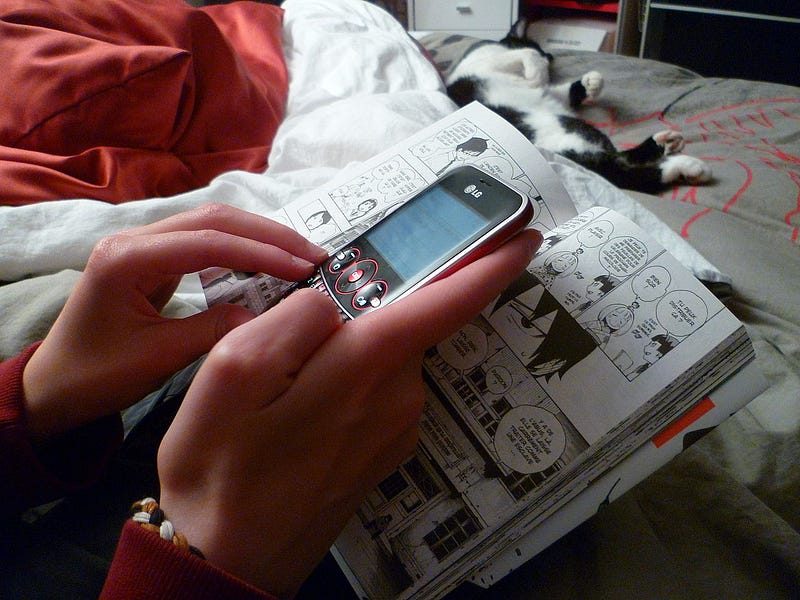
Since the pandemic started, I’ve developed a new habit. I don’t sleep much normally, so when the pandemic hit, it seemed natural that I’d sleep even less due to the anxiety. But it wasn’t so much a matter of less as how.
Pretty soon after we received our stay at home orders, like most of you I imagine, I found myself feeling very up in the air. My work life changed, the ability to earn money changed, the job I was supposed to start was put on hold indefinitely, and the fear I felt leaving the house maybe once a week to stock up on supplies, food and medication had me rushing home and jumping in the shower to scrub down in case I’d been exposed.
I typically did these runs as late as possible, figuring there would be less people out then, so I’d hit the pharmacy at 9:00 and the grocery story at 9:30 which would put me home about 11:00. By then I was worn out from weaving to avoid people, the anxiety over being inside the pharmacy and grocery store, and the 2 mile walk each way, the way back being laden with heavy bags.
A long anxiety filled shower, scrubbing down not once but twice, wasn’t the relaxing experience I needed at that point. So afterward I crawled into bed and turned on Netflix to take my mind off of things.
Strangely though, at this point, I felt a sense of freedom. It was too late to talk to anyone and even too late for telemarketers, who seemed to have increased exponentially since the start of the pandemic. I was too exhausted to even try to write, so the guilt that was threaded through my day over the inability to work as much as I thought I should be was also absent.
There was no daytime expectation that I needed to spend every moment doing something productive, planning for the future, coming up with goals and a way of achieving them, in other words, trying to make the time spent in this pandemic worth something and not wasted. I had the night time hours to myself, without the constant self-reproach that had become overwhelming during the day to the point of practically shutting me down.
I took the concept of “binge watching” to a whole new level. Since the beginning of the pandemic, I don’t know how many series I’ve seen — for some reason I watch only series not movies, perhaps because movies require starting new stories over and over again each night.
I know there have been a number of times there was literally nothing I hadn’t seen that I was interested in. When this happens I get upset. By that time of night, I’m tired, sometimes already exhausted and there really isn’t anything else I can do. My mind often becomes filled with negative and anxiety inducing thoughts and I need something to distract me more them.
As for binge watching, I found that I was watching episodes back-to-back, just letting them run. I would doze in and out, to the point that often I missed parts of an episode, but even though I kept falling asleep, I’d leave the lights on, and just let myself fall asleep for a few minutes at a time.
I’d often end up bruised by morning because as I began to fall asleep I’d suddenly be awakened by the shock of pain as my phone, which I’d been holding over me, crashed into my nose or lip or if I was very unlucky eye. I finally learned, since my eyes weren’t always open anyway to just prop the phone on a pillow so if I wanted to look at it when awake I could but otherwise I could just listen to it.
My watching habits resulted a few different sleep patterns. Sometimes I’d wake up after a couple of quick naps, unable to go back to sleep, so I was up all night except for maybe half an hour. Sometimes I slept on an off for a couple of hours then fall asleep fully for an hour or two, still waking well before dawn. Or when I was a bit less tired, I’d watch episode after episode until I realized the sun was rising, at which point I gave up on sleep entirely.
I’ve always been an insomniac, tossing and turning trying to force myself to sleep, staying in bed even if I couldn’t fall asleep until it was time to get up. Yet this was different.
In this case, I didn’t bother getting undressed for bed, let myself fall asleep with my glasses on and never even turned out the lights. Plus, usually I was exhausted to the point I couldn’t stay fully awake, but even then, I didn’t get ready for bed.
I knew this habit was bad for me, and a terrible idea from a sleep hygiene perspective. For someone with insomnia and chronic pain, forcing myself to stay awake when I might otherwise have slept even if only for a few hours was nuts. But somehow here I was still doing it.
Then tonight I came across an article, and as I was reading it I recognized the description. “They’re describing me,” I thought. “There’s actually a term for it?”
There is. It’s called Revenge Bedtime Procrastination. When I first saw the term tonight and read the description, I couldn’t believe it was something real, that I wasn’t alone. Reading on I learned that it is believed to be attributable to our sense of having little control over our daytime life or feeling pressured to the point of refusing to relax or sleep in order to regain some sense of freedom during our late night hours.
It makes sense for people with both jobs and families, multiple jobs or a home life that just isn’t great to choose when they can really cater to themselves. It’s logical this would be at night when everyone else is asleep. But it would seem for those of us who live alone, and are used to working from home that even with the shifts the pandemic has caused, that we wouldn’t have the same need.
Yet from those I’ve asked, it seems that people who live by themselves, without much social interaction, who are used to work from home, especially as freelancers, engage in this type of procrastination the most. Asking them why, I received answers similar to what I’ve come to conclude about myself.
There is something about the pandemic for freelancers who can work from home that makes us feel extra stressed. I think there are a few different groups in this overall population.
There are those who had full or part time jobs and freelanced on the side, and are now freelancing most or all of the time due to being laid off. These individuals feel that they have the time to put into what was previously more of a side hustle, and start off excited about seeing whether they might be able to turn it into a full-time endeavor.
Once they realize how difficult it is, they begin casting a wider net to see where else they can earn money, joining groups and platforms to provide themselves with a sense of community. But once committed to making a go of it, they feel like they aren’t doing as well as they’d like because they aren’t working hard enough.
For those who previously had decided to make a full-time career out of their freelance focus, with the pandemic, they feel that there are special opportunities for them with everyone working at home and they need to capitalized on these without wasting a minute. These may be people who have expertise and can explain skills like how to change furnace filters, do basic hvac maintenance or fix a leaky pipe, or garbage disposal. These folks often feel like they have a limited window, that being as long as people are home due to the pandemic, and that every second counts.
Then there are those who perhaps had begun taking steps to establishing themselves in their own business, but hadn’t quite done what was necessary to fully make that happen yet. Without the pandemic, they’d been able to go where they chose, were able to meet and network with others and could check out options to bring in some extra money while they were still conceptualizing exactly what their business would encompass.
With the pandemic all of those external possibilities quickly went away. Suddenly, they felt pressured to get their business up and running quickly since they no longer had the ability to meet other likeminded business people who could help them or easily obtain part time or temp jobs that would help pay the bills.
Whatever the reason for it, this sense of constant pressure to remain engaged in the job functions we already have, while looking for other opportunities as well, seems to be making many of us feel like we need to be working every minute of the day. The worst of it is during the hours when others we might need to contact or who might contact us are available.
For me, since I have contact on both coasts, that translates into 6:00am to 8:00pm my time. I feel my first real breath happen around 9:00pm. This is also the point of the day I first feel okay leaving to do whatever I need to. I try to get back early enough to still feel like writing and sometimes I do but most often I don’t.
Around 10:00pm I’m able to take my second breath and my third comes at 11:00pm. I feel that if I stop at 9:00pm or 10:00pm without the need to keep telling myself I should write at least a little while longer, it’s okay. Then Netflix goes on continuously.
This process has become almost like an addiction. I say each night, “I can turn everything off and go to bed normally any time I want.” But I don’t.
This creates an anxiety spiral during the day since I’m often so exhausted, I can’t get anything done. For a writer, to be so tired all the time effects productivity and the quality of the work. That contributes to an already frequent problem for writers — specifically not being able to come up with creative and unique ideas for articles which is the only way we survive. I have found myself spinning articles just to get something out on more than one occasion though I almost always just delete them, meaning everything I did that day amounted to zilch.
For me, part of it also has to do with nighttime anxiety and pain related to fibromyalgia and long haulers syndrome. When I turn everything off and lay in the dark my thoughts go in directions that I don’t want them to and the pain just causes the anxiety laden thoughts to escalate.
Leaving Netflix on all night, even if I miss large chunks of episodes and have no idea what is happening in a series, means that every time I come back to consciousness there is something to distract me. When we are alone so much, I think it’s natural even for those who normally don’t have night time anxiety, to develop it.
Final Thoughts and What You Can Do About the Problem
Watching Netflix, playing video games, scrolling through the news feed or whatever until we are so tired that we fall asleep without any time to think or experience the flood of emotions we often feel these days has become our new protection strategy. Unfortunately, while distraction, when limited can be helpful when feeling overwhelmed, avoidance isn’t. It leads to stronger emotions when they sneak through and thoughts that trigger worse anxiety and new worries.
Our workdays are no longer defined by a specific time interval so there’s no absolute as to when we should start or stop. There’s no structure or time determined work tasks, no winding down of tasks to finish by a certain time. There’s no end of workday ritual, such as a conversation as workmates ready to leave, stopping for a drink with a coworker or meeting friends for a movie. There’s also no social calendar to provide added structure and the need to plan work from home tasks to be places on time.
You may feel that trading sleep for having some anxiety free “me time” is justified but ultimately, if we indulge in this trade-off regularly, we risk having the revenge turn on us as sleep deprivation prevents us from operating at high enough level the next day to accomplish what we want to or need to. Each time this happens our anxiety and dissatisfaction grows. It can get to the point we cease to function in important ways.
The first thing to do, is to set a consistent work schedule for you days. Determine a start and end time and stick to them. Get up in time to shower and get dressed, and if possible do at least a little exercise before you start your day.
Don’t allow yourself to use excuses to start late and don’t end late if possible. If you are on a roll or feel like you need to finish something they go ahead and do it, but still decide you will stop at a specific time well before when you intend to go to bed.
List the exact tasks you want to complete during your workday and estimate how long they should take you to set you work hours. Set goals for the coming weeks and realistic steps to reach them with a time line of when you should be able to accomplish each one.
Basic sleep hygiene methods are good strategies to help with this problem. Make sure that your bed is only for sleeping. Take out all the things you have crowded into it, such as any electronic device, books, craft supplies etc. If you are going to watch Netflix or do other activities before bed, do so sitting up and not lying down.
Determine a bedtime hour and stick to it. Set a timer on your t.v. if you need to so it will go off. When it does so, don’t turn it back on. Create a bedtime routine to cue your body that it’s about time to go to sleep and do it in the same order each night.
Find a way to put away the materials for the activities that you do before bed. If you craft, put everything away in drawers or boxes. If your cell phone is your only one, you can bring it into the bedroom but put it on its charger somewhere across the room. Leave other electronic devices outside the bedroom. All this is aimed at making it harder and less attractive to start engaging in activities that will get in the way of sleep.
If the main cause of this for you is anxiety that you feel you can’t tolerate, don’t be ashamed to get help for this. Many mental health providers currently have remote services available that can help you regain control over your nights and your sleep.

If you enjoyed reading this article, you might also like these:
You can find links to my other work on Medium and follow me here. Thanks for reading and for supporting Mental Gecko!


