
Unleash Your Potential: A New Year’s Guide to Becoming the Best Version of Yourself
Build Habits Over Resolutions for a Remarkable New Year
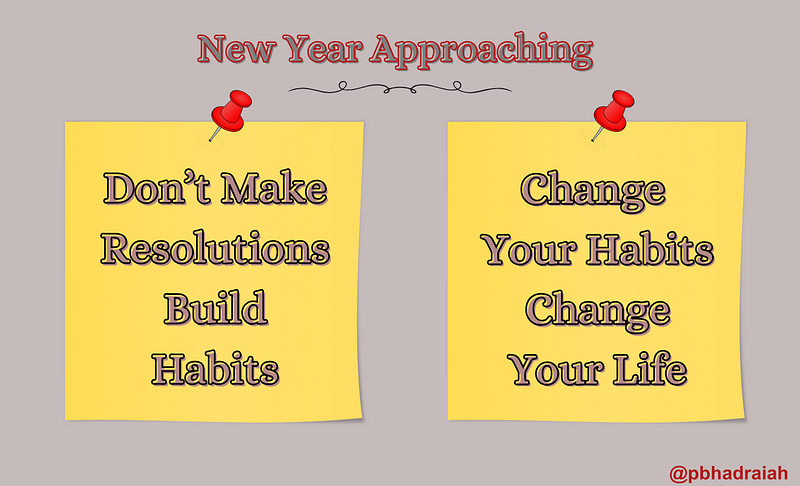
As we approach the end of another year, it’s natural to start thinking about the future and how we can make positive changes in our lives. Many people set New Year’s resolutions with the hope of achieving their goals and improving themselves. However, studies show that 80% of New Year's resolutions fail by the end of February.
Why is this so common? One possibility is that resolutions are often too vague and ambitious, making them difficult to achieve. Another reason is that we often focus on changing our behaviors without addressing the underlying habits that drive those behaviors.
Personal transformation is not merely about setting resolutions that often fade into the background; it’s about embarking on a conscious journey of self-discovery, growth, and becoming the best version of ourselves through habit formation. Habits are ingrained patterns of behavior that we perform automatically, often without even thinking about them. By cultivating positive habits, we can make lasting changes in our lives without the need for constant willpower.
The Significance of Habits in Personal Transformation
In his groundbreaking work, “Breaking the Habit of Being Yourself,” neuroscientist Dr. Joe Dispenza unveils the remarkable power of our thoughts and beliefs to shape our reality. He explains that our brains are not hardwired; they possess the remarkable ability to adapt and change — a phenomenon known as neuroplasticity. This means that we have the power to break free from the patterns that no longer serve us and create new habits that align with our desired outcomes.
“You can never truly extinguish bad habits. What you can do is replace them with better ones.” — Charles Duhigg
Our habits are formed through repetition and the creation of neural pathways in the brain. These neural pathways become hardwired over time into our subconscious mind, making it difficult to change our behavior. Almost 95% of what we do is done subconsciously. However, Dr. Dispenza also explains that we have the power to break these old habits and create new ones. By consciously choosing to repeat new behaviors, we can create new neural pathways and reshape our lives.
The key to habit formation is consistency. It takes time and effort to break old habits and establish new ones. However, with perseverance, we can achieve remarkable results.
Goal Setting and Habit Formation
Before diving into the habit-building process, it’s crucial to first clearly define the goals you want to achieve. Aim to develop habits that can progressively move you towards accomplishing those goals. Once you have a clear understanding of your objectives, you can start identifying the habits that align with your specific aspirations, whether it’s becoming a voracious reader, a prolific writer, or a fitness enthusiast. Break down your goals into smaller, actionable steps to make them more manageable.
“The only person you are destined to become is the person you decide to be.” — Ralph Waldo Emerson
Gradually incorporate these habits into your daily routine, starting with just a few at a time. As you consistently practice these habits, they will become an integral part of your lifestyle, leading you closer to achieving your goals.
Practical Steps for Building Life-Changing Habits
As James Clear suggests in his book "Atomic Habits," creating life-changing habits entails making small, gradual changes and applying the idea of tiny habits that Dr. BJ Fogg introduces in his book "Tiny Habits." By identifying cue-routine-reward loops and starting with easy-to-implement habits, individuals can gradually cultivate positive habits that lead to personal transformation.
“The journey of a thousand miles begins with a single step.” — Lao Tzu
The first step to building life-changing habits is to identify your personal goals. What do you want to achieve in the coming year? Once you have a clear understanding of your goals, you can start to break them down into smaller, more manageable steps.
Next, identify the habits that will help you achieve your goals. For example, if your goal is to lose weight, you might need to develop habits such as eating healthy foods and exercising regularly.
Once you have identified your target habits, start incorporating them into your daily routine. Begin with small, consistent steps and gradually increase the intensity or duration of your habits as they become ingrained.
To make habit formation easier, consider using habit stacking. This technique involves linking new habits to existing routines. For example, you could add the new habit of doing 20 push-ups to your morning routine after you brush your teeth.
It is also helpful to track your progress and maintain motivation using habit trackers or journaling. By keeping a record of your achievements, you can see how far you’ve come and stay committed to your goals.
Establishing Empowering Habits and Routines
Our daily routines lay the foundation for our thoughts, beliefs, and actions. By consciously designing routines that support our personal growth and well-being, we set ourselves up for success.
“We are what we repeatedly do. Excellence, then, is not an act but a habit.” — Aristotle
A well-structured morning routine can set the tone for the entire day, promoting focus, energy, and productivity. Consider incorporating mindfulness practices such as meditation or deep breathing to cultivate calmness and clarity. Engaging in reading or exercise can stimulate the mind and body, preparing you for the challenges ahead.
Beyond the morning routine, consider incorporating habits that promote physical and mental well-being throughout the day. Prioritize a healthy diet, regular exercise, adequate sleep, and stress management techniques. Engage in activities that spark joy and creativity, such as writing, reading, or learning something new.
Personal transformation is an ongoing journey, not a destination. It’s about embracing the power of change, breaking free from limiting beliefs, and continuously evolving into the best version of ourselves. As we embark on a new year, let us commit to cultivating empowering habits, setting meaningful goals, and incorporating mind-body practices that nurture our physical, mental, and emotional well-being. Let us embrace the transformative power of reading and writing, and let these practices ignite our creativity, expand our horizons, and inspire us to become the change we wish to see in the world. Why not try developing goals and corresponding habits you always wanted to try and become a better version of yourself in the coming year?


