Becoming Athletic In My 50s
For my entire life, I was allergic to sports and exercise. Then I fell in love with long-distance cycling
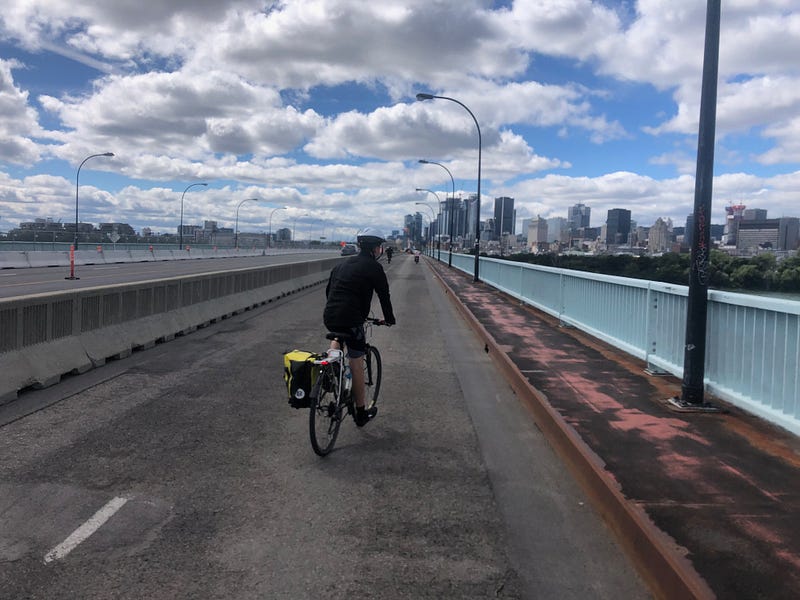
That picture above? It’s a snapshot of my 16 year old son arriving in Montreal by bicycle.
I’m the one who snapped the picture; I was cycling behind him, and you can see the skyscrapers of Montreal in the background. We were nearly at the end of a long journey. Four days earlier, we’d left Brooklyn at the crack of dawn, heading north out of the city. Now we were about to arrive at our destination — after 450 miles of cycling, doing about 100 miles per day.
It was about as punishing as it sounds! We did this during the final days of August, so half the time we cycled through the humid baking sun, which reached 98 degrees. Other times we shivered through pelting rain. We climbed thousands of feet of elevation each day, dodged 16-wheel trucks, fixed punctured tubes at the side of the road, and collapsed into bed each night like we were made of lead.
And we had a wonderful time. I am deeply impressed at my son’s persistence in pulling of this type of ride. He’s been an avid cyclist since middle school, pushing himself to do longer and longer rides.
But let me slap the klieg lights on myself for a second, too — because seriously, I am frankly astonished that I completed this ride. And not just this one; I’ve done multiple city-to-city cycling trips in the last four years. How in hell did I become the type of person who now routinely cycles 11 hours a day … for pleasure?
As I’ve discovered, it’s never too late. After a lifetime of avoiding sports, I somehow became an athlete in my early 50s.
I had sports drummed out of me very early.
It was largely because of school — specifically, the grisly nature of high school gym in the 1980s. I hit puberty very late, so compared to the strapping dudes at my rather jock-y high school, I looked like a hobbit, a head or two shorter and probably 66% of their average body mass.
This made gym class a dismal ordeal. I don’t know what it’s like these days, but back in the 80s, gym was a Darwinian exercise in physical dominance. Quaint ideas of “competing against your personal best” had yet to emerge, so gym class was, as I wrote in a previous essay ...
… a dreary litany of casual violence and enthusiastic bullying, which the teachers and coaches not only didn’t halt but seemed rather thrilled by. (For them, this was the whole point of sports — the ritual humiliation of smaller kids by bigger ones.)
Ever seen Freaks and Geeks? Yeah. The gym scenes, with the jocks torturing the nerds, have a more or less documentary fidelity to my high-school experience, lol.
So, unfairly or not, I quickly learned to associate men’s sports and athleticism with the absolute worst of the human spirit: Howling tribalism, septic masculinity, a creepy daddy-issue subservience towards coaches (seriously wtf), and the smirk-encrusted lording of physical mass over one’s fellow creatures. In grade 12 gym was finally optional. I got the hell out of dodge and dropped the class forever.
And I vowed, as a life goal, to religiously avoid participation in sports. For the next three decades I was remarkably successful at this task. Probably no more than once or twice a year I’d get dragooned into a game of baseball or touch football with my friends, but that was it. And I did absolutely zero formal exercise at all.
This is not to say I led a sedentary life. Living in downtown cores, as I did — Toronto, and then New York and Brooklyn — I got plenty of vigorous activity. Urban life requires walking every day; using the subway involved hoofing up and down tons of stairs. I was sprightly.
But the idea of formally and regularly doing exercise? The idea made me throw up a little in the mouth of my mind. I was just too emotionally messed up about it all.
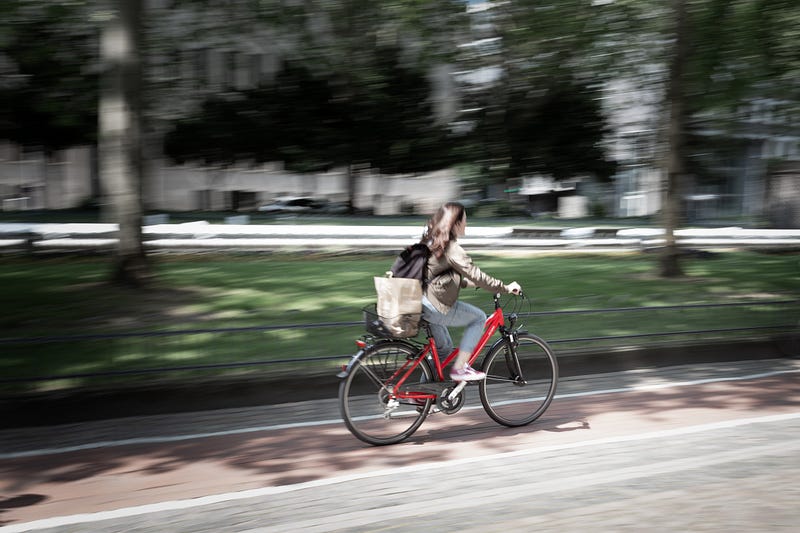
The one exception was cycling.
When I lived in Toronto I rode a bike to get to work or to see friends. This was purely functional cycling, navigating from point A to point B. I never pursued cycling with any particular fervor. I enjoyed it, don’t get me wrong! But I entertained no visions of going on long jaunts for the hell of it.
In fact, for my entire 30s I didn’t cycle at all. I moved to Brooklyn in 1998, but took one look at the streets — filled with motorists who paid zero heed to bikes — and gave my bicycle away to a friend with a more cavalier attitude towards spinal injuries. I didn’t own a cycle for another 12 years, until in 2010 when I decided that cyclists had finally reached a critical mass big enough that Brooklyn felt safe-ish for bikes.
Then two things came along that got me interested in seriously long rides.
One was my eldest son, who when he was in elementary school got fascinated by the challenge of serious bike journeys. When he was in grade four and on vacation up at our cottage in Ontario, he rode to the nearby town, a trek of 14 miles, which was a lot for a ten-year-old. The next summer he wanted to go longer, so he and I did a 26-mile ride. Each summer we challenged ourselves to go further — bumping it up to 36 miles, then 50 miles, then 65 miles. Urged on by the enthusiasm of my child, it was a lovely way to ease myself, in my late 40s, into pursuing longer and longer distances.
The second thing that got me seriously into the saddle? COVID.
As I wrote in a previous essay, in the first months of the pandemic I didn’t want to get on public transit, or to ride in ubers or taxis. So when I had a bunch of medical appointments and errands in the summer of 2020, I started cycling to them — no matter where, how far, or how hot it was. I quickly realized it was often faster than the subway or even a car, and far more fun besides. So soon I was doing quite long daily jaunts — like riding 13 miles to Harlem to visit friends for dinner, and 13 miles back, even in sweltering July heat. I bought pannier bags and began doing nearly all my shopping by bike; in one quick trip I could ferry home three massive bags filled with a five-day load of groceries for my family. I bought warm clothes so I could cycle even in the freezing months of the winter.
For the first time, I was enjoying the sensation of pushing my body harder than normal.
(BTW, if you’re enjoying this piece, I’ve done a whole series of posts about cycling: They’re all here.)
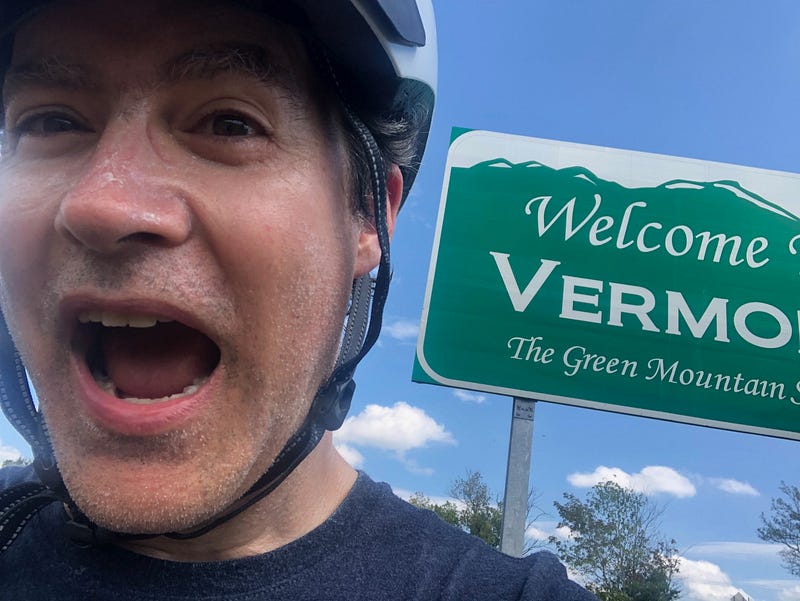
This was a new feeling — and one that was, for me, incredibly weird and foreign. What had changed? Why was I suddenly digging the feeling of exercise?
Part of it was that really vigorous cycling crept into my life as a functional activity. I wasn’t having to “set time aside to exercise”, or fit it into my calendar. I was just, well, moving around town and doing errands. I was Getting Stuff Done. I didn’t classify it as an athletic activity or a sport: It was “mobility”, autonomy. Since I’m also a big ol’ treehugger focused on climate-change mitigation, it also felt rad and empowering to suddenly schlep all over town — and carry heavy loads — without using a car.
But along the way, I also realized I was vibing with many of the thrills of athletics. I enjoyed pushing the limits of my endurance. In the fall of 2020, for example, my son and I decided to try cycling a full “century”, 100 miles in a single day. We hit the road one morning in early September, and holy moses by dinner we’d made our way to Philadelphia. When I arrived at Philly’s city hall, it felt astounding to have hauled such ass entirely under my own steam. It was a wild, giddy boost to one’s self-esteem. “After you’ve traveled a serious distance on a bike,” as I later wrote, “it’s hard to feel down on yourself.”
Energized by that trip, my son and I decided to try doubling it. In the fall of 2021 we cycled from Brooklyn to Providence, Rhode Island, a two-day ride in which we did 100 miles a day. Then this summer we doubled it again, doing a 450-mile trip to Montreal — four straight 105-mile days, capped by a shorter 30-mile half-day.
When I behold that distance on a Google map it’s quite surreal …
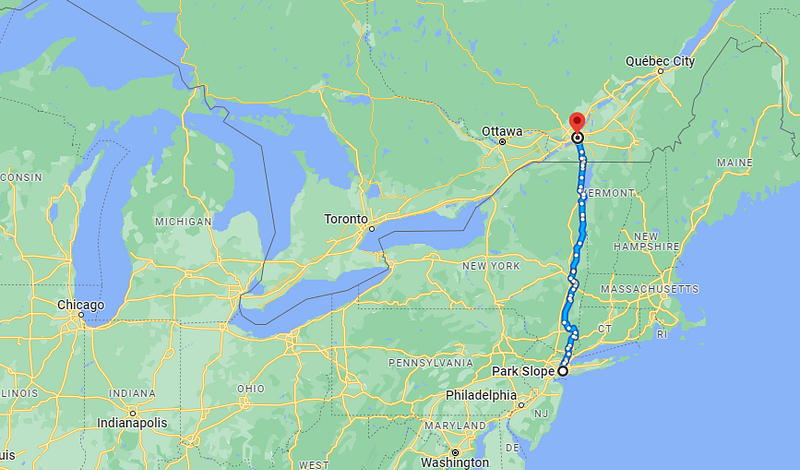
It’s seriously nuts to look at a zoomed out map showing a big chunk of a continent and see that you traveled a significant slice of it, using only your meat legs.
Anyway, once I started doing big multi-city trips, it was clear that I was no longer just cycling for mobility. I was evidently deriving some deep spiritual and emotional nourishment out of engaging in what is, quite obviously, a deeply athletic activity, and one that’s also clearly a sport. Somehow I’d become an athlete.
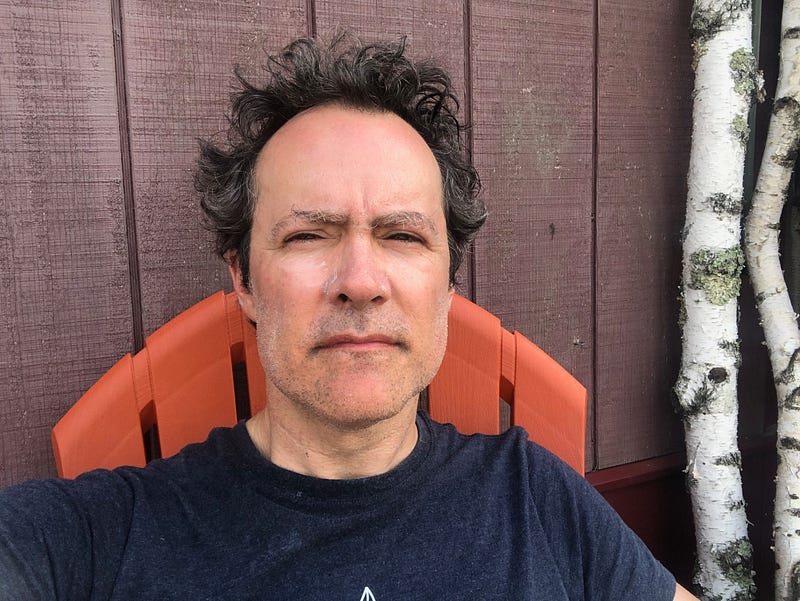
What was I getting out of this, that I’d never before gotten out of any athletic activity or sport?
Well, some of the joy in long-distance cycling is in seeing a gorgeous diversity of countryside …
You see every nook and cranny of a state — from its bustling urban cores to quiet waving rows of corn in the countryside, and everything in between: Old colonial country houses in sagging disrepair; sprawling blocks of suburban strip malls, with nail salons cheek by jowl with tattoo parlors and Tae Kwon Do gyms; rivers that flow past rusted, defunct ironworks; and maybe a thousand Domino pizzas.
It’s also a hell of an adventure, because things can go super wrong during a long bike ride, and you have to adapt. While cycling to Montreal, for example, my son and I were twice boxed in by unnervingly-close lightning storms — so we abruptly rerouted to find safety, pedaling like mad as forks of electricity danced closer to us along the horizon.
But most obviously, long-distance cycling finally helped me figure out what motivated all these sporty folks, who I’d regarded for decades with such dank suspicion. I now understood them, a little. Specifically, I felt the pleasure of figuring out what my body — and what my willpower — was capable of.
Historically, sure, I’d heard people talk about athletic activity as being all about pushing your “personal best”. But I never quite believed it. I had trouble separating athleticism from the aggro culture of pro sports. I mean, yeah, sure, personal best, givin’ it 110%, woof woof meow meow … but all those braying hordes of sports fans sure seemed pretty focused on who was winning and who was losing, right?
With long-distance cycling, though, it really did feel like I was just measuring myself against myself. There was no competition with others. It felt more like a deeply nerdy experiment in science and psychology: So, Clive — can you handle this? And what I’ve found is that, delightfully, most often I can. And it’s also fine when I can’t, or shouldn’t. Listening to how my body responds to athletic demands, and respecting its natural limits, is another odd pleasure in this new life of mine.
It no doubt helps that I have no interest in racing. I don’t care if I’m faster than others. Quite the opposite: When I do these epically long rides, I ride quite slowly, certainly compared to the heads-down lycra-clad cyclists blowing past me in hyperspace mode, straining atop their elite carbon-fiber featherweight bicycles reverse-engineered from crashed UFOs. Me, I ride an inexpensive and frankly kind of heavy standard hybrid bike. I do not ride in an aerodynamic posture. I just mosey along. I’ll get there when I get there. My goal is sheer, mulish endurance.
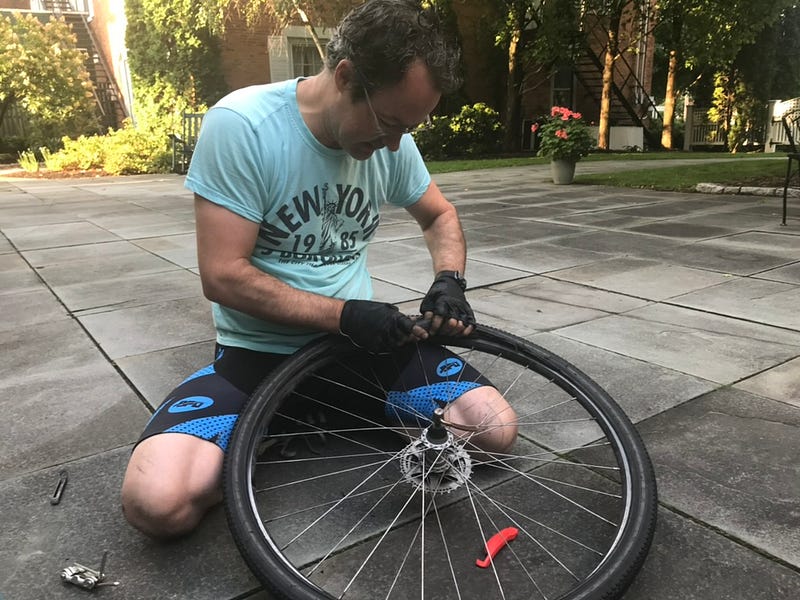
Even so, all this cycling has been stupendous for my well-being. I’m 54, the age at which one’s body begins to degrade at a positively domino-toppling pace if you don’t actively work to maintain it. Cycling so damn much, so damn often — mostly, again, just tooling around town — has improved my physical well-being to an extent I’d have previously assumed was impossible. I am in better shape now than I was in my mid 30s, probably.
This all all puts me in mind of Anne Helen Petersen’s wonderful essay from this summer, entitled “The Quiet Glory of Aging into Athleticism” …
How is it, at age 41, that I feel like my body can do more — and that I can take more joy in it — than ever before? I’m not faster, but I’m more resilient. I’m not doing as many overall miles, but I feel stronger. I love it more, and more feels possible. Sure, my knees are slightly more creaky, and I have to be keenly attentive to stretching and Theragunning and hydrating in a way I never was before. But exercise just generally no longer feels punitive or disciplinary. Instead, I feel something far more akin to curiosity. If part of me feels weak or tweaky, what’s struggling in other parts of my body and needs strengthening? And if I’m attentive to my body, if I’m legitimately kind to it, can it do more than I thought it could?
You should go read her entire essay, actually; it’s fabulous. I’ll end things here.
(Enjoyed this one? Then slide on down to the “clap” button and let your joy be known. It can handle up to 50 claps per reader!)
I publish on Medium three times a week; follow me here to get each post in your email — and if you’re not a Medium member, you can join here using my link, and about half your monthly fee goes directly to supporting my writing on Medium, while also giving you access to everything else on the site.
I’m a contributing writer for the New York Times Magazine, a columnist for Wired and Smithsonian magazines, and a regular contributor to Mother Jones. I’m also the author of Coders: The Making of a New Tribe and the Remaking of the World, and Smarter Than You Think: How Technology is Changing our Minds for the Better. I’m @pomeranian99 on Twitter and Instagram, and @[email protected] on Mastodon.