
Become Wiser in Three Months: Use This Forgotten Tool in a New Way
Can we help our minds evolve without a coach, a personal guru, or a significant financial investment in training?
The body of guidance on personal growth and self-improvement existent out there is simply overwhelming. One way to deal with the apparent confusion entailed by so many options is to remember that there are so many entrances, going towards the same center. There are no two identical roads to self-fulfillment: some are fast, others are anecdotic; some are proven, while others are counter-intuitive; some are scientific, others are more of a “been-there-done-that” kind of thing.
The entire journey of search and practice is unique to everyone, the combination between failure and success is the result of an entanglement between own qualities (for example perseverance, self-confidence or pre-existent skills) and external moderators (such as existence and accessibility of resources, physical conditions or support from significant ones).
Some self-improvement goals focus on a very specific niche, skill, or cognitive ability: learning a new language, mastering martial arts, playing an instrument. This is not what I want to focus this article on. Rather, the question is: how can we aim for a meta-development of our mind? How can we improve ourselves in a more subtle and ubiquitous way?
Can we help our minds evolve without a coach, a personal guru, or a significant financial investment in training?
If I’m raising these questions and writing this article, it is because I dare to share the answer I have found, one that in our society we are not talking enough about.
And that answer is: Reading.
Beware, I am not talking here about self-help books, research articles, or any textbooks either. I am talking about fiction.
Reading fiction will upgrade our minds more than self-help books or any other form of reading.
Here’s a cheap and intensive way of hacking our brain: read fiction over entertainment media, newspapers, and self-help books and resources.
If you will find yourself intrigued enough to consider this challenge, maybe the decision to uptake it might be easier after considering the benefits of reading fiction.
The Benefits of Reading Fiction
1. Focus and concentration will improve.
The reading experience cannot be forced: we are either “there”, in the story, every breath, every heartbeat, or we are simply moving our eyes over the words. Watching the news and being immersed in a story at the same time, is simply not possible. This ability to concentrate for longer periods will be a very useful skill.
I have personally discovered that I can focus better during long meetings or intensive conferences after I have intensified my fiction reading experience.
2. Empathy will develop.
Considered as the ability that makes us truly human, empathy can be developed. It is a muscle that can be flexed. And, unlike watching a movie, when we are reading a book, we get the chance of “going inside” each character in the story, not only the heroic and desirable ones, but also the despicable, weak, or cruel ones. In real life, we might not get the chance of playing these roles, but we can safely do it while reading.
For example, I found the male character in “Bel Ami” by Guy de Maupassant repulsive, yet it was really interesting to understand his resorts and emotions. At the same time, I have never experienced any episodes of anorexia and mental distress, such as the main character of “The Vegetarian”, by Han Kang, yet what a ride her inner exploration was. In “Dear Friend, from My Life I Write to You in Your Life” by Yiyun Li, I learned about how it is to swing between being suicidal and yet trying hard not to have that option anymore, even if I have never been in her shoes. I give these three examples since I want to emphasize that maybe, in other circumstances, I would have judged more harshly people who behaved like Georges Duroy, Yeong-hye or like Yiyun Li, the protagonists of the above books.
3. Fun and learning will come together.
Yes, since there are so many motives for turning that page! The paradox is that although there are just words in two dimensions, the reading experience helps us “see” everything in 3D, and that is really cool.
Historical fiction novels are usually where I have the most fun, and this is helping me to compensate for all the dull reading that I have to do for my work. Reading should melt your heart, give you shivers and make you feel good, it does not always have to be dark and complicated.
4. Perception will become sharper.
Great writers know how to make us aware of details that give flesh to the story, they can create smells, colors, temperatures, touches. Noticing how that is being done in that story, will improve our ability to perceive and express better what we feel or how the world around us is like.
I have learned not to rush through the descriptive passages, just looking for the next piece of action in the story, but also to enjoy the slower pace of descriptions. Kim Stanley Robinson does a fantastic work of description of an entirely new environment in his science- fiction series about Mars (Red Mars, Blue Mars, and Green Mars). There he helps the reader understand how it will be like to move from Earth to Mars and live there, in totally different conditions, on a strange planet. Reading his books, I felt like I have been on Mars!
5. You will find meaning for unsolved suffering.
The thing is, we all suffer in life. Not always do we find a confidant or a friend to lean on. Or, maybe we do, but there are things you simply don’t know how to express in words. There are pains that we cannot share, or that others cannot console. In fiction, we can find answers to our unexpressed suffering, we can identify alternatives to the scenarios we are living.
For me, reading fiction was a way of partially healing the tragic loss of my beloved dog. Reading “The Friend” by Sigrid Nunez or “Lilly and the Octopus” by Steven Rowley was a way of losing myself in others’ perspectives, in order not to succumb to overexposure to my own pain.
Reading fiction is hard work.
Unlike self-help books, reading fiction is hard work: we are not fed with explanations, tips and tricks, nor with conclusions. There are no diagrams, no shortcuts, you have to do all the work… Sometimes, the writers will let the story in limbo and then… we have to struggle with the story.
When I became an active reader of fiction, I changed my reading behavior: I was marking passages, taking notes, and reflecting on the story, letting it rest in my mind for a couple of days. Writing a review after finishing a book, is really what forced me to put my thoughts together. I have personally found that writing reviews is a really important step in connecting with the storyline and its beauty.
If you are interested to do so, do not worry about the quality of your review. Do not think that the world doesn’t need your review, since there are already so many out there.
You are not doing it for the world, you are doing it for your world.
So, where are you in this landscape?
Most people read around four books per year, and of course there is important variation among countries and demographic groups, with women, young adults and those with higher education reading more books than the other groups; but, actually, there is a significant number of people who do not even reach the threshold of one book per year (in 2019, 35% of people sampled in the US stated not reading any book during the last 12 months).
So, where are you in this landscape?
Well, the truth is it does not matter. It is not of importance if you are already a dedicated reader or a person who just reads a couple of books per year; it doesn’t matter if you are a slow reader, or if you master any techniques in fast reading. It is like enrolling in a boot camp: what will make the difference is whether you can sustain your reading every day.
Embracing the Challenge of Binge-Reading Fiction for Three Months
Before starting my intensive reading adventure, I did not focus too much on the gains and the benefits. I did not take a psychological test, to benchmark my psychological abilities. I simply took it as a temporary goal: a three-month mission to which I dedicated myself entirely.
I decided to read like my life depended on it, to read with focus, and in an active manner, while still taking care of my job, as usual.
My experience might seem like a commitment to isolate myself from the news, from the rhythm of life, and in a way, I was. But I was aware that it was going to be temporary until I would have built a new habit and would have set the stage to ripe the benefits of intensively reading fiction. And these are worthwhile, lifelong benefits.
Here is what worked for me:
Selecting my books — Before actually starting the binge-reading adventure, the first thing I focused on was creating my library. My advice is to invest some time in sorting the fiction you would enjoy reading for the next months.
1. I prefer to select books that have excellent ratings, to check them on Goodreads, or simply to check the many recommendations available on the internet: long-lists and shortlists of Booker Prize, Kirkus, Man Booker, Pulitzer, Women’s Prize for Fiction and so on.
2. I prepared around 30 books that I wanted to have at hand for this challenge. This gave me more control over the overall experience and increased my motivation to accomplish this challenge. I wanted to avoid picking up random books that I might end up hating or feel like a waste of time. Therefore, investing some effort into curating my own books was the strategy that worked for me.
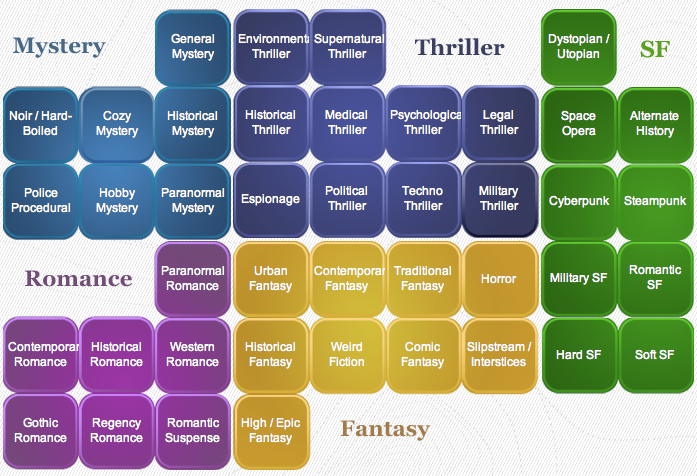
3. I made sure that my selected fiction covered various genres: historical fiction, science fiction, fantasy, crime, romance, and so on.

First of all, if we want to upgrade our minds, we cannot do it if we keep all routines as they were. We will simply not find the way, the time and the conditions to accommodate this.
This is how I navigated through the uncomfortable part that demanded change:
1. Structuring time in my busy schedule to prioritize reading: the intervals I defined were of at least 30 minutes (uninterrupted). Also, during the day I would aim for at least 120 minutes of reading, otherwise I would simply not be able to reach the targets.
2. Daring to read 2 or 3 books in parallel. To make it easier, I simply chose storylines from very different periods, that way there is no risk of confusing characters or plots. For example, I like reading science-fiction, in parallel with historic fiction, and I find it a great combination. Sometimes, there are simply amazing connections that came up from this kind of concoction.
3. Combining various channels of reading. I found that combining paperbacks, with audiobooks and e-books, which can be accessed on multiple devices worked for my lifestyle. That means that I was able to read in various conditions, not exclusively when I was comfortably sitting in my beloved armchair. Audiobooks during running or walks might seem weird if you are used to the tempo imposed by the music, but I found it to be a great way to read more (although my running speed did not increase!).
4. Making reading at hand. By successfully combining points 2 and 3, I managed to have a story at hand in most situations. For example, when I was riding the train, I had my phone at hand and it was only natural to open the story on my device. If I got some time during the weekend, I would take my paperback and read; or if I wanted to go out for a run, I made sure to press start for my audiobook.
5. Creating enabling conditions for reading. One thing I had to drastically reduce was socializing through long phone calls and entertainment through social media. That means that I would make a conscious decision to read or listen to an audiobook, instead of doing those other gratifying activities.
6. Using milestones and giving myself small gratifications was a way to celebrate small achievements. I would post something about the current book, I would use Goodreads to monitor my progress or I would invest in creating an attractive reading environment (getting a cool bookmark sign, a new reading lamp, or some great coffee to enjoy during reading). Whatever makes you feel good, after all, life is short…
Using the above approach, I have managed to read 2 to 4 books per week, and one can easily reach a target of around 30 books in three months. And if we don’t meet that target, we can simply be kind to ourselves, and keep our curiosity alive.
As a final argument of this article, I hope you will find inspiration in the wise words of Oscar Wilde, who, by the way, wrote GREAT FICTION:
“It is what you read when you don’t have to that determines what you will be when you can’t help it.”
© Ana-Maria Schweitzer 2020
I am a Romanian health psychologist, working in philanthropy and involved in developing prevention and care programs for people with chronic conditions. As a seeker of meaning, I use writing and playing with words, as ways of uncovering both the order and disorder that reign inside and outside our minds.
References: