
Beckett’s Endgame an Infinite Game of Chess Where Death Will be the Only Outcome
Why this farce, day after day?

Scene Overview: Hamm and Clov talk about why there are no bicycles; Nagg appears wanting his ‘pap’. Nagg is given a biscuit to keep him quiet and Hamm and Clov talk once more. Clov tells Hamm that their seeds will never sprout and that ‘Something is taking its course’. Nagg knocks on Nell’s bin, and Nell appears with a very white face. Nagg wants Nell to kiss him, but she says they can’t. They try to kiss but can not reach. Nell asks ‘Why this farce, day after day?’ Nagg realises he has lost a tooth and Nell is nostalgic. They become conscious that their sight and Nell’s hearing is failing, as they can’t really see each other. They laugh over a sequence of memories; however, the laugh becomes less hearty with each story. They are both cold, and Nagg says, ‘Do you want to go in?’ though neither does for dread of being alone.
This scene or piece as the play does not divide into scenes, is the pinnacle of the play. There are a number of moments leading to crises in this scene that lead to a change in emotion.
Pauses are used in this scene as well as the whole play, which serve to highlight the characters alienation and their slow quiet approach to death. Time plays an important role throughout, Nagg and Nell’s memories belong to the past and for them there is no future. For all of the characters, there is only the here and now and the present never seems to finish, hence Nell wishes for the everyday farce to end. In keeping with Beckett’s ‘Theatre of the Absurd’ the characters’ misery is never lessened and even though there are moments of laughter, these moments emphasize the absurd situation they are in, brought about by man’s condition.
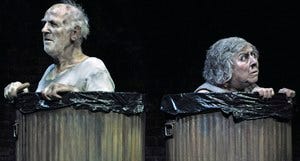
The major development is the revelation that Nell sees the situation they are in for what it is. She points out to not only Nagg but perhaps the audience too, that Man laughs at others unhappiness, however, when the story is told too often, the laughter fades. Consequently, Man might think he is in control but the reality is he is trapped in an endless cycle of life. For Beckett, this is the foundation of his work, man must witness the pain of living and the fear of dying, moreover, the audience must bear witness to their own existence.
This is the only time that we meet Nell and although within the context of the play her part is small, it is, important. We learn about the appalling conditions both Nagg and Nell are kept in, with sand at the bottom of their bin that has not been changed. They are cold and obviously not fed very often as a biscuit seems a treat. This causes the plot to progress as we can see that Hamm wants his parents to suffer as he does and feel the pain of separation as they abandoned him as a young boy. The separation becomes more overtly obvious when Nagg and Nell try to kiss but the metal of the bins keep them from succeeding.

Rather than a main crisis in this scene, there are many small obstacles that the characters must overcome and the audience observe, to drive the play forward. Clov states violently to Hamm that their seeds will never sprout reiterating the theme of the play being death. The seed will not sprout as this is a place where life is coming to an end; this is not for new beginnings. The theme of death is further reiterated when Clov states that he sees his light dying, although Hamm takes this to mean what Clov can physically see, as he is blind, Clov means that his end is coming. Nagg and Nell’s dialogue is punctuated by pauses, restating their circumstances. They are old and their obstacles are visibly physical as they are confined, however, they have many emotional complications also. They learn that their sight is failing and although Nell thinks it is better that Nagg does not see her now, it creates a poignant moment between the old lovers.
Taken in the context of the whole play, the scene also carries through the major symbols of the play. The play opens with ‘Finished, it’s finished, nearly finished, it must be nearly finished’. The word ‘finished’ is repeated throughout the play and serves to highlight the characters desire for the end. This is further driven home when Clov states ‘Something is taking its course’ the feeling that and end might come pushes to the forefront and of course later Nell dies.
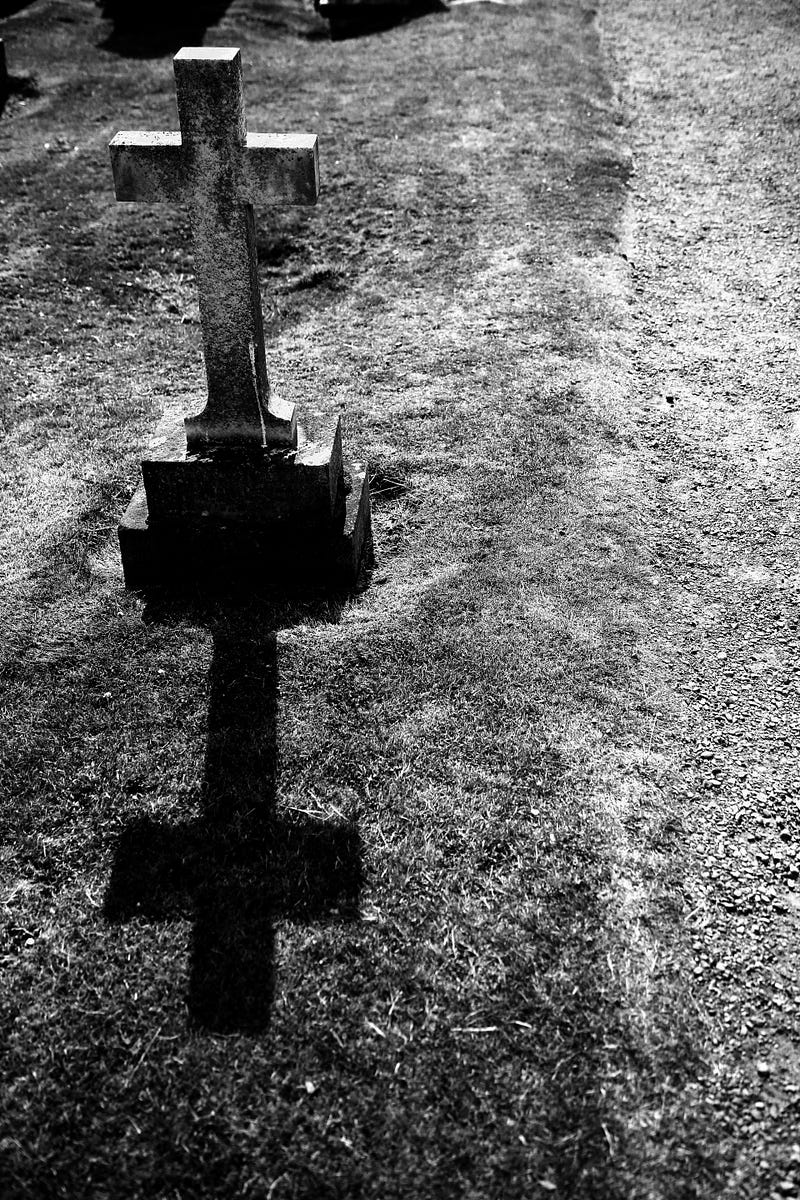
Throughout the course of the play the sense that the characters are stuck in an unending loop is further conveyed both in the physical actions of the characters but also the dialogue. Hamm always returns to the centre of the room, as Clov always returns back to Hamm, whilst Nagg and Nell can only pop in and out of their ashbins. Each character enacts a daily routine ritual, with specific almost choreographed movement, this coupled with occasional references to playing a game ‘Me to play’, drives home the feeling that the characters are stuck in an infinite game of chess where death will be the only outcome.
Article written by Drama Llama | Educator | Writer | Academic | Consultant


