
Beauty and bother in Banff
Heights and highlights of a road trip
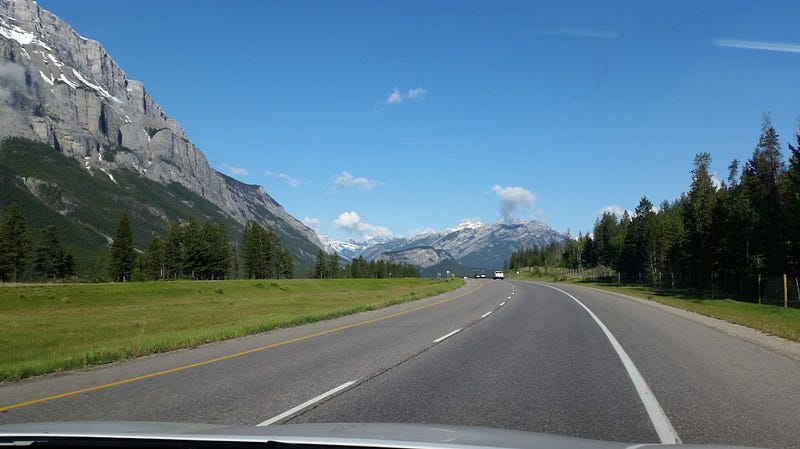
This month, selecting a story from my travels for the Monthly Challenge is a real challenge. I have taken quite a few trips, it’s difficult to choose. But since I had already started describing some parts of a trip through western Canada, during 2017, let me continue with a remarkable stage from that same trip.
Earlier parts of the trip are included in the list below this story. Here I will focus on what we experienced in the Banff National Park.
I’d been looking forward to our entry into Banff National Park, last visited with our kids during a road trip in the mid-90s. It’s very popular with tourists, especially in summer, since it has some of the most spectacular scenery that I’ve ever seen. One is able to avoid most tourists as soon as you start walking anywhere. Most people appear to want to see everything through a car or restaurant window…
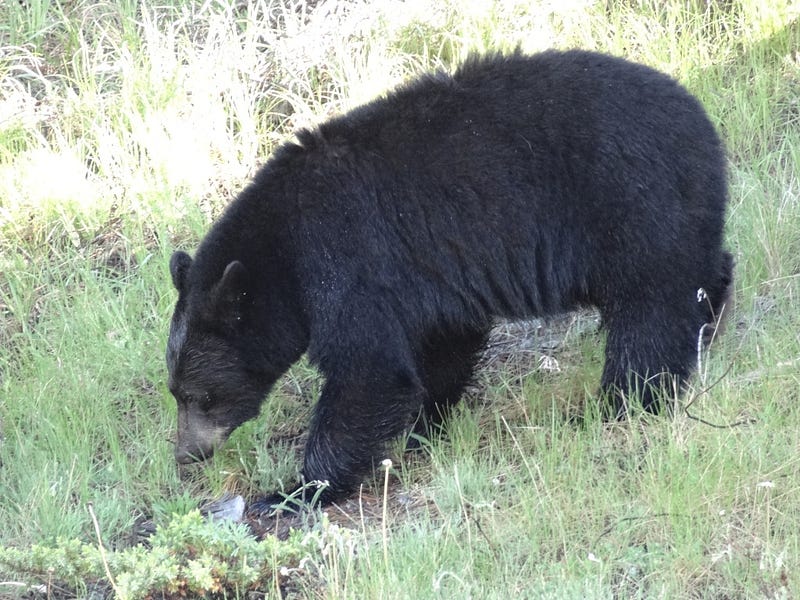
We’d stopped for some refreshments in the town of Banff but it is quite frankly a bit of a tourist trap and so we continued towards Lake Louise with the Bow Valley Parkway, the more scenic alternative to the Trans-Canada Highway 1. It’s a good thing we did, because we were treated to beautiful surroundings and a few black bears enjoying them. Almost oblivious to the many humans in cars who were taking pictures, even to the few idiots who got out of their cars to within 10 metres or so.
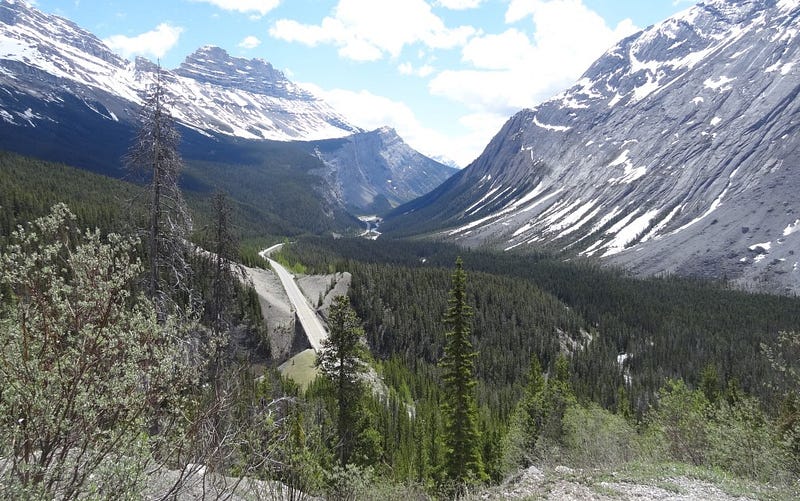
We drove past Lake Louise, continued northwestwards past Saskatchewan River Crossing (literally just a shop and a filling station), onto the Icefields Parkway, up to the Columbia Icefield and the Athabasca Glacier, or at least what remains of it. The icefield, sitting astride the continental divide, dates back some 130,000 years and has seen periods of growth and decline. Since 1840, however, the Athabasca Glacier, one of the six “toes” flowing out of the Icefield, has been losing volume, currently about 5 metres of depth per year, with about half of its volume gone over the past 125. The scenery in this area itself is dramatic rather than beautiful, and somewhat depressing to see evidence of how the glaciers are retreating…
Driving back down the Icefields Parkway is an excellent way to see the grand views offered by the Rocky Mountains and the wide valleys carved by glaciers of the past. The magnificent topography that we see today results from the glacial erosion of much higher mountains that were formed between 80 and 55 million years ago by horizontal tectonics when the Kula Plate was pushed from the West into the continent in the East. I love the summary provided by Wikipedia: “For the Canadian Rockies, the mountain building is analogous to a rug being pushed on a hardwood floor: the rug bunches up and forms wrinkles (mountains). In Canada, the subduction of the Kula Plate and the terranes smashing into the continent are the feet pushing the rug, the ancestral rocks are the rug, and the Canadian Shield in the middle of the continent is the hardwood floor.” I can’t do better than that description!
Closer to Banff, we stopped and photographed a number of the beautiful lakes and walked along the Mistaya Canyon. I realise that I’m over-using words like beautiful, but I can’t help it. The word “Mistaya” means “grizzly bear” in the Cree language, but we didn’t spot any of them there. That’s a very good thing, they are not as docile as the black bears we saw earlier.
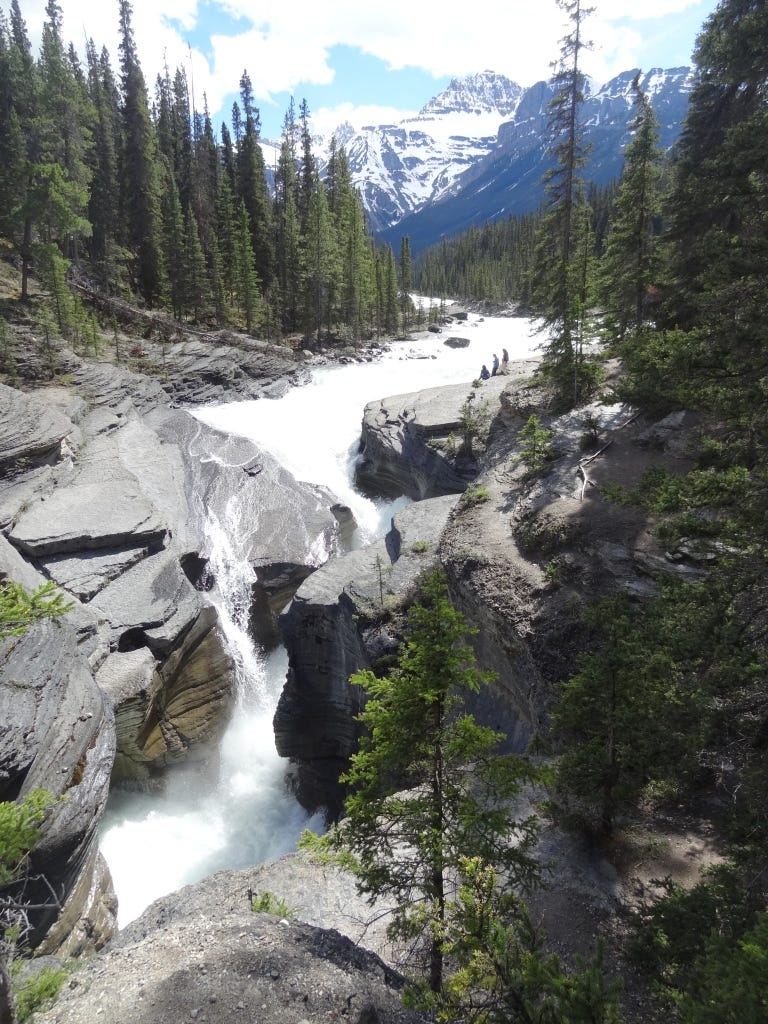
When I see canyons like this (and we would see quite a few during this trip) then I’m always reminded of the relentless power of moving water, continuing to carve deeper and deeper into the rock. All you need is moving water, some sediment to do the scouring, and time, a lot of time.
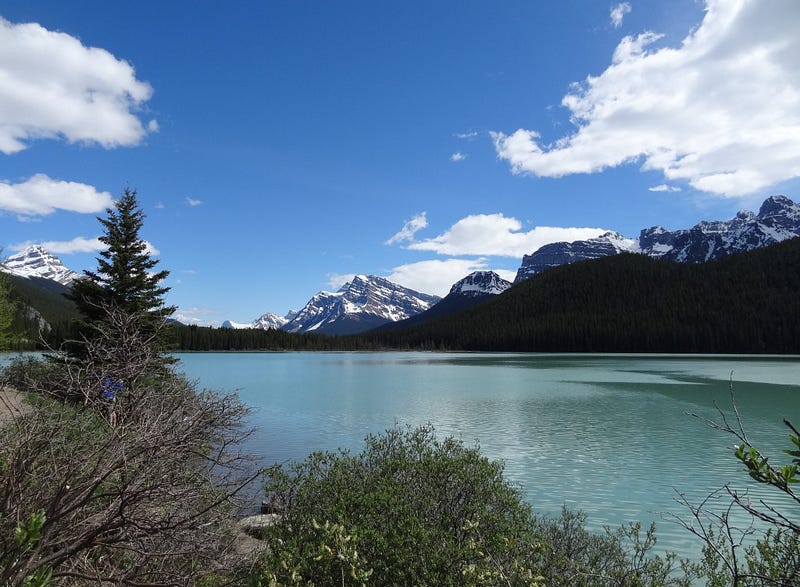
We were keen to visit the area around Lake Louise, so we drove there the next morning. Quite full of tourists, walking around the beautiful lake (that word again), sitting in a restaurant, or the lounge of the luxurious Fairmont Chateau Lake Louise, or shopping for souvenirs. We even had to find parking in some overflow area. In order to get away from the hordes, we hiked the trail up to Lake Agnes, a much smaller lake between impressive peaks, with a famous teahouse.
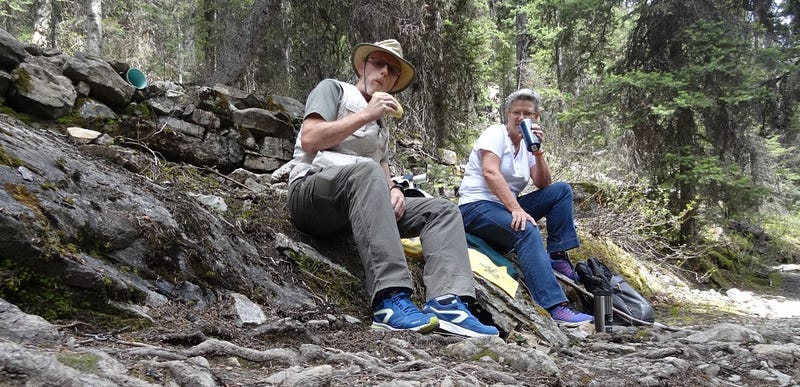
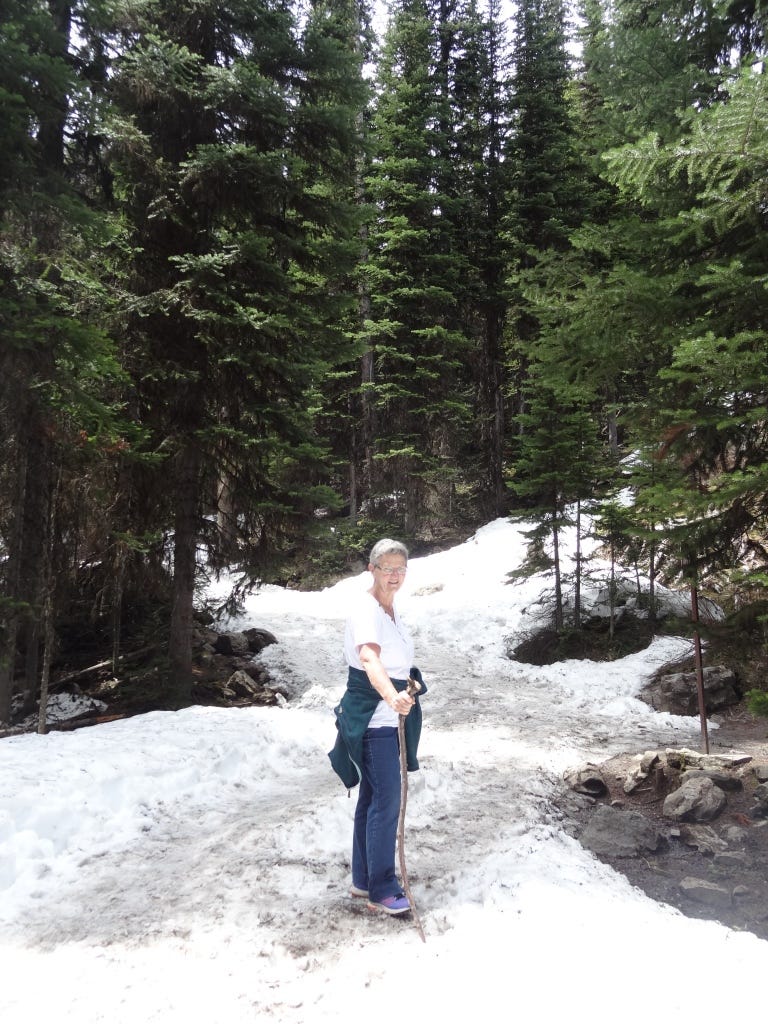
It might have been early July, hypothetically it was summer, but we hiked over snowy and icy terrain in the shaded areas and the peaks were still covered in snow. Paths covered in snow that has been remelted slightly and frozen again, are very slippery! Lake Agnes itself was still covered in ice over much of its surface.
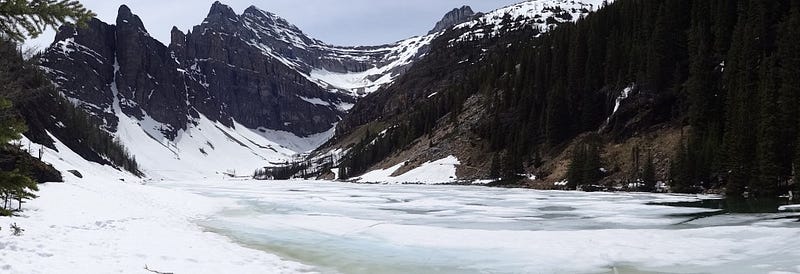
As I was taking a picture of this scene, we heard a shout from across the lake and I looked up to see a person cartwheeling into the water, followed by someone shouting “Help, help!”. I looked at Marina to get her attention, but she had already taken off towards the situation.
A large chunk of ice had broken off from a frozen waterfall, bounced once on a grassy slope and slammed an unlucky woman into the rocky shallows of the lake. When we got there, her husband had already dragged her out of the freezing water and she was lying stunned on the ground next to the path along the lake, bleeding from her head. We stayed with her for a couple of hours, keeping her neck immobilised and her body warm, until the rescue helicopter with medics arrived to airlift her away to hospital.
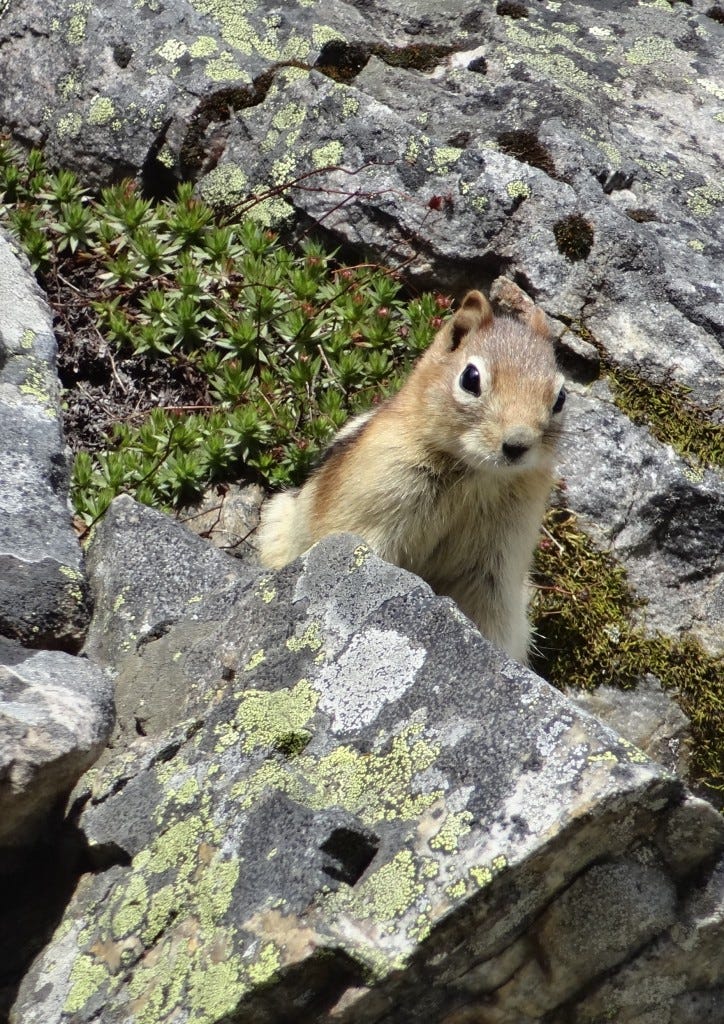
I could fill a whole separate post with the events during those few hours, what Marina did, how a Swedish policeman helped, how a few young and inexperienced doctors on holiday did not really help, etc. Marina can still remember a sore butt from having to sit completely still for a few hours!
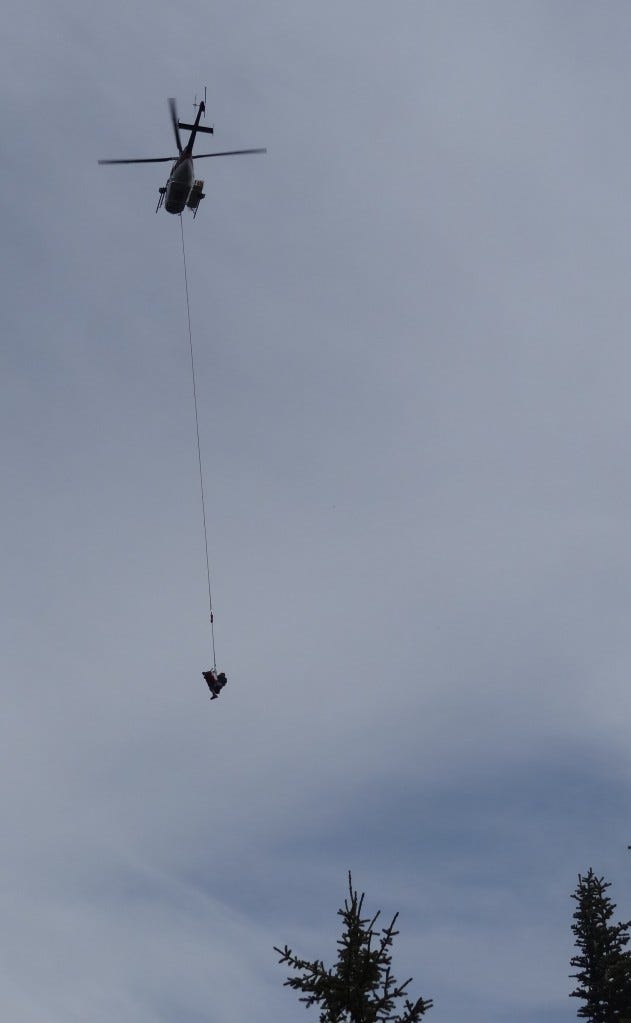
Fortunately all ended well. We coincidentally saw the same couple at a filling station the next day. The lady had a bandage around her head, courtesy of the hospital in Banff, and a black-and-blue face, courtesy of rocks in Lake Agnes. They were fortunately able to continue with their trip. Good to know that there is an impressive helicopter team, staffed with an experienced doctor, available when such help is needed in the mountains. And also… good to always have Marina along — I am convinced that she enjoys providing such first aid assistance during a holiday, more than the holiday itself!
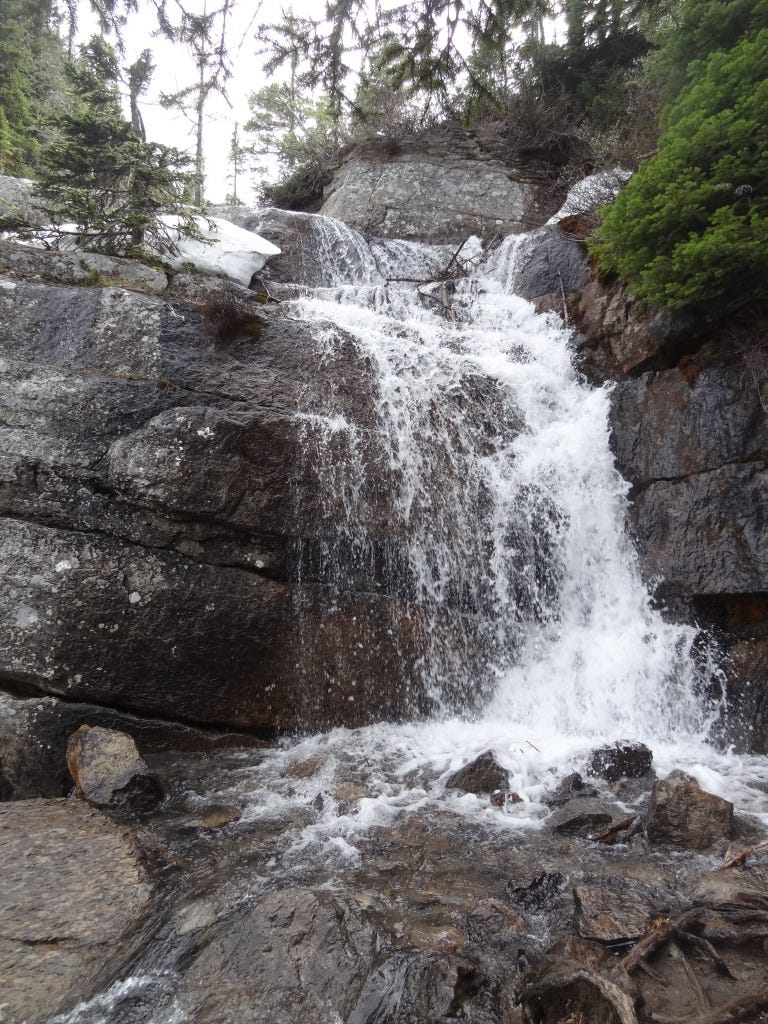
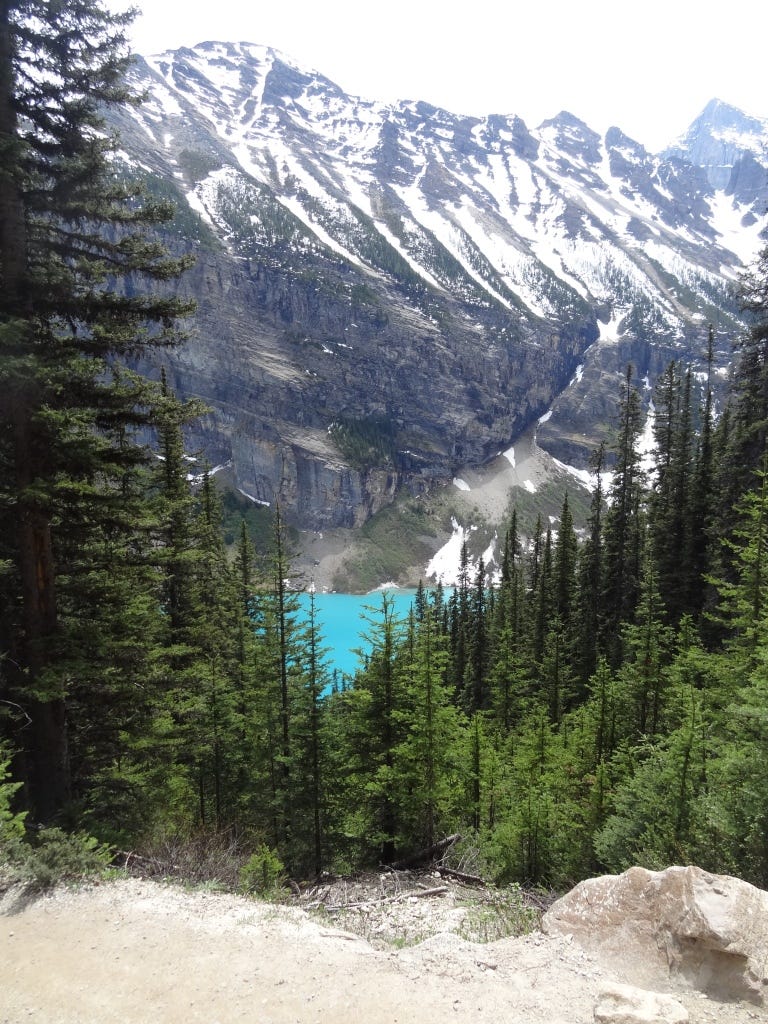
After an eventful day, we drove back to Field for another night in our comfortable room, in the Truffle Pigs Bistro and Lodge. Very comfortable, very friendly staff, very well located for sightseeing in the area, within the Yoho National Park.
You could read more about this road trip in the stories on the list linked below. Other episodes to come in future installments, stay tuned!


