
THE SCIENCE OF ALCOHOL
Beat Those Alcohol Cravings and Take Control of Your Life
Here are a few ideas to help you manage those pesky urges.
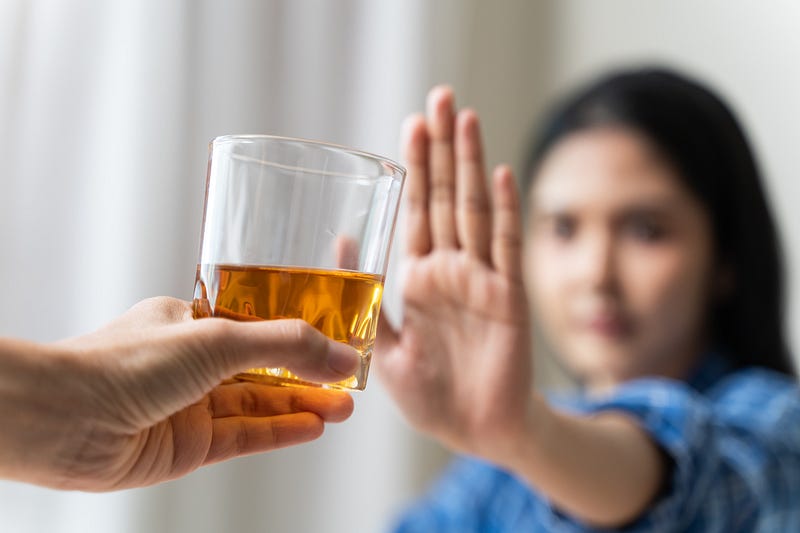
Throughout my adulthood, I enjoyed wine most evenings. On the weekends, cocktails were the choice of the day.
My sister, Michele, would pop over mid-afternoon on many a Saturday — we were both single moms then. Our boys were usually with their dads or, when older, out with their friends.
I would concoct my version of several fru-fru drinks — Strawberry Daiquiris or Pineapple Margaritas, sipping the afternoons away.
I would stay away from the hard stuff on weeknights, as my sons had school, and I worked and had to be sharp and feeling well. Wine was all I would allow myself.
Still, I knew the wine played havoc with me the following day. Many times, my plan was not to have wine on Mondays, Tuesdays, and Wednesdays to give my body a break. I especially needed one after my often boozy weekends.
Mondays were usually easy not to imbibe as I wasn’t feeling great from the weekend’s tippling.
Tuesdays were a struggle. I had a strong desire for just a teeny-tiny bit of Chardonnay.
If I managed to be alcohol-free for two days, Wednesdays were impossible. The cravings and urge to drink were too much.
I’d relent and have a glass. Sometimes two. So much for my grand plan. This did not discourage me, though. In another week or two, I’d give it another go.
Sometimes, I was successful and went three whole days AF. This merry-go-round of drinking and trying to abstain continued for many years.
I felt I was losing control of my life.

It never occurred to me to research for help in abstaining from the drink. It was also pre-Google days; fact-finding wasn’t as available as it is now.
What is a craving?
The National Institute on Alcohol Abuse and Alcoholism (NIAAA) defines alcohol cravings as “a strong desire or sense of compulsion” to drink. Cravings may also include intense, frequently occurring thoughts about alcohol.
As anyone who has attempted to quit drinking knows, cravings are the most persistent challenge you face.
For most drinkers, cravings last only for 15–20 minutes, but may feel that they’ll go on for hours.
When I finally attained sobriety, I had cravings, but I was well prepared for them and learned that the urge would pass. Give it time. Stay strong.
Other times, a craving would arise when I was having dinner out and a Cosmopolitan or glass of wine passed by on a waiter’s tray. These types of cravings were easier for me than the physical kind of cravings. This was more of a longing for what I once enjoyed.
I learned to follow my desire with my imagination and realized there would be an unhappy conclusion by relenting to consume that drink. This was enough to keep me on the sober path.
I had gained control of my life.
Alcohol impacts our brain’s reward system, stimulating dopamine production and creating feelings of pleasure and a sense of well-being.
Over time, our brain learns that alcohol will lead to these pleasurable feelings.
The balance of the brain’s chemicals changes with chronic alcohol consumption, producing more glutamate — the excitatory neurotransmitter and less of the inhibitory neurotransmitter GABA. This is why your brain is left hyper-excitable when you stop drinking — leading to withdrawal symptoms and cravings.
What to do when a craving hits
- Change rooms or leave the area where you are having cravings. Go for a walk or a drive — anywhere there isn’t temptation. There’s no reason to test yourself.
- Wait it out. 20 minutes is usually enough time for a craving to pass. Often, I would pick up one of my quit-lit books and read a few pages to reinforce my resolve to not drink.
- Accept that cravings are a normal part of quitting. Remind yourself that the craving will pass. Try deep breathing or visualizing yourself successfully attaining sobriety.
- Be sure you have alcohol-free beverages on hand. This is a must. Clear your home of all alcoholic drinks if possible. If your spouse continues to drink, ask that they be kept out of sight. Stock your fridge with your favorite buzz-free drinks.
- Create a statement or mantra reminding you of your goal of not drinking. When a craving appeared, I said, “I, Diana, am a non-drinker.” Your statement could be longer — maybe repeating why you want to be alcohol-free. Our brains love to hear positive messages and act on them.
- Know when your cravings usually appear. For me, between 4-5 pm was the witching hour when I would usually have a pre-dinner cocktail. Knowing this was a dangerous time helped me prepare by reminding myself of my long-term sober goal. I’d fix my favorite AF drink and take time to be alone. Knowing when your cravings usually appear allows you to prepare for them.
Be reassured that your cravings will not always be intense. Over time, they will fade.
The duration and intensity of alcohol cravings can vary greatly from person to person, depending on numerous factors such as the length and severity of the addiction, personal health, and the presence of co-occurring mental health conditions.
In general, the most intense cravings often occur within the first week of abstinence, as this is when withdrawal symptoms are at their peak. However, it’s common to experience intermittent cravings for several weeks or even months after quitting. — Ria Health.com.
Thank you to Ria Health for some of the information contained in this article.
There are various ways to find sobriety — AA, SMART Recovery, in or out-patient facilities, a sober coach, or do as I did — immerse yourself in a truckload of quit-lit and read to your heart’s content.
Regain control of your life.
If you think you may experience withdrawal — please seek help before quitting.
For more ideas to assist in attaining sobriety, call SAMHSA (Substance Abuse and Mental Health Service Administration at 1–800–662-HELP (4357).