
Bear Encounters Are On the Rise For Campers and Hikers
Know what to do should you encounter a bear
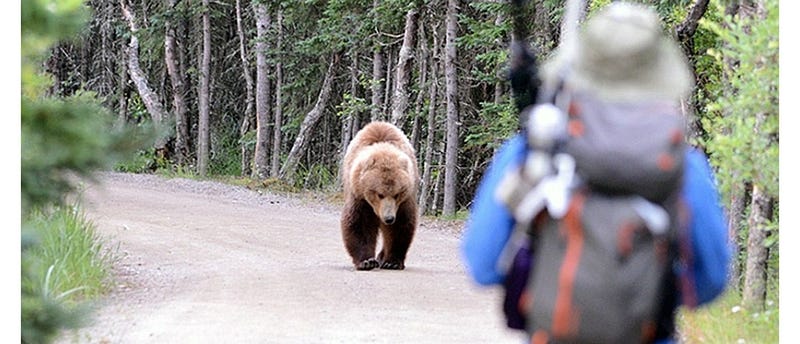
Bear encounters are on the rise in many parts of the US, so if you’re planning a hiking or camping trip, you need to be extra careful and plan ahead.
A study showed that, contrary to common belief, 88% of fatal black bear attacks involved food instead of the protection of cubs; 92% of the bears responsible were male. Mother black bears often pound the ground, bluff charge, or herd their cubs up a tree in the face of danger instead.
Recent Encounters
Growing numbers of bear encounters are happening this year from coast to coast.
In a press release, the Great Smoky Mountains National Park, Tennessee, wildlife biologists and park rangers responded to Elkmont Campground on Sunday, June 12, following a bear incident that resulted in human injury. After an investigation, wildlife biologists successfully captured the responsible bear. Due to human safety risks, the bear was humanly euthanized on Monday, June 13.
“The bear weighed approximately 350 pounds, which is not standard for this time of year, suggesting the bear had previous and likely consistent access to non-natural food sources,” said Lisa McInnis, Chief of Resource Management. “In this incident, the bear was likely attracted to food smells throughout the area, including dog food at the involved campsite. It is very difficult to deter this learned behavior; as in this case, the result can lead to an unacceptable risk to people.”
A family of five were sleeping in their tent, with their dog, when a black bear ripped into the tent at approximately 5:20 a.m. on Sunday, June 12. After gaining access to the inside of the tent, the bear scratched a 3-year-old girl and her mother. The father was able to scare the bear from the tent and campsite, but only after several attempts. The family left a note at the campground office to report the incident and departed the campground to seek medical attention. Both mother and daughter sustained superficial lacerations to their heads.
Some North Carolina bears are becoming so bold that the U.S. Forest Service has warned hikers to use extreme caution for the second year. Officials have warned hikers that bears are becoming particularly bold in search of food.
“Forest visitors have reported bears tearing down bear bags from trees, carrying off backpacks, spending hours near campsites and being unaffected by efforts to scare them away, the USFS said in a report.
Bear encounters in New Jersey have more than doubled compared to last year, with increasing numbers of animals straying out of the wilderness and onto private property.
There has been an increase in sightings in Oklahoma, where the population is growing by 6% each year.
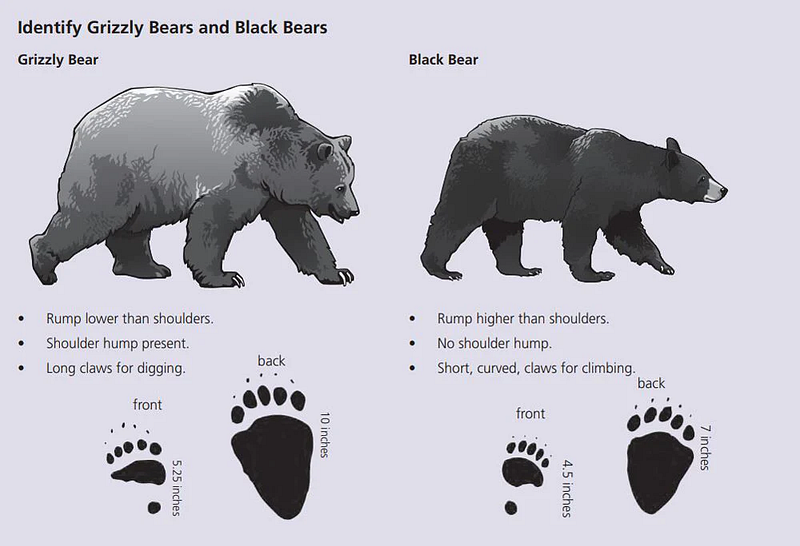
What should I do if I encounter a bear while hiking?
The U.S. National Park Service offers these tips (specific areas may have other or different tips):
- Identify yourself by talking calmly, so the bear knows you are a human, not a prey animal. Remain still; stand your ground but slowly wave your arms. Help the bear recognize you as a human. It may come closer or stand on its hind legs to get a better look or smell. A standing bear is usually curious, not threatening.
- Stay calm and remember that most bears do not want to attack you; they usually just want to be left alone. Bears may bluff their way out of an encounter by charging and turning away at the last second. Bears may also react defensively by woofing, yawning, salivating, growling, snapping their jaws, and laying their ears back. Continue to talk to the bear in low tones; this will help you stay calmer and won’t be threatening to the bear. A scream or sudden movement may trigger an attack. Never imitate bear sounds or make a high-pitched squeal.
- Pick up small children immediately. Do not make any loud noises or screams — the bear may think it’s the sound of a prey animal. Slowly wave your arms above your head and tell the bear to back off. Do NOT run or make any sudden movements. Do not make any loud noises or screams — the bear may think it’s the sound of a prey animal.
- Hike and travel in groups. Groups of people are usually noisier and smellier than a single person. Therefore, bears often become aware of groups of people at greater distances, and because of their cumulative size, groups are also intimidating to bears.
- Make yourselves look as large as possible (for example, move to higher ground).
- Do NOT allow the bear access to your food. Getting your food will only encourage the bear and worsen the problem for others.
- Do NOT drop your pack as it can provide protection for your back and prevent a bear from accessing your food.
- If the bear is stationary, move away slowly and sideways; this allows you to keep an eye on the bear and avoid tripping. Moving sideways is also non-threatening to bears.
- Do NOT run, but stop and hold your ground if the bear follows. Bears can run as fast as a racehorse both uphill and down. Like dogs, they will chase fleeing animals.
- Do NOT climb a tree. Both grizzlies and black bears can climb trees.
- Leave the area or take a detour. If this is impossible, wait until the bear moves away. Always leave the bear an escape route.
- Be especially cautious if you see a female with cubs; never place yourself between a mother and her cub, and never attempt to approach them. The chances of an attack escalate greatly if she perceives you as a danger to her cubs.
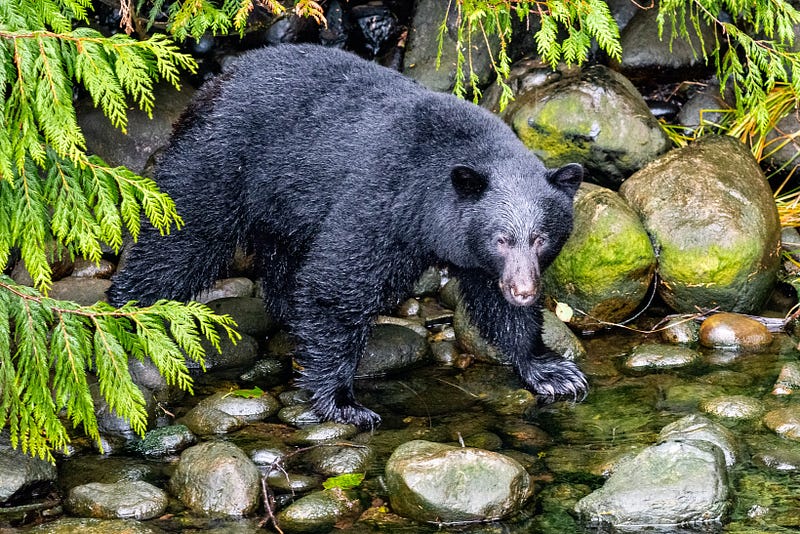
The USDA offers these Bear Smart Camping Tips:
- Store food and anything with an odor, including toiletries and the clothes you cook in, in bear-resistant containers or suspended at least 10 feet above the ground, at least four feet away from the tree trunk, and at least four feet down from the top of the tree or any large branches.
• Leave highly odorous foods like tuna, sausage, and bacon at home. Cooking intensifies and disperses food odors, so be extra careful to clean up and store food properly if you’re cooking.
• Citronella products have a strong scent that may attract bears. Don’t burn citronella candles in camp.
- Pack out all garbage and trash. Never bury garbage; bears will find it and dig it up, and you’ll be teaching them campsites are a good place to look for food. Don’t burn garbage or leftovers; a campfire is not hot enough to completely incinerate the remains, and the smell is very attractive to bears.
• Clean fish well away from your campsite and dispose of skin, entrails, etc. by leaving it out in the open, away from shorelines of lakes and streams, trails, and campsites. Hang bait with your food, and wash up thoroughly afterward. Some fishermen pack disposable plastic gloves to keep their hands odor-free.
- Don’t leave food, beverages, or packs unattended even for a few minutes. It’s an open invitation.
Familiarize yourself with all local regulations before you head out. Plan your travel to arrive before dark, in plenty of time to locate a good site with trees suitable for hanging your food bags, and set up your camp properly.
Experts recommend setting up your cooking, eating, and food and supplies storage area at least 100 yards from your sleeping area. If there’s not enough room, make sure smoke from your campfire won’t blow into your tent, and store your food well away from your sleeping area.
More about BA ( Bev)Little:
| Medium stories | Medium’s About Me| | My own Medium publications, Read All About It & True Crime Thirst| | Website| Facebook | Twitter| LinkedIn | Substack | 2022© All Rights Reserved. (The Caffeinated Writer / B.A. Little)
Read every story from B A Little. You’ll also get full access to every story on Medium. https://medium.com/@BALittle/membership


