
Be Passionately Curious
If intelligence is the destination, then curiosity is the journey
In Niklas Göke’s very capable think piece “If You’re an Intellectual, Act Like One,” the writer launches a robust defense of intellectuals. Rallying to a cause that’s obviously very close to his heart, he cites instances when he was personally “smart-shamed” by peers. Mr. Göke urges defiance from intellectuals as a valid, justifiable response to brain-shaming. To wit, “If you are an intellectual, act like one. It is long past time we come out of hiding and stop tolerating the bullying.”
His argument relies heavily on the tone in expressions of self-affirmation like “Black Power,” “Brown Power” or “We’re Here and We’re Queer, So Get Used to It!” — all coined by marginalized communities.
So, it is of great interest to me as he insists that “intelligence is one of our most malleable traits. It is available to anyone who wants it and works hard enough.” Given that intelligence is a quality anyone can strive for, I’m not confident that the discourse of liberation is the best or most relevant defense of it.
A person belongs to a marginal community by birth, whereas intelligence — to reiterate — “is available to anyone who wants it….” While the writer did not go so far as to offer any slogans of self-affirmation (thank God!) to intellectuals, his idea of defending intelligence is like bringing a rocket launcher to a knife fight.
Around the midpoint of Mr. Göke’s essay, curiosity enters the text as a way of explaining what motivates an intellectual’s efforts; as a defense against the charge that an intellectual is “showing off” when attempting to push the conversation at hand, further. And…? And he simply left curiosity there to wilt in the middle of his column.
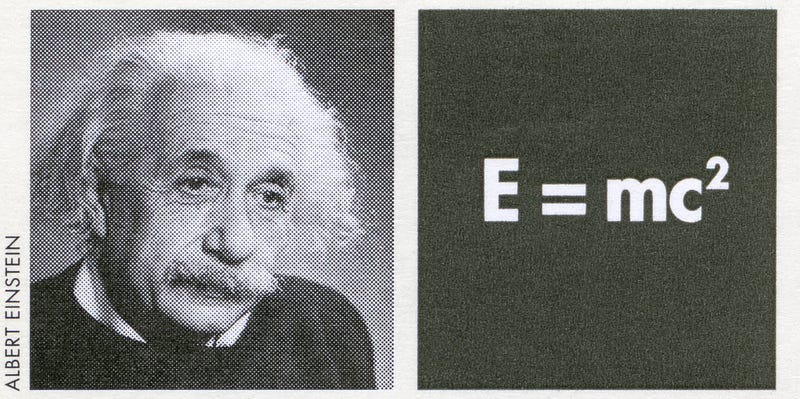
Enter Albert Einstein. I believe the legendary physicist is an apt reference since Mr. Göke name checks Germany’s legacy of intellectual achievement in letters and sciences. I quite admire what Albert Einstein had to say about curiosity. To quote:
I am neither clever nor especially gifted. I am only very, very curious.
Throughout Mr. Göke’s essay I sense there is a roiling rivalry between the intellectual haves and have-nots. Intellectuals need to stand up to the bullies. Einstein, on the other hand, who could have lorded his intellect, chose to emphasize the journey (curiosity), not the destination (intelligence). His rhetoric is truly empowering as it maneuvers around a silly polemic, to uplift humanity. Curiosity isn’t the purview of the so-called intelligentsia. We all have access to it.
As I think of it, perhaps the only just response to the anti-intellectual is, “So, what are you curious about? What question keeps you company when you’re alone?”
This is perhaps a topic for another writing, but I suspect there isn’t just a generally antipathy toward intelligence that prevails in contemporary times. Curiosity is also a hunted (i.e., not desired) quality. No doubt you’ve heard the maxim “curiosity killed the cat.” (By the by, I think dogs are far more curious than cats — but that’s a whole other argument I’d rather not wade into.)