avatarAlec Zarenkiewicz

Free AI web copilot to create summaries, insights and extended knowledge, download it at here

1936

Abstract

t. Created by events of the past and future, anxiety always occurs in the present. Most know how easy it is to get caught up in these alternate plains of existence; It’s nothing to beat yourself up over. I constantly find myself trying to control every part of my schedule using time. When I don’t know how long an event will last, I tend to spend the duration of moments worrying about it.</p><p id="c802">There is evidence to show that those who are less present show fewer signs of happiness. Harvard psychologists conducted a <a href="https://renevanmaarsseveen.nl/wp-content/uploads/overig8/Wandering%20mind%20is%20an%20unhappy%20mind%20-%20Killingsworth%20and%20Gilber%202010.pdf">study</a> using an app that collected data on participants’ thoughts, feelings, and actions. Despite the fact that negative moods are known to cause mind wandering, the researchers observed that mind wandering was not the consequence, but the <i>cause</i> of unhappiness. They concluded that the human mind is a wandering mind, and while wandering about something other than the present can be a useful cognitive tool, it comes at an emotional cost.</p><p id="7c47">In a time when attention is the most lucrative commodity on the market, staying present is an arduous task. The present moment is burdensome, albeit it is fleeting by nature. During meditation, some try to clear the apps running in the background and silence all notifications on the organic computer. I like to let the pop-ups roll and find out how many tabs I left open.</p><p id="47b8">Thought labeling, thought prevention, and detachment from any connotations of thought are common ways meditators deal with the conveyor belt of subconsciousness. For me, grounding myself in the moment starts with the breath. Then, I move on to observing my body, the sounds around me, and any other senses that are activated. Finally, I let the floodgates of my psyche free, returning to my bre

Options

ath any time I notice my ship sailing too far from the present.</p><p id="b41d">While listening to a podcast, I heard David Nichtern, a Buddhist teacher, describe the idea of the “fourth thought.” He explained that the first thought is of the past, the second thought is of the future, and the third thought is of the present. The fourth thought, however, is the moment when one realizes they were just present. Like sand running between your fingers, the present moment is in flux. Try to catch a grain and be here now.</p><div id="3079" class="link-block"> <a href="https://readmedium.com/the-many-types-of-meditation-47bf5b33c308"> <div> <div> <h2>The Many Types of Meditation</h2> <div><h3>The Second of Seven Lessons from 1,000 Meditations</h3></div> <div><p>medium.com</p></div> </div> <div> <div style="background-image: url(https://miro.readmedium.com/v2/resize:fit:320/1*V9fXH92EdW-1xGxT7RMV8w.jpeg)"></div> </div> </div> </a> </div><p id="e016">Not a member yet? Support my writing on Medium by joining through the link below:</p><div id="a9e6" class="link-block"> <a href="https://medium.com/@awzarenk22/membership?source=publishing_settings-------------------------------------"> <div> <div> <h2>Join Medium with my referral link — Alec Zarenkiewicz</h2> <div><h3>Read every story from Alec Zarenkiewicz (and thousands of other writers on Medium). Your membership fee directly…</h3></div> <div><p>medium.com</p></div> </div> <div> <div style="background-image: url(https://miro.readmedium.com/v2/resize:fit:320/0*NUNOoo_kNJP-Ie6h)"></div> </div> </div> </a> </div></article></body>

Be Here Now

The First of Seven Lessons from 1,000 Meditations
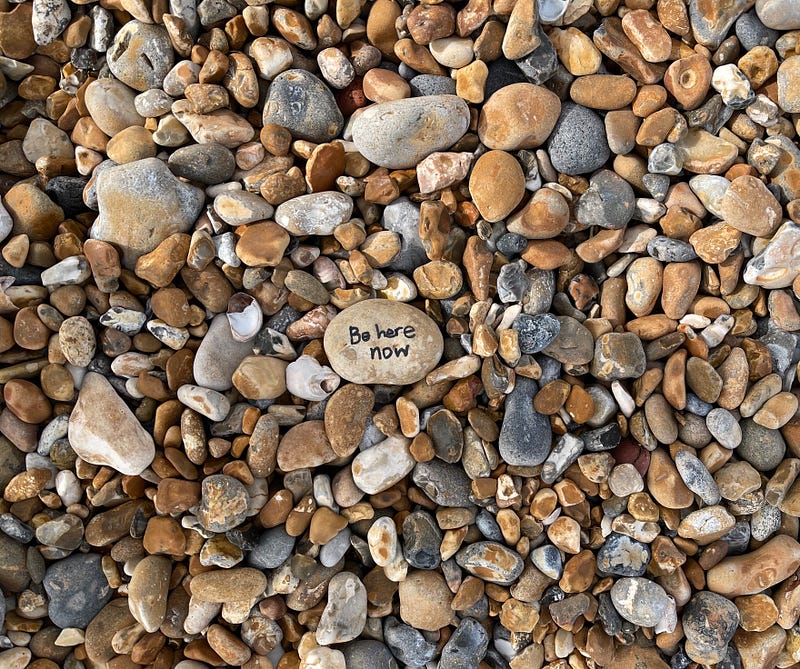
Photo by Shantanu Kulkarni on Unsplash

Last year, I set a goal to meditate everyday to cope with my lifelong companion: Anxiety. I recorded my sessions and managed to reach 1,000 meditations by the end of the year, blowing my primary target out of the water.

Being present is an atypical state for anxious folks, but a useful tool when faced with change. Although change is a natural condition of life, it can feel like a toxin. Presence is the antidote. This is the first of seven impactful lessons I learned during my meditation journey.

“Early in the journey you wonder how long the journey will take and whether you will make it in this lifetime. Later you will see that where you are going is HERE and you will arrive NOW…so you stop asking.”

-Ram Dass, Be Here Now

Anxiety was once described to me as the feeling one gets when they want to escape the present moment. Created by events of the past and future, anxiety always occurs in the present. Most know how easy it is to get caught up in these alternate plains of existence; It’s nothing to beat yourself up over. I constantly find myself trying to control every part of my schedule using time. When I don’t know how long an event will last, I tend to spend the duration of moments worrying about it.

There is evidence to show that those who are less present show fewer signs of happiness. Harvard psychologists conducted a study using an app that collected data on participants’ thoughts, feelings, and actions. Despite the fact that negative moods are known to cause mind wandering, the researchers observed that mind wandering was not the consequence, but the cause of unhappiness. They concluded that the human mind is a wandering mind, and while wandering about something other than the present can be a useful cognitive tool, it comes at an emotional cost.

In a time when attention is the most lucrative commodity on the market, staying present is an arduous task. The present moment is burdensome, albeit it is fleeting by nature. During meditation, some try to clear the apps running in the background and silence all notifications on the organic computer. I like to let the pop-ups roll and find out how many tabs I left open.

Thought labeling, thought prevention, and detachment from any connotations of thought are common ways meditators deal with the conveyor belt of subconsciousness. For me, grounding myself in the moment starts with the breath. Then, I move on to observing my body, the sounds around me, and any other senses that are activated. Finally, I let the floodgates of my psyche free, returning to my breath any time I notice my ship sailing too far from the present.

While listening to a podcast, I heard David Nichtern, a Buddhist teacher, describe the idea of the “fourth thought.” He explained that the first thought is of the past, the second thought is of the future, and the third thought is of the present. The fourth thought, however, is the moment when one realizes they were just present. Like sand running between your fingers, the present moment is in flux. Try to catch a grain and be here now.

Not a member yet? Support my writing on Medium by joining through the link below:

Self Improvement
Mental Health
Lifestyle
Meditation
Mindfulness
Recommended from ReadMedium