


Be Careful When Reading People’s Success Stories
Our growth is at stake if we consume them wholesale
Once, someone asked how I juggled two jobs and still looked so energized when she was drained by the day’s end. Let’s call her Anne.
I paused. Should I tell Anne the not so glamorous truth?
We consume people’s success stories hungrily, on Medium and elsewhere. Influencers boast astounding income and convince us we can do it too.
So we get inspired and ready to try these formulae — only to encounter days when we feel so alone, devoid of ideas despite having a creative routine, bogged down by life despite all the motivational content in the world.
What’s happening here?
How can our love for reading people’s success stories be, well, not enough to keep us going like an Energizer Bunny (now you know my age)?
Is it good to stay ‘safe’ through vicarious living?
In stories, we travel to amazing (or appalling) places and situations. We hobnob with the rich and help the poor. We get a free pass to live the life of almost anyone on this planet who publishes their journey — including their intimate moments that even their loved ones aren’t privy to.
It’s a bit like my voyeuristic habit of peeping into strangers’ houses on my walks. I get to wonder about their family arrangement and lifestyle without actually living their life. I stay safe from the outside.
While vicarious living might be good for learning from exemplars, it’s not so ideal for actual daily living. We need to live our own lives and create our own stories, to find out what really works for us.
Other people do not have our exact blend of personality traits, preferences, experiences, upbringing, contexts, environment, and worldview. So while we can borrow their actions, applying them in our lives may or may not work as smoothly.
I’ve read copious stories about people living their dreams, growing through the worst of circumstances, staying successful through strategy and resilience.
But I’m not the one slogging or suffering to achieve their hard-won lessons. I stay cloistered in my bedroom comfortably reading about hardship.
Is it any wonder why millions skim self-help content, but we don’t see a corresponding surge of superheroes?
We stay safely ignorant while other people grow tumultuously. We can borrow their spirit, but we can’t make it stick if we don’t put in the hard work to internalize their gifts.
For sure, reading about someone’s epiphany after a disease like cancer or losing everything in war but still wanting a child will inspire us. It will even propel some of us in similar situations to greater heights of growth.
Yet it’s still a fundamentally safe way to admire someone from afar without the deep, sticky learning that living an active life entails.
Knowing what ‘mistakes’ to avoid may not be ideal
Many of us want success, but don’t want to make mistakes in the process. This paradox explains why we lap up other people’s success stories.
Throw in the word “shortcut” or “easy” and we become slavish dogs to narratives that promise success.
Yet success is built on mistakes. Failures are an “essential prerequisite” for success — but only when we learn from them.
Even when we learn from other people’s mistakes, we will still make our own mistakes — and that’s a good thing. The more we accept this truth, the more we’ll start creating our own success — and stop overdosing on people’s success stories — with a much reduced fear of “failure”.
Don’t take it from me; take it from educational theorist D.A. Kolb. He’s the brain behind the Experiential Learning Cycle. Here’s how he describes it:
“Learning is the process whereby knowledge is created through the transformation of experience.”
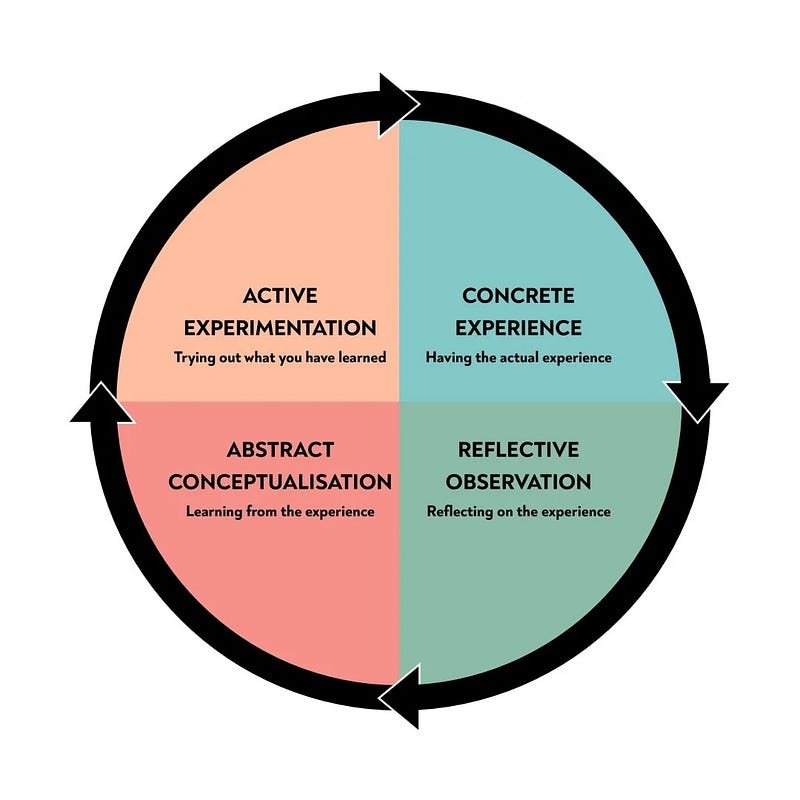
According to Mcleod’s article of Kolb, you don’t just stop at “[developing] new concepts” in your life through concrete experience, including “[reinterpreting existing] experience in the light of new concepts” (yes, these can belong to other people).
You also formulate your own idea that leads to active experimentation by trying out what you have learned.
This is why “effective learning only occurs when a learner can execute all four stages of the model. Therefore, no one stage of the cycle is effective as a learning procedure on its own”. In my life, my best lessons are the big mistakes I made and their unforgettable wisdom that I’m still living by.
So go ahead and read other people’s stories, but don’t forget to make it your own and experiment actively on your insights. It’s only then that your learning will truly stick.
We like knowing how the story ‘ends’, but is that life?
Let’s face it: we love happy endings. We watch episode after episode on Netflix to not just know the plot, but also find out if conflicts are resolved.
Someone I know told me she’d watch the ending of every new series first before deciding to commit to it. She thinks stories with sad endings aren’t worth her time.
This is why other people’s success stories are so addictive: they tend to look neat, contained, doable. Years’ worth of toil and tears can be digested in a one-minute skim and we think we can do it too.
Yet you only know how someone’s story “ends” because that person used a neat narrative framework and chose to zoom in on the “climax” — e.g., “My business then became a seven-figure one” — and “resolution” — e.g., “I’m now happily running a booming business after acting on my passion”.
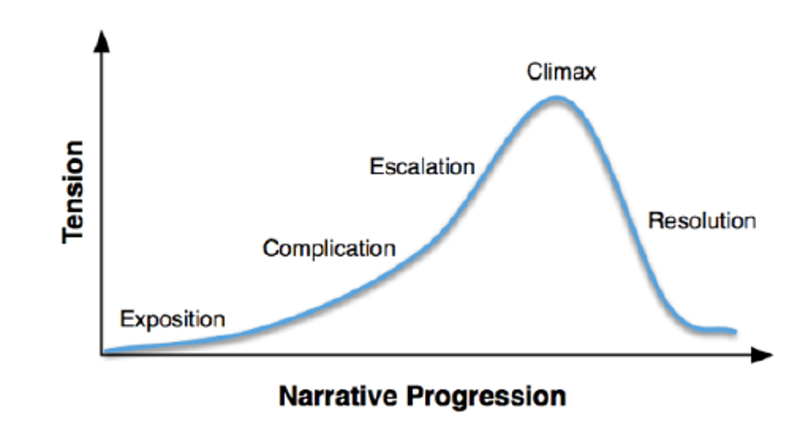
Look, life is gray and full of false starts and inconclusive endings. Real life is messy, ambiguous, and contradictory. “Conflicts” are never really resolved. In fact, it’s a constant struggle, e.g., “Do I live the life I want or give in to this temptation now?”
No one really spends time talking about tough slumps, days when they feel like taking a break from maintaining their success, administrative and financial frustrations that still pop up despite outsourcing such work.
They don’t make a good story, after all; we are fans of shocking conflicts and bold resolutions.
But is that “resolution” you just read really the “end”? These people’s stories are still unfolding in real life, as I type. Even the biographies of dead people are edited and second-hand. We don’t see all the untidy bits that don’t fit into a neat story curve.
And maybe we don’t want to see them either: it’s a lot easier to digest clean, clear, and concise frameworks for success without getting dirtied by the murky swamp in the way.
If we do know the messy truth behind what successful people have to handle daily, would we still want their “story” for our own lives?
Curation is easy; consuming messages tailored to a narrative arc is deceptive.
When we don’t see what people cut out, we often miss the fact that catharsis is not guaranteed, our identities are changing as we grow, and success is a constant negotiation where pain is unavoidable.
Call to action
Back to Anne. I could have gone along with her misperception and shared my “success story”. Instead, I told her my inner conflicts and vulnerabilities — which didn’t look too different from her predicament.
So live and write your own success with the messy bits for others to learn from. The entangled parts are as much a part of your story and helps people make better decisions for themselves.
When consuming “neat” narratives, don’t forget what the narrative arc omits, so that you are aware of opportunity costs.
Also, effective learning needs action and first-hand experimentation. If you’re overconsuming success stories and wondering why you’re growing more passive, you need to reflect on their ideas, come up with your new or modified learning, and take action on that to prototype the life you want.
Perhaps Walt Whitman captures the messiness of life best:
“Do I contradict myself?
Very well then I contradict myself,
(I am large, I contain multitudes.)”
Don’t trim your multitudes to fit another person’s curated success arc.
Reflect on what you read and act wisely, to truly live your own life.
What’s your greatest lesson from other people’s “success stories”? I’d love to hear from you!