
Be a More Effective Writer
Use these simple guidelines.
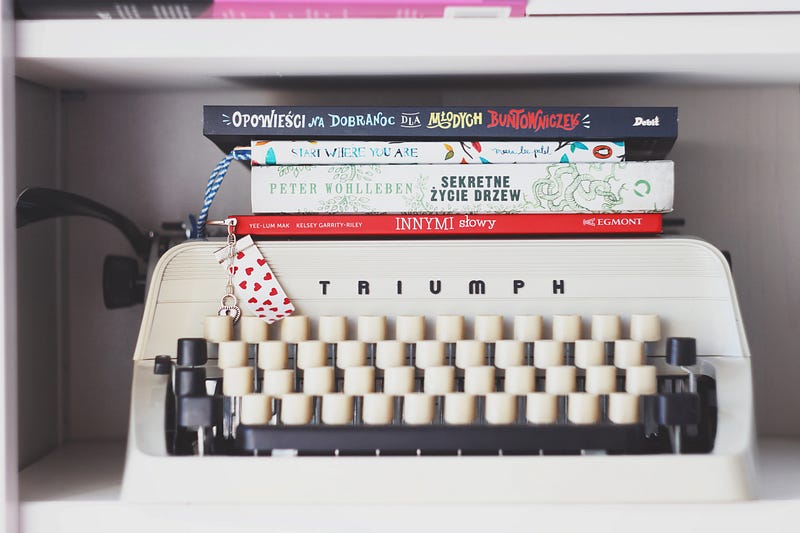
I’m guessing if you’re reading this, you’re a writer.
We’re all writers.
Whether you compose text messages, emails, Instagram captions, or blog posts, you are a writer. Today’s social media landscape demands we all write.
Writing is thrilling because you can always improve — if you put in the effort.
Below is some of the best advice I’ve gotten to be a more effective writer.
Here are some guidelines to help you write better
Learn the rules, and then break them. Understand the principles of good writing first, so you know how and when to break the rules to enhance your voice and content, making both more effective. Write a fractured sentence every so often. It sets the pace.
Punctuation. Sets. Pace. As well.
I keep several grammar books on my desk while I write. The best way to improve your craft is to read about your craft.
In Anne Stillman’s book, Grammatically Correct, she points out there aren’t really any steadfast rules for writing. A writer’s job is to determine which rules to stand by and which rules to bend to serve their story and produce the desired outcome.
Be concise. Never use three words when you can use one. Your reader’s time is precious to them, and there’s a lot of competition for their time. If you want their trust, don’t waste their time. Write with clarity, it adds to your style.
Writer’s block. Writer’s block is a cover for when you don’t feel like writing. We all have days when we don’t feel like writing. That’s OK. Sitting in the chair and doing the work is hard and requires effort, more on somedays than others. Ten times out of ten, you will be able to write something if you sit in the chair, even if it is only for ten minutes. Inspiration is everywhere.
Edit. Revise, revise, revise. For every hour you spend writing, spend three hours editing. Get the draft counter going. Editing is what you should’ve done immediately after your first draft. After you do it the first time, do it again.
Write your shitty first draft and then keep going. Everyone sucks when they first start writing seriously. Let your good enough have time to become great by being good enough first. Perfection doesn’t exist, or rather, don’t allow it to live around your work — it will prevent you from writing. Share your work even if it isn’t perfect. I did, and now I’m making money writing. Had I allowed my perfectionist tendencies to stop me from sharing, I wouldn’t be making money from my writing now.
Anne Lamott said it best in her book Bird by Bird,
Perfectionism is the voice of the oppressor, the enemy of the people. It will keep you cramped and insane your whole life, and it is the main obstacle between you and a shitty first draft. I think perfectionism is based on the obsessive belief that if you run carefully enough, hitting each stepping-stone just right, you won’t have to die. The truth is that you will die anyway and that a lot of people who aren’t even looking at their feet are going to do a whole lot better than you, and have a lot more fun while they’re doing it.
Don’t use too many adverbs. Overusing adverbs is a sign of amateur writing. A man in a story isn’t extremely boring — he’s prosaic; the water isn’t very hot — it’s boiling.
Stay away from passive voice. Rework passive phrases into active phrases. Example: “A scathing review was written by the critic” is passive; “The critic wrote a scathing review” is active.
Comma-then. Don’t use the word then as a conjunction without a subject following it. Jonathan Franzen wrote an excellent article called “Comma-Then,” check it out here, it is worth the read.
Don’t use commonly overused words; about, actually, almost, exactly, nearly, basically, simply, somehow, etc.
Show, don’t tell. This is the job of the writer. But what does it mean? Whenever possible, the writer should enable the reader to experience the story through feelings, actions, thoughts, senses. And not entirely through the author’s exposition and summarization. The writer’s goal is to allow her reader to experience the author’s ideas through well-chosen textual details and not heavy-handed adjectives and adverbs.
Avoid using idioms. Example: “It’s raining cats and dogs.” Idioms are like clichés, avoid them. They are overused and ordinary.
Don’t repeat yourself. Don’t say the same thing over and over again. Say it once. When you repeat yourself, your readers get bored and may doze off.
Read your writing aloud. Voice often has to do with rhythm. You will hear the rhythm of a piece when you read it aloud. Anything clunky and forced will be noticeable, as will spelling and grammatical mistakes. Rework anything that doesn’t flow when reading aloud.
Read like a writer. When you read anything, read like a writer. Have a highlighter in hand and underline or highlight what interests you. Write ideas down in a journal. Flip through it when you need or want to write about something.
Read for pleasure too. Don’t ever stop reading for pleasure. The best writers read regularly. Curling up in bed on a rainy day and diving into a novel you’ve been dying to read, or sitting on a beach with a love story are life’s simplest joys.
Write every day. Writing is a muscle that strengthens through exercise. No matter where you are in your writing career, there is always room for improvement. Writing every day will improve your writing faster than any other suggestion on this list.
Write on.
Below is the best writing advice I’ve ever gotten.
Jessica is a writer, an online entrepreneur, and a recovering perfectionist. She lives in Los Angeles with her extrovert daughter, two dogs, and two cats.


