
Be a Flower.
They seem to know the secret
How many flowers have you noticed today?
Think of your daily walks. Do you look around your surroundings and notice small things or are you just walking to where you need to go?
To notice is to look actively and once you make looking a habit, you will realize the world is full of small surprises. Shortly, you will notice so many new things, so many moments which make you appreciate more.
Take flowers for example, that colourful branches that you’ve seen many times before. There is nothing out of the ordinary about being a flower, there are more important things in the world and nobody has time to stop and smell every flower.
You see, the fragile flowers take their time to mature and blossom, show their colours to the whole world yet, we pass them by as if there is nothing special about them. Emily Dickinson reminds us in her poem about ecology,
“To be a flower is a profound responsibility”
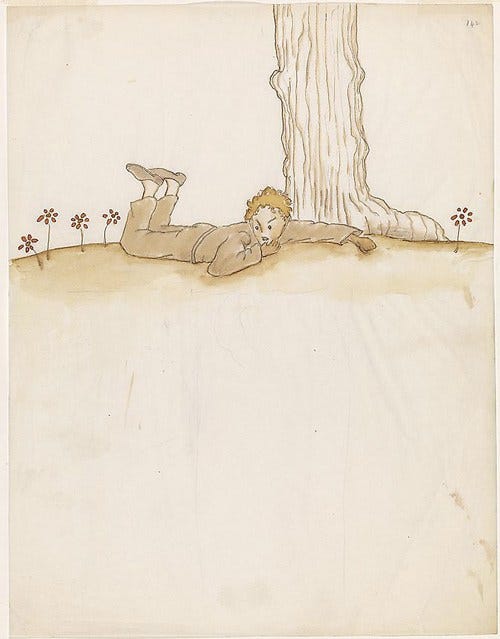
One of the most prominent “children’s” books, Antoine de Saint Exupery made its hero’s sole quest revolve around a single flower. Little Prince’s fragile and self-concerned rose is hungry for love, stubborn ye so ephemeral, capable of love and cruelty, as if it is almost a miniature version of what makes us human.
The concept of time changes with the priorities we put on ourselves as if it is the substance we are made of but Micheal Pollan considers time as the tendril by which flowers exert their existential pull on us:
Our experience of flowers is so deeply drenched in our sense of time. Maybe there’s a good reason we find their fleetingness so piercing, can scarcely look at a flower in bloom without thinking ahead, whether in hope or regret. We might share with certain insects a tropism inclining us toward flowers, but presumably, insects can look at a blossom without entertaining thoughts of the past and future — complicated human thoughts that may once have been anything but idle. Flowers have always had important things to teach us about time.
Time itself is a paradox both a forward momentum and an antidote for the anxiety of being alive. The moment you realize you are mortal, you also realize the future. Just like the philosopher Etel Adnan said in her meditation on impermanence and transcendence.
And added, “You fall in love with a Time you will never perceive.”
Hence the reason it flies when you are enjoying it or kids who never realize when it is time for dinner… Yet we cannot seem to find the time Adnan talks about. The time which astonished Darwin. After contouring the evolutionary history of flowers he writes:
Look into a flower, and what do you see? Into the very heart of nature’s double nature — that is, the contending energies of creation and dissolution, the spiring toward complex form and the tidal pull away from it.
Apollo and Dionysus were names the Greeks gave to these two faces of nature, and nowhere in nature is their contest as plain or as poignant as it is in the beauty of a flower and its rapid passing. There, the achievement of order against all odds and its blithe abandonment.
There, the perfection of art and the blind flux of nature. There, somehow, both transcendence and necessity. Could that be it — right there, in a flower — the meaning of life?
Of course, one “true” meaning is not possible to put a finger on. Meaning is just what we make of life, our mortality as a part of the universe that made us.
“It is the time you have wasted for your rose that makes your rose so important,”
The fox says to the Little Prince.
“All the stars are a-bloom with flowers,”
the Little Prince says to the pilot before he returns to that fathomless region of spacetime from which he had visited.
In Christopher Syke’s 1981 BBc documentary “ The Pleasure of Finding Things Out”, Nobel-winning physicist Richard Feynman (May 11, 1918–February 15, 1988) shares an ode to flowers:
I have a friend who’s an artist and has sometimes taken a view which I don’t agree with very well. He’ll hold up a flower and say “Look how beautiful it is,” and I’ll agree. Then he says “I as an artist can see how beautiful this is but you as a scientist take this all apart and it becomes a dull thing,” and I think that he’s kind of nutty.
First of all, the beauty that he sees is available to other people and to me too, I believe…
I can appreciate the beauty of a flower. At the same time, I see much more about the flower than he sees. I could imagine the cells in there, the complicated actions inside, which also have a beauty. I mean it’s not just beauty at this dimension, at one centimeter; there’s also beauty at smaller dimensions, the inner structure, also the processes.
The fact that the colors in the flower evolved in order to attract insects to pollinate it is interesting; it means that insects can see the color. It adds a question: does this aesthetic sense also exist in the lower forms? Why is it aesthetic?
All kinds of interesting questions which the science knowledge only adds to the excitement, the mystery and the awe of a flower. It only adds. I don’t understand how it subtracts.
Please take everything in, read it again and embrace what made you and what is still the essence of who you are. Allow time to pass through, see how many moments you missed and hold them dear to your heart. Look at every flower that you notice and whisper to them
“You matter and I love you”
Thanks to Jennifer Latour for existing in between the notion of time and its staticness.
I am glad you made it this far! Thank you so much for taking the time to read what I had to say.
If you would like to stay connected please consider following and subscribing.
I have been working on a book on how to look at art for a while and it is finally out!! I am super happy and would be so proud if you check it out here.
And if you like poems you should check out Lemon Scented Poems where I share my poems along with other writers I love.


