
Ode to the Office Park
I find office parks fascinating and creepy, and inherently off-putting; I feel the same about highways. Both of them go hand in hand as specific fabulations of capitalism. My interest in office parks and highways is equal parts intrigue and disgust, wrapped in a love of mid-century modern. It started initially because I got to visit a few office parks for an old job. I transitioned from working as a photographer and perma-freelancer to full time tech employee in 2015, when I worked for IBM Watson as a design researcher.
Office parks feel strange, in a way that feels both specific and difficult to describe, perhaps because they feel as planned as theme parks and also extremely banal as a regular office. Every single office park I’ve visited, regardless of the company and location, all have an inherent sameness, like airports or bus terminals. IBM’s office parks on the outside looked quite different, but inside were all the same: the same furniture, the same art and the same IBM branded Sharpies. Some office parks were new buildings, adjacent to other office parks, like Austin, sitting on the outskirts of town but surrounded by Shake Shacks and other chain restaurants. Some were in high rises (though, I guess that’s just technically a building), and some were older, mid-century modern style buildings built in the ’60s near small little townships and villages surrounded by pebbled walkways that were en vogue in the 70s, and trees and trees and trees. People were there, too, but like every office park we didn’t really speak to each other, just a nod and hello while we went on our way.
Part of what I find intriguing, and off-putting about office parks is the separation and isolation they have from actual communities. That’s also what is unsettling about Lumen’s set design; the company within the TV show Severance. I watch Severance with a kind of obsessive nostalgia, and feel simultaneous creepiness and comfort given my history of working in office parks. That’s part of the perversion. Office parks are strange, and office parks up in the Northeast seem older, vintage, and their now ‘outdated’ design lends to the kind of horror movie ethos as untouched relic, still replete with pastoral capitalism. The architectural design of office park buildings, particularly Severance’s which is filmed at Bell Labs, designed by Eero Saarinen in the late 1950, felt of that era. Juxtaposed to Hulu’s also creepy miniseries on technology, Devs, with its forest-like maze of a campus, floor to ceiling windows, and all the accruement expected of a FAANG company, both settings are deeply unsettling and creepy but in their own specific ways.
Watching Severance and Archive 81 (RIP- canceled before it’s time), I was transported immediately back to my 2015. So much of the IBM lore is rooted in design (even if that’s not directly apparent from the outsider) and its office parks are a part of that lore. As an IBM-er (as we were called), I got to visit a few different campuses on business trips. The design of the offices, including the amenities, is one way to entice employees to join a company, but equally important, the design of the office helps reinforce the lore of the company itself.
This was particularly true with IBM. Inside the company when you’re being onboarded and inducted, design is revered in the job materials (at least, the materials I, as a designer, were given), and the design of the office is similar to any other tech company. Free and low cost snacks abound, bright colors but with a minimal aesthetic. There’s a kind of specific through-line of design that you see physically and then within the design materials you access as an employee, be it presentation templates, the typography used in employee only documents, and the look and feel of the products. It’s a kind of meticulous intentionality, and this was also prevalent within the on-boarding, but this kind of meticulous intentionality was mirrored in Severance as well.
I traveled up to Armonk campus from New York via train, during my first week onboarding. The campus sat back, hidden behind a winding road and blanket of trees. Inside, I sat with business executives, hardware designers and research scientists, none of whom I would see again during my tenure at IBM. We signed documents, got keycards and watched the same 15 minute video on the history of IBM (leaving out WWII). We were told how important design was, that Ray and Charles Eames designed an IBM pavilion for the 1964’s World’s Fair, and created numerous design exhibitions for the company. Eames chairs were frequently spotted at different office parks, and the work of Paul Rand, Saarinen and the Eames are still frequently referenced in current IBM design materials. These kinds of tactics worked as a part of on-boarding, and as a form of induction, inclusion and seduction. At the time, I found this intoxicating. Designers want to know that design matters. And that includes the office perks, and the office parks. IBM’s office in New York had a Jeff Koons balloon sculpture in the lobby. Not my style, but it still served to underscore this truism: design matters here, and no cost would be spared when it came to making that clear.
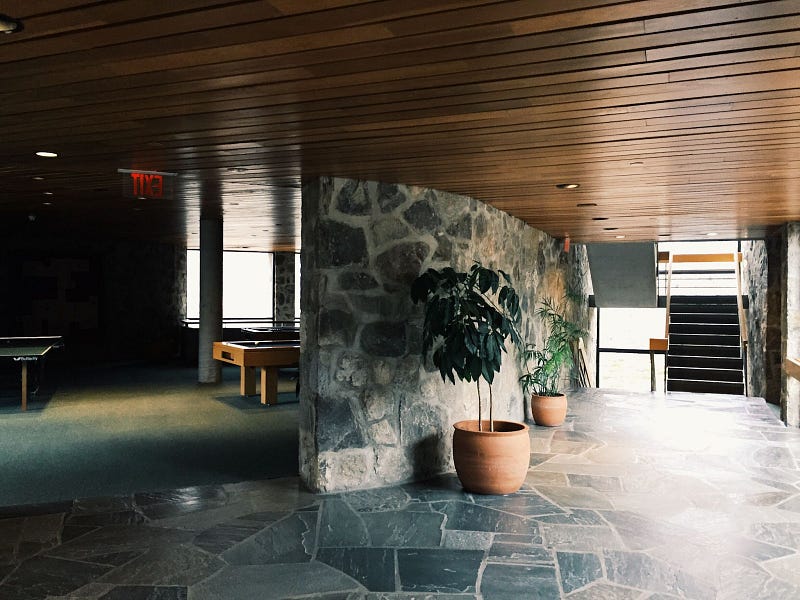
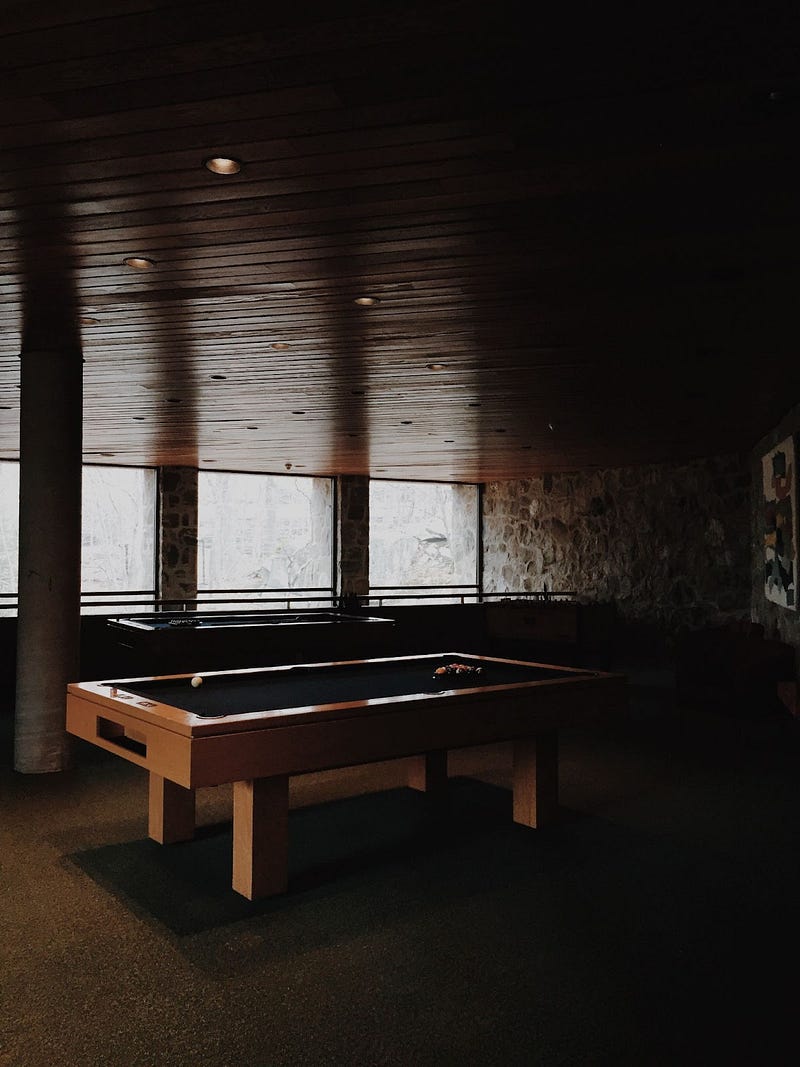
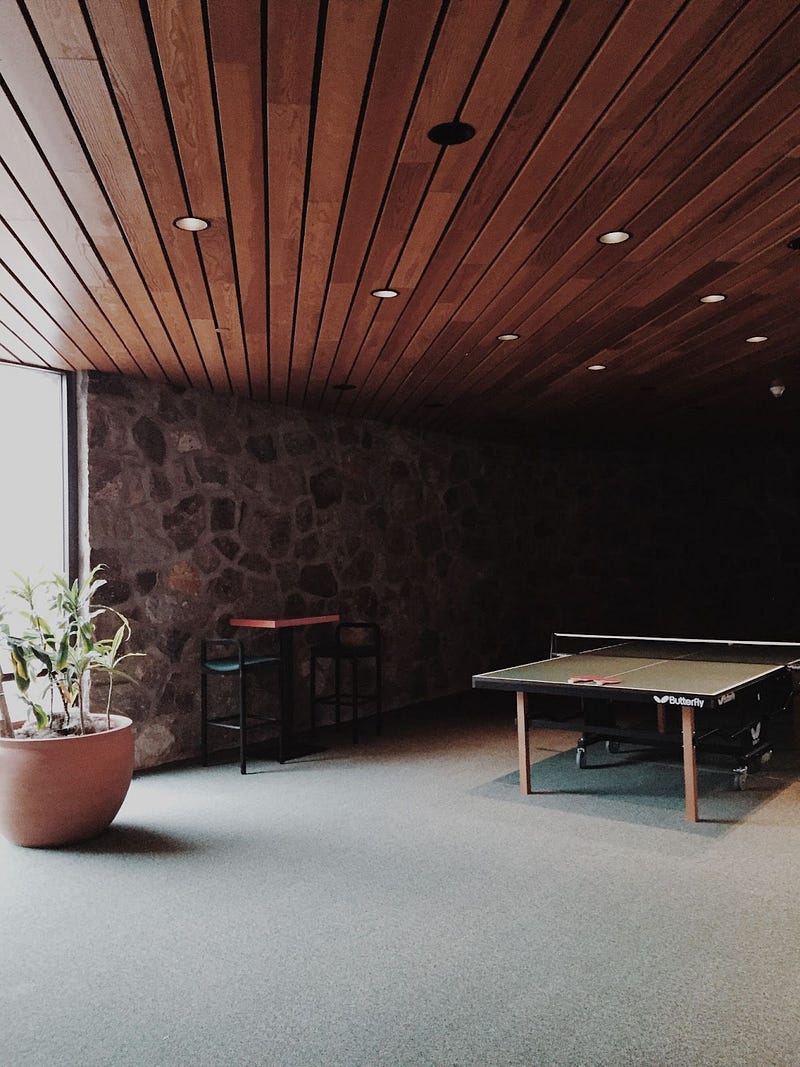
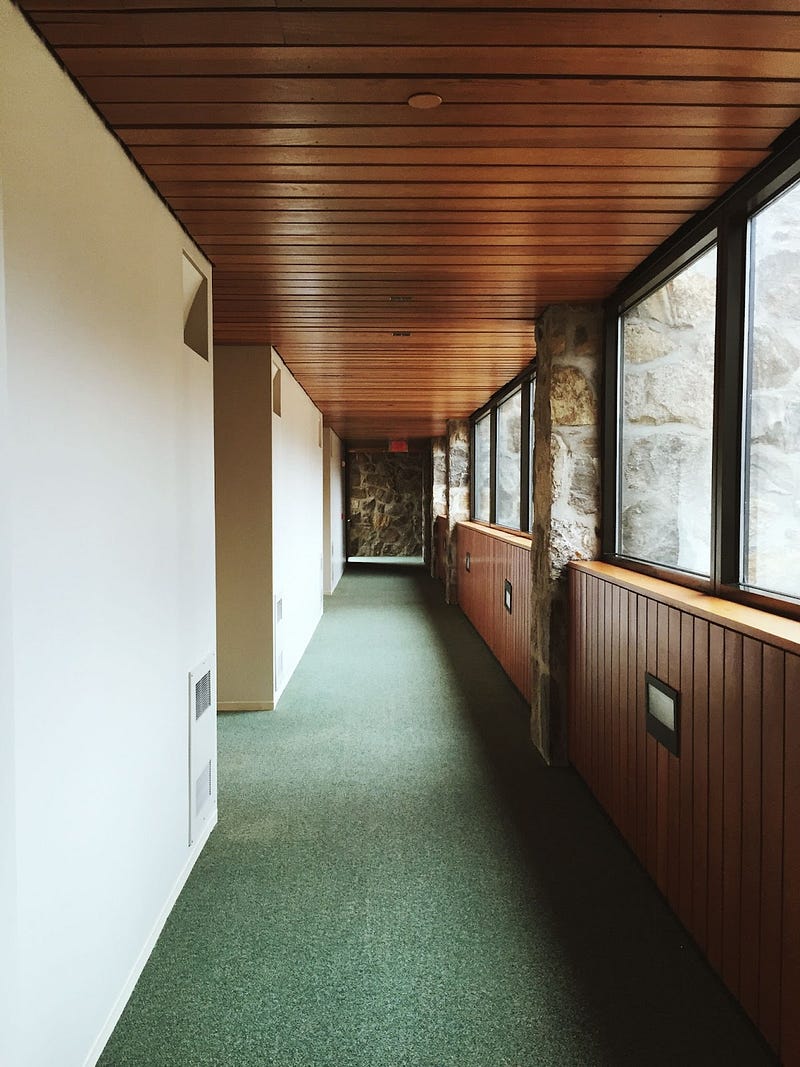
During my onboarding, we spent the night near the campus in a nearly deserted old lodge IBM had purchased at some point in the 1980s. This felt the most like Archive 81. The lodge looked like something out of the Shining. Apparently, people could rent it out for weddings or events, but it’s unclear if that ever happened. I thought I was the only person there, though in the morning, I heard only one other door open and close. Going down for breakfast, there were two people working, one making eggs, and another at the front desk. I wasn’t hungry; I decided to walk to the main building, it was just a few minutes away inside of this somewhat empty campus.
****
In researching for this post as to why I was drawn to and repulsed by office parks, I went down a rabbit hole of articles on office park architecture (saved on this growing are.na board), particularly on the work of Louise Mozingo, and the concept of ‘pastoral capitalism.’ In an article for Collectors Weekly, Mozingo described how current and old office parks are still built following specific landscaping ethos over a century old still prevalent in suburban universities, office parks and neighborhoods promoted by people like landscape architect Frederick Law Olmsted. In a quote for that article, she mentioned how, “[landscape Olmsted] called his ideal park landscape ‘pastoral.’ He was well-read enough to understand that this combined elements of wild nature with agricultural nature.”…In response to these shifts, major corporations embraced the notion that suburban pastoral settings were beneficial to their workers and their business.”
Office parks aren’t new concepts, with companies and CEOs building corporate campuses in the 1920s, and with pushes for more office parks in the 1950s, specifically focused on suburbs. At the time, “CEOs realized that horizontal architecture immersed in a park-like buffer lent big business a sheen of wholesome goodness. The exodus was triggered, in part, by inroads the labor movement was making among blue-collar employees in cities. At the same time, the increasing diversity of urban populations meant it was getting harder and harder to maintain an all-white workforce.” Thus, the initial role of office parks was seclusion, and exclusion, by a kind of gilded, any means necessary.
Severance, with its labyrinth of white hallways, solid colors, and windowless rooms and Devs with its biting nearly 1 to 1 remake of current tech office parks, except for its 5 story-sized little girl statue (definitely creepy). New and old office parks still engage with this separatist geography of being closed off spaces inaccessible to community members, but internally, their design is one of pastoral capitalism. Even if we don’t see the outside of Severance, it is a separated space from the rest of the town it sits near. Devs, with its light up trees, and acres of outdoor space, is not dissimilar from the Facebooks, IBMs, Microsofts, and Googles with their rooftop gardens, manicured lawns, or other manufactured greenery, all cut off from the ‘rest of the world.’
The office park feels isolated because it is. It’s self contained, sharing no information or resources with the outside. If you’re living in Menlo Park, but don’t work for Facebook, you can’t access its restaurants or rooftop parks. Writer Margaret O’Mara beautifully articulates this tension of office parks, that “large tech companies tend to build in the same way. They create workplaces as full-immersion experiences: places where employees can find all the things they need without straying too far from their desks…There are hives of innovation in buildings and campuses that are literally sealed off from the public, even when they are located in the heart of the city. There are armies of bright, politically engaged, socially conscious techies working in and leading companies that can remain oddly disconnected from civic life.” Being in an office park, you’re only surrounded by your own fellow co-workers, but that can feel as alienating and unknown as being surrounded by strangers, because they are strangers. Even when a company is sold as a community, it’s not exactly one. The office park then heightens that artificial feeling, because everything about it is artificial.
This ‘cut-off’ design is key, and intentional, given also the placement of office parks in or near suburbs. Mozingo calls this a “separatist geography” which is exactly what it is. But there’s something more to office parks, because being inside of one, you feel a kind of aching intention. It wants to be more than an office, it wants to be more than a building, but only for certain people.O’Mara echoed this in her article, that for “over more than 100 years, American high-tech companies have chosen to be cathedrals rather than bazaars. Propelled by technological needs, practicality, and a deeply rooted set of ideas about how environments shape productivity, technology decamped to self-contained, suburban places.” Office parks are the cathedrals but dressed up as bazaars, with their amenities only for their workers.
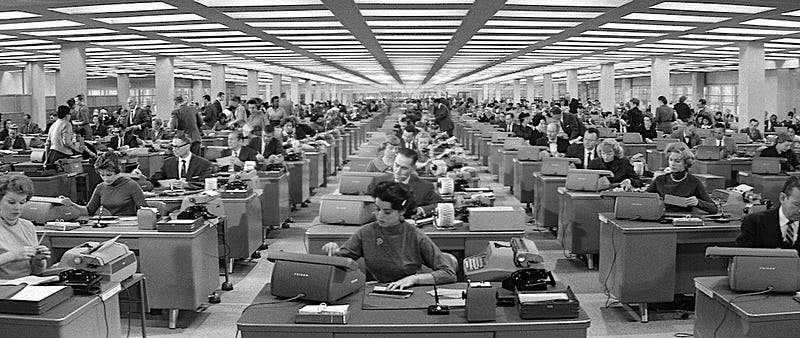
It’s hard not to draw parallels of tech office parks to Lumen, partially with how much Severance satirizes corporate office culture, partially the almost prograndized self- identity and pride instilled into workers, and partially the secrecy. Like the opening scene in “the Apartment”, where CP Baxter describes his company and staggered entrances and exists, behind rows and rows of hundred desks, it’s nearly identical to Google, Facebook, IBM, Lumen and hundreds of other companies, there were rows and rows of desks and floors where I have no idea what someone works on, and areas of the company I never had access to.
****
Why be intrigued by office parks given their problematic nature? Similar to malls, it’s the bigness of it’s design, along with, perhaps sooner than later, the awareness that they will disappear as an irrelevant artifact of a specific kind of capitalist past. There’s something more to them, too. Visiting an office park, like visiting a mall on the outskirts of a town, you can see it and feel it dying, or hiccuping. It’s need and its draw is a lot less now than it was before. Big tech companies are crowded, teeming with people, and IBM was too, but the pandemic changed that. The bigness of these offices is not in isolation. Underneath is the friction of everyday reality, something highlighted by historian and researcher Allison Arieff in terms of the monstrous traffic and inconvenience created by office parks, particularly the commuting undertaken by Silicon Valley workers. Office parks are often not that accessible by public transportation, nor are they accessible to the surrounding neighborhoods and communities.
****
One of the first scenes in Severance is Adam Scott crying in his car, in a parking lot full of cars but empty of people; it’s the winter and there’s snow on the street medians. We see no employees at all, save for Scott, but the remnants of them are there. There’s no snow in the parking lot; it’s a manicured, sparkling clean, dark asphalt of a well and frequently maintained concrete. He walks inside, greets one security guard, and is transported downstairs to a world of monotones, of all white walls, bright reds, deep blues, emeralds, canary yellows and Helvetica fonts. He’s in a business suit and so are his co-workers.
Watching Severance reminded me so viscerally of my own past office park experience. At the time, I found the creepiness and the opulence of my IBM onboarding work excursion thrilling and funny since it was so out of the norm compared to my everyday life back in Brooklyn. Like Scott, I had to arrive by car or, in my case, taxi as no trains and buses could get to the actual office. Like Scott, I was also in a business outfit, because visiting the Armonk office was different than being on my regular design floor. People still wore button downs, suits and ties to work in Armonk, so I dressed accordingly. Like Severance, there were markers of people being around and working without physically being seen. The carpets were vacuumed, the parking lots cleaned, and the pens restocked. People were here even if I couldn’t see them or speak to them.
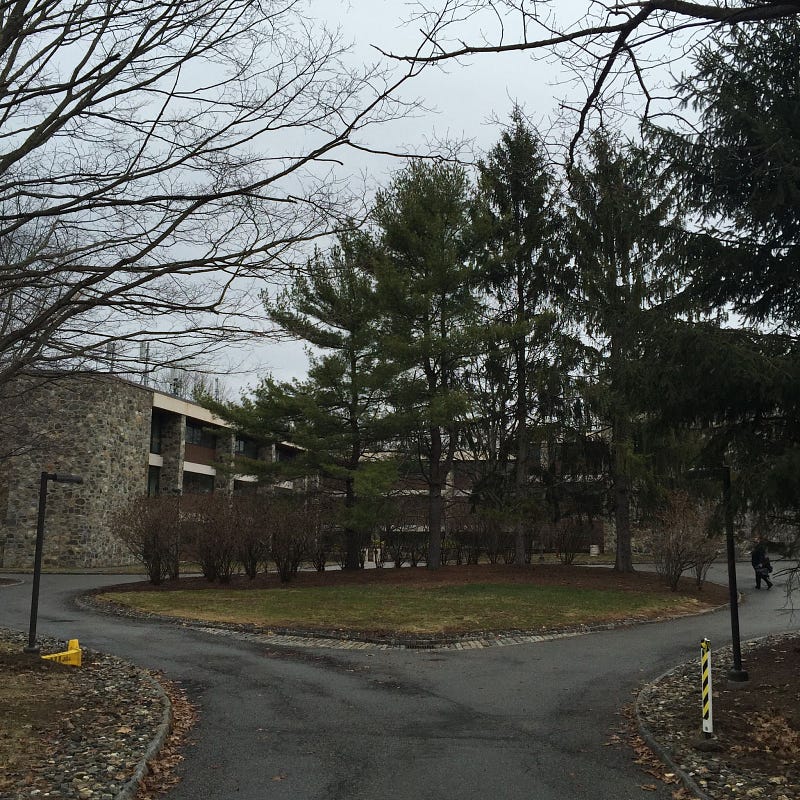
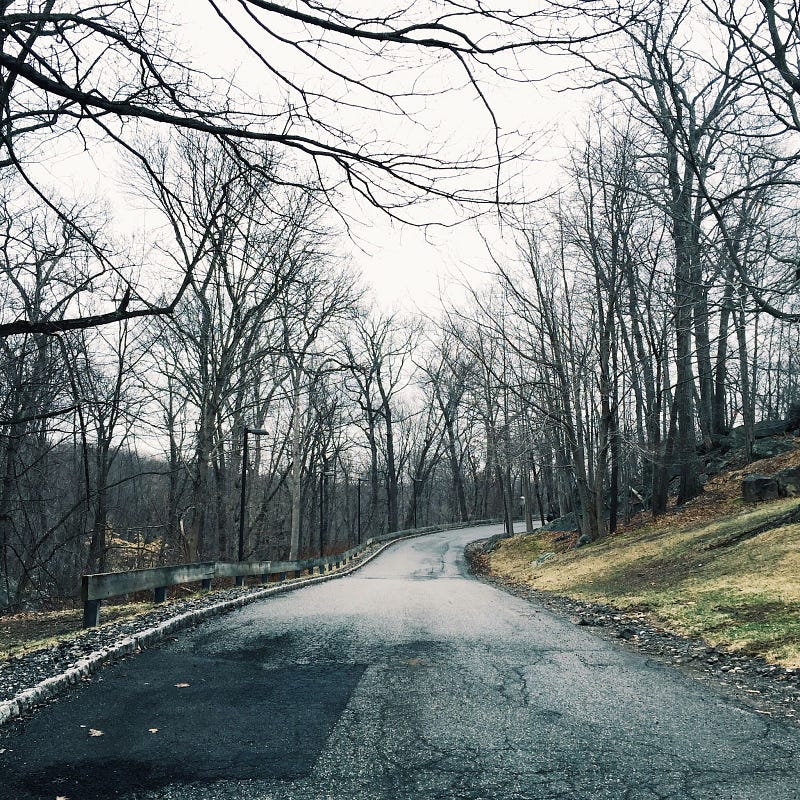
Recently I found a travel page for that specific lodge, and I still want to go back with my camera in tow, because it was such a specific kind of experience. Why is there this ‘lodge’ in the middle of Upstate New York with a handful of people working there? Why was it so, so eerily empty? Part of it is the design; it was out-dated. It’s purpose, too, was and is outdated. In 2016, IBM was started to do away with letting employees travel to different cities to work with their teams, and in a pandemic world, it’s needed even less. Who needs to own a lodge just for your employees? But looking back now, that lodge and office park feels similar to the kind of strange fabric of what is being sewn in Severance; the location (the Northeast), the snow, and the strange under-populated feeling of the office parks themselves. They are becoming dinosaurs, outdated, under utilized and not needed, which is what makes them the perfect setting for a show all about the obsession, mystique, secrecy and violence of work and capitalism.


