
What It Means to Learn Outdoors With My Black and Brown Students
The difference between sitting on grass and broken wooden chairs
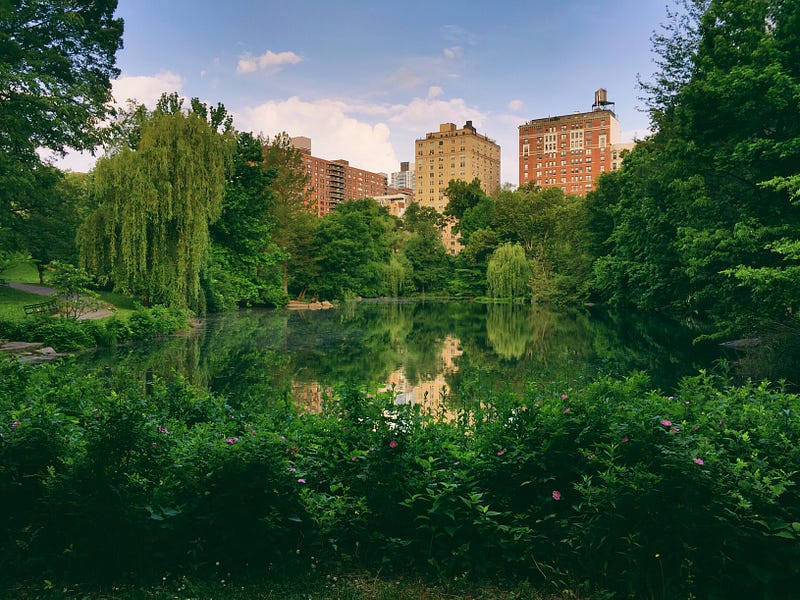
Many professors don’t take their students off-campus without an obvious reason. Now that I think of it, that may be why I began to do it when I became an academic.
I was suffocated by being confined to a room with no windows, fluorescent lighting, and rows after rows of chairs attached to small desks. I also realized that many of my students believed that something as simple as sitting on real grass, discussing social politics or literature, belonged to white people. As a Black and Latino Studies professor in New York City, many of my students had no experience spending time in nature.
We lost count of the number of movies with imagery that reinforced that we don’t exist in certain spaces. Many of my students, urban-dwelling commuters like myself, bought into the stereotype that outdoor learning wasn’t part of their cultural identities.
What difference did it make to sit on grass instead of broken wooden chairs?
On a field trip to one of the famous botanical gardens in New York City, a student pointed out that there were more people of color working in support staff positions than there were Black and Brown visitors. Her observation troubled her, and once I sat with her statement in the depths of my quiet, it bothered me too. She and I, close in age, reflected in laughter on the ideas we once had when we were first students back in the 1990s. We thought we were headed to campuses with big lawns to learn on and to stretch across as we read the Great Works. We thought we would be in a version of the television show A Different World.
Comparing those dreams to our neighborhoods, train rides, full-time jobs, and inequalities that actually came with a college education, we decided we were stronger for it. What difference did it make to sit on grass instead of broken wooden chairs? Concrete spaces were what we had, and taking classes between a long, full workday would preclude any chance we might otherwise have had to be dialectical in an urban meadow. We chuckled ourselves to tears, but the sadness in her voice over the missed opportunity to explore the outdoors before our class stayed with me for a long time after our encounter.
In the fall of 2010, just as the leaves were turning red and orange, my undergrads and I again ditched our classroom in the Flatiron section of Manhattan. Ninety minutes later, we were all standing in the middle of a 250-acre garden in the Bronx. “I live here, right in this area, and I’ve never been here,” said one student.
It’s not uncommon to find a New Yorker who hasn’t visited popular tourist spots near their home, especially botanical gardens, where the idea is to stroll leisurely while taking in aesthetic beauty. Working-class residents rarely have time for frivolities of this nature, and people of color may not always feel comfortable in these spaces at all. “This is the first time I’ve seen so many Black and Brown people in a garden, and that’s because you have the whole class out here,” my student teased.
Any one of us could close our eyes and remember a childhood experience on an asphalt playground, on a handball court, or a public summer camp that only saw the concrete parts of the park, but it was harder to remember a time we were in nature. It took research to find Black and Brown naturalists. Others couldn’t see this as a field of study for their future. We couldn’t see ourselves spending time in a natural environment for our own sake. Outdoor spaces were not for learning, and certainly could not be used for leisure.
Many of us have bigger problems than wanting to become more fluent in our city’s natural environment. We live(d) in neighborhoods that are coated in thick gray plumes of dust and smog, poor air quality, contaminated cancer-linked water, lead piping and paint in our apartments, noise pollution, and bad food options.
For some of my Black male students, the park was synonymous with the trauma of the Central Park Five. It was even harder to loosen up when we knew that below our feet laid the remains of Black Seneca Village families.
The students were right to feel apprehensive. Not all of the green spaces we ventured out to were welcoming. Even the parks in our communities aren’t worthy of our trust. We asked to observe nature programs at various places in the city, and some told us that they could not accommodate us for a variety of reasons. One green space suggested that they “weren’t able to make connections to Black Studies and would find it challenging for the staff” to have “so many people observing at one time.” At other places, admission fees were too costly for the students and they were too inflexible to waive or discount fees for students. I inquired at one place that held over 300-acres of open space, whether we could hold class there and sometimes use their classroom in the event of sudden rain and the outright answer was “no.”
Still, I wasn’t entirely deterred. We used free activities at Central Park, but still, we couldn’t find ourselves completely calm on the Great Lawn, sunbathing, trying to collectively find solutions for social ills. I had been somewhat blessed, maybe more than a lot of people. Though unsafe and not inviting back then, I grew up with Central Park as my distant backyard (some 10 blocks from my apartment building).
For some of my Black male students, I understood that the park was synonymous with the trauma of the Central Park Five. It was even harder to loosen up when we knew that below our feet laid the remains of Black Seneca Village families who built their homes, schools, and churches in an attempt to settle down and keep New York City as their home. Through eminent domain and without compensation of any kind, Seneca Village was demolished, lost beneath the sandy dirt of the famous park where people now frolic, and private school children hold recess, around a small sign indicating that Black people once lived there.
We spent time at the African Burial Ground and stared at the wall of photographs depicting the slaves discovered beneath the Federal buildings our city has erected in an attempt to quiet the stories of slavery around us. Our eyes landing on hand-carved boxes for the ashes of ancestors led my students to think about their mortality. We couldn’t ignore it, but I needed them to think about life, about existing in a world, in a space where we are not common.
Even the motions of shoveling, reaping, and planting reminded us of our grandparents who toiled, without payment nor with a bit of the food they grew for others.
Week after week we migrated, despite the change from warmer weather to the chill of the holiday season. I’d like to think we forgot to return to our designated classroom. By now we had forged an unbreakable habit. We had to be outside, to undo some of the pain and discomfort history has caused us.
Given our desire to construct an inquisitive relationship with nature, we began discovering green spaces that had troubling histories for people of color. Black Studies had to take on a new meaning for us. Being in these gardens, parks, arboretums and others that were also the sites of ugly, racist histories was a form of protest.
I spent several weeks alongside my students working at various urban food farms, getting our hands dirty, the evidence of our labor and goodwill underneath our fingernails as we rode the subway from place to place in a single day. It was fulfilling and yet even the motions of shoveling, reaping, and planting reminded us of our grandparents who toiled, without payment nor with a bit of the food they grew for others.
We soon understood that although many of us did not have direct access to fresh food in our neighborhoods, simply growing our own food wasn’t the most immediate issue. There was so much we had to do first. Before we could ever enjoy nature the way most people could, we had to pinpoint why we hadn’t been there in so long. There was an invisible divider between us and the natural world.
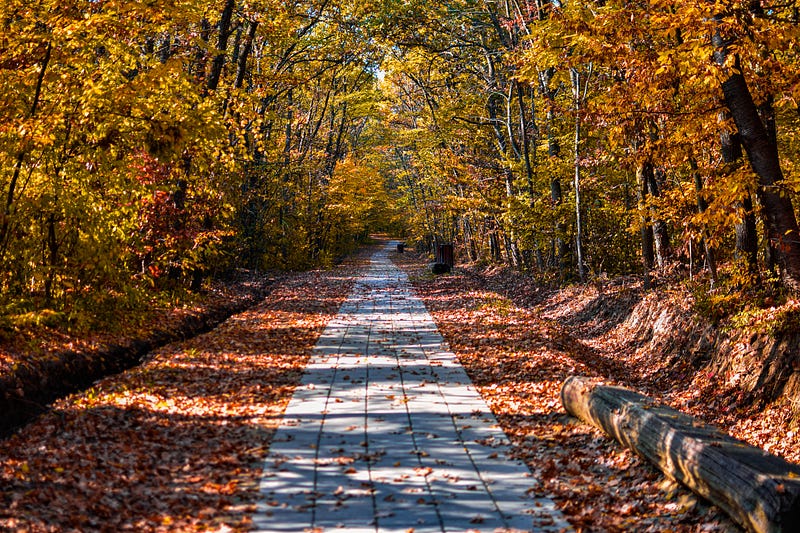
We wanted to reclaim the earth as belonging to us as much as it is claimed by anyone else. We needed to try and undo some of the confinement we had grown accustomed to, and in the process find the roots of our identities that we could pull from to continue our journey into nature.
In a research assignment, one student found the Japanese practice of Forest Bathing, also known as Shinrin-Yoku. Delighted with her findings of the practice, that in its simplest of interpretations means spending time in nature for good health, she asked, “Where are the Black and Brown people who practice this?” Here we were again, confronted with our lack of representation. Her project set out to disprove the possibility that people of color were not actively engaging in rescuing their health by a practice similar to just spending time in nature. Together, as a class bent on making sure we were outside, we discovered nature-as-medicine practices that are part of everyday life all over Africa, South America, South Asia, and the Caribbean.
The thought of returning to a boxed, windowless classroom now is even more disdainful amidst a pandemic and a life-threatening series of invisible viruses here and to come.
The more time we spent outside, the more clearly we began to understand the inextricable ties between deforestation, climate change, food deserts, and the destructive and violent practices that destroy ecosystems, and lead to the poor quality of life in Black and Brown urban communities. There it was. We had found our bridge to Black and Latino studies, and although I am the educator in residence, I too began to undo some of the discomforts I had with outdoor spaces.
I am relearning the importance of connecting with the earth in ways that pay homage to my great-grandparents who worked in unfamiliar natural environments — not by choice and without a livable wage if any at all. I understood that my Indo-Guyanese grandfather was an early example of farm-to-table artisanal handwork, not because it was chic, but because he had to survive. My grandfather had to be outside and the forces of survival that began his legacy have knitted together my desire for a relationship to the outdoors.
It is for this and other reasons that I have deepened my admiration for nature, and listen respectfully to my young daughter, who already knows at seven that she wants to be an ornithologist. She loves bird songs.
We wanted to reclaim the earth as belonging to us as much as it is claimed by anyone else.
The thought of returning to a boxed, windowless classroom now is even more disdainful amidst a pandemic and a life-threatening series of invisible viruses here and to come. I am comforted to know some of my students have gained the tools to seek out better practices that position their health, as well as their heritages, as a central focus of their being. Whenever we are able to physically be together again, I know we still won’t fully return indoors until we have spent equal time outside, finding ourselves, feeling the grass beneath our bare feet.